


Close Menu
Savannah HeraldSavannah Herald
    We're Social
    • Twitter
    • Facebook
    • YouTube

    Subscribe to Updates

    Get the latest creative news from FooBar about art, design and business.

    Trending
    • HONOR 600 series launches in SA with flagship-level performance
    • Mathematicians stunned by AI’s biggest breakthrough in mathematics yet
    • Lincolnville (South Carolina) Hometown Festival – Savannah Herald
    • Risk of snakebites increasing as reptiles adapt to changing world, says study | Snakes
    • USMNT’s Chris Richards has torn ligaments in ankle, putting World Cup status in doubt | USA
    • Easy Blueberry Vodka Lemonade – Kenneth Temple
    • Diabolic review – Mormon-country horror takes ayahuasca down to the creepy cellar | Movies
    • The Malbon x HVN Collab Brings the Cool Girls to the Golf Course
    Facebook X (Twitter) Instagram YouTube
    Login
    Savannah HeraldSavannah Herald
    Savannah HeraldSavannah Herald
    Home » Weight-Loss Drugs Could Prevent and Treat Addiction, New Research Shows
    Health

    Weight-Loss Drugs Could Prevent and Treat Addiction, New Research Shows

    Savannah HeraldBy Savannah HeraldMarch 30, 20266 Mins Read
    Facebook Twitter Pinterest LinkedIn WhatsApp Reddit Tumblr Email
    Weight-Loss Drugs Could Prevent and Treat Addiction, New Research Shows
    Share
    Facebook Twitter LinkedIn Pinterest Email

    Health Watch: Wellness, Research & Healthy Living Tips

    Key takeaways
    • A VA study led by Dr. Ziyad Al-Aly found GLP-1 use cut new substance-use disorder risk 14%–25% versus SGLT2 drugs.
    • Among people with existing addictions, GLP-1 treatment lowered emergency visits 29%, hospitalizations 26%, overdoses 39%, and drug deaths 50%.
    • Mechanism: GLP-1 drugs suppress reward signals in the mesolimbic system, reducing cravings underlying tobacco, alcohol, opioid, and stimulant dependence.
    • Researchers caution more study on dosing, duration, neuroadaptation, and rebound cravings; do not yet recommend prescribing GLP-1 solely for addiction.

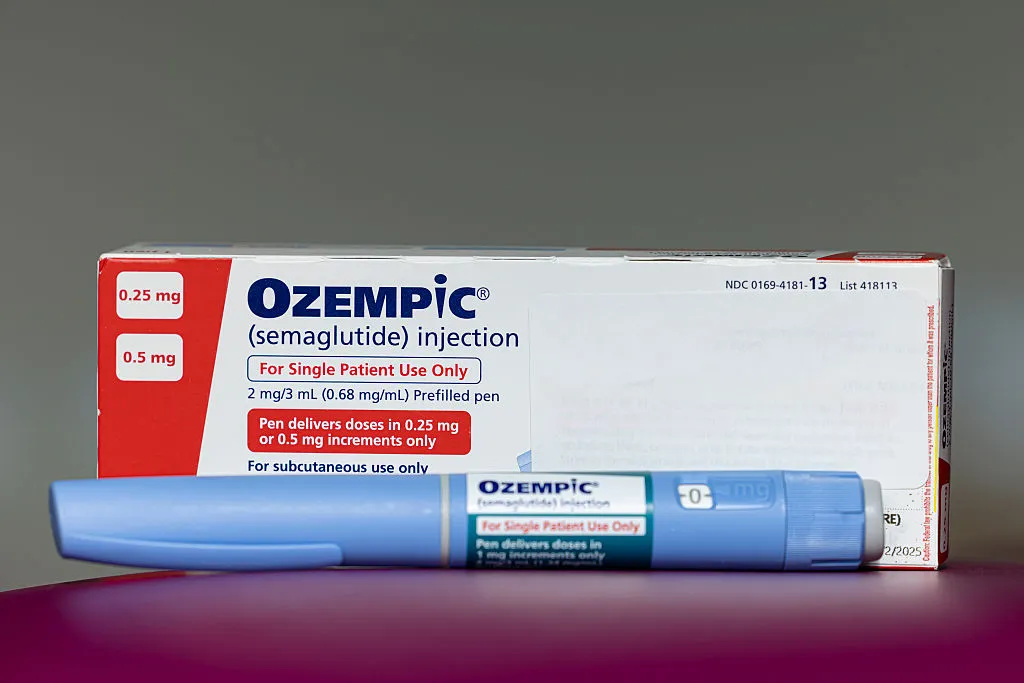
    The list of health conditions that benefit from the GLP-1 weight loss and diabetes drugs like Ozempic, Wegovy, Mounjaro and Zepbound, continues to grow.

    The drugs are already approved to lower the risk of heart disease, sleep apnea, kidney and liver conditions. In the latest study on the medications, published in the BMJ, researchers led by Dr. Ziyad Al-Aly, from the department of medicine at the Washington University School of Medicine, report that people taking the drugs lowered their risk of developing addictions, as well as reduced the negative consequences of addictive behaviors, including hospitalizations, overdose and death.

    [time-brightcove not-tgx=”true”]

    “There are a smattering of studies here and there, small studies that look at one type of substance use—for example, alcohol—but there really is not a single human study that comprehensively evaluates two things: 1) the risk of new onset substance use disorders across all major substances, and 2) harm reduction, or the question of do these drugs really reduce the risk of drug overdoses, drug deaths, drug-related hospitalizations, emergency room visits, and suicides,” says Al-Aly.

    He and his team analyzed health records from more than 600,000 people in the Department of Veterans Affairs system, who represented a broad swath of the population, although most were men. All of the participants were diagnosed with diabetes and prescribed either a GLP-1 drug like Ozempic or Mounjaro, or a different group of diabetes medications known as SGLT2 inhibitors, such as Farxiga or Jardiance. While GLP-1 drugs work in the brain, the SGLT2 drugs do not, acting instead on the kidneys to remove excess sugar. That’s why previous studies suggested that GLP-1 drugs could have benefits in treating addictions—as weight loss drugs, they suppress the reward signals in the brain, in the mesolimbic system, that reinforce cravings and so-called food noise that many people with obesity report. Addictive substances such as nicotine, alcohol, cocaine, and opioids tap into the same brain region to reinforce cravings for and dependence on those substances.

    Among people who did not currently have a substance use disorder, Al-Aly studied their likelihood of becoming addicted to alcohol, cannabis, cocaine, nicotine, or opioids over a three year follow-up period after being prescribed either a GLP-1 or a SGLT2 inhibitor. Across each of the different substances, people taking the GLP-1 showed anywhere from 14% to 25% reduced risk of developing an addiction to one of them, compared to people prescribed an SGLT2 inhibitor. The reduction was greatest for the chance of developing a dependence on opioids, which could be an important new strategy for addressing the growing epidemic of opioid addiction around the world.

    The researchers then looked at whether the weight loss drugs had any benefit in helping people who already had a substance use disorder. And they found that GLP-1 medications were helpful in lowering the risk of emergency department visits by 29%, hospitalizations due to their addiction by 26%, overdose by 39%, and deaths from drug-related causes by 50%.

    “The biggest revelation for me is that [these GLP-1 drugs] are working across different substances,” says Al-Aly. “Previously, in addiction medicine, there were medications tailored to treat specific substances—nicotine patches for smoking, other treatments for alcohol and another treatment for opioids. There is no medicine, or no precedent in our armamentarium that actually has this property of working across addictive substances.”

    This means the results could provide a key foundation for establishing GLP-1 medications as a potentially new class of drugs that could both prevent and treat different types of addictions, he says. But more studies need to be conducted to better understand exactly how the medications should be used in these cases. The current study, for instance, does not delve into the issue of dose or duration of the medications—studies in weight loss show that once people stop taking the drugs, their effects dissipate and many people regain weight. The same phenomenon could occur in addictions, since the drugs work by suppressing the reward signals in the brain; if the drugs are no longer present, those craving signals could return. 

    “I worry about what will happen since if [these drugs] put the lid on craving in the mesolimbic system [of the brain], then all of a sudden people stop taking them, that the craving then comes back with a vengeance,” says Al-Aly. “I worry that in dealing with people with cravings, and people at risk of overdosing and other problems, that we need to understand and appreciate the uncertainties here more.”

    He says that another issue that must be explored further before prescribing GLP-1s to prevent or treat addictions is the ability of the brain to adapt. If people start taking GLP-1s to prevent or control addictions, it’s not clear whether the brain would develop a tolerance to the drugs and therefore reach a point at which the medications would no longer effectively control cravings. “I’m excited by these results,” says Al-Aly. “But as a scientist, I would not advise prescribing [GLP-1s] for the sole indication of addiction at this point, pending more studies and understanding, and more resolution of uncertainties.”

    Still, the data are the first step in understanding a potentially powerful new way these medications could be used to address another significant health issue that so far hasn’t enjoyed truly effective prevention and treatment strategies. If the current data are replicated and better understood, for example, it could open the door to preventing addictions before they become harmful and cause irreparable harm, both physically and behaviorally. Such an intervention would be unprecedented in the addiction space, and require additional research to identify stronger risk factors for addictive behaviors, whether they are genetic, environmental, or behavioral, or a combination. 

    “Who benefits from them the most is the next big question,” says Al-Aly. “At this point, we don’t really know. Are there subsets of people among these 600,000 person cohort who might benefit more from GLP-1s? We would need additional follow up studies.”

    For now, even if the data don’t support using the GLP-1 medications to just prevent or treat addictions, Al-Aly says that if people qualify for the drugs because they have diabetes or are overweight or obese, and they also want to quit smoking, stop drinking, or control their opioid dependence, then the GLP-1 medications could help. “For those people, these data give them an additional rationale,” he says. “It will literally help them reach their two goals. But for prescribing for the sole purpose of controlling addiction—I don’t think we are there yet, and need to resolve more uncertainties about what happens when people discontinue the medications, as well as neuroadaptation, before we start making recommendations.”

    Read the full article on the original source


    Disease Prevention Fitness and Nutrition Fitness Trends Health News Health Policy Healthcare Innovation Healthy Habits Healthy Living Immune Health Lifestyle Medicine Medical Breakthroughs medical research Men's health Mental Health Awareness Nutrition News Public health Self-Care Strategies Stress Management Wellness Tips Women's health
    Share. Facebook Twitter Pinterest LinkedIn WhatsApp Reddit Tumblr Email
    Savannah Herald
    • Website

    Related Posts

    Local May 21, 2026

    Mathematicians stunned by AI’s biggest breakthrough in mathematics yet

    Health May 21, 2026

    Risk of snakebites increasing as reptiles adapt to changing world, says study | Snakes

    Health May 21, 2026

    Our Promise to You on What Would’ve Been the 53rd Anniversary of Roe v Wade

    Local May 20, 2026

    Can we harness quantum effects to create a new kind of healthcare?

    Health May 20, 2026

    The mysterious reason why women get hotter from age 18 to 42

    Health May 20, 2026

    The State of Healthcare Access in Georgia: What’s Working—and What Still Needs to Change

    Comments are closed.

    Don't Miss
    Politics October 3, 2025By Savannah Herald04 Mins Read

    Activist Assata Shakur Dead At 78

    October 3, 2025

    Wellness That Matters: Black Health News & Community Care Assata Shakur died Friday in Cuba…

    Ultimate Guide to Spring 2026 Exhibitions

    April 10, 2026

    ‘The Traitors’ Season 4 Cast Revealed

    November 25, 2025

    Grocery chain recalls tuna salad because of contamination with Listeria monocytogenes

    September 3, 2025

    Witchcraft and A.I. – by Samuel James

    November 25, 2025
    Archives
    • May 2026
    • April 2026
    • March 2026
    • February 2026
    • January 2026
    • December 2025
    • November 2025
    • October 2025
    • September 2025
    • August 2025
    • July 2025
    • June 2025
    • May 2025
    • April 2025
    • March 2025
    • February 2025
    Categories
    • Art & Literature
    • Beauty
    • Black History
    • Business
    • Climate
    • Education
    • Employment
    • Entertainment
    • Faith
    • Fashion
    • Food
    • Gaming
    • Georgia Politics
    • HBCUs
    • Health
    • Health Inspections
    • Investing
    • Lifestyle
    • Local
    • Lowcountry News
    • National
    • National Opinion
    • News
    • Politics
    • Real Estate
    • Senior Living
    • Sports
    • State
    • Tech
    • Transportation
    • Travel
    • World
    Savannah Herald Newsletter

    Subscribe to Updates

    A round up interesting pic’s, post and articles in the C-Port and around the world.

    About Us
    About Us

    The Savannah Herald is your trusted source for the pulse of Coastal Georgia and the Low County of South Carolina. We're committed to delivering timely news that resonates with the African American community.

    From local politics to business developments, we're here to keep you informed and engaged. Our mission is to amplify the voices and stories that matter, shining a light on our collective experiences and achievements.
    We cover:
    🏛️ Politics
    💼 Business
    🎭 Entertainment
    🏀 Sports
    🩺 Health
    💻 Technology
    Savannah Herald: Savannah's Black Voice 💪🏾

    Our Picks

    Teachers Are Using Software To See If Students Used AI. What Happens When It’s Wrong?

    January 13, 2026

    Thom Tillis Is Prepared to Advance Kevin Warsh After U.S. Drops Fed Inquiry

    May 8, 2026

    Islands High Boys’ Soccer Wins School’s First Ever State Championship

    May 14, 2026

    New 76-unit affordable housing complex opens in Watts as part of $1 billion redevelopment – Los Angeles Wave Newspaper Group

    May 7, 2026

    Memorial Day in elderly living areas 2025 

    August 28, 2025
    Categories
    • Art & Literature
    • Beauty
    • Black History
    • Business
    • Climate
    • Education
    • Employment
    • Entertainment
    • Faith
    • Fashion
    • Food
    • Gaming
    • Georgia Politics
    • HBCUs
    • Health
    • Health Inspections
    • Investing
    • Lifestyle
    • Local
    • Lowcountry News
    • National
    • National Opinion
    • News
    • Politics
    • Real Estate
    • Senior Living
    • Sports
    • State
    • Tech
    • Transportation
    • Travel
    • World
    Copyright © 2002-2026 Savannahherald.com All Rights Reserved. A Veteran-Owned Business

    Type above and press Enter to search. Press Esc to cancel.

    Manage Consent
    To provide the best experiences, we use technologies like cookies to store and/or access device information. Consenting to these technologies will allow us to process data such as browsing behavior or unique IDs on this site. Not consenting or withdrawing consent, may adversely affect certain features and functions.
    Functional Always active
    The technical storage or access is strictly necessary for the legitimate purpose of enabling the use of a specific service explicitly requested by the subscriber or user, or for the sole purpose of carrying out the transmission of a communication over an electronic communications network.
    Preferences
    The technical storage or access is necessary for the legitimate purpose of storing preferences that are not requested by the subscriber or user.
    Statistics
    The technical storage or access that is used exclusively for statistical purposes. The technical storage or access that is used exclusively for anonymous statistical purposes. Without a subpoena, voluntary compliance on the part of your Internet Service Provider, or additional records from a third party, information stored or retrieved for this purpose alone cannot usually be used to identify you.
    Marketing
    The technical storage or access is required to create user profiles to send advertising, or to track the user on a website or across several websites for similar marketing purposes.
    • Manage options
    • Manage services
    • Manage {vendor_count} vendors
    • Read more about these purposes
    View preferences
    • {title}
    • {title}
    • {title}
    Ad Blocker Enabled!
    Ad Blocker Enabled!
    Our website is made possible by displaying online advertisements to our visitors. Please support us by disabling your Ad Blocker.

    Sign In or Register

    Welcome Back!

    Login below or Register Now.

    Lost password?

    Register Now!

    Already registered? Login.

    A password will be e-mailed to you.