




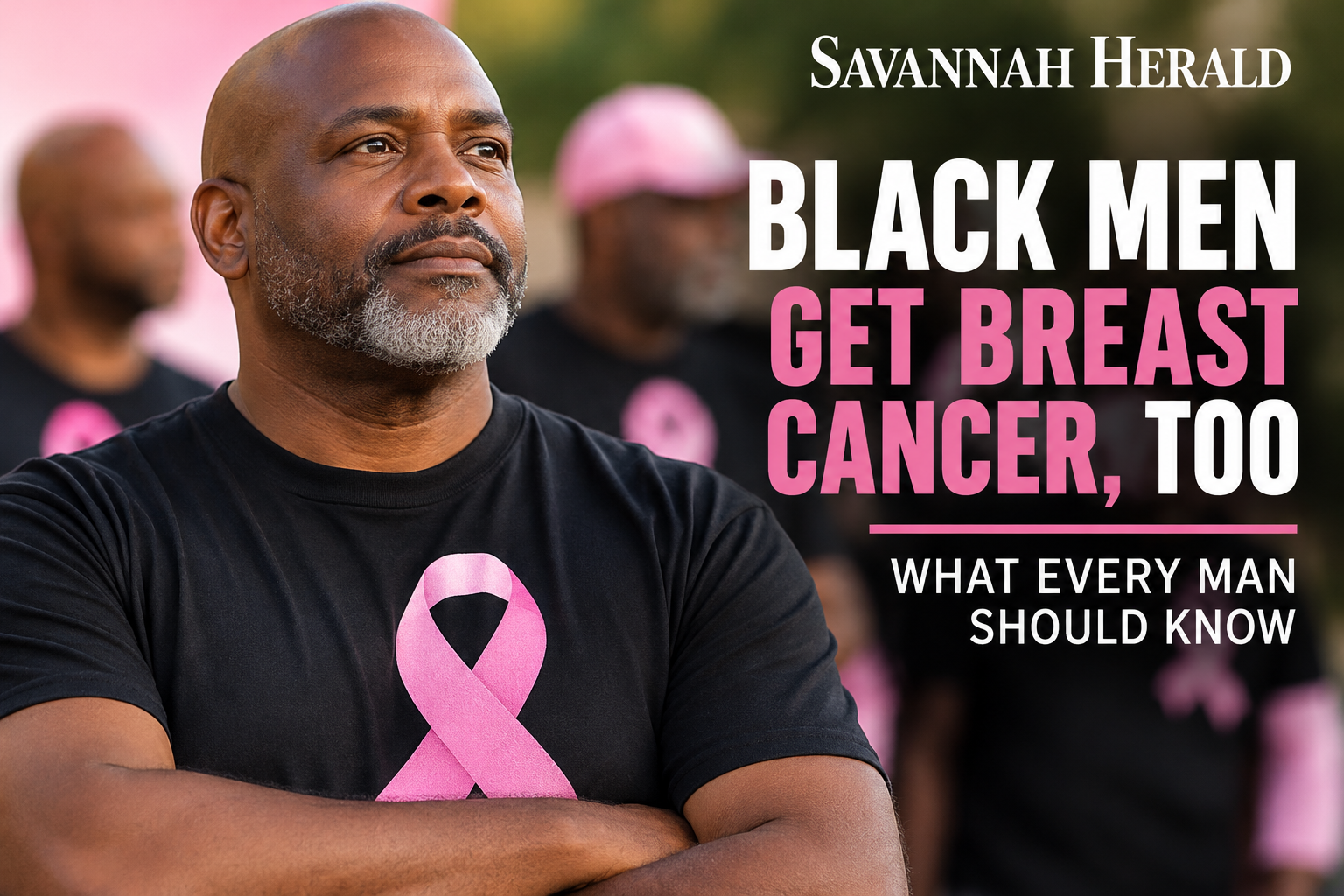
Breast cancer is often discussed as a women’s health issue, but men can develop it, too. That is a message worth sharing with fathers, brothers, sons and friends across Savannah and Coastal Georgia. A breast lump or a change around the nipple may be easy to dismiss, especially when someone does not realize men have breast tissue.
- Recognize warning signs: lump, nipple change, redness, scaling, or discharge; seek prompt medical evaluation.
- Ask about family history and inherited genes like BRCA2; consider genetic counseling and individualized screening if high risk.
- Encourage open conversations in Black families; help arrange appointments, transportation, and support prompt medical care.
During Breast Cancer Awareness Month, the Savannah Herald is taking a closer look at what Black men and their families should know about this disease. The goal is not to create fear. It is to help people recognize possible warning signs and know when to ask for medical care.
Yes, Men Can Get Breast Cancer
Male breast cancer is rare, accounting for fewer than 1% of breast cancers in the United States. Still, the American Cancer Society estimates that about 2,670 men will be diagnosed with invasive breast cancer in 2026 and about 530 will die from it. Most diagnoses occur later in life, but breast cancer can develop in younger men as well.
Because the disease is uncommon, many men do not expect it. Some may assume a lump is harmless or feel uncomfortable discussing changes to their chest. But waiting to get checked can delay an important diagnosis.
Warning Signs Men Should Not Ignore
According to the American Cancer Society, the most common warning sign is a lump in the breast, often near or beneath the nipple. It may feel firm and may not hurt. Other possible signs include:
- Skin that becomes dimpled or puckered.
- A nipple that turns inward.
- Redness, scaling or other changes to the nipple or surrounding skin.
- Fluid, including bloody discharge, from the nipple.
- A lump or swelling under the arm or near the collarbone.
These changes do not automatically mean cancer. Other conditions can cause similar symptoms. But they deserve prompt attention from a qualified healthcare professional rather than a wait-and-see approach.
Risk Factors: What Men Should Know
There is no single reason why a man develops breast cancer. Some factors are inherited or cannot be changed, while others relate to medical history or health conditions. According to the American Cancer Society and National Cancer Institute, important risk factors include:
- Older age: The chance of developing breast cancer generally increases as men get older.
- Family history and inherited genes: Having close relatives with breast cancer can raise risk. Inherited changes in BRCA2, and sometimes BRCA1 or other genes, are especially important. These changes can be passed down from either parent. Family histories of ovarian, pancreatic or prostate cancer may also matter.
- Klinefelter syndrome: This genetic condition affects sex chromosomes and hormone levels and is associated with a higher risk of male breast cancer.
- Previous chest radiation: Radiation treatment involving the chest, particularly earlier in life, may increase risk.
- Hormone-related conditions: Certain conditions that affect estrogen and androgen levels, including some liver diseases, may increase risk.
- Excess body weight: Obesity is associated with increased risk and can affect hormone levels.
Remember: Having one or more risk factors does not mean a man will develop breast cancer. Men without known risk factors can also be diagnosed. A new lump or nipple change deserves medical attention regardless of family history.
Men who know of a BRCA gene change in their family, or who have several close relatives with related cancers, should ask a healthcare professional whether genetic counseling or individualized screening advice would be appropriate.
Why This Conversation Matters in the Black Community
For Black families, breast health conversations should include men as well as women. Talking openly about family medical history, taking symptoms seriously and helping loved ones get appointments are practical ways to support one another.
It is important not to assume that every difference in cancer outcomes has a single cause. Access to healthcare, timely diagnosis, treatment and follow-up can all affect a person’s experience. The most useful message is simple: no one should feel embarrassed about asking a doctor to examine a breast change.
Local Spotlight: The Pink Men’s Club
Here in Savannah, the conversation about men and breast cancer has already reached local television. WSAV presented “The Pink Men’s Club: Surviving Breast Cancer”, a one-hour special that aired October 6, 2026, highlighting male breast cancer survivors. The program was promoted in connection with St. Joseph’s/Candler and Paint the Town Pink awareness efforts.
The special is a reminder that men’s experiences belong in Breast Cancer Awareness Month coverage, too. Readers can see the community-shared promotional flyer in the Savannah Herald’s Breast Cancer Awareness & Resource Guide 2026. The flyer is included for awareness; it does not establish whether a recording of the program remains available to watch.
Should Men Get Mammograms?
Routine mammograms are not recommended for all men because male breast cancer is uncommon. Most cases are investigated after someone notices a symptom. A healthcare professional may recommend imaging, a biopsy or other testing when needed. Men with a strong family history or a known inherited genetic change should ask about individualized risk assessment and whether genetic counseling or testing makes sense.
What Savannah Families Can Do
Start by talking with relatives about cancer diagnoses on both sides of the family. If you notice a new lump, nipple discharge or another unusual breast change, make a medical appointment promptly. If you are supporting a loved one, offer to help arrange a visit or transportation. Those small steps can make it easier to seek care.
The Savannah Herald’s Breast Cancer Awareness & Resource Guide 2026 includes screening information, support resources and community events in Savannah and Coastal Georgia. Some services listed there are intended specifically for eligible women; men should ask their own healthcare provider about appropriate evaluation and referrals.
Learn More
- American Cancer Society: Male breast cancer statistics for 2026
- American Cancer Society: Signs and symptoms in men
- American Cancer Society: Risk factors in men
- American Cancer Society: Detection and diagnosis
Editor’s note: This article is for general education and is not a substitute for medical advice, diagnosis or treatment. If you notice a concerning change, contact a qualified healthcare professional. Prepared for Savannah Herald’s October 2026 breast health coverage.
