


Close Menu
Savannah HeraldSavannah Herald
    • Home
    • Features
      • View All On Demos
    • Buy Now
    We're Social
    • Twitter
    • Facebook
    • YouTube

    Subscribe to Updates

    Get the latest creative news from FooBar about art, design and business.

    Trending
    • French singer Patrick Bruel in police custody over alleged rape and sexual assault
    • Georgia Southern graduate uses history to leave a legacy
    • The African Aesthetic Is Everywhere — But Who Gets Credited?
    • NBA bans two fans for life after on‑court incident during Game 1 of Finals
    • Robin Quivers of The Howard Stern Show is Cancer-Free After a 14 Year Battle
    • Researchers trained an open source AI search agent, Harness-1, that outperforms GPT-5.4 on recalling relevant information
    • What Michigan Schools Reveal About Reversing Chronic Absenteeism
    • 2025-26 All-Cov News Boys Soccer Team
    Facebook X (Twitter) Instagram YouTube
    Login
    Savannah HeraldSavannah Herald
    Savannah HeraldSavannah Herald
    Home » Bridging The Climate Capital Chasm: Why Africa Needs More Than Venture Capital
    World

    Bridging The Climate Capital Chasm: Why Africa Needs More Than Venture Capital

    Savannah HeraldBy Savannah HeraldNovember 11, 20254 Mins Read
    Facebook Twitter Pinterest LinkedIn WhatsApp Reddit Tumblr Email
    high angle view of empty road against sky
    Share
    Facebook Twitter LinkedIn Pinterest Email

    Global Black Voices: News from around the World

    By Katie Hill, Expert Partner, Boston Consulting Group in Nairobi

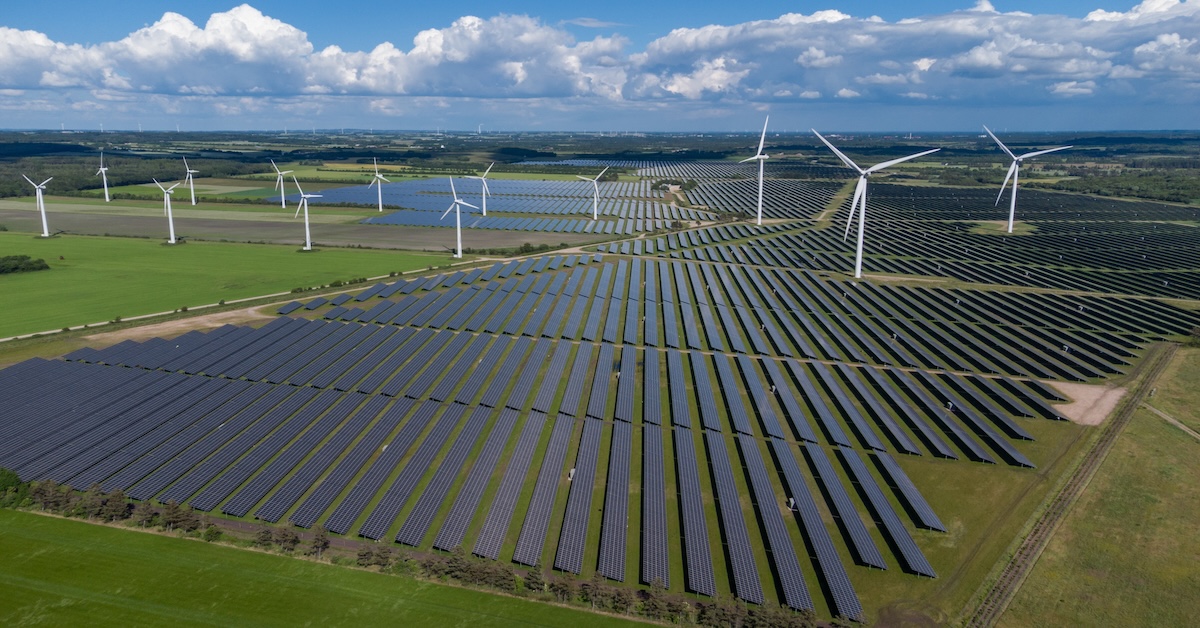
    Africa holds 40% of the world’s solar energy potential—and yet receives just a fraction of the capital needed to unlock it. This is not just an inefficiency. It’s a failure of capital architecture—and a threat to global climate progress. Similarly, Africa is home to 65% of unused arable land and could become the climate-smart global food basket if matched with the right financing.

    Traditional private capital, which has proven effective in developed markets, encounters significant structural barriers in Africa. Historically in the United States 20% of climate finance originated from private equity and venture capital investors, yet for Africa, this figure plummets to less than 5%.

    This disparity becomes more striking when considering that Africa offers compelling advantages such as natural assets: Africa’s tropical forests sequester three times more carbon dioxide per hectare than temperate forests in developed economies. Further, with limited legacy fossil fuel infrastructure, the continent has an opportunity to build climate-fit infrastructure from the start.

    The consequences of this capital deployment gap are both profound and measurable.

    Research examining two hundred climate ventures backed by private capital in Africa reveals that 75% remain below $20 million in annual revenue despite operating for up to twenty years. These companies persist at sub-scale not due to inherent business flaws, but because the financing ecosystem has failed to properly match risks with suitable capital structures.

    In examining some of the barriers, foreign exchange volatility emerges as the most significant deterrent to international investment in African climate solutions. Recent currency devaluations demonstrate the scale of this challenge: in the past five years, Nigeria and Egypt both experienced currency depreciations of approximately 70%, effectively wiping out dollar-based returns on local investments.

    Consequently, global investors price this risk rationally with brutal consequences. Late-stage private equity firms often require 25-50% premiums on returns in Africa above their global hurdle rates. These elevated return expectations create unsustainable pressure on investee companies, forcing them to bear macro risks beyond their control.

    The local capital landscape presents equally formidable challenges. Commercial banks in many African markets remain largely closed to private sector lending, with interest rates frequently exceeding 20% when available. This dynamic reflects an underlying misalignment of incentives: local banks and institutional investors hold substantial portions of high-yielding sovereign debt, reducing their motivation to engage in private sector lending. In Kenya, 50% of commercial bank lending flows to government securities, with banks historically earning 13-14% returns on treasury bonds with minimal risk compared to private sector alternatives.

    Addressing these structural impediments requires innovative approaches that move beyond traditional private capital frameworks. The concept of risk layering offers particular promise; wherein different institutions assume responsibility for different risk categories. Multilateral development banks and donor organisations could shoulder macro-level risks including currency volatility (as articulated well by, Avinash Persaud and the Climate Policy Initiative in this proposed partial FX guarantee facility), whilst private investors and companies can focus on commercial execution and business performance.

    Local capital market development represents another critical avenue for progress. Nigeria’s recent regulatory change provides an encouraging precedent: pension fund regulators updated guidelines to permit 10%-15% allocation to infrastructure and private equity investments, increased from the previous 5%, creating pathways for domestic institutional investors to support local climate infrastructure whilst building more resilient capital markets.

    Critically, Development Finance Institutions (DFIs) are uniquely positioned to help climate capital markets evolve. In many lower-income African countries, DFIs play a vital role, often the predominant capital backing regional private equity funds and local companies. Yet, we often don’t see their intended effect of bridging to commercial capital. DFIs could redirect a portion of their principle investing toward derisking opportunities for larger institutional investors. Recognising that DFIs face important constraints on their sources of funds and balance sheet performance, this would require backing at the highest levels, very thoughtful design, and learning from past mistakes.

    Finally, asset-light business structures and securitisation models offer additional pathways to capital efficiency. Pan-African off-grid-solar companies, such as d.light and SunKing, demonstrate the potential impact, having raised upwards of $1billion in debt primarily through receivables securitisation, enabling distributed renewable energy access for hundreds of millions of people. Electric vehicle startups similarly pursue franchising models for charging infrastructure to avoid capital-intensive lock-in scenarios.

    The climate challenge demands gigaton-scale solutions, yet current financing approaches in Africa produce sub-scale enterprises. Moving beyond venture capital requires coordinated action across the investment ecosystem, from policy makers creating enabling regulation to multilaterals and institutional investors embracing innovative risk-sharing mechanisms. Doing so would translate Africa’s climate advantages—from renewable energy potential to natural assets—into meaningful climate impact and economic growth for the region.

    Read the full story from the original publication


    Africa News African American Global Ties African Business African Innovation African Politics Afro-Caribbean Affairs Black Diaspora Black Excellence Black History Worldwide Caribbean News Caribbean Politics Diaspora Culture Diaspora Identity Global Black Voices International Black Media Jamaican News Pan-African News South Africa News Southern Africa West Africa
    Share. Facebook Twitter Pinterest LinkedIn WhatsApp Reddit Tumblr Email
    Savannah Herald
    • Website

    Related Posts

    World June 9, 2026

    Toronto Newcomer Day Celebrates Diversity

    World June 8, 2026

    Taste of Haiti: Jonathan Pierre Lafleur brings Haitian culinary storytelling to NYC families

    Faith June 8, 2026

    HOW POPE LEO 7-DAY APOSTOLIC JOURNEY TO SPAIN KICKS OFF, YOUTH ASKED TO CHANGE HISTORY WITH LOVE,

    Sports June 8, 2026

    Savannah Web.com Tour event will give winner seersucker jacket

    Health June 8, 2026

    The Story of Lieutenant Colonel Corrine “Coco” Burnett

    HBCUs June 7, 2026

    LU Cooperative Extension and Outreach hosts virtual reality STEM education labs

    Comments are closed.

    Don't Miss
    Entertainment May 5, 2026By Savannah Herald04 Mins Read

    George arrested for Theo’s murder in Coronation Street, but a new twist sees police attention turn elsewhere

    May 5, 2026

    From Hollywood to Home: Black Voices in Entertainment Coronation Street fans were left reeling in…

    How to See How Much a House Sold For

    November 1, 2025

    Voice of America to Obtain Feeds From Professional-Trump Community, Administration Says

    August 29, 2025

    Savannah State Takes Two From Trinity College Of Jacksonville

    February 27, 2026

    Gemma 4 on iPhone: Running Powerful AI Models Locally on Mobile Devices

    April 6, 2026
    Archives
    • June 2026
    • May 2026
    • April 2026
    • March 2026
    • February 2026
    • January 2026
    • December 2025
    • November 2025
    • October 2025
    • September 2025
    • August 2025
    • July 2025
    • June 2025
    • May 2025
    • April 2025
    • March 2025
    • February 2025
    Categories
    • Art & Literature
    • Beauty
    • Black History
    • Business
    • Climate
    • Culture
    • Education
    • Employment
    • Entertainment
    • Faith
    • Fashion
    • Food
    • Gaming
    • Georgia Politics
    • HBCUs
    • Health
    • Health Inspections
    • Investing
    • Lifestyle
    • Local
    • Lowcountry News
    • National
    • National Opinion
    • News
    • Politics
    • Real Estate
    • Senior Living
    • Sports
    • State
    • Tech
    • Transportation
    • Travel
    • World
    Savannah Herald Newsletter

    Subscribe to Updates

    A round up interesting pic’s, post and articles in the C-Port and around the world.

    About Us
    About Us

    The Savannah Herald is your trusted source for the pulse of Coastal Georgia and the Low County of South Carolina. We're committed to delivering timely news that resonates with the African American community.

    From local politics to business developments, we're here to keep you informed and engaged. Our mission is to amplify the voices and stories that matter, shining a light on our collective experiences and achievements.
    We cover:
    🏛️ Politics
    💼 Business
    🎭 Entertainment
    🏀 Sports
    🩺 Health
    💻 Technology
    Savannah Herald: Savannah's Black Voice 💪🏾

    Our Picks

    HBCU football coach sounds alarm on ‘street agents’ trying to poach players

    November 25, 2025

    Mysterious interstellar object aiming at Earth ‘not natural’ as scientists rule out comet theory

    September 3, 2025

    Asus unveils back to school deals on laptops and PCs

    September 3, 2025

    Fayette Forward Seeks Public Input on Countywide Path System Name

    April 4, 2026

    May Donald Trump Deport Barack Obama?

    August 29, 2025
    Categories
    • Art & Literature
    • Beauty
    • Black History
    • Business
    • Climate
    • Culture
    • Education
    • Employment
    • Entertainment
    • Faith
    • Fashion
    • Food
    • Gaming
    • Georgia Politics
    • HBCUs
    • Health
    • Health Inspections
    • Investing
    • Lifestyle
    • Local
    • Lowcountry News
    • National
    • National Opinion
    • News
    • Politics
    • Real Estate
    • Senior Living
    • Sports
    • State
    • Tech
    • Transportation
    • Travel
    • World
    Copyright © 2002-2026 Savannahherald.com All Rights Reserved. A Veteran-Owned Business

    Type above and press Enter to search. Press Esc to cancel.

    Manage Consent
    To provide the best experiences, we use technologies like cookies to store and/or access device information. Consenting to these technologies will allow us to process data such as browsing behavior or unique IDs on this site. Not consenting or withdrawing consent, may adversely affect certain features and functions.
    Functional Always active
    The technical storage or access is strictly necessary for the legitimate purpose of enabling the use of a specific service explicitly requested by the subscriber or user, or for the sole purpose of carrying out the transmission of a communication over an electronic communications network.
    Preferences
    The technical storage or access is necessary for the legitimate purpose of storing preferences that are not requested by the subscriber or user.
    Statistics
    The technical storage or access that is used exclusively for statistical purposes. The technical storage or access that is used exclusively for anonymous statistical purposes. Without a subpoena, voluntary compliance on the part of your Internet Service Provider, or additional records from a third party, information stored or retrieved for this purpose alone cannot usually be used to identify you.
    Marketing
    The technical storage or access is required to create user profiles to send advertising, or to track the user on a website or across several websites for similar marketing purposes.
    • Manage options
    • Manage services
    • Manage {vendor_count} vendors
    • Read more about these purposes
    View preferences
    • {title}
    • {title}
    • {title}
    Ad Blocker Enabled!
    Ad Blocker Enabled!
    Our website is made possible by displaying online advertisements to our visitors. Please support us by disabling your Ad Blocker.

    Sign In or Register

    Welcome Back!

    Login below or Register Now.

    Lost password?

    Register Now!

    Already registered? Login.

    A password will be e-mailed to you.