


Close Menu
Savannah HeraldSavannah Herald
    We're Social
    • Twitter
    • Facebook
    • YouTube

    Subscribe to Updates

    Get the latest creative news from FooBar about art, design and business.

    Trending
    • NexGen Global Green Housing announced a groundbreaking initiative for Baltimore City Section 8 residents to select a residential lot anywhere in the city
    • Atmus Filtration Technologies Names Kevin Carpenter Senior Vice President & Chief Supply Chain Officer
    • Storm Reid Joins Cast of Coming-of-Age Revenge Thriller ‘Hot Year’
    • Weather pushes back Game 2 of SCISA 4A baseball state title series
    • Kardea Brown on Love, Diabetes, and Reimagining Tradition
    • Protect your enterprise now from the Shai-Hulud worm and npm vulnerability in 6 actionable steps
    • Georgia Trend Daily – May 12, 2026
    • Jason Collins, NBA’s first openly gay player, dies at 47
    Facebook X (Twitter) Instagram YouTube
    Login
    Savannah HeraldSavannah Herald
    Savannah HeraldSavannah Herald
    Home » Google Just Made It Easier To Find Out What The World is Searching For Online
    Tech

    Google Just Made It Easier To Find Out What The World is Searching For Online

    Savannah HeraldBy Savannah HeraldNovember 11, 20258 Mins Read
    Facebook Twitter Pinterest LinkedIn WhatsApp Reddit Tumblr Email
    Google Just Made It Easier To Find Out What The World is Searching For Online
    Share
    Facebook Twitter LinkedIn Pinterest Email

    Tech Trends & Innovation: The Latest in Tech News

    Key Takeaways

    • Trends API Launch: Google has introduced the alpha preview of its Trends API, enabling direct access to Google Trends data via code for easier analysis.
    • Consistent Data Scaling: The API offers consistently scaled data, making it easier to compare trends across different searches, regions, and timeframes.
    • Five-Year Data Window: Users can access five years of search data, useful for tracking evolving trends and global events over time.
    • Limited Early Access: Early access to the API is available by invitation only, with feedback from users helping shape its final release.

    Google Trends API

    Every day, users around the world depend on Google to find answers. But there is a unique group of people (researchers, journalists, and developers) who are interested in discovering what the world is searching for online.

    And at the recently held Search Central Live APAC 2025, Google had a surprise in store for these attendees. 

    The company announced the alpha preview of its first official Trends API, which will help users interact with search data more simply and quickly. 

    This allows journalists, researchers, marketers, and developers to access Google Trends data directly through code without relying on the manual web interface. This can provide several advantages. 

    Google Invites Applications for API

    John Mueller, a Senior Search Analyst at Google, encouraged people to test the Trends API in a LinkedIn post. He explained that;

    “If you’re a researcher looking to use Google Trends for regular analyses, check out the alpha preview of the first API for Google Trends,” he wrote, adding that Google wants to ensure that the API is both valuable and sustainable for long-term use. 

    “There’s still a lot of work to do, and we want to make sure it’s useful for reasonable usage. If you’d like to bring your input, try out a new API, and help shape the final API, feel free to sign up for the (very limited) early tests in a few weeks/months.”  

    Meanwhile, Google Search Central also announced the same on LinkedIn and invited applications, saying that the new API will “help Researchers, Journalists, and Developers to understand Search behaviors and patterns.”

    What is Google Trends?

    Before we go further, let’s quickly look at what exactly Google Trends is. It is a tool used worldwide to track what people are searching for online. 

    This free-to-use tool is a part of many journalists, researchers, and developers’ daily workflows. 

    Google Trends Google Trends

    Since its inception, Google Trends has provided information to users through a web-based interface. And although this has been sufficient for many casual users seeking a quick comparison, the situation has been different for researchers or analysts who require consistent, large-scale data over long periods.

    And to solve this problem, Google is now here with its new Trends API.

    About Google’s New Trends API

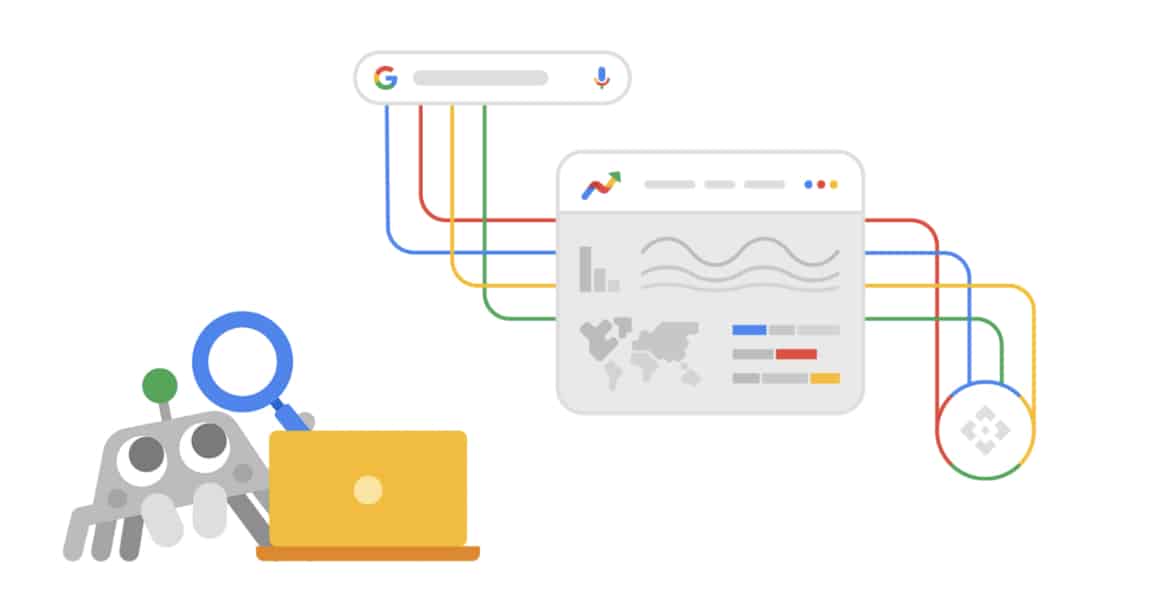
    Google’s Trends API allows users to request specific search trend data directly from Google using code, without the need to manually browse the website.

    In a blog post, Google explained that the API offers a five-year rolling window of data, with results accessible up to approximately 48 hours ago. This can be useful for long-term analysis, tracking evolving stories, seasonal trends, and major global events. 

    Therefore, the introduction of the Trends API represents a significant upgrade in how Google Trends can be utilized. For journalists covering viral moments, researchers tracking public interest, or developers creating tools, the API could streamline workflows and enhance insights.

    Though it’s still in alpha and access remains limited, the goal is clear: Google is updating how it provides one of its most valuable public datasets—something many professionals have long requested.

    What does the API offer currently?

    Currently, the Google Trends API helps track how interest in specific search terms or topics has changed over time. Users can break down that interest by:

    • Time: Weekly, monthly, or yearly intervals
    • Geography: Countries, regions, or even cities
    What is the API - Google TrendsWhat is the API - Google Trends

    This makes it easier to see when something was popular and where it was searched the most. Additionally, the results are consistently scaled, which is a key difference from what you might see on the Trends website. 

    Trends API vs Google Trends website

    On the Google Trends website, search interest scores are scaled depending on what you search and how you filter it. So, the scores can vary between searches. 

    But with the Trends API, this scaling method remains consistent across all your requests. That means the numbers are more reliable and easier to compare, which is helpful if you do serious analysis. Google explained in its blog post:

    “On the Trends website, the results are scaled from 0 to 100 every time you request data. The API uses a different method for scaling, which is consistent across requests, and lets you join, compare, and merge data from multiple requests. However, while the API returns consistently scaled data, the numbers don’t reflect absolute numbers; they reflect search interest.”

    It is worth noting that since the API is still in its early stages, Google is focusing on making it stable and easy to understand, rather than including every possible feature or dataset immediately. 

    This limited scope appears intentional because it allows early testers to give feedback that helps shape future versions.

    How to Use Trends API?

    As mentioned before, the Trends API isn’t fully developed yet and is currently in its Alpha stage. A small group of early users are testing it out and will play a key role in shaping its future development. 

    You can sign up for the early access program if you’re a researcher, developer, or journalist who frequently works with Trends data. All you need to do is register yourself using the official form.

    Early access to Google Trends API

    Early access to Google Trends API

    Participation will be limited during this phase, and access won’t be granted immediately. However, those selected will help shape what the final product becomes. 

    Google also mentioned in its blog post that even if you don’t get chosen to test the product now, there’s still hope. 

    “If you’re not in the first batch of developers, don’t worry, we’ll ramp up access in the coming months.” – The blog post read. 

    What To Expect If You Are Selected

    Once you have registered and gained access to the API, you’ll likely receive technical documentation, usage limits, and possibly community channels for feedback.

    Future versions might include more query options, support for additional data slices, or integration with other developer tools. But for now, Google focuses on making the core functionality stable, useful, and respectful of data use norms.

    It’s also important to understand what the Trends API does not aim to do. This isn’t about providing users access to raw or real-time search logs. Instead, the API offers aggregated, anonymized data intended for long-term, high-level analysis—similar to the public version of Google Trends, but now easier to handle at scale.

    The five-year rolling window is meant to help users observe shifts in public interest over time, not monitor individual behavior. 

    By maintaining privacy and aggregation, Google states it stays true to the core principles of Trends. 

    The API also isn’t intended for commercial forecasting or instant trend-spotting; it’s geared more toward structured research, experimentation, and transparency—exactly the kind of use cases where stable, clean datasets matter most.

    Final Takeaway

    Google is making it easier for professionals like journalists, researchers, and developers to access and analyze what people are searching for online. 

    The Trends API, currently in its Alpha stage, is designed for those who want to perform serious analysis and need reliable information. It allows users to access Google Trends data directly through code.

    To try out the Trends API in its Alpha stage, you need to register by filling out a Google form. Access to this API will be by invitation only, but in the future, Google might invite more users as well. The scope is still limited since the API is in its early days, but the direction is clear.

    She holds a master’s diploma in mass communication and a bachelor’s degree in English literature. Her love for writing and gaming began early—often skipping classes to try out the latest titles—which naturally evolved into a career at the intersection of technology and storytelling.

    When she’s not working, you’ll likely find her exploring virtual worlds on her console or PC, or testing out a new gadget she managed to get her hands on. She remains curious, driven, and always on the lookout for what’s next in the world of tech and gaming. Read less


    View all articles by Divyanshi Sharma

    The Tech Report editorial policy is centered on providing helpful, accurate content that offers real value to our readers. We only work with experienced writers who have specific knowledge in the topics they cover, including latest developments in technology, online privacy, cryptocurrencies, software, and more. Our editorial policy ensures that each topic is researched and curated by our in-house editors. We maintain rigorous journalistic standards, and every article is 100% written by real authors.

    Read the full article from the original source


    AI and Machine Learning artificial intelligence Consumer Electronics Cybersecurity Updates Data Privacy Digital Trends Enterprise Technology Future of Work Gadget Reviews Green Tech Mobile Tech Robotics News Science and Technology Silicon Valley News Software Development Startups and Tech Tech Industry Insights Tech Innovation Tech Policy Technology News
    Share. Facebook Twitter Pinterest LinkedIn WhatsApp Reddit Tumblr Email
    Savannah Herald
    • Website

    Related Posts

    Tech May 13, 2026

    Protect your enterprise now from the Shai-Hulud worm and npm vulnerability in 6 actionable steps

    Tech May 12, 2026

    Some Women Are Obsessively Testing Their Vaginas to Optimize Them

    Tech May 12, 2026

    Videos: Robotic Hand Dexterity, Social Robots, and More

    Tech May 10, 2026

    EU Targets VPNs as Age Verification Loophole: Privacy vs. Protection in the Digital Age

    Business May 10, 2026

    How Brandeis Is Trying to Change College Shopping

    Tech May 10, 2026

    A new frontier: Identity stack evolves for agentic systems

    Comments are closed.

    Don't Miss
    Health November 15, 2025By Savannah Herald04 Mins Read

    Uncertainty over federal subsidies impacts Georgia’s Obamacare premiums

    November 15, 2025

    Wellness That Matters: Black Health News & Community Care by Margaret Coker and Jabari Gibbs,…

    What Does A Comprehensive Breastfeeding Policy Look Like In Action?

    May 1, 2026

    Third person dies at Disney resort in Florida over past two weeks

    May 1, 2026

    Nintendo Denies Report It Pulled Products From Amazon Amid Spat Over Third-Party Sales

    June 30, 2025

    STYLE STEALS UNDER $150 – Merritt Beck

    September 3, 2025
    Archives
    • May 2026
    • April 2026
    • March 2026
    • February 2026
    • January 2026
    • December 2025
    • November 2025
    • October 2025
    • September 2025
    • August 2025
    • July 2025
    • June 2025
    • May 2025
    • April 2025
    • March 2025
    • February 2025
    Categories
    • Art & Literature
    • Beauty
    • Black History
    • Business
    • Climate
    • Education
    • Employment
    • Entertainment
    • Faith
    • Fashion
    • Food
    • Gaming
    • Georgia Politics
    • HBCUs
    • Health
    • Health Inspections
    • Investing
    • Lifestyle
    • Local
    • Lowcountry News
    • National
    • National Opinion
    • News
    • Politics
    • Real Estate
    • Senior Living
    • Sports
    • State
    • Tech
    • Transportation
    • Travel
    • World
    Savannah Herald Newsletter

    Subscribe to Updates

    A round up interesting pic’s, post and articles in the C-Port and around the world.

    About Us
    About Us

    The Savannah Herald is your trusted source for the pulse of Coastal Georgia and the Low County of South Carolina. We're committed to delivering timely news that resonates with the African American community.

    From local politics to business developments, we're here to keep you informed and engaged. Our mission is to amplify the voices and stories that matter, shining a light on our collective experiences and achievements.
    We cover:
    🏛️ Politics
    💼 Business
    🎭 Entertainment
    🏀 Sports
    🩺 Health
    💻 Technology
    Savannah Herald: Savannah's Black Voice 💪🏾

    Our Picks

    Plaintiffs’ attorneys are checking on NAR settlement compliance

    August 28, 2025

    Beyoncé becomes billionaire, joining rare circle of Black American wealth built on ownership

    January 13, 2026

    EU launches listing of risky merchants connected to logging

    August 28, 2025

    DEA To Return $8K Taken From Man Who Was Never Charged

    September 3, 2025

    Midtown Atlanta Condo with Skyline Views

    August 21, 2025
    Categories
    • Art & Literature
    • Beauty
    • Black History
    • Business
    • Climate
    • Education
    • Employment
    • Entertainment
    • Faith
    • Fashion
    • Food
    • Gaming
    • Georgia Politics
    • HBCUs
    • Health
    • Health Inspections
    • Investing
    • Lifestyle
    • Local
    • Lowcountry News
    • National
    • National Opinion
    • News
    • Politics
    • Real Estate
    • Senior Living
    • Sports
    • State
    • Tech
    • Transportation
    • Travel
    • World
    Copyright © 2002-2026 Savannahherald.com All Rights Reserved. A Veteran-Owned Business

    Type above and press Enter to search. Press Esc to cancel.

    Manage Consent
    To provide the best experiences, we use technologies like cookies to store and/or access device information. Consenting to these technologies will allow us to process data such as browsing behavior or unique IDs on this site. Not consenting or withdrawing consent, may adversely affect certain features and functions.
    Functional Always active
    The technical storage or access is strictly necessary for the legitimate purpose of enabling the use of a specific service explicitly requested by the subscriber or user, or for the sole purpose of carrying out the transmission of a communication over an electronic communications network.
    Preferences
    The technical storage or access is necessary for the legitimate purpose of storing preferences that are not requested by the subscriber or user.
    Statistics
    The technical storage or access that is used exclusively for statistical purposes. The technical storage or access that is used exclusively for anonymous statistical purposes. Without a subpoena, voluntary compliance on the part of your Internet Service Provider, or additional records from a third party, information stored or retrieved for this purpose alone cannot usually be used to identify you.
    Marketing
    The technical storage or access is required to create user profiles to send advertising, or to track the user on a website or across several websites for similar marketing purposes.
    • Manage options
    • Manage services
    • Manage {vendor_count} vendors
    • Read more about these purposes
    View preferences
    • {title}
    • {title}
    • {title}
    Ad Blocker Enabled!
    Ad Blocker Enabled!
    Our website is made possible by displaying online advertisements to our visitors. Please support us by disabling your Ad Blocker.

    Sign In or Register

    Welcome Back!

    Login below or Register Now.

    Lost password?

    Register Now!

    Already registered? Login.

    A password will be e-mailed to you.