


Close Menu
Savannah HeraldSavannah Herald
    • Home
    • News
      • Local
      • State
      • National
      • World
      • HBCUs
    • Events
    • Directories
    • Weather
    • Traffic
    • Jobs
    • Sports
    • Politics
    • Lifestyle
      • Faith
      • Senior Living
      • Health
      • Travel
      • Beauty
      • Fashion
      • Food
      • Art & Literature
    • Business
      • Real Estate
      • Entertainment
      • Investing
      • Education
    • Guides
      • Summer Camp Guide
      • Juneteenth Guide
      • Black History Savannah
      • MLK Guide Savannah
    We're Social
    • Twitter
    • Facebook
    • YouTube

    Subscribe to Updates

    Get the latest creative news from FooBar about art, design and business.

    Trending
    • Cherry Red Makeup is This Season’s Burgundy Take on Beauty » coco bassey
    • Curator Oluremi C. Onabanjo, ‘Among the Most Compelling Voices in Contemporary Photography Today,’ is Departing MoMA to Join Metropolitan Museum of Art
    • How Did Argentina Go From 20-30% Black to 1% Black? Donald Trump Wants to Know
    • When Appetite Declines: Helping Seniors Eat Well
    • Mortgage Applications Dip as Rates Stay Above 6%, Discouraging Refinancing
    • Gullah Geechee’s impact on Jacksonville’s, America’s history
    • Keri Hilson Music Can Harm Tweet Explained at Essence Festival
    • Jacksonville’s Forgotten Emancipation History
    Facebook X (Twitter) Instagram YouTube
    Login
    Savannah HeraldSavannah Herald
    Savannah HeraldSavannah Herald
    Home » How Did Argentina Go From 20-30% Black to 1% Black? Donald Trump Wants to Know
    Black History

    How Did Argentina Go From 20-30% Black to 1% Black? Donald Trump Wants to Know

    Savannah HeraldBy Savannah HeraldJuly 8, 20266 Mins Read
    Facebook Twitter Pinterest LinkedIn WhatsApp Reddit Tumblr Email
    How Did Argentina Go From 20-30% Black to 1% Black? Donald Trump Wants to Know
    Share
    Facebook Twitter LinkedIn Pinterest Email

    Black Background & Cultural Perspectives:

    Key takeaways
    • Disproportionate conscription in independence wars and the War of the Triple Alliance killed many Afro-Argentine men, collapsing the Black population.
    • The 1871 yellow fever epidemic devastated Buenos Aires Black neighborhoods, producing a concentrated demographic shock and high mortality.
    • After 1887 the state stopped counting Afro-descendants, reclassifying many as mestizo, pardo, or white, erasing statistical visibility.
    • State sponsored European immigration and policies of blanqueamiento intentionally whitened Argentina, overwhelming Afro-descendant and Indigenous populations.
    • Textbooks, national myths, and urban redevelopment erased Afro-Argentine history, teaching Argentina as a white nation and hiding Black presence.

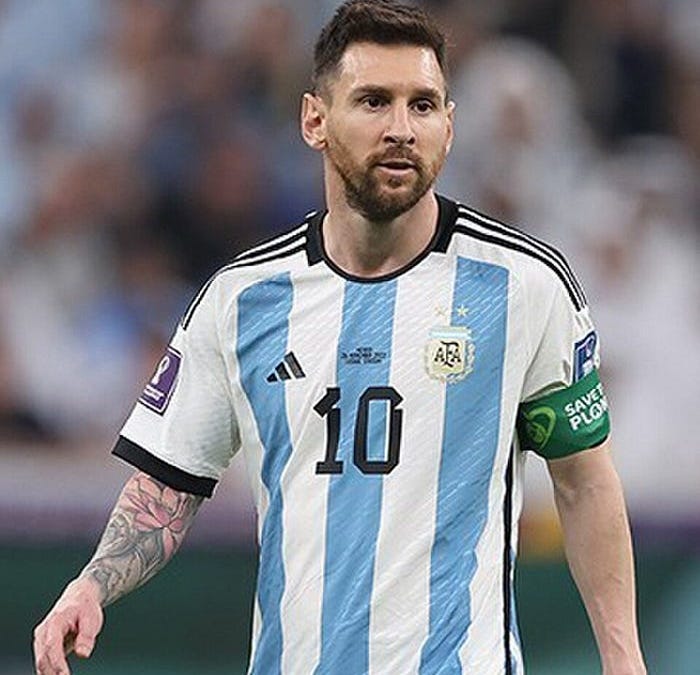
    Argentina was barely on my radar till a couple of days earlier. I knew Argentina is the reigning Globe Mug champ and taking part in the existing video games. I know of Lionel Messi and fighter Oscar Bonavena, who battled against Joe Frazier and Muhammad Ali. I understand of golf enthusiasts Roberto De Vicenzo and Angel Cabrera. I’ve never ever been there however did hang out lately in Curacao, off the shore of Venezuela.

    I might always place Argentina on a map as a result of a life time of playing the board game Danger, where the goal is to take control of the world. I could have told you that several Nazis escaped from Germany after World War II, which has actually been the focus of a few movies. I had a basic impression of what I believed was a varied population in Argentina, however lately discovered I was oh, so wrong.

    While complying with information of the Globe Cup, I listened to that of the 48 groups in the tournament, 47 had gamers of African heritage, leaving Argentina as the only nation with none. I began checking to see if this was true, and it was. A little more research brought about me composing this short article.

    Argentina’s populace was around 25 % Black in the late 18 th and early 19 th centuries. Today, only concerning 1 % of the populace recognizes as Afro‑descendant, greatly because of war, condition, market change, and intentional erasure.

    • In 1778, the Viceroyal census taped 37 % of Buenos Aires as Black or Afro‑descendant.

    • By 1800, estimates variety from 30 % to 46 % depending upon the area.

    • In the late 1700 s and early 1800 s, historians estimate 20– 30 % of the population was Black or Afro‑descendant.

    • The number varies because:

    • backwoods were undercounted,

    • Indigenous and Afro‑descendant identities were frequently combined,

    • and enslaved people were often left out or misclassified.

    25 % is a traditionally precise national quote for the late colonial and very early freedom durations.

    Argentina’s Black population fell considerably in between 1810 and 1900 because of:

    Black men were disproportionately conscripted right into:

    • the Self-reliance Battles (1810 s),

    • the Battle of the Three-way Partnership (1865– 1870,

    • internal civil wars.

    Mortality was very high.

    Among the means the Black populace was reduced in the significant cities with the greatest concentration of Black individuals was the absence of sufficient health care. The 1871 yellow high temperature outbreak in Buenos Aires hit Black neighborhoods hardest because:

    Countless Afro‑Argentines passed away in a single epidemic.

    Outcome: A significant populace shock concentrated in the capital, where Black areas were greatest.

    The state intentionally stopped counting Afro‑descendants after 1887 Numerous were reclassified as “mestizo,” “pardo,” or just “white.” In America, numerous Hispanic individuals in the USA are counted as “white” on the census, and this has been true for years. The census treats “Hispanic/Latino” as an ethnic background, not a race.

    Afro‑Argentine identification was statistically eliminated even when individuals still existed.

    By the very early 20 th century, Argentina advertised the myth:

    “Argentina has no Black people.”

    This story was taught in institutions, duplicated in newspapers, and embedded in nationwide identification.

    Outcome: Afro‑Argentine history was gotten rid of from public memory, making the population seem smaller than it was.

    In between 1880 and 1930, numerous Italians and Spaniards got here, considerably altering demographics. Argentina received among the biggest waves of European immigration in globe history:

    • 6 million Italians and Spaniards arrived

    • plus Germans, French, Eastern Europeans, and others

    This transformed the populace’s racial makeup.

    Result: Afro‑Argentines ended up being a little minority in a swiftly “whitened” society.

    Argentina promoted itself as a “white country,” motivating adaptation and discouraging Black identification.

    Argentina crafted among the biggest market changes in globe history.

    The government:

    • subsidized ship flow for Europeans

    • advertised Argentina in Italy and Spain as a “brand-new Europe”

    • passed legislations encouraging European settlement

    • focused on white immigrants over Afro‑descendants and Aboriginal individuals

    Result: 6 million Europeans showed up, overwhelming the existing Afro‑Argentine and Indigenous populaces.

    This was willful. Leaders openly stated they wished to “civilize” Argentina by lightening it.

    Argentina adopted the Latin American belief of blanqueamiento, which held that:

    • racial blending with Europeans “boosted” the populace

    • brightness was connected with modernity, progression, and civilization

    • Blackness and Indigeneity were connected with backwardness

    The state urged:

    • intermarriage with Europeans

    • adaptation right into “white” identification

    • abandonment of Afro‑Argentine cultural markers

    Over generations, Afro‑Argentines were absorbed into a “white” national identity.

    Schools showed:

    • Argentina was a “white nation”

    • its populace descended from European immigrants

    • Indigenous and Black backgrounds were limited or missing

    Textbooks got rid of:

    • Afro‑Argentine soldiers

    • Black areas

    • Black cultural payments

    • the fact that Buenos Aires was when 30– 46 % Black

    That sounds like Donald Trump, Stephen Miller, and Ron DeSantis once ran Argentina. By the early 20 th century, children matured believing Argentina had never ever had a considerable Black population.

    In Buenos Aires:

    • Black communities (San Telmo, Monserrat) were redeveloped

    • Upsurges (especially yellow fever in 1871 were utilized as pretexts to move locals

    • Wealthier European immigrants changed Afro‑Argentine neighborhoods

    Urban preparing came to be a tool of bleaching.

    By the early 1900 s, Argentina marketed itself abroad as:

    • “The Europe of South America”

    • “A white country in the New World”

    • “A country of Italian and Spanish heritage”

    This branding brought in much more Europeans and enhanced the whitening story.

    • out of proportion wartime deaths

    • harmful epidemics

    • census erasure

    • huge European migration

    • intermarriage and lightening policies

    • cultural reductions of Black identification

    The populace didn’t just “disappear”– it was eliminated, absorbed, reclassified, and gotten rid of.

    Much of what I learned about Argentina was stunning. A lot more stunning were the number of points Argentina did that America is attempting. Possibly America will certainly quickly market itself as “The Argentina of the North.”

    Argentina’s story is not a secret of loss however a record of style. The nation did not merely “end up being” white; it was made white with battle, migration plan, census adjustment, and a national misconception that demanded European beginnings even as Afro‑Argentine neighborhoods lived, functioned, dealt with, and passed away in ordinary sight. The group collapse from roughly a quarter of the populace to statistical invisibility was not an accident of background. It was the end result of choices made by federal governments, institutions, and elites that believed whiteness was the foundation of modernity. When the census quit counting Black people, the nation stopped seeing them, and at some point quit remembering them.

    What stays today is the afterimage of that job: a nation that informs a European tale while basing on African and Aboriginal structures it hardly ever recognizes. Argentina’s past is not undone by its myth, only covered by it. Recuperating the background of Afro‑Argentina is not about remedying a footnote. It has to do with recovering a missing chapter of the national story, one that reveals how power, identification, and memory were crafted. The inquiry is no more exactly how Argentina came to be a “white country,” however what it indicates to confront the reality that it never truly was.

    Review the full post on the initial source

    Related Posts

    • A Surprising Tool To Help You best endorphina slots
    • Protesters present up outdoors courthouse to assist Wisconsin choose
    • When To Expect Release Date?
    • Shin Megami Tensei Spin-Off Raidou Remastered Gets First Discount At Amazon
    • National HIV Testing Day Events Scheduled in Chatham and Glynn Counties June 27
    • Today’s NYT Connections: Sports Edition Hints, Answers for July 24 #304
    • Curiosity Blog: Sols 4913-4919: Planetary explorers, freewheeling to the Yardang unit!
    • Reclaiming Control: Digital Sovereignty in 2025
    African American Heritage African American Research African Diaspora Ancestral Knowledge Black Historians Black History Black Voices Civil Rights History Cultural Identity Folklife and Culture Global Black History Historical Storytelling Legacy and Memory Modern Black Thought Oral History Personal Narratives Public History Reconstruction Era Slavery and Resistance Substack Voices
    Share. Facebook Twitter Pinterest LinkedIn WhatsApp Reddit Tumblr Email
    Savannah Herald
    • Website

    Related Posts

    Sports July 8, 2026

    Join Golden Lion Nation for the 2026 Natural State Kickoff Classic Press Conference

    Black History July 7, 2026

    Remembering the First FIFA Men’s World Cup Held in the United States

    Sports July 7, 2026

    Reginald Ruffin, Tuskegee AD, Named Nation’s Best

    Climate July 7, 2026

    Team behind NOAA site builds new trusted climate source –

    Black History July 7, 2026

    Has the Republican Party Sabotaged Its Last Great Black Hope for the House of Representatives?

    Black History July 6, 2026

    From Reconstruction to Redemption – by William Spivey

    Comments are closed.

    Don't Miss
    Sports June 9, 2026By Savannah Herald04 Mins Read

    Jannik Sinner: World No 1 closes in on Italian Open final against Casper Ruud before rain halts Daniil Medvedev clash | Tennis News

    June 9, 2026

    Game On: Sports News, Highlights & Commentary World No 1 Jannik Sinner moved to within…

    Florida A&M, Texas A&M-Corpus Christi Power Through 2026 PGA WORKS Collegiate Championship – African American Golfer’s Digest

    May 9, 2026

    Global warming places Africa’s wildlife in peril

    September 3, 2025

    Understanding Temptation: Wisdom from Proverbs 7

    May 22, 2026

    FDA reports two new outbreaks

    September 20, 2025
    Archives
    • July 2026
    • June 2026
    • May 2026
    • April 2026
    • March 2026
    • February 2026
    • January 2026
    • December 2025
    • November 2025
    • October 2025
    • September 2025
    • August 2025
    • July 2025
    • June 2025
    • May 2025
    • April 2025
    • March 2025
    • February 2025
    Categories
    • Art & Literature
    • Beauty
    • Black History
    • Business
    • Climate
    • Culture
    • Education
    • Employment
    • Entertainment
    • Faith
    • Fashion
    • Food
    • Gaming
    • Georgia Politics
    • HBCUs
    • Health
    • Health Inspections
    • Investing
    • Lifestyle
    • Local
    • Lowcountry News
    • National
    • National Opinion
    • News
    • Politics
    • Real Estate
    • Senior Living
    • Sports
    • State
    • Tech
    • Traffic
    • Transportation
    • Travel
    • World
    Savannah Herald Newsletter

    Subscribe to Updates

    A round up interesting pic’s, post and articles in the C-Port and around the world.

    About Us
    About Us

    The Savannah Herald is your trusted source for the pulse of Coastal Georgia and the Low County of South Carolina. We're committed to delivering timely news that resonates with the African American community.

    From local politics to business developments, we're here to keep you informed and engaged. Our mission is to amplify the voices and stories that matter, shining a light on our collective experiences and achievements.
    We cover:
    🏛️ Politics
    💼 Business
    🎭 Entertainment
    🏀 Sports
    🩺 Health
    💻 Technology
    Savannah Herald: Savannah's Black Voice 💪🏾

    Our Picks

    Who are Trump Administration Officials Hiding From? Why are they living on Military Bases?

    March 22, 2026

    The Democratic Event Is Essentially Passing Away

    June 1, 2026

    A Look Ahead And A Farewell To The Political Junkie : NPR

    July 4, 2026

    Trump’s Tylenol remarks prompts concern from local medical professionals – The FAMUAN

    October 27, 2025

    Woman Who Lost Both Legs During Bahamas Excursion Sues Carnival Cruise Line –

    June 19, 2026
    Categories
    • Art & Literature
    • Beauty
    • Black History
    • Business
    • Climate
    • Culture
    • Education
    • Employment
    • Entertainment
    • Faith
    • Fashion
    • Food
    • Gaming
    • Georgia Politics
    • HBCUs
    • Health
    • Health Inspections
    • Investing
    • Lifestyle
    • Local
    • Lowcountry News
    • National
    • National Opinion
    • News
    • Politics
    • Real Estate
    • Senior Living
    • Sports
    • State
    • Tech
    • Traffic
    • Transportation
    • Travel
    • World
    Copyright © 2002-2026 Savannahherald.com All Rights Reserved. A Veteran-Owned Business

    Type above and press Enter to search. Press Esc to cancel.

    Manage Consent
    To provide the best experiences, we use technologies like cookies to store and/or access device information. Consenting to these technologies will allow us to process data such as browsing behavior or unique IDs on this site. Not consenting or withdrawing consent, may adversely affect certain features and functions.
    Functional Always active
    The technical storage or access is strictly necessary for the legitimate purpose of enabling the use of a specific service explicitly requested by the subscriber or user, or for the sole purpose of carrying out the transmission of a communication over an electronic communications network.
    Preferences
    The technical storage or access is necessary for the legitimate purpose of storing preferences that are not requested by the subscriber or user.
    Statistics
    The technical storage or access that is used exclusively for statistical purposes. The technical storage or access that is used exclusively for anonymous statistical purposes. Without a subpoena, voluntary compliance on the part of your Internet Service Provider, or additional records from a third party, information stored or retrieved for this purpose alone cannot usually be used to identify you.
    Marketing
    The technical storage or access is required to create user profiles to send advertising, or to track the user on a website or across several websites for similar marketing purposes.
    • Manage options
    • Manage services
    • Manage {vendor_count} vendors
    • Read more about these purposes
    View preferences
    • {title}
    • {title}
    • {title}
    Ad Blocker Enabled!
    Ad Blocker Enabled!
    Our website is made possible by displaying online advertisements to our visitors. Please support us by disabling your Ad Blocker.

    Sign In or Register

    Welcome Back!

    Login below or Register Now.

    Lost password?

    Register Now!

    Already registered? Login.

    A password will be e-mailed to you.