


Close Menu
Savannah HeraldSavannah Herald
  • Home
  • News
    • Local
    • State
    • National
    • World
    • HBCUs
  • Events
  • Weather
  • Traffic
  • Obituaries
  • Sports
  • Politics
  • Lifestyle
    • Faith
    • Beauty
    • Fashion
    • Food
    • Art & Literature
    • Travel
    • Senior Living
    • Black History
  • Health
  • Business
    • Investing
    • Gaming
    • Education
    • Entertainment
    • Tech
    • Real Estate
  • More
    • Health Inspections
    • A List of Our Online Black Newspapers in America
  • Guides
    • Black History Savannah
    • MLK Guide Savannah
We're Social
  • Twitter
  • Facebook
  • YouTube

Subscribe to Updates

Get the latest creative news from FooBar about art, design and business.

Trending
  • TouchArcade is Shutting Down
  • Why AI Means Radical Change
  • Sheet Pan Pizza for a Crowd
  • How To Choose Healthier Hair Products For Black Women
  • 8 Michael B. Jordan Quotes From the Oscar Winning Actor. – ThyBlackMan.com
  • Lusaka, Zambia is Ideal Destination for Diasporans Seeking – Lex Pyerse Clothing
  • The Carroll County Courthouse Massacre
  • Throw These Items Out Today to Make More Space in Your Home
Facebook X (Twitter) Instagram YouTube
Login
Savannah HeraldSavannah Herald
  • Home
  • News
    • Local
    • State
    • National
    • World
    • HBCUs
  • Events
  • Weather
  • Traffic
  • Obituaries
  • Sports
  • Politics
  • Lifestyle
    • Faith
    • Beauty
    • Fashion
    • Food
    • Art & Literature
    • Travel
    • Senior Living
    • Black History
  • Health
  • Business
    • Investing
    • Gaming
    • Education
    • Entertainment
    • Tech
    • Real Estate
  • More
    • Health Inspections
    • A List of Our Online Black Newspapers in America
  • Guides
    • Black History Savannah
    • MLK Guide Savannah
Savannah HeraldSavannah Herald
Home » How Trump officials created ‘nuclear option’ against protesters in church | US immigration
Faith

How Trump officials created ‘nuclear option’ against protesters in church | US immigration

Savannah HeraldBy Savannah HeraldMarch 15, 20267 Mins Read
Facebook Twitter Pinterest LinkedIn WhatsApp Reddit Tumblr Email
How Trump officials created ‘nuclear option’ against protesters in church | US immigration
Share
Facebook Twitter LinkedIn Pinterest Email

Faith & Reflection: Voices from the Black Church and Beyond

Key takeaways
  • Trump administration repurposed the 1994 Face Act to criminalize protests inside houses of worship.
  • Legal experts call the statute a “nuclear option” because it imposes extreme felony penalties for disruptions.
  • Responses include prosecutions, pardons, and state bills creating protest buffer zones around religious sites.

When dozens of protesters interrupted a church service in St Paul, Minnesota, earlier this year, it revived a fierce yet enduring debate about whether places of worship are appropriate arenas for dissent.

In demanding the resignation of a pastor who leads a local Immigration and Customs Enforcement (ICE) field office, demonstrators chanted “ICE out” and “Hands up, don’t shoot!” at Cities church on 18 January. Religious and political leaders condemned the action, fueled by the church’s statement that protesters had “frightened children and created a scene marked by intimidation and threat”.

Since then, the justice department has indicted 39 people, including former CNN anchor Don Lemon, on charges of conspiracy and interfering with the first amendment rights of worshipers. (Lemon had been covering the incident as a reporter.) Their arrests sparked outrage among free speech advocates, as many questioned whether the Trump administration had overstepped its authority in using a 1994 law to prosecute protesters and journalists in houses of worship.

“What we’re seeing with Trump is the favoring of some places and viewpoints over others, and an increase in prosecutions to blur the line between speech and intimidation and protests,” said Mary Ziegler, a professor at the University of California’s Davis School of Law.

Using the ‘nuclear option’ to charge church protesters

Acts of civil disobedience in religious spaces, sometimes spearheaded by faith leaders, are not a new phenomenon in US history. In 1984, the Rev D Douglas Roth delivered searing sermons against “corporate evil” and led disillusioned steelworkers to picket Pittsburgh area churches attended by industry executives. The Lutheran minister was defrocked and jailed for 112 days. In 2024, pro-Palestinian activists hoisting “Stop the sale of stolen Palestinian land” banners protested an event at a New Jersey synagogue that promoted property sales in Israel and the occupied West Bank. The demonstrators clashed with pro-Israel counter-protesters outside the synagogue, leading to the arrest of two members from the latter camp.

What is new in the civil disobedience landscape is the Trump administration’s deployment of the federal Freedom of Access to Clinic Entrances (Face) Act to charge protesters for promoting certain political causes in houses of worship. Ziegler calls this a “reinvention” of the statute.

A protest in New Jersey in April 2024. Photograph: Anadolu/Getty Images

The 1994 law was initially established to protect abortion clinics from an eruption of violence; a clause extending the protections to houses of worship was added later. For most of its history, the Face Act has been used exclusively to prosecute anti-abortion groups and agitators. The Trump administration, Ziegler said, has rolled back the use of the law to prohibit blockades of abortion clinics while expanding its powers against pro-Palestine and anti-ICE protests near religious sites. Last January, Trump pardoned 10 anti-abortion advocates who had been charged with violating the Face Act.

In September, the justice department used the law to sue the pro-Palestinian activists involved in the 2024 New Jersey synagogue protest. It marked the first time the Face Act was used to target a demonstration at a place of worship. In late January, the DoJ asked a federal judge to indefinitely pause the civil lawsuit so that a related criminal investigation can be resolved first. Attorneys for the protesters, meanwhile, pushed for the case to proceed or be dismissed entirely.

Ziegler acknowledged that freedom of religion should be protected, as should people’s right to pray without disruption. But the tool for enforcing that right, she said, is the trespassing law. “The Face Act is the nuclear option,” she said. “The penalties are extreme. It’s one thing to say people shouldn’t disrupt religious services and another to charge them with a felony.”

In response to the Minnesota demonstration in January, lawmakers in a half dozen states quickly introduced legislation expanding penalties for disrupting religious services. A bill in Oklahoma would direct protesters who step within 100 feet of a place of worship to maintain at least eight feet of distance from worshippers. New York City lawmakers are debating two bills that would establish protest-free buffer zones around religious sites. The proposals were a response to recent demonstrations outside two New York synagogues, both of which were holding events to promote illegal settlements in the West Bank and property sales in Israel.

Nekima Levy Armstrong outside the courthouse in St Paul. Photograph: Star Tribune/Getty Images

A number of moderate Jewish groups in New York have endorsed the bills, while several progressive Jewish organizations released a joint statement last month opposing them.

“We really believe that first amendment protest rights are an essential part of building an open society and democracy that have allowed Jews to thrive in New York City,” said Sophie Ellman-Golan, the director of strategic communications for Jews for Racial and Economic Justice, one of the groups opposing the buffer zone proposal.

Ellman-Golan said houses of worship often function as meeting and events spaces where political issues are discussed. During the mayoral campaign last October, for example, Congregation Beth Elohim (CBE) hosted a candidate forum with Zohran Mandami that drew dozens of pro-Israel protesters.

“That was their right because it’s a political event taking place inside a synagogue,” Ellman-Golan said. “Something should not be given the shield of religion just because they’re taking place inside a church.”

The lasting impact of church protests

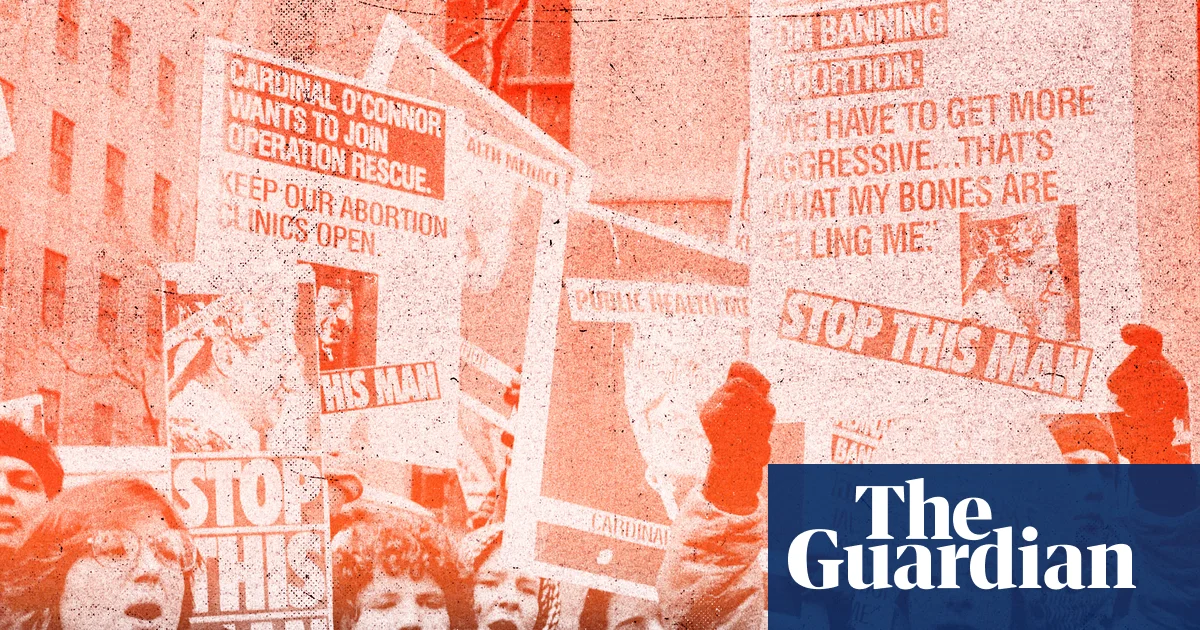
One of the biggest church demonstrations in modern US history interrupted Sunday mass at St Patrick’s Cathedral in New York City. In 1989, dozens of protesters lay down in the cathedral’s middle aisle and performed a silent “die-in”, while 7,000 others joined a mass protest outside.

“Stop the Church,” organized by Aids Coalition to Unleash Power (Act Up) and Women’s Health and Action Mobilization (Wham!), targeted the Catholic Church for its efforts to block condom distribution and safe-sex education in public schools, said Sarah Schulman, an Act Up member and curator of the Act Up Oral History Project.

Despite the meticulous planning, it was the moments that veered off-script that generated international headlines, such as when one Act Up member screamed at the cardinal: “You’re killing us!” Or when another crumbled a communion wafer in his hands.

The police arrested 111 protesters, and the action was sharply rebuked by religious leaders and politicians. But the impact was incalculable, Schulman said.

Marchers outside St Patrick’s Cathedral in New York in June 1989. Photograph: Mariette Pathy Allen/Getty Images

“Stop the Church” put Aids activism on the map and transformed how people with the disease were portrayed in the media. Before the action, Schulman said, newspapers were printing photos of “emancipated people dying in their beds.” Afterward, they sought images of activists fighting for their lives. The ensuing media coverage also paved the way for Act Up to push for important policy changes, Schulman said, including the legalization of needle exchange programs and the inclusion of women and people of color in FDA trials for HIV treatment.

“For homosexuals with Aids to go into a catholic church was so far beyond what anyone had seen before,” Schulman said. “It showed the world how high the stakes were.”

For Schulman, the discourse around the recent protests in Minnesota and New York have largely missed the point. The issue is less about the protection of religious freedom, she said, than a people’s right to react when the church attempts to shape matters of public interest.

“Once a religious organization outsteps its boundaries and gets involved in secular politics to an extent that’s detrimental to a large number of people, the public has a right to respond,” Schulman said.

Read the full article on the original source


African American Religion AME Church Biblical Wisdom Black Faith Christian Living Christian Women of Color Church Leadership COGIC Community Churches Cultural Christianity Devotional Messages Faith and Culture Faith and Justice Faith-Based News Gospel and Grace Inspirational Writing Religion and Identity Religious Commentary Spiritual Reflection The Black Church
Share. Facebook Twitter Pinterest LinkedIn WhatsApp Reddit Tumblr Email
Savannah Herald
  • Website

Related Posts

Faith March 19, 2026

8 Michael B. Jordan Quotes From the Oscar Winning Actor. – ThyBlackMan.com

Faith March 17, 2026

Vatican appeals court declares mistrial in the ‘trial of the century’ against a cardinal

Faith March 16, 2026

Office for Students faces judicial review over public funding for bible colleges | Office for Students

Faith March 16, 2026

Doing the Lord’s Will – The Christian Recorder

Faith March 15, 2026

As an Iranian Australian I feel helpless watching the war unfold and pray for peace – but prayer must be coupled with action | Dellaram Vreeland

Faith March 12, 2026

‘I have never seen anything like it’: MP warns of rise in extreme views on race and identity | Islamophobia

Comments are closed.

Don't Miss
Local December 22, 2025By Savannah Herald03 Mins Read

Updated Policy on Student Use of Electronic Devices for 2026-27 SY

December 22, 2025

Savannah Chatham County Public School System (SCCPS) Update: During the December 17, 2025, Board meeting…

“We’re going to be stronger” – Nomad Foods reflects on tough 2025

September 7, 2025

10 Ways to Manage Time and Make the Most Out of Your Day in Retirement

October 30, 2025

Obituary | Mr. Bobbie Jones

December 24, 2025

Holding Your Immune System Sturdy

August 29, 2025
Archives
  • March 2026
  • February 2026
  • January 2026
  • December 2025
  • November 2025
  • October 2025
  • September 2025
  • August 2025
  • July 2025
  • June 2025
  • May 2025
  • April 2025
  • March 2025
  • February 2025
  • January 2025
  • December 2024
Categories
  • Art & Literature
  • Beauty
  • Black History
  • Business
  • Climate
  • Education
  • Employment
  • Entertainment
  • Faith
  • Fashion
  • Food
  • Gaming
  • HBCUs
  • Health
  • Health Inspections
  • Home & Garden
  • Investing
  • Local
  • Lowcountry News
  • National
  • News
  • Obituaries
  • Politics
  • Real Estate
  • Science
  • Senior Living
  • Sports
  • SSU Homecoming 2024
  • State
  • Tech
  • Transportation
  • Travel
  • World
Savannah Herald Newsletter

Subscribe to Updates

A round up interesting pic’s, post and articles in the C-Port and around the world.

About Us
About Us

The Savannah Herald is your trusted source for the pulse of Coastal Georgia and the Low County of South Carolina. We're committed to delivering timely news that resonates with the African American community.

From local politics to business developments, we're here to keep you informed and engaged. Our mission is to amplify the voices and stories that matter, shining a light on our collective experiences and achievements.
We cover:
🏛️ Politics
💼 Business
🎭 Entertainment
🏀 Sports
🩺 Health
💻 Technology
Savannah Herald: Savannah's Black Voice 💪🏾

Our Picks

Chicago’s Forever Mine Music Festival Brings R&B Royalty And House Legends Together This Spring – Essence

February 5, 2026

Matthew Stafford won’t be part of Rams’ joint practice with Cowboys

September 3, 2025

Why Preserving Local Culture Matters More Now Than Ever, It’s Not About YOU — Minority Nomad

September 3, 2025

Specialists satisfying in Costa Rica to question the future of the bioeconomy in the Americas and throughout the globe

August 28, 2025

HBCU fired alumnus ‘with no cause’ says coach

March 12, 2026
Categories
  • Art & Literature
  • Beauty
  • Black History
  • Business
  • Climate
  • Education
  • Employment
  • Entertainment
  • Faith
  • Fashion
  • Food
  • Gaming
  • HBCUs
  • Health
  • Health Inspections
  • Home & Garden
  • Investing
  • Local
  • Lowcountry News
  • National
  • News
  • Obituaries
  • Politics
  • Real Estate
  • Science
  • Senior Living
  • Sports
  • SSU Homecoming 2024
  • State
  • Tech
  • Transportation
  • Travel
  • World
  • Privacy Policies
  • Disclaimers
  • Terms and Conditions
  • About Us
  • Contact Us
  • Opt-Out Preferences
  • Accessibility Statement
Copyright © 2002-2026 Savannahherald.com All Rights Reserved. A Veteran-Owned Business

Type above and press Enter to search. Press Esc to cancel.

Manage Consent
To provide the best experiences, we use technologies like cookies to store and/or access device information. Consenting to these technologies will allow us to process data such as browsing behavior or unique IDs on this site. Not consenting or withdrawing consent, may adversely affect certain features and functions.
Functional Always active
The technical storage or access is strictly necessary for the legitimate purpose of enabling the use of a specific service explicitly requested by the subscriber or user, or for the sole purpose of carrying out the transmission of a communication over an electronic communications network.
Preferences
The technical storage or access is necessary for the legitimate purpose of storing preferences that are not requested by the subscriber or user.
Statistics
The technical storage or access that is used exclusively for statistical purposes. The technical storage or access that is used exclusively for anonymous statistical purposes. Without a subpoena, voluntary compliance on the part of your Internet Service Provider, or additional records from a third party, information stored or retrieved for this purpose alone cannot usually be used to identify you.
Marketing
The technical storage or access is required to create user profiles to send advertising, or to track the user on a website or across several websites for similar marketing purposes.
  • Manage options
  • Manage services
  • Manage {vendor_count} vendors
  • Read more about these purposes
View preferences
  • {title}
  • {title}
  • {title}
Ad Blocker Enabled!
Ad Blocker Enabled!
Our website is made possible by displaying online advertisements to our visitors. Please support us by disabling your Ad Blocker.

Sign In or Register

Welcome Back!

Login below or Register Now.

Lost password?

Register Now!

Already registered? Login.

A password will be e-mailed to you.