




Black Arts & Culture Feature:
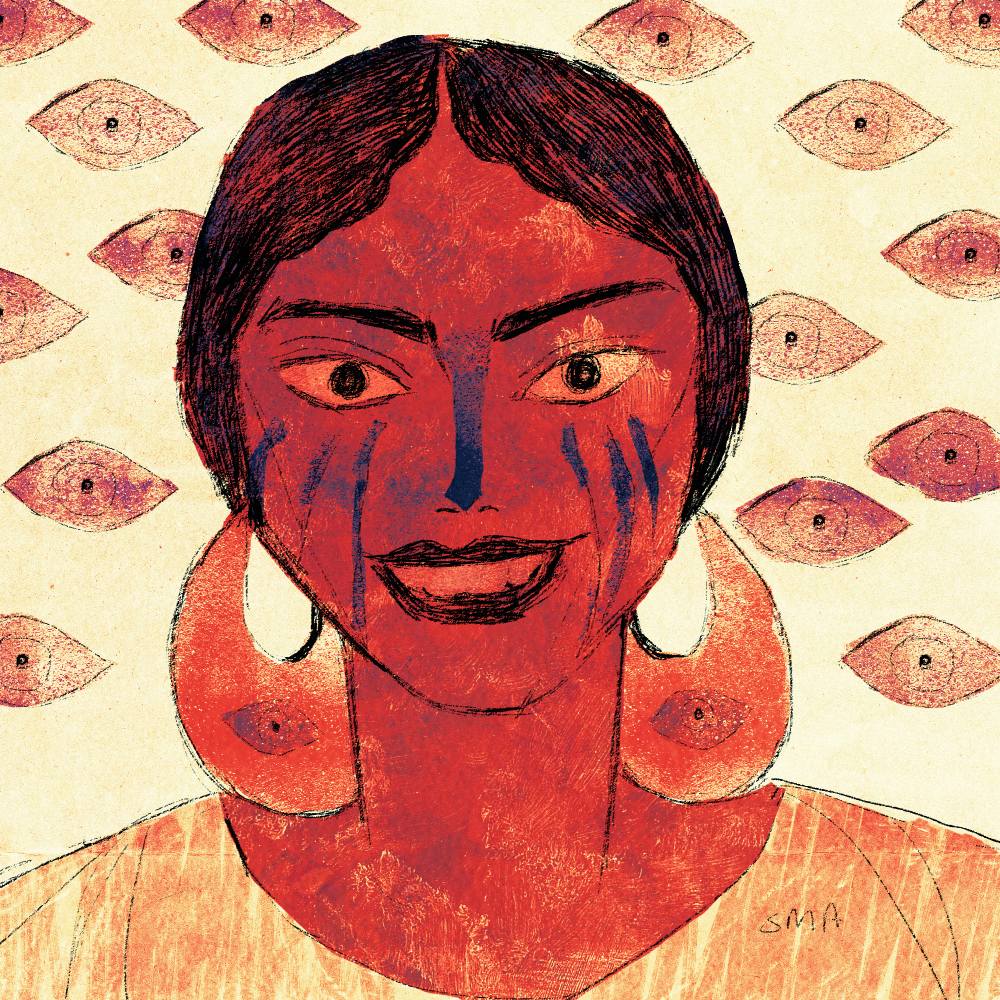
In the midst of Sudan’s turbulence, Shiroug Idris’s art stands as both testimony and tenderness — a vivid reclamation of culture, identity, and belonging. The Sudanese illustrator and graphic artist merges folklore, myth, and social commentary into a body of work that feels deeply rooted in African heritage while speaking urgently to the present moment.
Through intricate portraits and layered illustrations, Shiroug transforms collective struggle into visual storytelling — a form of healing and a call to remember who we are.

From Medicine to Art: A Dual Calling
Born and raised in Khartoum, Shiroug’s creative journey runs parallel to her training in medicine. While studying to become a doctor, she nurtured her art as a vital outlet for expression — a space where emotion and history could take visual form.
“Art has always been a way to process the chaos around me,” she shared in an interview with System Magazine. “It helps me find clarity, even in difficult times.”
Her medical background informs her sensitivity toward the human condition, while her artistic practice becomes a form of care — for her culture, her people, and herself.

A Language Rooted in Folklore and Heritage
Shiroug’s work draws deeply from Sudanese and African folklore, fusing symbols, attire, and mythological archetypes from across the continent. Each illustration feels like a story rediscovered — part historical, part fantastical.
In pieces such as The Nile Bride and Tuareg-Inspired Illustration, she reimagines ancient narratives through a contemporary digital lens. Decorative jewelry, textiles, and traditional dress become visual metaphors for identity and endurance. Her use of color — earthy ochres, indigo blues, and deep reds — evokes the landscapes and moods of Sudan while anchoring her characters in authenticity.
“I want my art to remind Sudanese people of the beauty in our African identity,” she explains. “Our stories, our symbols, our women — they are all worth celebrating.”
Women, War, and the Power of Representation
At the center of Shiroug’s creative world are Sudanese women — depicted not as victims of circumstance but as symbols of resilience and transformation. Her portraits portray women as protectors, dreamers, and warriors, each one carrying the spirit of Sudan’s strength through conflict and displacement.
Her series The Narrative of War and War Journal document the emotional aftermath of Sudan’s recent turmoil. These works are not literal depictions of violence but meditative reflections on memory, endurance, and the emotional landscapes of survival.
In a time when Sudanese artists are grappling with censorship and instability, Shiroug’s digital illustrations serve as quiet acts of defiance — proof that art persists, even when everything else is uncertain.

Activism Through Art
For Shiroug, illustration is more than aesthetic; it is a political and cultural tool. Her work amplifies marginalized voices and challenges narrow representations of Sudanese and African identity. Through subtle symbolism — a raised chin, an ancestral pattern, a figure gazing into the distance — she weaves visual activism into her storytelling.
“Art is resistance,” she says. “It can hold pain, but it also builds hope.”
Her digital practice makes her part of a growing network of African artists using online platforms to document history as it unfolds — turning social media into living archives of visual resistance.

Shiroug Idris represents the new face of Sudanese digital art — one that refuses to separate beauty from truth. Her work bridges folklore and futurism, medicine and art, vulnerability and power. Through her illustrations, she not only preserves Sudan’s visual heritage but redefines what African digital storytelling can be: empathetic, deeply researched, and unapologetically human.
As Sudan continues to navigate crisis and change, Shiroug’s art reminds us that even in uncertainty, creativity endures. Her illustrations breathe life into forgotten myths, amplify women’s stories, and celebrate the complexity of being Sudanese — and African — today.
Read more from the original source
