




Faith & Reflection: Voices from the Black Church and Beyond
- Supreme Court decision in Louisiana v. Callais gutted Section 2 of the Voting Rights Act, weakening racial redistricting protections.
- Justice Elena Kagan warned the ruling turns the Voting Rights Act into a "dead letter," sounding a fierce alarm for democracy.
- Under the new standard, politicians can more easily gerrymander to exclude Black and brown voters by calling it partisan politics.
- Fewer Black representatives means less advocacy for your kids' school funding, health care, housing, and neighborhood development.
- Fight moves to Congress and the states: pass the John Lewis Voting Rights Advancement Act, Freedom to Vote Act, and elect protective officials.
1
(ThyBlackMan.com) Imagine over 60 years of loving care and attention were spent constructing a fence around part of your garden to keep it safe. Then one morning, in the name of progress, some of it was ripped down – in a matter of minutes. That was essentially what happened last week.
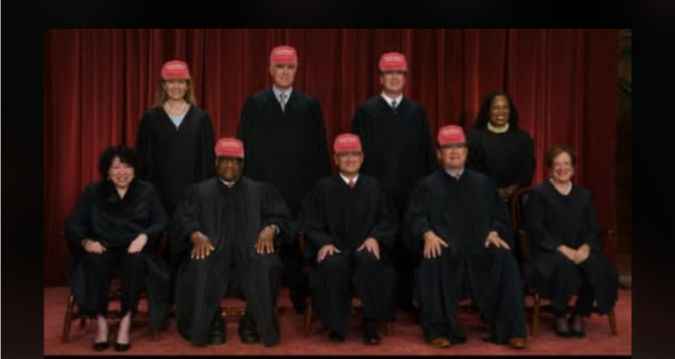
In a 6-3 ruling, the Supreme Court on Monday struck down the most potent tool for Black Americans and other communities of color to fight discriminatory voting districts. The case was called Louisiana v. Callais, and the court’s decision to gut the tool feels like a body blow.
Let’s Back Up. What Was the Voting Rights Act?
The Voting Rights Act was signed into law in 1965, a pivotal moment in the history of American democracy emerging from the turmoil of the Civil Rights Movement marked by images of fire hoses spraying and police dogs biting at the feet of peaceful protesters as they crossed the Edmund Pettus Bridge in Selma on what became known as Bloody Sunday. But that burst of dramatic imagery was followed by a steadfast resolve and Congress finally said enough. Poll taxes and literacy tests were to be no more, and, more importantly, other dirty tricks that had long been employed to keep large numbers of African Americans from being able to vote would henceforth be scrutinized by Justice Department lawyers and examined by federal courts before being allowed to remain in effect.
Section 2 of the law focuses on a specific way that states have been known to water down minority communities’ voting power. Thanks to this law, politicians cannot use district maps as a weapon to silence your neighborhood.
The law was designed to protect the voting rights of Black citizens and provided a safeguard for other minorities as well. In reality, it worked. For decades, this law helped ensure that Black citizens had real representation in Congress as well as at the state and local levels. Latino communities and Native American communities also gained representation as they earned the right to send people who actually looked them to Congress. Yes, the law was not perfect, but it was a safeguard – a necessary one given the country’s dark history of disenfranchising minority citizens.
So, What Just Happened?
Louisiana had been ordered to redraw its Congressional map to create a second majority-Black district. Once remapped, Black voters in the state elected their own choice of representatives to Congress for the first time. Then a group of white voters sued, claiming the map was an illegal “racial gerrymander.”
The Supreme Court agreed with the white voters and ruled in their favor. The Supreme Court majority, which consists of six-justice conservatives, says using race in redistricting is nearly always unacceptable — even when it is used to counteract a history of exclusion.
Justice Elena Kagan was not pleased. She wrote a furious dissent to the majority’s decision to strike down Section 2 of the Voting Rights Act. Three words jump out from her opinion: dead, letter, law.
What Does This Mean for Your Household?
I’m wondering if anyone has even noticed that this court decision has nothing to do with the state of Louisiana. But everything to do with every state in the country. And that’s because under this new standard, districts can be gerrymandered to exclude Black and brown people from the voting pool – so long as you call it partisan politics instead of racism, the courts will likely let it stand.
Other states such as Florida, Arkansas, Missouri, Mississippi and South Carolina will soon be contending with the redistricting process as well. In Florida, legislators held a special legislative session within hours of the Supreme Court’s ruling and began redrawing Congressional districts.
An NPR analysis of congressional districts found that under a new plan for redistricting, white candidates might win 15 seats now held by Black members of Congress, the largest reduction in Black congressional representation since the end of the Reconstruction era in the 1870s. Another NPR analysis found that as many as 19 districts that currently have majority, or plural minority populations could flip to Republican candidates.
So, what does this mean in real life? Less Black representation in Congress, fewer voices advocating for the school funding your kids need, fewer voices pushing back on policies that impact your health care, housing, and neighborhood development.
But I Thought My Vote Still Counts?
Every vote counts. But where you vote may count for more. That’s because of a practice called gerrymandering, in which politicians redraw the boundaries of voting districts to include the voters of their choice rather than the other way around. Just recently, the Supreme Court made it even easier for politicians to engage in this practice by race.
Redistricting can change the neighborhood you live in. If your block is 80% Black under current district lines, chances are that you live in a district where your neighborhood is grouped together with other predominantly Black areas to create a strong voting district. Under new district lines, that same block could be carved up and divided amongst three or more different legislative districts, which could result in your neighborhood becoming a minority in each of those districts. Your vote would still count, but it wouldn’t matter as much.
What Can Actually Be Done?
The fight is not over but it’s moving to a different arena.
While some forms of voting reform are seemingly beyond Congress’ power to implement, legislation is still pending that could inject federal protections back into the democratic process. The John Lewis Voting Rights Advancement Act and the Freedom to Vote Act would achieve this purpose, though they have previously stalled. There is, however, a difference between failing to pass legislation during a Republican-dominated Congress as opposed to a Democratic-controlled one, and the political reality shifts considerably with the approach of midterm elections and a surge of public awareness on the issue. It remains to be seen whether these factors are enough to drive the legislation over the finish line.
Although federal voting rights laws are frozen, states are free to enact their own voting rights law. And some are already doing it—so why not where you live? If your state legislature included members who actually represent your community of work, your community of color, your senior citizens, people with disabilities, then they should be acting on your behalf to protect your voting rights now.
These races matter a lot — especially locally, city councils, school boards, state legislatures. Redistricting happens at every level of government, not just Congress.
“The Supreme Court betrayed Black voters, they betrayed America, and they betrayed our democracy” — NAACP President Derrick Johnson. But despite this setback, the communities that have been told they’re beneath the status quo of American democracy have suffered the greatest losses, and it is they who will not be deterred by the Supreme Court’s regression. In fact, they will redouble their efforts and take to the streets and the polling places for the next election.
The anger is legitimate, and this is not the end of the fight. It is the beginning of a new phase of it.
Associate Editor; Stanley G. Buford
Feel free to connect with this brother via Twitter; Stanley G. and also facebook; http://www.facebook.com/sgbuford.
Also his email addy is; StanleyG@ThyBlackMan.com.
Read the full article on the original source
