




Global Black Voices: News from around the World
- At least three fatalities confirmed aboard the MV Hondius, including two Dutch nationals; a third Dutch national also died.
- The World Health Organization acknowledges the outbreak; at least one confirmed case and five other infections are under investigation.
- Medical evacuations constrained: two crew members remain onboard pending authorization from Cape Verde, complicating urgent treatment.
- Hantavirus incubation of one to eight weeks complicates contact tracing and raises risk of additional international cases among disembarked passengers.
A suspected outbreak of hantavirus aboard a transatlantic expedition vessel has introduced a complex public health scenario spanning multiple jurisdictions, underscoring the challenges of disease surveillance and containment in mobile, multinational environments.
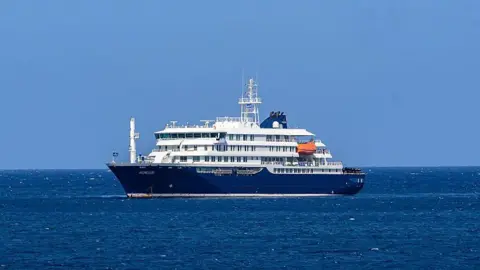
At least three fatalities have been confirmed in connection with the incident on the MV Hondius, a polar-class cruise ship operated by Oceanwide Expeditions. The vessel, which departed from Ushuaia on 20 March and concluded its voyage near Praia on 4 May, was carrying approximately 150 international tourists alongside crew and expedition staff. The route across the South Atlantic has now become the focus of epidemiological scrutiny following reports of one confirmed and multiple suspected cases of hantavirus infection.
The outbreak was formally acknowledged by the World Health Organization, which indicated that, in addition to the confirmed case, at least five other infections are under investigation. Among those affected is a 69-year-old British national currently receiving intensive care treatment in Johannesburg, where local health authorities have verified the presence of the virus.
Hantavirus, a zoonotic pathogen typically transmitted through contact with infected rodent excreta, is associated with severe respiratory complications and carries a notable fatality risk in advanced cases. While human-to-human transmission is considered rare, the confined conditions of a cruise vessel raise operational concerns for containment, monitoring, and medical response.
The fatalities include two Dutch nationals—a man aged 70 and a woman aged 69—whose clinical progression illustrates the rapid onset and severity of the disease. The male passenger reportedly developed symptoms including fever, abdominal pain, and gastrointestinal distress before dying shortly after reaching Saint Helena, a remote British territory that served as an emergency stop. The female passenger was evacuated to South Africa for advanced care but subsequently died in hospital. A third Dutch national also died, with arrangements underway for repatriation.
The situation has been further complicated by constraints on medical evacuation and disembarkation. Two crew members requiring urgent treatment have not yet been permitted to leave the vessel due to regulatory and coordination requirements with authorities in Cape Verde. This highlights a recurring challenge in maritime health emergencies: balancing sovereign health controls with the urgency of medical intervention.
Operationally, the vessel itself represents a contained but high-risk environment. The MV Hondius accommodates up to 170 passengers, supported by a complement of crew, guides, and a single onboard physician. Such configurations, while standard for expedition cruises, are not designed for sustained outbreak management, particularly when dealing with pathogens that require specialized diagnostic and treatment capabilities.
The incubation profile of hantavirus adds a further layer of uncertainty. Experts note that symptoms may take between one and eight weeks to manifest following exposure. This extended window complicates both contact tracing and risk assessment, as individuals may have disembarked or traveled onward before showing signs of illness. The potential for additional cases to emerge in multiple countries cannot be discounted, particularly given the international composition of the passenger cohort.
Public health authorities are therefore operating within a multi-phase response framework. Immediate priorities include the medical stabilization of affected individuals, comprehensive screening of passengers and crew, and coordination between national health systems to track potential secondary cases. Longer-term considerations will involve epidemiological analysis to determine the source of exposure and evaluate whether environmental or procedural lapses contributed to the outbreak.
The role of international coordination is central in this context. The involvement of the World Health Organization provides a platform for information sharing and technical guidance, while national governments—including the United Kingdom—have initiated monitoring protocols to support affected citizens. The UK Foreign Office has indicated readiness to provide assistance, reflecting standard consular response mechanisms in overseas health emergencies.
From a governance perspective, the incident raises questions about regulatory frameworks governing cruise operations, particularly in relation to biosecurity and emergency preparedness. Expedition vessels operating in remote or transoceanic routes face unique challenges, including limited access to medical infrastructure and delayed response times. Ensuring that operators maintain robust contingency plans is increasingly critical as global travel resumes at scale.
The economic implications, while secondary to the immediate health concerns, are also noteworthy. Cruise operators may face reputational risk, potential liability claims, and increased regulatory scrutiny. Insurance costs, particularly those related to medical evacuation and outbreak management, could rise in response to such incidents. For the broader tourism sector, the case serves as a reminder of the vulnerabilities inherent in high-density travel environments.
The outbreak also intersects with ongoing global discussions حول pandemic preparedness and zoonotic disease surveillance. Hantavirus, while not new, exemplifies the category of pathogens that can emerge unpredictably and exploit gaps in monitoring systems. Strengthening early detection mechanisms, particularly in environments where human-animal interaction may occur, remains a priority for international health agencies.
Scientific analysis will be essential in the coming weeks. Determining how exposure occurred—whether through contaminated environments, supply chains, or other vectors—will inform both immediate containment measures and longer-term policy adjustments. The findings may also contribute to broader research on hantavirus transmission dynamics, particularly in atypical settings such as maritime travel.
For passengers and crew, the immediate experience is one of uncertainty and disruption. The requirement for coordinated medical screening before disembarkation reflects a precautionary approach aimed at preventing further spread. However, such measures also underscore the logistical complexity of managing health incidents across jurisdictions with differing regulatory standards.
Looking ahead, the incident is likely to influence both operational practices within the cruise industry and policy frameworks at the national and international levels. Enhanced health screening protocols, improved onboard medical capabilities, and more stringent reporting requirements may emerge as standard responses.
In the interim, the focus remains on containment and care. The combination of confirmed fatalities, suspected cases, and ongoing medical interventions places the situation firmly within the category of high-priority public health events. How effectively it is managed will depend on the coordination between operators, health authorities, and international organizations.
The MV Hondius outbreak thus serves as a case study in the complexities of managing infectious disease in a globalized, mobile context. It highlights the need for integrated systems capable of responding بسرعة and effectively, even when events unfold far from conventional infrastructure. As investigations continue, the lessons drawn from this episode will likely shape future approaches to health security in international travel environments.
Read the full story from the original publication
