




Faith & Reflection: Voices from the Black Church and Beyond
- The Church and Mining Network platform engages 12 Latin American and Caribbean countries to promote Indigenous rights and divestment consensus.
- Speakers say mining profits benefit wealthy corporations while local communities face contamination, water loss, and poverty, citing the Marlin mine case.
- Indigenous leaders, like Yolanda Flores of the Aymara, report heavy metals, water contamination, and threats to health and livelihoods.
- The Church ties the campaign to Laudato Sì, issues investor guidance, a Catholic Principles Index, and a commitment to carbon neutrality by 2050.
- Faith-based organizations urged to divest, build solidarity between the Global North and Global South, and use portfolios for ethical impact.
VATICAN CITY (RNS) — The Vatican announced a new campaign to urge divestment from mining activities, which Catholic Church leaders said enrich wealthy countries while leaving environmental damage and poverty in the Global South.
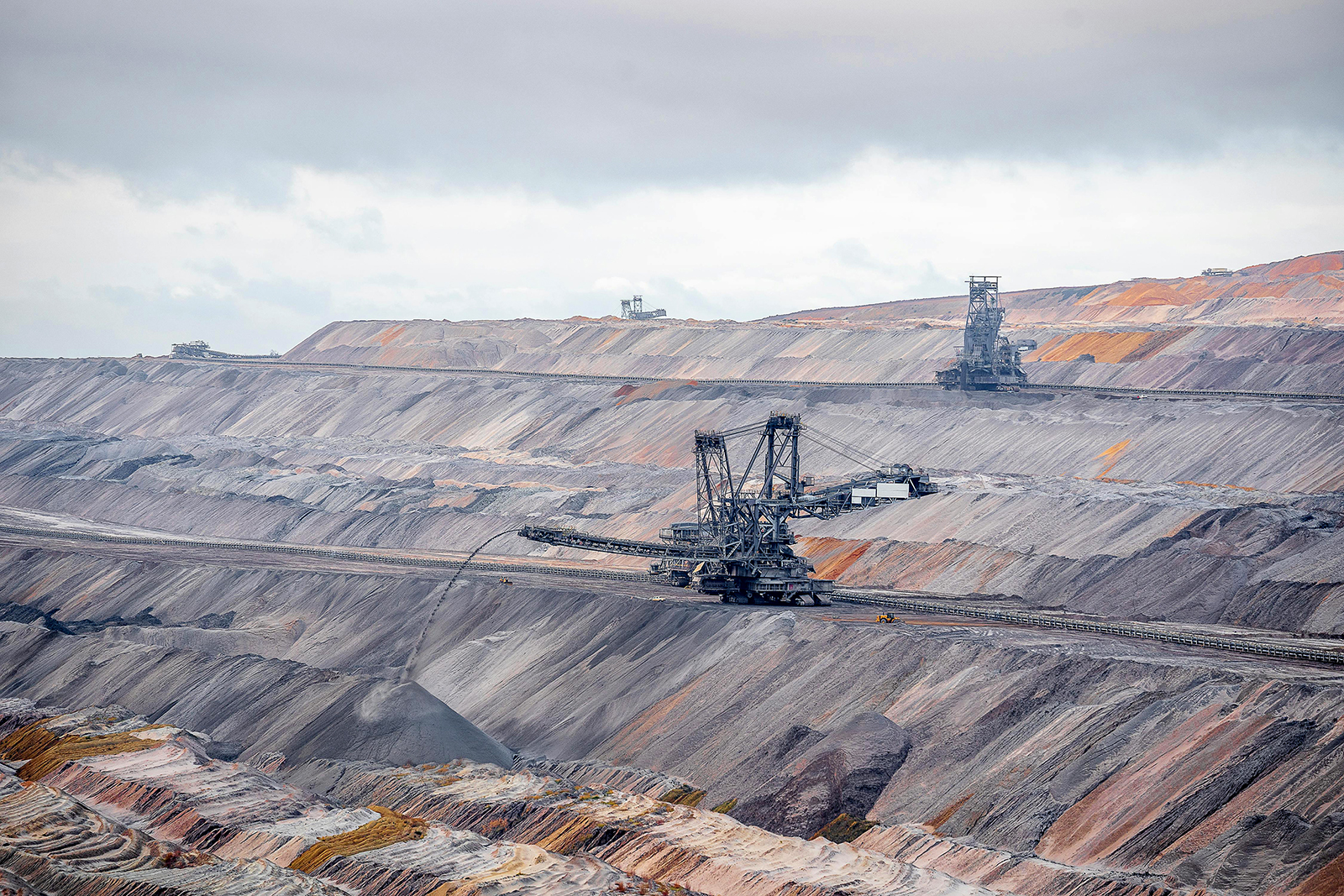
“We are living in a time when humanity faces a decisive question: What kind of world do we want to leave to the generations that come after us?” said Cardinal Fabio Baggio, undersecretary of the Vatican Department for Integral Human Development, in announcing the campaign on Friday (March 20). “This question is not abstract. It has the face of concrete communities — Indigenous peoples who see their territories threatened, families who lose their sources of water, mountains opened like wounds and rivers turned into silent witnesses of contamination.”
The Vatican’s campaign and divestment platform is in conjunction with the Church and Mining Network, a group that engages 12 countries in Latin America and the Caribbean to promote rights of local and Indigenous communities and build consensus around divestment from mining and related activities. Institutions that join the platform can share and compare practices for divestment and ethical investment policies.
Speakers at the Vatican press conference on Friday said about 40 faith-based organizations are involved in the platform, but a monetary divestment goal was not given.
The mining industry has been expanding globally as demand for critical minerals — which are those that countries deem essential for their economies — rises sharply, driven largely by the push for renewable energy and, increasingly, by the growth of artificial intelligence. The International Energy Agency expects the demand for these materials will triple by 2030 and quadruple by 2040. There are over 15,000 mining and processing sites worldwide, according to the Global Mining Dataset.
Speakers at the Vatican conference said the industry’s profits, which some project to be in the trillions of dollars, are benefitting wealthy corporations and countries while harming local communities and ecologies in the developing world.
“Our territories are in the sites of military neocolonialism, driven by a thirst for rare-earth minerals,” said Bishop Vicente de Paula Ferreira, who advocates on behalf of communities affected by mining in his diocese of Livramento de Nossa Senhora in Bahia, Brazil. He warned against what he termed “green capitalism,” referring to companies masking mining operations behind clean energy enterprises.
“Mining is undoubtedly the central pillar sustaining the unrestrained pursuit of profit,” Ferreira said.
The campaign is the latest step in the Catholic Church’s efforts promoting ecology and care for the environment, enshrined in Pope Francis’ 2015 encyclical “Laudato Sì” on the protection of our common home.
Bishop Álvaro Leonel Ramazzini has been an outspoken critic of the devastating impact of aggressive mining in his diocese of Huehuetenango in Guatemala. In 2004, the Canadian-owned Marlin gold and silver mine began extracting minerals in San Marcos in western Guatemala. Local Indigenous communities claimed not to have been consulted in the process and began to protest in 2005, resulting in one death and many injuries when security forces opened fire.
Reports have found high contamination risks, water depletion and damage to agriculture and livestock near the mine. Some reports also found elevated metal exposure in people who lived near the Marlin mine, which closed in 2017.
“Who suffers most the consequences of environmental impacts that damage and destroy nature?” Ramazzini asked. “The main beneficiaries were the company’s shareholders on the stock exchanges of the United States and Canada,” he said, adding that the local government received only 3% of the profits from mining.
“In the end, the people in whose territory the mining took place remained just as poor as before,” he said.
Ramazzini said the company that owned the mine acted within the framework of the law. “What is legal does not always correspond to what is just,” he said.
Yolanda Flores, leader of the Aymara people in Peru, speaks during a press conference for the launch of a Mining Divestment Platform, at the Vatican, Friday, March 20, 2026. (AP Photo/Alessandra Tarantino)
The Indigenous Aymara communities that live on the shores of Lake Titicaca in the Andes Mountains also have experienced environmental repercussions after two decades of mining, with reports of heavy metals found in the water.
“We don’t know what type of water we are drinking,” said Yolanda Flores of the Aymara people, with tears in her eyes, during the conference. “Instead of giving water to my son or my daughter, I might be poisoning them.”
Flores called for action from Catholics, asking for clergy to help as communities seek answers about what is happening to their land and people. “When will we put in practice what Jesus said?” she asked.
Claiming support for affected communities isn’t enough to have an impact, given the complex web of financial and political interests involved in mining, said Dario Bossi, a Comboni priest from Brazil who coordinates the Church and Mining Network. “Large mining companies are deeply connected with banks, investment funds and global financial markets,” he said, calling for networks of solidarity between the Global North and South.
The Vatican has made repeated appeals to divest from fossil fuels, and in 2022, offered guidelines for Catholic investors and overhauled the investment policy of the Holy See to align with Catholic principles.
The Institute for Works of Religion, commonly known as the Vatican Bank, in 2026 issued its first Catholic Principles Index identifying 50 companies aligned with Catholic teaching, while Vatican City has committed to becoming the first carbon-neutral state by 2050.
Meanwhile, faith-driven investments are growing. And the Vatican has gathered investors from dioceses and congregations, which together have an estimated portfolio of $1.75 trillion, in summits in London and the Vatican to discuss how to invest ethically.
“Faith-based organizations play a crucial role because they manage significant financial resources,” said Maamalifar Poreku, a missionary of Our Lady of Africa originally from Ghana, speaking at the conference. “These economic decisions are not neutral; they carry moral consequences.”
Read the full article on the original source
