




Faith & Reflection: Voices from the Black Church and Beyond
- Tough Shit reclaims dismissed emotions, turning a derogatory phrase into a fierce refusal to silence valid pain.
- The journal uses somatic practices to track anger, fear, sadness, and hurt toward conscious embodiment and positive change.
- Historical evolution of phrases like "tough titty" to "tough shit" shows patriarchy enforcing emotional suppression.
- Refusing emotional censorship challenges patriarchal projection and demands collective responsibility to honor discomfort.
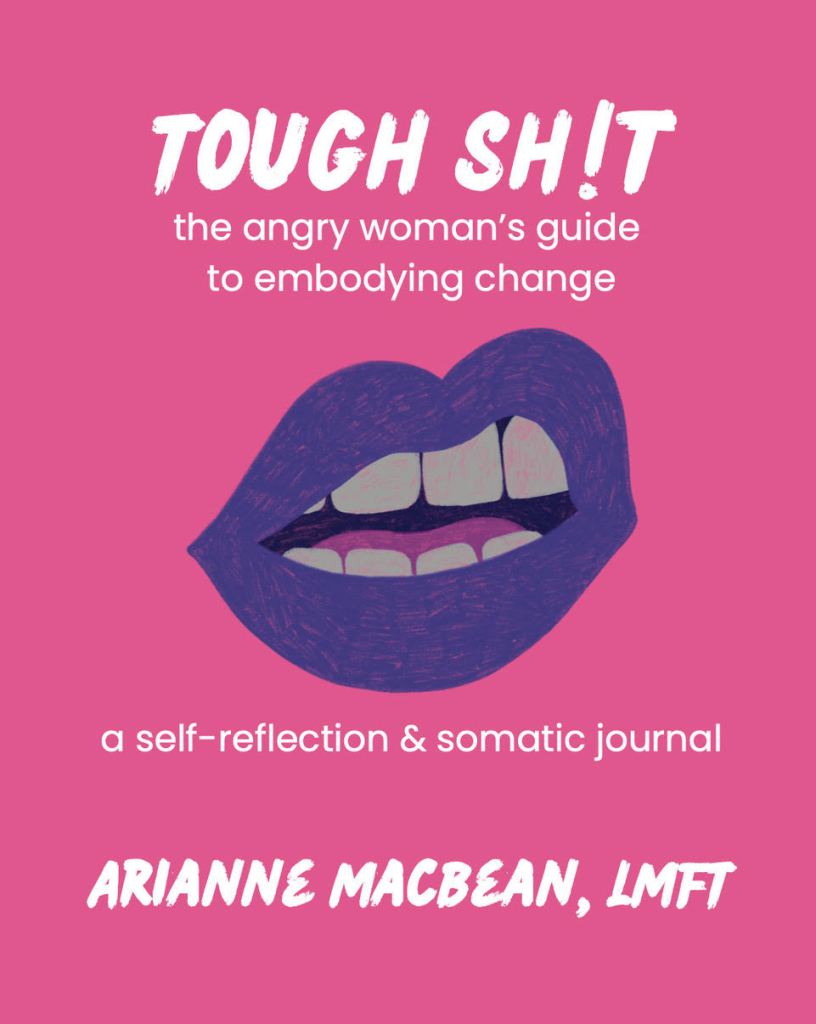
Before I knew what form my self-reflection and somatic journal for women would take, I knew what its title had to be. Through my work as a somatic psychotherapist, I understand how repressed anger, fear, sadness and hurt affects the psyche and the body. At best, suppressed emotional pain can show up as sensations that limit pleasure in daily life. At worst, unprocessed trauma can lead to chronic and debilitating illness. I wanted to create a journal that was not only anti-oppressive but also subverted the misnomer that divisive feelings are negative and should be stifled. Mostly, I wanted to expose how emotional censorship has its roots in its chief proponent: patriarchy.
Tough Shit. – the angry woman’s guide to embodying change is a journal that supports consciously tracing difficult feelings to understand one’s true self and make positive change. The title isn’t about being provocative or crass. I chose it because the phrase “tough shit” has a long history related to gender stereotyping and dominance—all of which my journal actively challenges. But the phrase is not just cultural; it’s personal. An iteration of this phrase was used against me growing up. As the concept of the journal became clearer, I felt my body insist on throwing “tough shit” back out, not as a degrading echo, but as a reclamation—a fierce refusal to silence valid emotional pain.
The saying “tough shit” is commonly used as a dismissive response to a complaint. It’s a phrase many of us grew up with and that reinforces the belief that emotions should be stuffed down. “Tough shit” found its origin in the disquieting expression “tough titty,” which first appeared in an 1888 Tennessee newspaper with the line, “It’s tough titty, boys, but let’s suck it like little men.” This historical usage of the phrase suggests that a boy or man (man-child) should keep sucking on an empty or withholding breast despite the futility. Here, the “titty” is reduced to an emblem of failure rather than an honored source of life, while “little men” are instructed to ignore the reasons that might cause feminine nourishment to dry up and turn an experience of deprivation into a test of masculine strength.
In the early 1900s, the phrase evolved into “tough luck,” which promoted the image of suffering as unfixable misfortune. Unlike the raw bodily degradation of “tough titty,” “tough luck” reframes suffering as accidental. During the Great Depression, this phrase turned peoples’ focus away from social inequity or collective responsibility and implied that individual loss was simply a random bad break. The phrase trivialized the value of having feelings about unmet needs or questioning why those needs cannot be fulfilled while squashing the legitimacy of expressing discomfort with systemic disfunction and abuse.
The phrase later morphed into the harder-edged “tough shit,” used by soldiers during World War II to express a fatalistic acceptance of bad circumstances with no remedy; the only option was to endure. In the military setting, “tough shit” shut down protest and equated manhood with unquestioning obedience. Stomaching cruelty in silence is venerated while the need for care and comfort is defined as weak. While “tough titty” mocked maternal care by imagining it as useless, “tough shit” erased it altogether. There is no breast/nourishment—only an order to comply, which must be followed with numb fortitude.
In the 1970s, “tough noogies” became the next popular adaptation of the phrase after it was used on Saturday Night Live. This version of the phrase was a twist on the schoolyard torture game where someone forcefully rubs their knuckles into another’s person’s head, giving them a “noogie.” Here, the idiom trivializes emotions as being too sober, essentially saying “Life is a game. Don’t take yourself so seriously.” This infantile iteration is the one I heard from my father growing up. When I whined, did not agree, or desired something other than what was offered, “tough noogies” shut down my hard-to-deal-with feelings. Back then, I thought wanting something different than what I was given meant I was bad. Now, I know that it means that I exist.
The raw truth is that tossing out the phrase “tough shit” when faced with another person’s expression of discomfort indicates their own incapacity to tolerate discomfort, not the other way around. It’s just like patriarchy to turn its own rigidity into the world’s problem—classic projection in Jungian psychology.
According to feminist psychology, the root of patriarchy is found in men’s incapacity to tolerate the tension between their need for and fear of the nurturing/devouring mother. Exemplified by the original term “tough titty,” the building blocks of American culture reflect men’s unconscious need/fear, which results in their egos’ demand to project stoicism rather than want, self-reliance rather than dread. Patriarchy is a paradigm that has no room for discomfort: Everyone must deal with “tough shit” or act out one of the other 20 American idioms that connote the same thing:
Grin and bear it
Bite the bullet
Grit your teeth
Suck it up, buttercup
Swallow the bitter pill
Take it on the chin
Weather the storm
Take your lumps
Lump it
Soldier on
Roll with the punches
Stick it out
Ride it out
That’s the way the cookie crumbles
Keep a stiff upper lip
Keep your chin up
Put on a brave face
Don’t cry over spilled milk
Pull yourself up by your bootstraps
The title of my journal is both a reclaiming of valid emotional responses to tough situations (No, I’m not going to suck it up) and a re-presentation of the saying (Not only am I going to deal with my feelings—so are you). My tough shit (my anger, fear, sadness, and hurt) is real. I honor and tolerate my hard feelings, and I expect you to do the same.In my personal and professional war against repression, I invite “tough shit” to have new meaning as a rallying invocation: I feel tough shit. I refuse to hide it. Deal with that.
BIO: Arianne MacBean is a licensed marriage family therapist with a certificate in somatic psychotherapies and practices at Synergy Somatic Psychotherapy in Los Angeles, CA. Her first book, a self-reflection and somatic journal entitled, Tough Shit. – the angry woman’s guide to embodying change was published by Tehom Center Publishing is available everywhere books are sold on November 4th, 2025. Her essays have been published by Mutha Magazine, Nasty Women Writers Project, and Dance Chronicle. You can find more of her writing on Substack @writebig
Discover more from Feminism and Religion
Subscribe to get the latest posts sent to your email.
Read the full article on the original source
