




Glow & Grow: Black Beauty, Haircare, and Skincare Tips
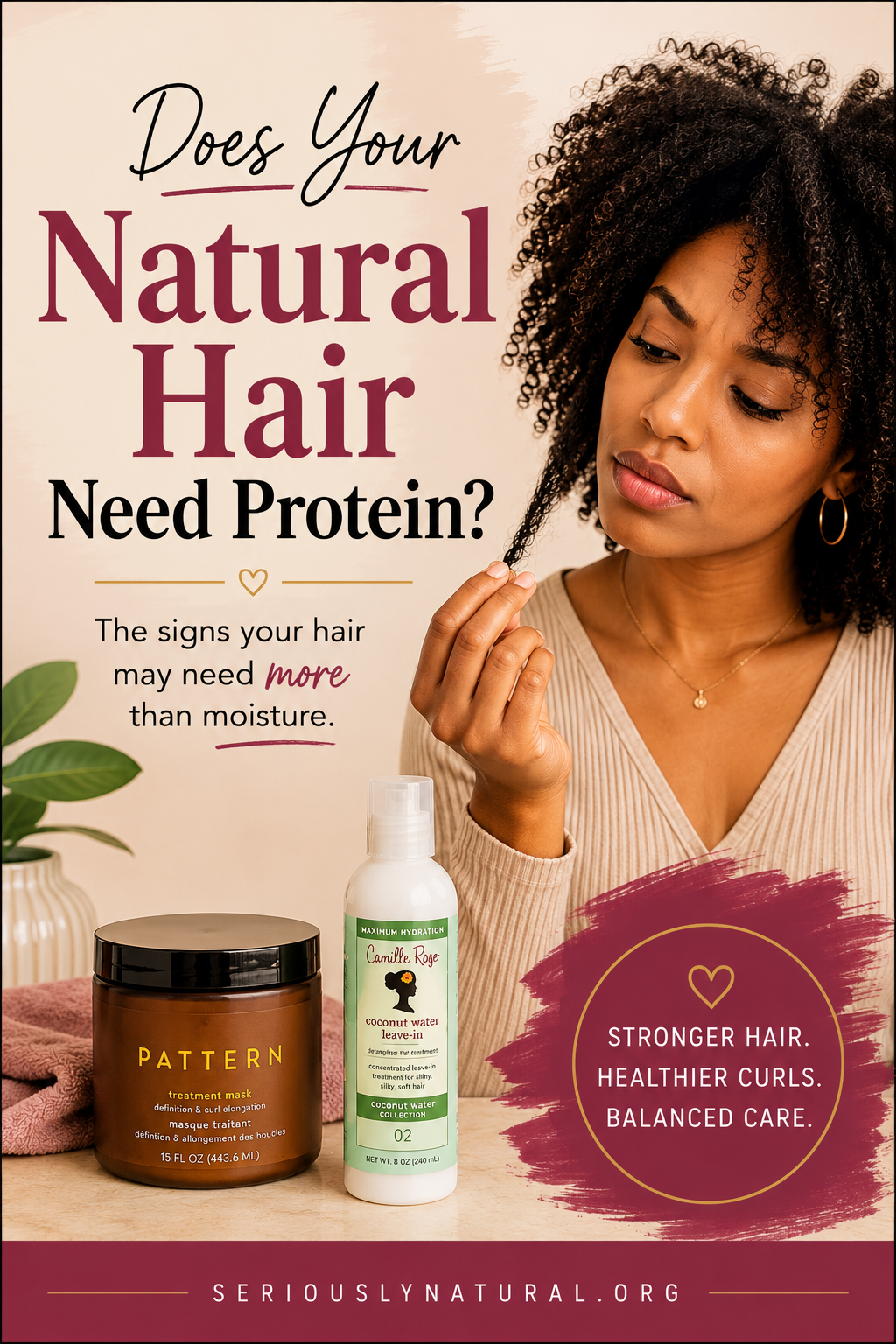
- Protein provides structural strength; moisture keeps hair soft and flexible, and both must be balanced.
- Need protein signs: overly soft but weak hair, curls losing shape, styles not lasting, frequent breakage.
- Too much protein shows as stiffness, brittleness, snapping instead of stretching, and lack of softness.
- Richer leave-ins plus occasional protein treatments restore balance and improve manageability.
- Try Black-owned brands like Pattern, Camille Rose, CÉCRED, Design Essentials, Melanin Haircare, and tgin.
A few weeks ago, I realized my natural hair was feeling drier than usual.
At first, I assumed it needed more moisture. I found myself refreshing my hair more often, reaching for water more frequently, and wondering why the softness wasn’t lasting the way it normally did. Now, switching to a thicker leave-in conditioner definitely helped and my hair immediately felt better because I wasn’t constantly trying to bring it back to life every couple of days –But after using a treatment mask from Pattern, I started wondering if moisture was only part of the issue. A natural hair protein treatment was not on my mind lately and my hair was complaining.
What if my hair didn’t just need moisture?
What if it needed protein too?
That’s when I started thinking about something many of us don’t talk about enough: the balance between moisture and protein.
@seriouslynaturalsabrina I kept wondering why my natural hair suddenly felt dry ALL the time… and honestly the answer was simpler than I thought 🤎 #washday #naturalhairproblems @CAMILLE ROSE @Pattern ♬ Beauty care – Dih
What Does Protein Actually Do for Natural Hair?
When people talk about healthy natural hair, moisture usually gets most of the attention. And don’t get me wrong—moisture is important.
But protein plays a role too.
Protein helps support the structure of your hair. While moisture helps keep hair soft and flexible, protein helps provide strength. When those two things are working together, hair is often easier to manage, holds styles better, and experiences less breakage. The tricky part is figuring out when your hair needs more moisture, when it needs more protein, and when it simply needs balance.
Protein, A Necessity For Natural Hair
One product that made me start thinking differently about my routine was the Pattern Treatment Mask. I hadn’t used a protein-focused treatment in a while, and after adding it back into my routine, I started paying closer attention to the balance between moisture and strength. It didn’t magically transform my hair overnight, but it did make me realize moisture wasn’t the entire conversation.

If Pattern isn’t your thing, there are other protein treatments available that can help strengthen hair while maintaining moisture balance.
CÉCRED Reconstructing Treatment Mask or Design Essentials Restore Vitamin Treatment for Natural Dry Damaged Hair. Both are Black-owned too.
Signs Your Natural Hair May Need Protein
One thing I’ve learned over the years is that natural hair doesn’t always communicate its needs in obvious ways. Sometimes hair that needs protein doesn’t feel dry at all.
Instead, you may notice:
🖤👉🏾 Your hair feels overly soft but still seems weak
🖤👉🏾 Your curls don’t hold their shape the way they normally do
🖤👉🏾 Styles don’t last as long as they used to
🖤👉🏾 Your hair breaks more easily during styling
🖤👉🏾 Moisture doesn’t seem to stay in your hair very long
For me, the biggest clue was that I was constantly chasing moisture. No matter what I did, my hair never seemed satisfied for very long.
Signs You May Have Too Much Protein
Just because protein can help doesn’t mean more is always better. Too much protein can create a different set of problems.
Some signs your hair may be getting more protein than it needs include:
🖤👉🏾 Hair feeling stiff or rough
🖤👉🏾 Increased brittleness
🖤👉🏾 Hair snapping instead of stretching
🖤👉🏾 A lack of softness, even after moisturizing
This is why balance matters so much. Natural hair usually responds best when moisture and protein work together rather than one completely overpowering the other.
@seriouslynaturalsabrina #tiktoklearningcampaign My hair kept feeling dry no matter how much I refreshed it… and I finally realized it wasn’t just about adding more moisture. I had to actually listen to what my hair needed 🤎 #naturalhair #drynaturalhair #naturalhairjourney #edutok ♬ original sound – BrinaPerk
Why Moisture and Protein Need Each Other
This is the part I think many of us overlook. When my hair was feeling unusually dry, I immediately focused on moisture. That made sense because dry hair often needs more hydration. But after switching to a richer leave-in conditioner and using the Pattern treatment mask, I realized the conversation wasn’t really about choosing moisture or protein.
It was about balance.
The leave-in helped my hair feel moisturized again. The treatment mask helped me feel like I was strengthening my hair at the same time. Together, they seemed to work better than either one would have on its own. That’s why I don’t think every hair problem can be solved with more moisture alone. Sometimes our hair needs a little strength too.
Best Portable Hooded Natural Hair Dryer – We’ve Got Six!
Around the same time, I switched to a thicker leave-in conditioner. My hair had been feeling drier than usual, and lighter products just weren’t giving me the lasting moisture I needed. The Camille Rose Coconut Water Leave-In was one of the changes I made, and I noticed I wasn’t reaching for my spray bottle nearly as often.

The important thing isn’t necessarily using this exact leave-in. It’s finding a product that gives your hair the level of moisture it actually needs. Some naturals do well with lighter formulas, while others need something richer.
Melanin Haircare Multi-Use Softening Leave In Conditioner (my staple during warmer months) or even tgin Miracle RepaiRx Protective Leave In Conditioner and yes, both are Black-owned.
The Product That Made Me Rethink My Routine
I hadn’t used a protein-focused treatment in a while, so adding the Pattern treatment mask back into my routine was eye-opening. Did it magically fix everything overnight? No. But it did make me pay closer attention to what my hair was telling me. Combined with a thicker leave-in conditioner, I started noticing that my hair felt more balanced, easier to manage, and less dependent on constant refreshing. That alone made me realize I probably needed more than moisture. I needed a better moisture-protein balance with a natural hair protein treatment added too!
One thing I’ve learned over the years is that healthy natural hair isn’t just about finding the right products. It’s about understanding how your hair responds to moisture, protein, styling, and everyday care.
In my book, *Natural Hair for Beginners*, I devote an entire chapter to moisture and protein balance because it’s one of the most misunderstood parts of natural hair care. Understanding that balance can make a huge difference in how your hair looks, feels, and responds to your routine. If you’re still learning what your hair needs, the book may be a helpful resource on your natural hair journey.

Final Thoughts
If your natural hair has been feeling unusually dry, weak, limp, or difficult to manage lately, don’t automatically assume moisture is the only answer. Take a closer look at the overall condition of your hair.
🖤👉🏾 Does it feel strong?
🖤👉🏾 Does it hold moisture well?
🖤👉🏾 Does it hold styles the way it used to?
Sometimes our hair gives us clues long before we realize what’s happening. For me, learning to pay attention to those clues helped me make better decisions about my routine—and reminded me that healthy natural hair usually needs both moisture and strength to thrive with an excellent leave in along with a natural hair protein treatment along for the ride.
Sabrina
Read the full article from the original source
