




Local Voices. Statewide Impact. Stay Informed with Bulloch County News
- United States National Tick Collection at Georgia Southern University holds over one million specimens and supports active tick research.
- Lone Star tick common locally; transmits ehrlichiosis and can trigger alpha-gal syndrome, a red meat allergy that may be severe.
- Remove ticks promptly without crushing; disinfect and save the specimen. Tell your doctor if symptoms appear. Use DEET and permethrin-treated clothing.
- United States National Tick Collection trains scientists, hosts international researchers, preserves type specimens, and supports public health officials and student education.
As national concerns over tick-borne illnesses grow, Georgia Southern University in Statesboro is home to a globally significant U.S. National Tick Collection, serving as a critical resource for researchers worldwide.
As emergency room visits for tick bites draw national attention and doctors warn of a potentially active year for tick-borne diseases, one of the world’s most important tick research resources sits in Statesboro, Georgia.
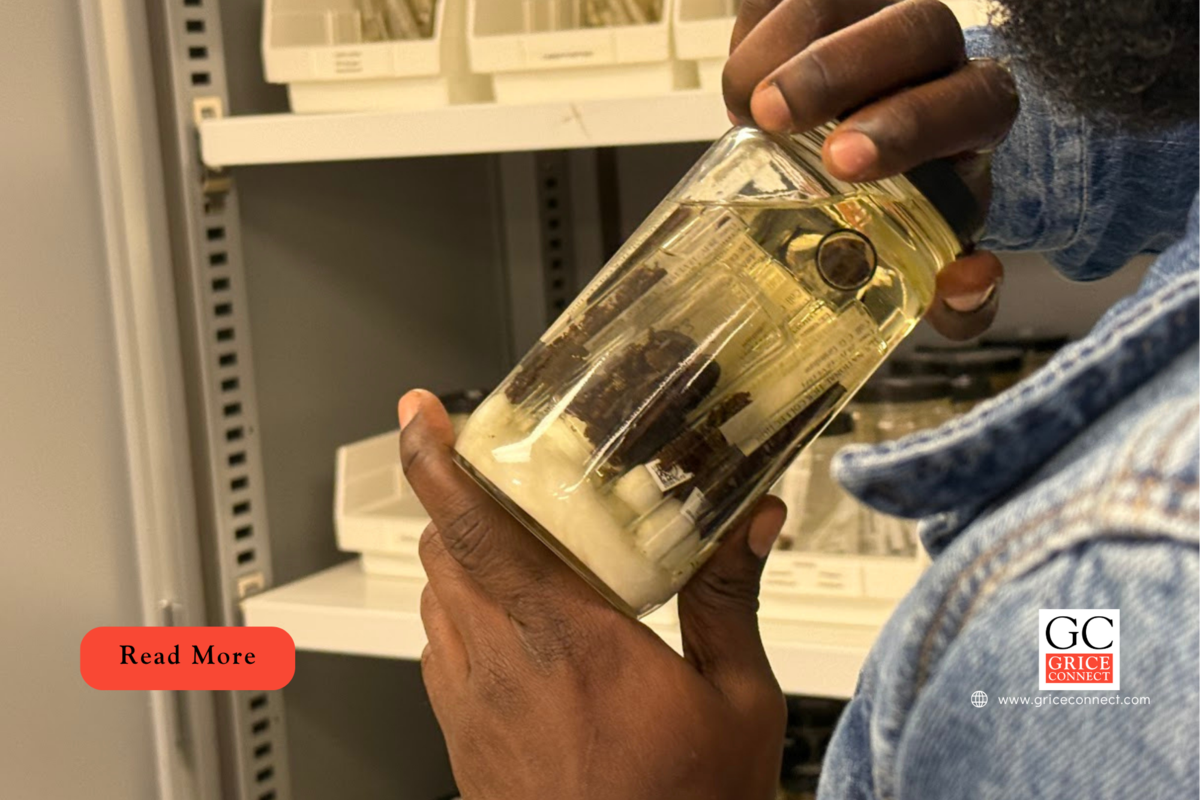
Georgia Southern University’s Statesboro Campus is home to the United States National Tick Collection, one of the largest curated tick collections in the world and a major resource for scientists studying ticks, tick-borne illness, and changing tick distribution.
The timing gives the work new relevance. The Centers for Disease Control and Prevention reported this spring that tick-bite visits to emergency departments were higher than normal in many parts of the country. National reports have pointed to warmer weather, milder winters, and expanding tick habitat as factors helping fuel concern about ticks and tick-borne diseases.
While South Georgia may not be seeing the same level of increase reported in some other parts of the country, Statesboro is still closely tied to the national conversation. Inside Georgia Southern’s United States National Tick Collection, researchers study the very species, distribution patterns, and public health questions now receiving renewed attention across the country.
For Lorenza Beati, M.D., Ph.D., curator of the collection, the work is not just scientific. It connects directly to everyday questions for South Georgia residents: Which ticks are common here? What illnesses can they carry? How should people protect themselves outdoors? And when should someone call a doctor after a tick bite?
The United States National Tick Collection is housed at Georgia Southern University’s Statesboro Campus and belongs to the U.S. National Museum of Natural History, Smithsonian Institution.
The collection has been entrusted to Georgia Southern since 1990 and includes more than 1 million specimens and more than 125,000 accessioned lots.
Beati said the collection is probably the largest curated tick collection in the world. While she said there may be a larger collection elsewhere, she said Georgia Southern’s collection remains especially important because it is active, used for research, and supported by curatorial work.
“By having two curators here, we really keep the collection very active,” Beati said. “We publish a lot, we do a lot of research on our samples. We have visitors coming from all over the world to work with us.”

Beati said the collection includes ticks from every continent and has a history of more than 100 years. The core of the collection dates back to the early 1900s, when scientists were beginning to understand that ticks were not just pests, but vectors capable of transmitting disease.
Before those discoveries, Beati said ticks were mostly considered a nuisance because they fed on blood. That changed after researchers established that ticks could transmit what is now known as Rocky Mountain spotted fever.
“When Dr. Ricketts and his team established that ticks could transmit what is now called the Rocky Mountain spotted fever, it became clear everywhere that ticks were important, not just blood-sucking arthropods, but also important for medical and veterinary reasons,” Beati said.
The collection’s path to Statesboro included the Rocky Mountain Laboratories in Montana and the Smithsonian Institution in Washington, D.C. Beati said the collection later came to Georgia Southern after former curator Jim Keirans and Georgia Southern professor Jim Oliver received an NIH grant to move it here.
Georgia Southern’s page on the collection identifies it as part of the James H. Oliver, Jr., Institute for Coastal Plain Science. The university says the collection represents most of the approximately 860 known species of ticks and a quarter of the primary tick types.
Ticks common in South Georgia


Beati said several ticks are common in South Georgia, and their activity depends partly on the season.
One of the most common right now, she said, is the Lone Star tick, Amblyomma americanum. Beati described it as abundant, aggressive, and likely to bite people.
“Those ticks will not only wait for you to get there and then try to climb on you, but they will also follow you,” Beati said.
The Lone Star tick is not specifically looking for humans, she said. Like other ticks, it is naturally looking for vertebrate hosts, especially animals. But because people spend time outdoors, they can become accidental hosts.
Beati said the Lone Star tick can transmit ehrlichiosis, which she described as a disease that is often considered mild but can be more serious for older adults or people with other medical conditions.
The illness can be treated with antibiotics if it is diagnosed properly. The challenge, she said, is that symptoms are not always specific.
“The symptoms of ehrlichiosis are not very specific,” Beati said. “If they get a tick bite and one week or 10 days later they have high fever, they should remember the tick bite.”
That is one of Beati’s main messages to the public: if someone gets sick after a tick bite, they should tell their doctor about the bite.
A fever or flu-like symptoms may not automatically point to a tick-borne disease. But telling a doctor about a recent bite can help them know what to check for.
“Absolutely mention that with your doctor, because that might be the key to discover what the disease is,” Beati said.
Lyme disease risk is low locally
Beati also discussed the blacklegged tick, Ixodes scapularis, which is the vector of Lyme disease in the United States. In South Georgia, she said, the tick can be found, especially in fall and winter. However, Lyme disease is much less common locally than it is in parts of the Northeast.
“If you collect adult [ticks] in, let’s say, Connecticut, 45% of them contain Lyme,” Beati said. “If you collect them here, it’s maybe 0.1%.”
Because of that, Beati said Lyme disease is not one of the biggest tick-borne disease concerns in this area.
“Here the prevalence of Lyme disease is very, very, very low,” Beati said. “So it’s not too much of a concern in this area.”
Still, that does not mean people should ignore ticks. Beati said other species in South Georgia can carry other diseases. The Gulf Coast tick, Amblyomma maculatum, can transmit a spotted fever group rickettsia, she said. That illness may involve mild symptoms and sometimes a rash around the feeding site.
Another species, the American dog tick, Dermacentor variabilis, can transmit Rocky Mountain spotted fever. Beati said that illness can involve high fever and sometimes spots on the skin or a rash at the bite site.
For all of these diseases, the advice is similar: if symptoms develop after a tick bite, tell a doctor about the bite.
Lone Star ticks and red meat allergy

The Lone Star tick is also tied to a condition that many people may not immediately associate with ticks: red meat allergy.
Beati said Lone Star tick bites can cause alpha-gal syndrome, which may lead some people to become allergic to red meat, including beef, pork, goat and lamb.
“The Lone Star tick is also the cause of red meat allergy,” Beati said. “It’s something called the alpha-gal syndrome.”
The allergy can be serious, she said, and some people can experience anaphylactic shock. Beati said some people may eventually lose the allergy if they avoid additional bites, while others may deal with it for much longer.
People with alpha-gal syndrome can still eat chicken and fish, she said.
Tick activity is changing

Beati said tick activity and distribution are changing, though she cautioned that some of her observations are not formal statistics.
She said she has noticed Lone Star ticks becoming less active during parts of the summer in places where she used to find more of them. She said heat may be one reason.
“I think it’s just getting too hot, and they are kind of going quiet until the temperatures work out again,” Beati said.
At the same time, Beati said some tick species are spreading into new areas. The Lone Star tick, she said, has become especially abundant in parts of the Midwest. The Gulf Coast tick, once known mainly along the Gulf Coast and Florida, has been found as far north as New York.
Beati said birds can help move ticks, especially when immature ticks feed on birds that travel. If those ticks drop off in a new area where the conditions are suitable, they may be able to establish new populations.
Climate is not the only factor, she said. Land management, habitat fragmentation, prescribed fire, deer populations and other human influences can also affect tick numbers and distribution.
How to protect yourself outdoors

Beati said residents should not stop enjoying the outdoors, but they should take precautions.
DEET can still work well, she said, though she noted that a high concentration is needed. Another option is permethrin, which can be used on clothing.
“You can spray permethrin on your clothes, not on yourself,” Beati said. “You let them dry, and then you can wear them.”
She also recommended simple clothing precautions. Ticks climb upward and look for openings, so Beati said people should tuck shirts into pants and make it harder for ticks to get under clothing.
“Ticks will try to go under your clothes,” Beati said.
For people who hunt, fish, hike or spend time near wooded areas, Beati said treating clothing with permethrin can be helpful. She said hunters, in particular, can benefit from treating outdoor clothing.
How to remove a tick safely

If someone finds a tick attached to their skin, Beati said they should remove it immediately.
She said people should avoid squeezing or crushing the body of the tick while it is attached. If the tick is carrying a disease, crushing it could cause fluids to leak onto the skin and into the bite wound. Instead, Beati said people should use tweezers and grab the tick as close to the skin as possible.
“You really need to remove the tick as close as possible to your skin,” Beati said. “Then pull out so that you don’t squish the back of the tick.”
After removing the tick, she said people should disinfect the bite area if possible and clean their hands. That is especially important if the tick breaks during removal.
Beati said some diseases require the tick to be attached for a period of time before transmission becomes more likely, so removing a tick quickly can reduce the risk.
“The sooner you remove the tick, the less chances you have to get the disease,” Beati said.
She also suggested saving the tick in a plastic bag in the freezer. If symptoms develop later, the tick may help a doctor determine what illness could be involved.
A resource for scientists and students

The United States National Tick Collection is also used to train scientists and support visiting researchers.
Beati said researchers visit Georgia Southern from around the world to study specimens. During a tour of the collection, she pointed to specimens from Africa, South America, North America, the Caribbean, the Galapagos, Australia and Asia.
The collection includes type specimens, which are especially valuable because they were used to describe species for the first time. Those specimens serve as physical references for scientific identification.
“The more specimens you have in collection, the more the value of the collection is,” Beati said.
The collection also includes historical papers, illustrations and archives tied to tick research.
Georgia Southern says the collection is not only a resource for tick taxonomists, but also for public health officials working to understand and combat tick-borne illnesses. The university also notes that the collection supports education through research and workshops, including the Summer Tick Workshop at the James H. Oliver, Jr., Institute for Coastal Plain Science.
Beati’s path to Statesboro

Beati said she is from Switzerland and studied medicine before becoming interested in parasitology. She said she was especially drawn to arthropods that can transmit diseases, including ticks, mosquitoes, fleas and lice.
After completing her medical studies, Beati said she worked in France on ticks and tick-borne diseases. She later came to the Centers for Disease Control and Prevention in Atlanta as a visiting scientist and then worked at Yale.
While at Yale, she visited Statesboro twice a year to work with former curator Jim Keirans on tick projects. When Keirans needed an assistant curator, Beati applied for the job. He retired about a year later, and Beati became curator.
She said she has been at Georgia Southern since 2004.
Beati said she enjoys the research side of her work and teaching students in the lab. She said undergraduates, master’s students and Ph.D. students have worked with her through the collection.
“When you love what you do, when you do it with passion, it’s a privilege to do this work,” Beati said.
Main message for residents

For South Georgia residents, Beati said the main message is awareness, not fear.
Not every tick carries disease, and not every tick bite leads to illness. But people should remove ticks quickly, avoid crushing them, clean the bite area and remember to tell a doctor if they develop symptoms after a tick bite.
Beati said residents should still enjoy outdoor activities such as hunting, fishing, hiking and spending time in nature.
“Don’t let it stop you from doing fun stuff,” Beati said. “If you protect yourself properly, enjoy the weekend.”
Read the full article on the original site
