




Faith & Reflection: Voices from the Black Church and Beyond
- Zahra Tabari holds a master's in electrical engineering from Isfahan University of Technology and University of Borås, specializing in Sustainable Energy.
- Chronic health conditions worsened by Lakan Prison poor conditions, medication shortages, inadequate medical care, and constant psychological pressure.
- Arrested after a warrantless home raid in Rasht; electronic devices confiscated and family left uninformed about her whereabouts.
- Video trial under ten minutes; court-appointed lawyer inaudible; evidence a cloth with slogan Woman, Resistance, Freedom and a voice note.
- More than 400 prominent women worldwide protested; the Supreme Court ordered reconsideration, but the case was re-sentenced in April 2026.
Women’s National Council of Resistance of Iran (info below)
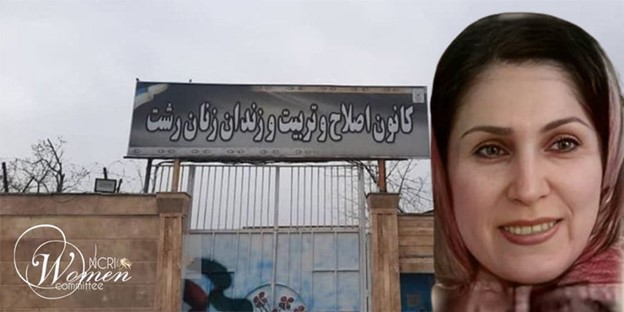
In a continuation of the escalating crackdown on political dissent in Iran, Zahra Shahbaz Tabari, a 67-year-old political prisoner, was sentenced to death by Branch 1 of the Revolutionary Court of Rasht on October 25, 2025. The regime’s judiciary has accused her of “supporting the People’s Mojahedin Organization of Iran (PMOI).”
Who Is Zahra Tabari?
Zahra Tabari, 68, holds a master’s degree in electrical engineering and is a graduate of Isfahan University of Technology and the University of Borås in Sweden, specializing in Sustainable Energy.
She suffers from chronic health conditions, and the poor conditions in Lakan Prison, combined with shortages of medication, medical care, and constant psychological pressure, have severely deteriorated her physical condition.
She was arrested on April 17, 2025, after security forces raided her home in Rasht without presenting a judicial warrant. During the raid, agents searched the house and confiscated her and her daughter’s electronic devices. For weeks, her family had no information about her whereabouts or health condition. She is currently being held in Lakan Prison in Rasht.
A Ten-Minute Trial Without an Independent Lawyer
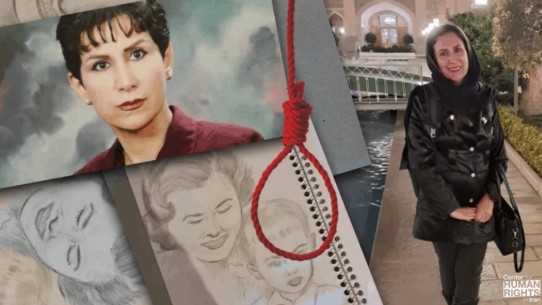
According to Zahra Shahbaz Tabari’s family, her trial was held via video conference and lasted less than ten minutes. The court-appointed public defender reportedly offered no meaningful defense, and the death sentence was issued during the same brief session. Her family has condemned the proceedings as a “pre-determined show trial” devoid of due process or fairness.
The case files reportedly consist only of a piece of cloth bearing the slogan “Woman, Resistance, Freedom” and an unpublished voice message, which the family considers unfounded and inadmissible. Ms. Shahbaz Tabari had previously been detained for her peaceful activities on social media.
Despite several months of detention, no public or fair trial has been held, and her chosen legal counsel has been denied access to the case files. According to the family, judicial authorities are attempting to attribute collaboration with the People’s Mojahedin Organization of Iran (PMOI) to her, while granting only seven days to file an appeal against the death sentence.
Prison Voice Message (her voice is on the message at the bottom of this post or you can hear it on WNCRI’s website)
Zahra Tabari issued a heartfelt voice message from prison in November 2025, urging the international community and all “awakened consciences” around the world to stand with the people of Iran and amplify the call for justice and freedom.
On November 29, 2025, in a prison call, she provided a detailed account of her arrest, interrogation, and trial. Rejecting all security-related charges, she described her death sentence as “devoid of any judicial legitimacy” and a clear case of “judicial murder.”
At the start of her account, she said: “The only things they attributed to me were a piece of cloth and a voice note—nothing else. There is nothing more in my file.”
Sudden Reclassification of Charges and Lack of Fair Process
Zahra Tabari stressed that from arrest to sentencing, no element of a fair trial was observed: “My second objection, and the reason this verdict has no legal validity, is that I had no fair procedure at any stage. From the very beginning, when I was arrested, they charged me with bagh-ye (armed rebellion). Although the charge later changed, on May 25, it was reinstated. So, I remained in prison under the same charge of bagh-ye.”
She also described the inspector’s conduct: “Mr. Bakhshipour, the inspector of Branch 4, honestly, in my view, is someone sitting there with a noose in his hand, just measuring people’s neck sizes!”
A Trial Lasting Minutes, With a Court-Appointed Lawyer on Screen
She recounted that she was denied any meaningful opportunity to defend herself: “My court-appointed lawyer appeared on a monitor during the hearing. I saw him for the first time there. I objected, but no one responded, and I never even heard the lawyer’s voice.”
She added: “I also objected to the sudden change in charges, which I had not been informed about. I was connected to the courtroom by phone. They asked me only one question: ‘State your final defense.’ I said I had committed no crime defined by law and that I was being punished solely because of my beliefs.”
Social Protest as the Reason for Arrest
She explained that her criticisms were rooted in social injustice: “If the issue is beliefs, then yes, I am a protester. I protest the fact that a woman must bend down into the trash bin just to take out bread to survive.”
She highlighted the plight of child laborers: “How can a government tolerate a child standing at intersections begging instead of going to school? These were the issues I protested.”
“This Verdict Is Invalid at Its Core”
She concluded: “The verdict issued against me has no legal basis or judicial credibility. Even according to their own laws, it is invalid. In my view, this is judicial murder—not a judicial ruling”
Her case has become one of the clearest examples of the Iranian authorities’ disregard for due process in prosecuting political detainees—a case built, as she says, on “a piece of cloth and a voice note,” yet resulting in one of the harshest possible sentences.
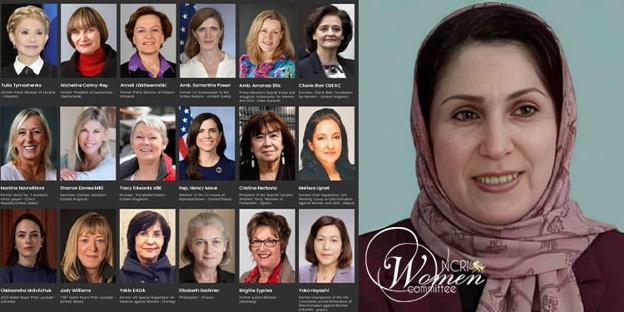
Following widespread international criticism and reactions to the death sentence—including statements by more than 400 prominent women worldwide, among them Nobel laureates, former presidents and prime ministers, parliamentarians, UN special rapporteurs, media figures, sports icons, and human rights advocates—the clerical regime’s Supreme Court referred the case back to Branch 2 of the Rasht Revolutionary Court for reconsideration.
On April 14, 2026, the court once again sentenced Tabari to death on the same charges. The verdict was officially delivered to her at the end of June.
Transcript of audio below: [Moderator’s Note: It is very moving to hear Zahra’s voice, it is short and well worth listening to.]
“At the beginning of the audio recording, there is an automated message in Persian from the Iranian prison system stating that the call originates from a prison and that the caller is an inmate.”
Dear friends, this is a voice calling for justice and freedom. They sentenced me to death penalty just by a single word called “Baghi” (a person accused of armed rebellion against the state under Iranian law). This is just enough to sentence all those who are politically opposite or even with their own mental beliefs to death penalty.
I applied for bail, but I don’t rely for further process to arrest it. I rely on you as a jury member of my trial in worldwide court hall. To me, it’s not a matter of saving life of an individual but saving life of many others.
This reminded me once a man, I think it was Neil Armstrong, sent us a message far far away from the earth. A small step for a man, a giant move for mankind, he said. Now, I could tell just a small step for saving a life, carry us to a movement in order to condemn human rights violence in this corner of the world.
So please raise your voice for justice and freedom on behalf of us. Thank you all.
FOR ANYONE WISHING TO DONATE: The contributions we receive enable us to keep supporting women inside Iran and advocating for imprisoned women, especially women political prisoners, whose voices are too often silenced. Every contribution, no matter the size, helps us continue this important work and reach those who need support the most. Donate for supporting brave Iranian women’s struggle
INFO: NCRI The NCRI Women’s Committee works extensively with Iranian women outside the country and maintains permanent contact with women inside Iran. The Women’s Committee is actively involved with many women’s rights organizations, NGOs, and the Iranian diaspora.
The NCRI Women’s Committee is a major source of much of the information received from inside Iran with regard to women. Attending meetings of the UN Women, the UN Commission on the Status of Women (CSW), the Human Rights Council, and other international or regional conferences on women’s issues, and engaging in a relentless battle against the Iranian regime’s misogyny are parts of the activities of members and associates of the NCRI Women’s Committee.
The NCRI Women’s Committee is one of the 25 committees of the National Council of Resistance of Iran.
For more on this women’s committee click here.
Discover more from Feminism and Religion
Subscribe to get the latest posts sent to your email.
Read the full article on the original source
