




From Campus to Classroom: Stories That Shape Education
- Rita Pierson's TED Talk says every child needs a caring adult who believes in them and builds connection for learning.
- Teacher-student relationships and asset-based pedagogy boost learning, attendance, social-emotional skills, and reduce teacher burnout.
- Rita Pierson's authenticity and decades of teaching, with phrases like "I love you" and "you get five minutes", model care plus self-care.
- Rita Pierson's talk shapes teacher education; Dr. Ganga Bey and others show love reframes student behavior, lowering stress while urging teacher self-boundaries.
Episode Transcript
Nimah Gobir: Welcome to MindShift, where we explore the future of learning and how we raise our kids. I’m Nimah Gobir.
Nimah Gobir: It’s summertime. School hasn’t started yet. The hallways are still quiet, and the kids are still sleeping in, but teachers? They’re back in school early to attend mandatory professional development sessions. Also known as PD. These might include discussing new protocols, hashing out curriculum and getting inspired for the new school year.
Nimah Gobir: If I asked teachers ‘What’s the one piece of PD you just know is coming?’ A lot of them would say the same thing: “Every kid needs a champion.” A TED Talk given by a teacher named Rita Pierson.
Rita Pierson: Every child deserves a champion, an adult who will never give up on them, who understands the power of connection and insists that they become the best they can possibly be.
Nimah Gobir: In our last episode, we talked about how teaching is harder than ever – and how schools tend to focus on supporting kids while overlooking the adults who make learning possible: teachers.
Nimah Gobir: In this episode, we take a look at Rita Pierson’s viral talk and what it tells us about how relationships shape learning. We’ll meet the people who knew Rita best, the educators who carry her philosophy forward, and the researcher studying what happens to our bodies and minds when we lead with love.
Beth Jarzabek: Every time somebody finds out I teach middle school, they’re like, ‘Oh bless you.’ Like that’s the that’s the first reaction. And I’m like, Yeah, I know, because everybody remembers middle school is such a hard transition
Nimah Gobir: Beth Jarzabek teaches English in Ludlow, Massachusetts. She works with the kids who struggle the most with reading and writing.
Beth Jarzabek: I have all three grades. So I teach sixth, seventh, and eighth.
Nimah Gobir: Since her students need more support, there’s a stigma about being placed in her class
Beth Jarzabek: Like, ‘Oh, you have to go to Mrs. J’s class.”
Nimah Gobir: These are kids who often mask academic frustration with misbehavior. They might act out. They shut down. But Beth sees through it.
Beth Jarzabek: Their other teachers may not see them the same way I do. So I try to make those connections and and try to be their champion
Nimah Gobir: The idea of being a students’ champion comes straight from Rita Pierson. Like many teachers Beth first watched her TED Talk video during professional development.
Beth Jarzabek: There were people like, you know, who were kind of rolling their eyes and whatnot. But it resonated with maybe when she talked about the kids that she had that, you know were the kids that were struggling, that the and the fact that she said to them, they put us all together to show everybody else how it’s done.
Nimah Gobir: Here’s the clip from Rita’s TED Talk
[Rita’s TED Talk: One year I came up with a bright idea. I told all my students, you were chosen to be in my class. Because I am the best teacher and you are the best students. They put us all together so we could show everybody else how to do it.]
Beth Jarzabek: And I was like, oh, I love that.
Nimah Gobir: So Beth decided to bring that same energy into her own classroom, especially for kids who rarely get encouraged by adults.
Beth Jarzabek: I started, you know, just trying to be that hype person, you know, when I go when I would go into my neighbor’s classroom, I would be like, Oh, which kids can I steal from you? You know, I’m like, oh, or if a kid got transferred in, I was like, I found out how cool you were, and I told them that I want, wanted you in my classroom. And it gave the kids like a little boost.
Beth Jarzabek: Or I’ll say to them, you know, like, hey, I’m telling all these people how awesome you are. I’m like, you gotta show them how awesome you are. And they’re like, okay, well, for you, I’ll do it.
Nimah Gobir: she’s tapping into something we know from decades of research. A positive relationship with even one caring adult is one of the strongest predictors of: better attendance, stronger academic performance, and improved social-emotional skills
Nimah Gobir: Several studies find that students with strong teacher relationships can gain the equivalent of up to an extra year of learning — especially those who struggle the most.
Nimah Gobir: And here’s something else: supportive teacher–student relationships protect teachers too. Studies show that educators who feel connected to their students report significantly lower burnout and higher job satisfaction, even in high-stress environments.
Beth Jarzabek: I don’t have to be your favorite, but I’m still gonna go to bat with you. You are still going to know that you’re safe with me. You are still going to know that you have a valued place in my classroom.
Nimah Gobir: She reminds herself of that, even on the hardest days.
Beth Jarzabek: I try to remember when everything is falling apart I’m here for them to be that person in this tumultuous time in their life is really such an honor. Sometimes it’s easier to remember that than others. And there’s definitely days that I I go home and I like I’m under a weighted blanket. But I try to bring myself back to that, you know, what an honor it is to be the safe place for these kids because some of them don’t have it otherwise.
Nimah Gobir: Up next, we’ll explore why Rita Pierson’s message still resonates — who she was, how teachers are putting her ideas into practice, and what it takes to care for students without burning out.
Nimah Gobir: Rita Pierson’s TED Talk reached millions of teachers, but behind the scenes, the story of how it even happened is almost as special as the talk itself.
Juliet Blake: I joined Ted working two days a week to try and help them figure out whether or not they could make TV.
Juliet Blake: And I said, Of course you can do TV, it’s SNL for nerds.
Nimah Gobir: Juliet Blake , was the head of television for TED in 2013. She was producing a TV special on education — it included John Legend, Bill Gates, Sir Ken Robinson… big names. But she couldn’t shake off the feeling that something was missing.
Juliet Blake: Through YouTube and I came across Rita. And the video that was that existed online wasn’t great, but I could see she had this enormous personality and that she was so authentic.
Nimah Gobir: After seeing clips of Rita giving teaching tips, she spent months trying to track her down
Juliet Blake: I was getting a bit desperate.
Nimah Gobir: Rita wasn’t a celebrity educator at the time. She was a longtime teacher and administrator in Houston who came from a family of educators.
Juliet Blake: And eventually I was calling different school districts in Houston. And I left a message for her at a school
Nimah Gobir: Then one evening Juliet’s phone rang.
Juliet Blake: I got a call one evening, and she just went, ‘Hello,’ and I went, ‘Rita, Rita Pearson?’ And she went, ‘Sure am.’ And I went, ‘I have been looking you for you for months.’ She said, ‘Why?’ And I said, ‘Well, I’m producing a show for Ted.’ And she said these magical words that made me fall in love with her immediately. ‘Who’s Ted?’
Nimah Gobir: From there, they talked on the phone almost every night—once Rita got home from teaching. They were trying to figure out what she might talk about for her presentation.
Juliet Blake: She would talk to me about her mother and her father being educators and the schools that she’d worked in
Nimah Gobir: Rita could move seamlessly between heartbreaking stories about students and cracking jokes about the realities of teaching. And slowly, through those late-night phone calls, the TED Talk started to take shape.
Juliet Blake: And then she said, I need to write this, don’t I? I said, Yes, this is how it works. You not only have to write it, you have to learn it.
Nimah Gobir: But when Rita arrived in New York for rehearsal…
Juliet Blake: And she goes, ‘Honey, I didn’t learn it.’
Nimah Gobir: Juliet was panicking… Rita was not.
Juliet Blake: And she goes, You sit here and I’ll be on the stage and give me, tell me when I’ve got to wrap up, do this, and I’ll bring it to a close.
Juliet Blake: And I just thought, you know what? I just trust this woman to be brilliant. I just know that she’s going to do it and it’s gonna be great.
Juliet Blake: And it was.
Nimah Gobir: That talk given live and mostly off the cuff and it is the one millions of teachers know today. Rita, on stage, speaking straight from the heart about how relationships are important for learning
[Rita’s TED Talk: But one of the things that we never discuss or we rarely discuss is the value and importance of human connection…relationships]
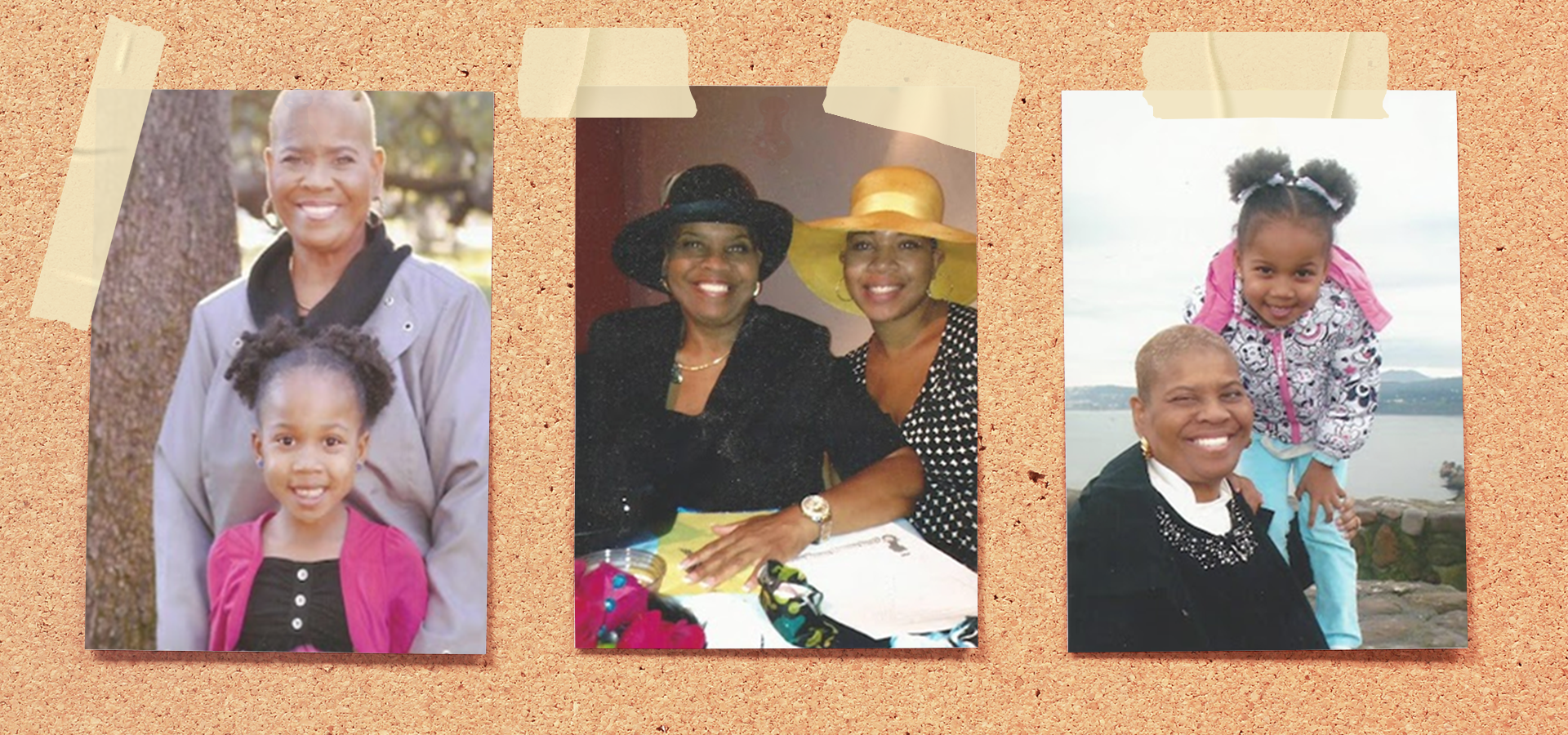
Nimah Gobir: Juliet remembers her as one of the most authentic speakers she’s ever worked with. And Rita’s daughter, Kristin Pierson Forrest says this all makes sense.
Kristin Pierson Forrest: My mother’s never written down a speech in her life.
Kristin Pierson Forrest: there might be maybe some bullet points, but she always knew exactly what she wanted to say and how she wanted to get it across.
Nimah Gobir: Kristin says her mom’s taught elementary and junior high students for over 40 years. Her entire philosophy came down to one lesson:
Kristin Pierson Forrest: It’s okay to say I love you. It’s okay to let the kids know that that that they are loved, because there’s so many kids out there who don’t know that, who don’t inherently know that they are love. And so to explicitly tell kids, I care about you, you know, I’m here for you. I love you, and I’m gonna work my butt off for you.
Nimah Gobir: Kristin spent 15 years teaching in Houston herself, and she says her mother’s approach shaped her own practice.
Kristin Pierson Forrest: her work was centered around relationships. It was centered around relationship building and that was the central part of who I got to be as a teacher because I got that from her.
Nimah Gobir: But she’s also quick to point out that her mom wasn’t naïve about the realities of teaching. Rita loved her students fiercely, but she knew that caring deeply for students wasn’t enough to protect her from burnout or from a system that often asks too much with too little support.
Kristin Pierson Forrest: And she reminded me quickly, my first year teaching, that I’m no good to my kids if I’m exhausted.
Rita’s TED Talk: When Kristin had an especially hard day in the classroom. Rita would say, “You get 5 minutes.”
Kristin Pierson Forrest: It just means that you know, your sadness, there’s an end point to it. So whatever that five minutes is, it might be a day, it might be a week, it might be a month. But just know that at some point there’s going to be an end to it.
Nimah Gobir: Kristin says those lessons from her mom took on a very different meaning not long after the TED Talk was filmed.
Kristin Pierson Forrest: After you know, they shot that TED talk, she she passed about three months later.
Nimah Gobir: Kirstin isn’t in the classroom anymore, but she still works with educators. she brings her mom’s presence with her everywhere.
Kristin Pierson Forrest: I think about my mom every day, and it’s been close to 13 years since she was gone.
Kristin Pierson Forrest: And even the day she passed, I had to remind myself, okay, you get five minutes. I don’t know if my five minutes is over yet. I really I really don’t know. But I I haven’t stayed in a sad place clearly, but but it’s definitely reminded me to pick myself up, dust myself off, and and what’s the next thing?
Nimah Gobir: More than a decade later, Rita Pierson’s talk is still finding new audiences – not just among teachers, but among the people learning to become teachers. And that’s where Melissa Stanley comes in.
Melissa K. Stanley: I am Dr. Melissa K. Stanley and I am the director of secondary social studies education at Central Michigan University.
Melissa K. Stanley: I teach social studies methods courses to help prepare them to be social studies teachers.
Nimah Gobir: She first saw Rita’s talk back when she was teaching in K–12 classrooms.
Melissa K. Stanley: And it really resonated with me and resonated with the way that I taught. I felt like I was meeting someone who viewed education and viewed the role of a teacher the same way that I did.
Nimah Gobir: And once Melissa became a teacher-educator at Central Michigan University. The talk became part of how she teaches. It’s a required video during the semester that her class does their pre-student teaching.
Melissa K. Stanley: They’re pretty nervous. And that is the semester that they do their pre-student teaching. It’s is the first real experience that they’ll get with students in going into classrooms.
Nimah Gobir: Melissa uses the video to introduce students to asset-based pedagogy.
Melissa K. Stanley: It’s looking at the whole student and it’s valuing what they bring and building relationships with them when the history of education has traditionally been kind of a deficit approach.
Nimah Gobir: That means seeing students through their problems rather than their potential.
Nimah Gobir: Studies show that when teachers take an asset-based approach, valuing students’ cultural strengths, community knowledge, and lived identities, students show stronger academic engagement, better attendance, and improved well-being. And teachers themselves experience more purpose and lower burnout because relationships feel reciprocal rather than adversarial.
Melissa K. Stanley: That really helps us have conversations and then use it as a gateway into conversations with students about how we adopt an asset bit based pedagogy and how we value the whole student and we value the strengths they bring to the classroom, the diversity they bring to the classroom, and how we work with that to build relationships and then also help them grow and meet their goals and their dreams for their lives.
Nimah Gobir: for some preservice teachers, this is a brand-new idea. Their own schooling may not have included teachers who championed them. So imagining themselves as that kind of teacher can be hard.
Melissa K. Stanley: It generally generates a lot of questions about okay, how do we do this? This is great. I would love to get there. That’s kind of an end goal for me. But what are the steps along the way? What does that look like in practical application?
Nimah Gobir: They also discuss Rita’s line about joy.
[Rita’s TED Talk:Teaching and learning should bring joy.]
Melissa K. Stanley: But if you’re engaging in this type of teaching and this type of work with students, not every moment is going to be joy.
[Rita’s TED Talk: So teachers become great actors and great actresses. And we come to work when we don’t feel like it. And we listen to policy that doesn’t make sense. And we teach anyway. We teach anyway because that’s what we do. ]
Melissa K. Stanley: So we have a discussion about what that looks like and how do we keep our enthusiasm for teaching when things are hard, when things don’t go as well as we want them to, despite best intentions or despite support that we provide for students.
Nimah Gobir: Melissa is naming something important. Teachers want to show up for kids the way Rita did, but the reality is that teaching is stressful. And not just the piles of grading or the endless meetings—interpersonal stress can hit teachers particularly hard. It affects their bodies and can leave them feeling emotionally exhausted.
Nimah Gobir: Dr. Ganga Bey is a researcher at the University of North Carolina. She studies how stress affects the body and why stress hits some people harder than others. And one thing she’s interested in is how the way we think about other people changes how stress affects us.
Ganga Bey: Love to me is this idea of opening our ego boundaries to include everyone else in it.
Nimah Gobir: In simpler terms: seeing other people’s well-being as connected to your own. That can matter a lot in the classroom. Because when a student lashes out, a teacher can interpret that in different ways. They can think: This kid doesn’t respect me. Or: This kid is struggling right now.
Nimah Gobir: And Ganga says that shift matters physically—not just emotionally.
Ganga Bey: So because of that, I’m literally gonna process that in a less stressful way.
Nimah Gobir: Now to be clear—this is not the same thing as toxic positivity. This isn’t: ‘Just smile through abuse.’ And it’s not: ‘Teachers should sacrifice themselves for kids.’ In fact, Ganga says one of the biggest problems in education is that teachers are already being asked to give too much of themselves.
Ganga Bey: Teachers are a particular group of people. Who encounter a tremendous amount of stressors and some of them are avoidable stressors right and part of the way that we organize our society teachers are undervalued um overworked and and live in a largely thankless space
Nimah Gobir: Teachers are reporting record-high stress levels, elevated rates of depression, and many are leaving the profession within the first five years. Ganga says burnout often happens when teachers keep putting everyone else’s needs ahead of their own for too long.
Ganga Bey: I think burnout happens when you have pushed out, pushed through as much as possibly can because you have centered the needs of these children that you have been serving above even your own.
Nimah Gobir: So her argument isn’t “love harder.” It’s that teachers have to include themselves in that care too.
Ganga Bey: It means that when my body is signaling to me that I am tired…we give equal weight to our needs
Nimah Gobir:That balance—staying open to students without completely draining yourself—is hard. But Ganga says people like Rita Pierson matter because that care seem possible
Ganga Bey: I love to hear about Rita because I know that there are other people out there like that who embody this. And the more that we make them into real human beings and make them accessible, the more than I think we can convince others that it’s worth endeavoring to even be like that.
Ganga Bey: Regardless of what the world right now may make us think, that it is worth it for us to pursue a world and a society and hold on to the idea that being loving can be the norm.
Read the full article on the original site
