




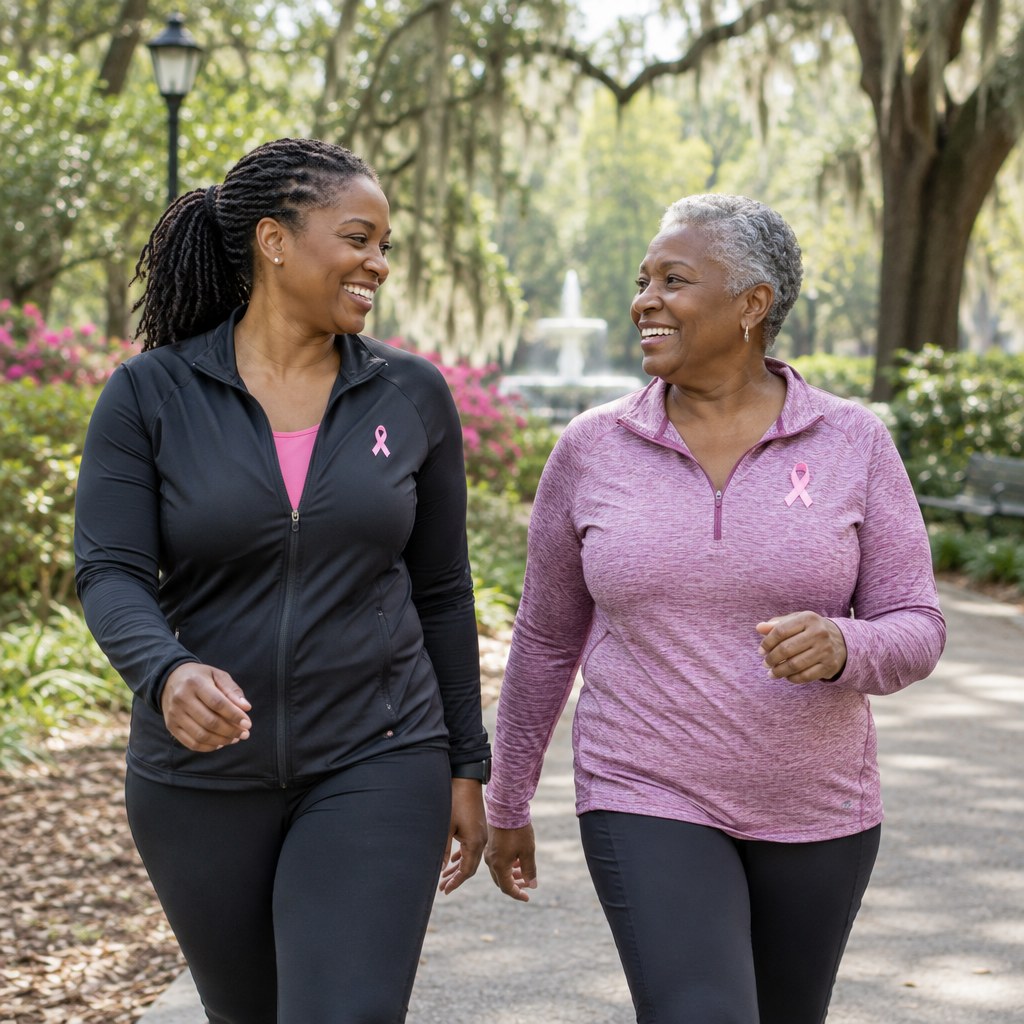
For people facing breast cancer, exercise can mean anything from a short walk to a carefully supervised rehabilitation program. In Savannah and Coastal Georgia, staying active does not have to mean joining a gym or following an intense workout plan. Savannah and Coastal Georgia residents can enjoy local parks, squares and other outdoor spaces when the weather and their health allow.
- Physical activity is linked to lower breast cancer risk and can improve fatigue, mood, function, and quality of life.
- Ask your oncology team before exercising during treatment to check restrictions related to surgery, infection, anemia, neuropathy, or bone involvement.
- Local rehab and programs like LIVESTRONG at the YMCA, Lewis Cancer & Research Pavilion, and Memorial Health offer cancer rehabilitation and lymphedema care.
Physical activity is associated with lower breast cancer risk and can improve well-being for many people during and after treatment. It does not guarantee prevention or replace medical care.
What Studies and Guidelines Tell Us
The American Cancer Society recommends that adults work toward 150 to 300 minutes of moderate activity or 75 to 150 minutes of vigorous activity each week. Those are general public health goals, not a prescription for every cancer patient.
An American College of Sports Medicine expert consensus found that appropriately prescribed exercise can help many people with cancer manage fatigue, anxiety and depressive symptoms while improving physical function and quality of life.
Movement That Fits Everyday Life
Walking, dancing, gardening, riding a stationary bicycle and gentle fitness classes can all be forms of physical activity. Strength training may also help preserve muscle and function. Starting with a few comfortable minutes may be more realistic than trying to reach a weekly target immediately.
For Savannah residents, heat and humidity can make outdoor activity challenging. Consider cooler hours, hydration and indoor alternatives when necessary.
Exercise During Treatment: Safety Comes First
Many patients can remain active during treatment, but recent surgery, anemia, infection, neuropathy, balance problems, bone involvement or severe fatigue may require changes. Ask the oncology team whether there are restrictions and whether physical therapy or cancer rehabilitation would help.
Stop exercising and seek medical guidance for chest pain, fainting, unusual shortness of breath or other concerning symptoms.
What About Lymphedema?
Some patients develop swelling after breast cancer surgery or radiation. Gradually progressed, supervised resistance exercise can be safe for many survivors, including some with lymphedema, but new or worsening swelling should be assessed. A qualified lymphedema therapist can help with individualized recommendations.
Exercise and Recovery Resources in Coastal Georgia
The YMCA of Coastal Georgia describes its LIVESTRONG at the YMCA program for adults living with or beyond cancer. The 12-week small-group program includes cardiovascular activity, strength training, balance and flexibility exercises led by trained instructors. Contact the YMCA to confirm current participating branches, enrollment, eligibility and any medical-clearance requirements before making plans.
In Savannah, the Nancy N. and J.C. Lewis Cancer & Research Pavilion also lists cancer rehabilitation and survivorship services. Patients can ask their oncology team whether a referral to rehabilitation or physical therapy is appropriate. The center is at 225 Candler Drive, Savannah, and can be reached at 912-819-5704.
Residents of Pooler, Hinesville, Richmond Hill, Statesboro and surrounding Coastal Georgia communities may need to consider transportation, class schedules and treatment-related fatigue when choosing a program. A safe starting point may be a short walk near home or gentle indoor movement, but people in active treatment should discuss any restrictions with their care team.
Hospital-Based Cancer Rehabilitation in Savannah
Memorial Health Curtis and Elizabeth Anderson Cancer Institute at 4700 Waters Avenue lists lymphedema therapy, counseling, nurse navigation, and supportive wellness services for breast cancer patients. Ask about current rehabilitation services and referrals by calling 912-350-8000. Memorial Health breast cancer services.
St. Joseph’s/Candler offers cancer rehabilitation and lymphedema-related care through its Savannah health system. The Lewis Cancer & Research Pavilion can help patients ask about physical therapy, occupational therapy, and recovery support. Cancer rehabilitation information.
Confirm program availability, insurance, and medical clearance before enrolling. General fitness classes are not a substitute for cancer rehabilitation when specialized care is needed.
Five Questions Worth Asking
- What activity is safe during my treatment or recovery?
- Are there restrictions related to surgery, a port or bone health?
- Would cancer rehabilitation or physical therapy help?
- How should I adjust for fatigue, numbness or swelling?
- What is a realistic starting goal for me?
Breast health also depends on screening and timely follow-up. Find community information in the Savannah Herald’s Breast Cancer Awareness & Resource Guide.
Sources
- American Cancer Society: Diet and Physical Activity Guidelines
- American College of Sports Medicine: Exercise Guidelines for Cancer Survivors
- National Cancer Institute: Fatigue and Cancer Treatment
Editor’s note: Exercise recommendations during and after cancer treatment should be individualized with a healthcare professional.
