




Tech Trends & Innovation: The Latest in Tech News
- Congress passed a TikTok ban tied to Gaza protests, framed as national security despite weak public evidence.
- Lawmakers blamed algorithmic propaganda for youth pro-Palestine sentiment, conflating platform trends with foreign interference.
- Author coins information-nationalism: states weaponize selective information to defend their abuses and discredit rivals.
- U.S. response combined censorship tactics, surveillance, ICE threats, and university repression to suppress pro-Palestine dissent.
- TikTok's alleged bias lacked clear evidence; mainstream media historically favored Israel, complicating claims of platform-driven radicalization.
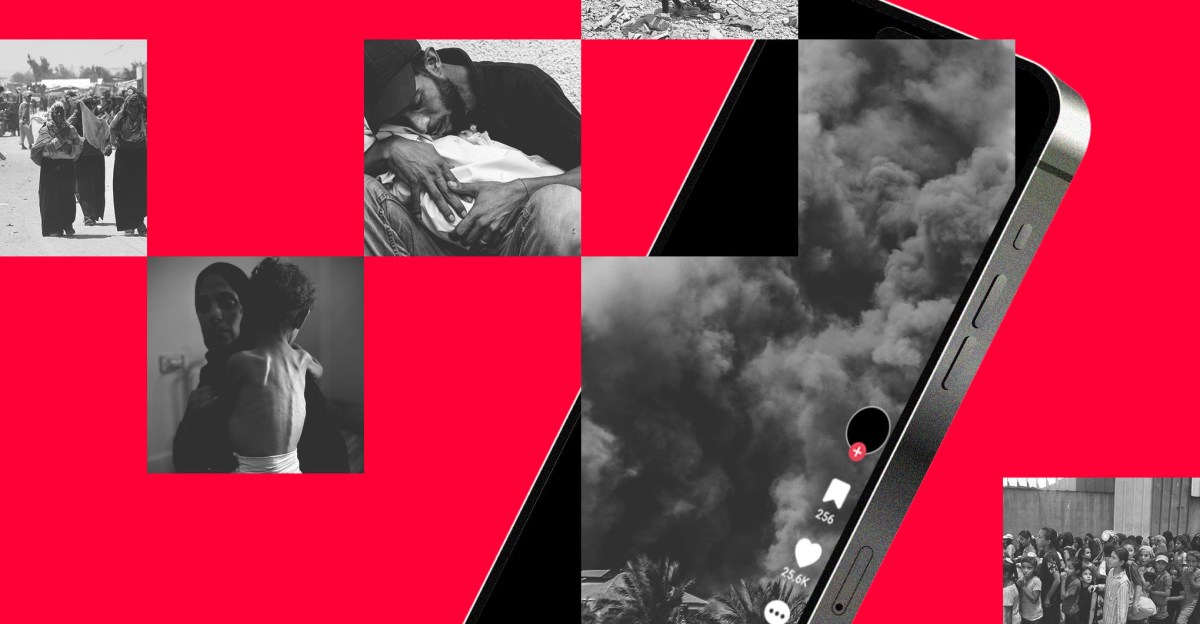
In the last month, the war in Gaza has become an inescapable facet of the public consciousness as a new surge of images of Palestinian children their faces impossibly sunken, their limbs reduced to skin and bone flooded the internet. As the pictures became ubiquitous, the outcry became louder than ever.
These conditions of extreme deprivation are not new: in November 2024, the International Criminal Court issued an arrest warrant for Israeli Prime Minister Benjamin Netanyahu for using starvation as a method of war. Nevertheless, the situation now is piercing the mainstream in a way that official charges of war crimes could not. Maybe it was the video of guards at a food aid distribution site using stun grenades, pepper spray, and live ammunition on crowds of hungry Palestinians. Or perhaps it was the news, two weeks later, that 20 Palestinians had been killed mostly by trampling when a crowd at a distribution site panicked as stun grenades were used on them. Or possibly it was the open letter from the European news agency AFP, warning that its final remaining journalists in Gaza were at imminent risk of death by starvation. Since AFP was founded in 1944, we have lost journalists in conflicts, some have been injured, others taken prisoner. But none of us can ever remember seeing colleagues die of hunger, the agency wrote.
But most likely it was the images of children children far too weak to move, their wasted bodies rendered at screen resolutions that should not exist in the same era of history as their inhumane malnourishment. These horrific pictures are viral; even President Donald Trump, who continues to back Netanyahu, has seen them. Some of those kids are thats real starvation stuff. I see it, and you cant fake that, he said on television.
The upswell of photographs from Gaza is surreal. The heightened attention resembles similar inflection points in the past, in which international scrutiny came to focus on an atrocity inflicted on children abroad think of intentionally viral campaigns like Kony 2012 (protesting, among other things, the use of child soldiers) or #BringBackOurGirls (decrying the 2014 abduction of 276 schoolgirls by Boko Haram in Nigeria).
But these priors are also distinct from the virality of this moment. Both Kony 2012 and #BringBackOurGirls were attempts to solicit American intervention. Although there is, in the short term, a demand for American action in Gaza, the immediacy of the crisis just barely obscures the paradox at play. Israel has successfully blockaded Gaza by land, sea, and air since 2007, controlling how much food and water can enter the region. It has maintained military supremacy and bolstered its cutting-edge defenses using American military aid and American-manufactured arms. The ultimate plea from Gaza is for American nonintervention. The US has had a hand in the starvation of Gaza. And in that sense, the sum total of these images of Gazan children despite no single photograph breaking free and coming to the forefront of the onslaught is most analogous to the Vietnam Wars Napalm Girl photo.
One of the persistent myths of American history is that The Terror of War, a 1972 photograph of a weeping, running nine-year-old Vietnamese girl covered in blazing napalm, changed American sentiment and brought an end to the Vietnam War, a conflict that had been made possible with American dollars, American bombs, and, eventually, American soldiers. I, too, subscribed to this belief at one point. But in truth, a poll in 1971 the year prior found that 61 percent of Americans already believed it had been a mistake to send soldiers to Vietnam. (A poll in early 1973, ahead of the Paris Peace Accords, saw no rise in that number.) The Napalm Girl photograph was never a catalyst; it was a symbol of a tide that had already turned.
The myth of the Napalm Girl is powerful because it tells us a story about the American conscience that is far more palatable than the reality. We would like to think that Americans only tolerated war so long as they did not viscerally comprehend its horror. The truth is a little more complex: photography, videography, journalism, and mass communication were important to the American antiwar movement, but raw information on its own was never the on / off switch of morality. To comprehend horror is not the same as rejecting it.
Regardless, governments certainly believe that images speak to the conscience in a way that can shake the foundations of power itself. It is why Richard Nixon was caught on the Oval Office tapes furiously coping about The Terror of War, musing about how surely it must be fake. It is why the United States instituted a blanket ban on photographs of flag-draped coffins of soldiers returning from the battlefield from 1991 to 2009. It is why IDF spokesperson Effie Defrin has told reporters that most of the images of starving children were fake, fake distributed by Hamas. It is why China still censors a photograph of a man with two plastic bags standing in front of a line of tanks in Tiananmen Square; it is why China banned TikTok in Hong Kong during the 2020 democracy protests.
And its why the United States did what it did in March 2024. Six months after the October 7th massacre of 1,195 people by Hamas, and the commencement of Israels retaliatory war in Gaza, upwards of 30,000 Palestinians, including 13,000 children, had been killed. Americas response to all of this was, of all things, an attempt to ban TikTok.
Trump was the first to propose a ban on TikTok as early as 2020, ultimately signing an executive order to force the sale of the Chinese-owned video platform. This effort petered out for a number of reasons, including probable unconstitutionality, Trump getting sort of distracted by a bunch of stuff, and then Trump leaving office.
The Biden administration withdrew the executive order, but fear of TikTok lingered as a bipartisan issue. In 2022, Reps. Mike Gallagher (R-WI) and Raja Krishnamoorthi (D-IL) introduced a sell-or-ban bill designed to wrest control of the platform from Chinese parent company ByteDance. This went nowhere, although later in the year, the app was officially forbidden from being installed on certain government-owned devices. Claims and insinuations that the software posed a national security risk circulated for years, but without convincing, publicly available evidence, the TikTok ban looked as though it had been consigned to the dustbin of discarded ideas. Then, in March 2024, after a classified briefing, the House Energy and Commerce Committee voted 500 to advance the TikTok ban bill. Shortly thereafter, the House voted 352 to 60 in favor of the measure.
This wasnt really a ban, congressional offices were quick to say from the start. It was merely the threat of a ban, meant to force ByteDance into selling majority control of TikTok to an American owner. And ByteDance would sell, they assured us. There was simply too much money on the table.
The inherent ridiculousness of this position seemed to go by without remark. Our lawmakers were ascribing covert ownership and control of a social media platform to an authoritarian communist state with an iron grip on the lives of a billion and a half people, and then going on to insist there wasnt the faintest possibility the communists would pass up on a pile of American dollars. Moreover, no one seemed to be able to square the claims of shadowy Chinese control over the TikTok algorithm with the fact that the Chinese Communist Party (CCP) had never allowed TikTok in mainland China (where a sister app, Douyin, is ascendant instead) or the fact that the CCP had later proceeded to crack down on TikTok in Hong Kong when civil unrest had broken out over the institution of a new Chinese national security law. (TikTok is still unavailable for download in Hong Kong.)
There was no evidence that TikTok was an insecure app. It does collect user data, but as the entire world knows, that kind of data collection is endemic to social media; dire warnings about data privacy begged the question of why it was okay for Facebook to have that data but not for TikTok. Still, the basic proposition that ByteDance was susceptible to pressure from Beijing was entirely reasonable. But rather than posing some kind of undetectable spyware risk, the danger was from Chinese-influenced content moderation. Internal materials at ByteDance acquired by Forbes indicate that TikToks content moderation system monitored for mentions of Tibet and the Uyghur people both sensitive topics in China due to ongoing state repression of ethnic minorities. If TikTok had put its thumb on the scales in response to the CCP, why wouldnt it tweak the algorithm to start some kind of massive psy-op against the American people?
No one could really establish a tie between Beijing and the watermelon emoji
The contents of that March 2024 classified briefing that made 50 congressional representatives freak out have never been made public. But its not hard to figure out what changed between 2022 and 2024. Oct. 7 really opened peoples eyes to whats happening on TikTok, Krishnamoorthi told The Wall Street Journal a few days before the vote. Multiple sources told the WSJ that Gallagher and Krishnamoorthis efforts had been revived in part by the fallout from the Oct. 7 attack by Hamas on Israel. Gallagher was even more transparent about where he stood on the matter, writing an op-ed in The Free Press titled Why Do Young Americans Support Hamas? Look at TikTok, describing the app as digital fentanyl that was brainwashing our youth.
TikTok is a tool China uses to spread propaganda to Americans, now its being used to downplay Hamas terrorism, then-Sen. Marco Rubio (R-FL) wrote on X in November 2023. TikTok needs to be shut down. Now.
TikTok and its parent company ByteDance are threats to American national security, wrote Sen. Josh Hawley (R-MO) in a letter to Treasury Secretary Janet Yellen, also in November 2023. He decried TikToks power to radically distort the world-picture that Americas young people encounter, describing Israels unfolding war with Hamas as a crucial test case.
According to one poll, 51% of Americans between the ages of 18 and 24 believe that Hamass murder of civilians was justified a statistic notably different from other age cohorts, Hawley wrote. Analysts have attributed this disparity to the ubiquity of anti-Israel content on TikTok, where most young internet users get their information about the world.
By March 2024, as the House geared up to vote on the TikTok ban, there was already a clear and visible youth movement condemning Israels actions in Gaza. On April 17th, while the TikTok ban was still stalled at the Senate, students at Columbia University began pitching tents on the South Lawn in protest of the war, demanding that their school divest from companies with ties to Israel. All across the United States, university students set up their own encampments in solidarity.
The TikTok ban then found fresh momentum; Congress rolled it up into a package with a foreign aid bill that provided billions of dollars of military assistance to Ukraine and Israel. (In a twist that seems almost satirical, the bill also prohibited funding for the United Nations Relief and Work Agency, an organization that, among other things, provides food assistance to Palestinian refugees.) Once bundled with the foreign aid package, the TikTok ban sailed through both the House and Senate. On April 24th, on the same day that House Speaker Mike Johnson (R-LA) took the stage at a press conference at Columbia University in order to accuse pro-Palestinian protesters of antisemitism, President Joe Biden signed the ban into law.
Even after the passage of the bill, legislators drew a connection between the war in Gaza and the TikTok ban. The following May, Sen. Mitt Romney (R-UT) said, Some wonder why there was such overwhelming support for us to shut down potentially TikTok or other entities of that nature. If you look at the postings on TikTok and the number of mentions of Palestinians relative to other social media sites its overwhelmingly so among TikTok broadcasts.
To be clear, no one could really establish a tie between Beijing and the watermelon emoji. But in the minds of the very legislators who had voted for the TikTok ban bill, there was a definite link between the ban and Palestine. And meanwhile, those on the other side of the issue saw a connection as well.
A week after Romneys remarks, Macklemore a white rapper best known for palatable tracks and softcore social liberalism, who was now, bizarrely, one of the most visible figures in the pro-Palestine movement released Hinds Hall. The protest song included the lyrics You can pay off Meta, you cant pay off me, and You can ban TikTok, take us out the algorithm / But its too late, weve seen the truth, we bear witness.
Because social media platforms are increasingly opaque about the global metrics of their content, it is difficult to accurately measure a skew in pro-Palestine versus pro-Israel content. TikTok, the corporation, has always contested the factual issue of whether its algorithms skew toward pro-Palestine content. The company has questioned the methodology of those who allege that the algorithm is actively promoting pro-Hamas or pro-Palestine messaging; it has pointed out that there appears to be a skew on Metas platforms as well. From TikToks perspective, there is simply more organic pro-Palestine content. And if the skew appears to be more pronounced on TikTok, the company argued, it is because TikToks user base was younger, and younger generations tend to be more pro-Palestine than older generations. In other words, TikTok was not poisoning the youth; the youth were poisoning TikTok.
Perhaps to that point, in December 2023, Human Rights Watch issued a report alleging systemic censorship of pro-Palestine content on Instagram and Facebook. Unfortunately for ByteDance and its communist overlords, this was not the sort of allegation that TikTok could capitalize on. The reality was that Metas own content moderation practices reflected a long-standing bias in American news coverage. Research and analysis of Israel-Palestine news coverage in the US stretching back to the 1980s suggests a persistent bias against Palestinians historically, media reports have tended to underreport Palestinian deaths relative to Israeli deaths, and to more often cite official Israeli sources over Palestinian ones.
What the fuck does any of this have to do with American national security?
In other words, Facebook and traditional media sources of news that older generations were more likely to rely on were biased against Palestine, and those same older generations were also less likely to support Palestine. Meanwhile, a third of Americans under the age of 30 relied on TikTok for news, and Americans in that age bracket are much more likely to sympathize with Palestine.
But information environments are not straightforward causal chains of influence. They are, rather, chaotic and recursive oceans of sentiment. The Napalm Girl photograph may not have ended the Vietnam War, but the relentless pipeline of war footage from Southeast Asia was not being dumped out into a void. It had an effect on the American psyche and American politics, and that in turn had an impact on the kind of reporting that was pursued by American journalists.
If one cannot acknowledge the recursive nature of media, one is railroaded into asking, Where did all this pro-Palestinian content even come from? Which then begets the even more problematic question Where did all this pro-Israel content come from? And because it is difficult to contemplate how we swim between the tides of information, media, and public opinion, weaker minds will fall back on conspiracy theory. One side parrots cheap antisemitism about a Jewish-controlled media; and the other alleges a massive conspiracy by the Peoples Republic of China. Which then leads us to the most uncomfortable question of all: What the fuck does any of this have to do with American national security?
In 2020, in the wake of Trumps first attempt at a TikTok ban, I tried making sense of the strange, contradictory noise around TikTok, China, and America. China had banned TikTok in Hong Kong, citing its national security. Now the United States was trying to ban the app in America, citing CCP control. I couldnt stop thinking about Chinas hypersensitivity about the Xinjiang region, where the Chinese government is alleged to be committing genocide against the Uyghur people an ethnic group subject to sweeping suppression under the pretext of curbing violent Islamic terrorists who wish to secede as a separate, sovereign state. Any international scrutiny of Xinjiang was treated as a dire offense; it dawned on me that the American governments increasing hostility toward woke and the Black Lives Matter movement carried the exact same flavor of authoritarian hysteria.
From there, I posited a theory that I dubbed information-nationalism a paradigm in which world powers promote information about their rivals human rights abuses while suppressing information about their own. This was not countries engaging in basic adversarial public relations, I argued, but rather a shift in which both China and the United States had come to accept the same basic premises about the role of information in national security. To acknowledge its own abuses would make America weak; to advertise the abuses of its enemies would make them weak and, conversely, would make America strong.
Since the 1990s, American foreign policy had assumed that the free flow of information such as an unfettered internet could only be, in the aggregate, favorable to democracies like the United States. The export of American culture was seen as one of the forces that brought down the Soviet Union; Chinese controls over the internet were viewed as an artificial entrenchment of an authoritarianism that was destined to lose should it ever be tested in an honest-to-goodness fight in the marketplace of ideas. But these kinds of assumptions are no longer the bedrock of American foreign policy. They belong to a world we no longer live in, and to a paradigm through which we no longer view the internet. How America would enact its new outlook on the world was unclear when it lacked a decades-old technological solution like the Great Firewall of China. The TikTok ban became an early experiment of what the American playbook would look like.
When seen through the lens of information-nationalism, the TikTok ban makes perfect sense. Lawmakers were not being hornswoggled by flimsy allegations that Beijing had pacifism-pilled American kids. Rather, any information about what Israel was doing in Gaza with American aid and American weaponry the bombed hospitals, the bodies under rubble, the starving children was automatically a win for China. No cause and effect had to be established between the CCP and the content. Similarly, a video about forced labor camps in Xinjiang regardless of the content creators ties to America was automatically a win for the United States. And if TikTok was downplaying Chinese atrocities against the Uyghur people while passively allowing the organic spread of content about the atrocities that America was complicit in, the app was, in fact, an instrument of Chinese information-nationalism.
The bill signed by Biden gave ByteDance nine months to sell TikTok, with an option for the president to extend the deadline. This placed the first deadline on January 19th, 2025, which ended up being the day before Trumps inauguration. TikTok went dark on the night of January 18th, only to bring back service the next day when Trump touted a plan to save TikTok. The plan did not appear to be entirely legal, but this did not bother TikTok, which was all too ready to fawningly hail Trump as the apps savior, even though he had been the original progenitor of the ban.
On the first day of his return to office, Trump suspended the TikTok ban in a legally dubious move. The new deadline came; the president issued a second extension which, at this point, seemed definitely illegal. By the time the third extension rolled around, no one batted an eye.
Congress had passed the TikTok ban by an overwhelming majority, and the government had defended it at the Supreme Court, citing a severe national security risk. Yet the smartphone app secretly controlled by the Chinese Communist Party continues to stream what is supposed to be dangerous propaganda into the eyeballs of Americas children, with very little objection from lawmakers. There are only three possibilities: that Congress is very stupid, that Congress lied, or that there has been a significant change in what Congress perceives to be the state of American national security.
Internet censorship of the tanks at Tiananmen Square is a kind of weapon, but so are literal actual weapons like those very tanks. Congress disinterest in enforcing the TikTok ban coincides with increasingly punitive measures against student activists and an escalation of force against all protests. The second TikTok ban extension was signed while Columbia graduate student Mahmoud Khalil was still in ICE detention; the third was signed just one day before a court ordered his release. At that point, countless student protesters across the country had been imprisoned; some had been deported from the country. Non-citizen students are desperately trying to scrub their names from the internet and remove any sign that they once objected to Israels actions in Gaza. The threat of ICE now flush with billions of dollars to hire thousands of new agents looms over all forms of dissent in the United States.
The things that we need the most in this moment are things we have already given away
You dont need to take TikTok away from the kids once youve got jackboots on their necks. And why attack the social media platforms when you can use social media surveillance to identify targets for repression? Once dissent was squashed, TikTok no longer posed a threat. This is the ultimate logic of why China censors all mention of Tiananmen Square within its borders: disillusionment with the state fuels dissent; dissent makes the state weak. Chinese-style information-nationalism is a sophisticated technological web of censorship; the American style, as it turns out, involves thousands of ICE agents.
Viewed through this lens, the new focus on Gaza is not a change of fortune for Palestinians, but rather a sign of how successfully the United States has suppressed their sympathizers. The pictures of infants reduced to skeletal forms, the videos of panicked hungry crowds under fire, the sheer devastation wrought on the Gaza Strip these images no longer pose a risk to America. A photograph cannot inspire an antiwar movement if the antiwar movement has been spirited away in the night to a facility in Louisiana. Like the Napalm Girl photo, these images are but a symbol of a tide that has already turned.
Trumps oddly blas acknowledgment of the starvation in Gaza might have been the senile ramblings of a television addict with no knowledge of the past several decades of American foreign policy. But he has always demonstrated animal cunning when it comes to power and vulnerability. And with the universities brought to their knees, hordes of masked secret police on the streets, the cowing of major newspapers like the Los Angeles Times and The Washington Post, and the massive defunding of public media, all of the institutions that could meaningfully criticize the government are now in their most weakened state.
We are now facing a time where democracy is in critical condition, but a dragnet of surveillance and suppression has already closed around young activists, an entire movement has been intimidated into silence, and the social media networks appear to be pandering to the federal government. To adopt the logic of information-nationalism is to commit to a course of action that is at odds with democracy. Now, the things that we need the most in this moment are things we have already given away.
We have always been at war with TikTok. We have never been at war with TikTok. And if we are lucky, one day, we can all look back and be able to tell the truth about ourselves how we imprisoned our children, dismantled our universities, and tried to ban a scrolling video app, all because we could not admit that we were wrong about Palestine.
Read the full article from the original source
