




Aging Well: News & Insights for Seniors and Caregivers
- Engaging social activities ease loneliness, boost mood, and slow cognitive decline through shared stories, music, and renewed purpose.
- Choose activities that match interests and abilities; offer low-pressure, accessible options like chair yoga, crafts, and gardening.
- Families remove barriers, join in, invite grandkids, and offer patient encouragement to gently reconnect seniors.
- Use simple tech like video calls, social media such as Facebook, and services like Always Best Care to stay connected.
Social Activities for Seniors: Key Takeaways
- Social activities for seniors go beyond fun, as they also strengthen an elderly person’s overall well-being
- Every individual has different preferences, so social activities for seniors should be flexible and accessible
- Families play an important part in making it easier for seniors to stay socially connected
Nearly one in four older adults living at home say they feel socially isolated, and about 43% of people over 60 say they feel lonely.
It’s a quiet struggle for many seniors, and one that deserves more attention and care. That’s why social activities for seniors matter.
Social activities for seniors like crafting, tending a small garden, or joining a day trip can do more than pass the time. They also help build connections and remind elderly individuals they’re part of a larger community.
If you’re wondering how to get your favorite senior out of their shell, this guide has got you covered.
In this article, we will:
Fun Activities for Elderly in Nursing Homes: Old People Games & More
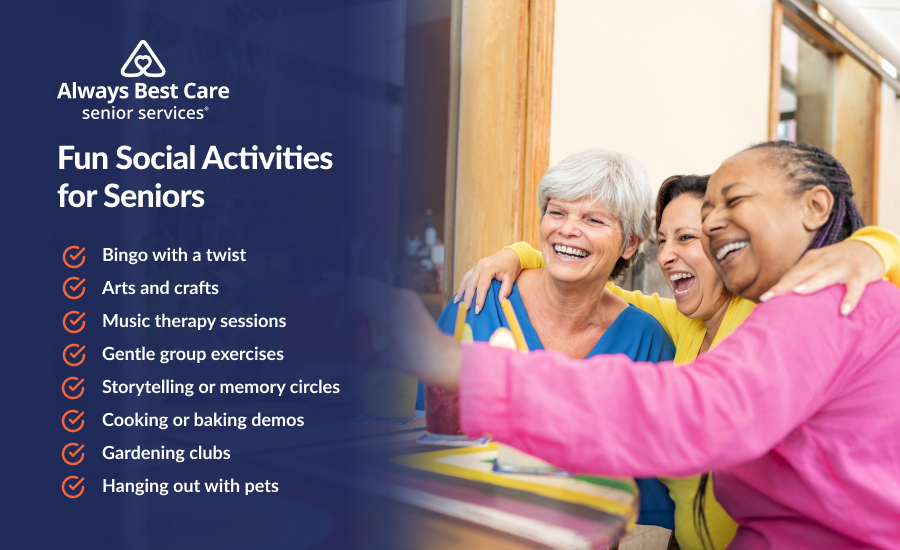
Here are fun and meaningful activities for seniors in nursing homes, from classic “old people games” to simple, engaging ways to make everyday life more enjoyable.
- Bingo with a twist: Add themed prizes or silly “callers” to make this classic game feel fresh and fun every time.
- Arts and crafts: Imagine painting flower pots, making holiday cards, or crafting quirky collages. No art skills needed, just a little creativity and fun.
- Music therapy sessions: From sing-alongs and live performances to music trivia, the right tunes can spark memories and help get their toes tapping.
- Gentle group exercises: Chair yoga, stretching circles, or balloon volleyball keep everyone moving, and usually laughing a little, too!
- Storytelling or memory circles: Story circles, photo sharing, or “Remember When” games give residents a chance to connect over shared experiences.
- Cooking or baking demos: Baking together, decorating cookies, or sharing a favorite family recipe brings people closer, and fills the hallways with something that smells a lot like home.
- Gardening clubs: Whether it’s planting herbs in teacups or tending raised garden beds, a little dirt under the nails goes a long way, especially for seniors with green thumbs who miss time outdoors or love watching something grow.
- Hanging out with pets: Visits from furry friends are always a favorite, because sometimes, a wagging tail or gentle nuzzle is all it takes to lift someone’s spirits.
- An afternoon at the movies: Watching classic films or new releases together can be a calming, communal experience, especially with popcorn!
5 Benefits of Socialization for Seniors
What if the secret to aging well wasn’t a treatment or a diet, but meaningful conversations?
Let’s walk through the surprising ways social activities for seniors fuel their well-being.
1. It Eases Loneliness
In 2022, nearly one in three adults aged 50 to 80 reported feeling socially isolated, according to the University of Michigan’s National Poll on Healthy Aging.
This level of disconnection isn’t just common; it’s also dangerous.
Loneliness is more than just an emotional burden, as it’s also associated with serious health risks, including depression, cognitive decline, and heart disease.
2. It Keeps the Mind Active and Engaged
Staying mentally sharp as we age isn’t just about brain teasers and memory games.
While those help, it’s often the unexpected things, like sharing a laugh or telling a story for the third time to someone who genuinely listens, that keep the mind truly engaged.
It turns out those small moments matter more than we might think.
Recent research shows that regular social interaction helps slow age-related cognitive decline, especially in older adults.
3. It Creates a Strong Support System
As the years pass, seniors don’t just hold on to milestones or memories; they also value the people who continue to show up.
Friends who check in, neighbors who lend a hand, and family members who take the time to listen all help build the steady support system every senior needs and deserves.
4. It Boosts Confidence and Self-Worth
Social interaction helps seniors feel valued and respected.
Whether offering advice, joining a group activity, or simply receiving a warm hello, these moments reinforce self-worth, often sparking better self-care, increased engagement, and a more positive outlook.
5. It Restores a Sense of Purpose
Sometimes, purpose doesn’t come from a big mission; it comes from a knock on the door, a shared story, or a moment of being needed.
For many seniors, these simple connections are what bring meaning back into focus and remind them they still have something important to give.

How Families Can Make Activities for Seniors More Enjoyable
Explore creative ways to turn everyday interactions into meaningful moments through engaging social activities for seniors.
1. Start with What They Already Enjoy
It’s easy to jump straight into suggesting events or activities, but it’s often more effective to start with something smaller and more personal.
Ask how they’ve been feeling lately. Bring up someone they haven’t seen in a while.
Often, what seniors need most isn’t a packed schedule, but a reminder that someone still wants to be with them.
These simple check-ins can spark interest in low-pressure social activities for seniors, especially when they’re centered around familiar faces and warm conversations.
2. Make Socializing Easy and Accessible
Socializing looks different for everyone. Some seniors crave lively gatherings; others prefer quiet one-on-one chats. Pay attention to what lights them up and what wears them out.
Suggest low-pressure options, like a walk with a neighbor or coffee on the porch, rather than urging them into large groups right away.
Supporting the right social activities for the elderly means meeting them where they are.
3. Involve Friends and Grandkids
Sometimes, a simple nudge from someone they love is all it takes.
Invite the grandkids to play cards, cook together, or learn a hobby their grandparent enjoys. You can also help them reconnect with old friends by arranging a quick call or visit.
4. Suggest Group Activities That Fit Their Comfort Level
A lot of hesitation comes down to logistics: transportation, energy levels, or even anxiety about unfamiliar settings.
Offer to go with them, provide a ride, or simply help them prepare. Removing these small barriers opens the door to social activities for seniors that might otherwise feel out of reach.
5. Use Technology to Stay Connected
Help them set up a simple video call with family, join a Facebook group for local seniors, or play a digital card game with the grandkids.
While technology doesn’t replace face-to-face interaction, it can still fill in some of the gaps. Even digital forms of social interaction for older adults have been shown to support memory and mood.
6. Lead by Example
Sometimes the best way to encourage connection is through involvement. Instead of telling them to socialize, give them a reason to.
Invite them to your next dinner with friends, include them in your weekend plans, or ask for their input on something that matters to you, like weighing in on your “DIY masterpiece”!
At the end of the day, genuine inclusion often opens the door to social activities for seniors.
7. Be Patient and Encouraging
If your loved one seems uninterested in socializing, it may not be due to personality; it might be grief, anxiety, or simply feeling worn out.
Instead of pushing, check in with care. What they often need isn’t activity, but reassurance that someone sees them. Helping with old people socializing starts not with plans, but with emotional safety.

Discover How Always Best Care Can Support Your Loved One
No one’s plan is to spend their golden years on the sidelines.
Whether your loved one thrives at home or is open to a new care facility, Always Best Care makes sure they’re safe and socially connected.
From companionship and 24-hour care to helping find the right community through our senior living referral services, we’re here to help them stay active, engaged, and surrounded by good company.
Social Activities for Seniors: FAQs
Why are social activities important for seniors?
The importance of socialization for seniors goes far beyond entertainment.
Staying socially connected helps reduce feelings of isolation, improves mood, and can even slow cognitive decline.
Regular social interaction for elderly individuals supports better physical and emotional health, making it one of the most important aspects of healthy aging.
What are some good social activities for seniors who have limited mobility?
There are plenty of engaging options that don’t require much physical effort.
Art classes, virtual meetups, or classic board games are all great examples.
Many social groups for older adults also offer hobby-based activities that can be enjoyed right from home or within a care community.
These types of social activities for seniors create meaningful connections and routine, without placing extra strain on energy.
How can families help seniors get involved in social activities?
Start by finding out where older adults hang out in your area. Senior centers, community events, or hobby groups are great options to explore.
Families can also encourage participation in social activities for older adults that align with their loved one’s interests.
Read the full article on the original source
