




Black Athletes in the Spotlight: HBCU Sports & Local Highlights
- Orange Blossom Classic reunited generations at Hard Rock Stadium, showcasing FAMU's evolving traditions and deep community presence.
- Quinn Gray Sr. leads the football program while former Heisman winner Charlie Ward begins as FAMU men’s basketball coach.
- The game introduced the inaugural James "J.R.E." Lee III MVP Award, connecting the Classic to its founder’s legacy.
- The Marching 100's halftime, performing Michael Jackson songs, became a signature moment that captivated the crowd.
- New attendees and nonalumni embraced FAMU culture, highlighting the Classic’s role in extending HBCU influence across South Florida communities.
Kenneth Williams remembers the Orange Blossom Classic from a much different perspective.
Before he was the principal of Miami’s Scott Lake Elementary, Williams was a member of Florida A&M University’s Marching 100. He marched in the Classic during his college years and remembers when the game and FAMU’s presence in South Florida were already deeply woven into the community.
Decades later, as an alumnus, Williams returned for another one.
“I marched in the Marching 100 back in the ’80s,” Williams said. “So I marched in the Classic game, and I’ve come here every year that it has been here.”
For Williams, a Miami native who attended FAMU from 1988 to 1994, Sunday’s Orange Blossom Classic represented something bigger than another football game. It was another chapter in a tradition he has watched evolve alongside his alma mater.
“FAMU itself has just grown over the years,” Williams said. “From the conception of 1887 to when I was there in ’88 to ’94, and even since then, it just continues to grow and grow and grow.”
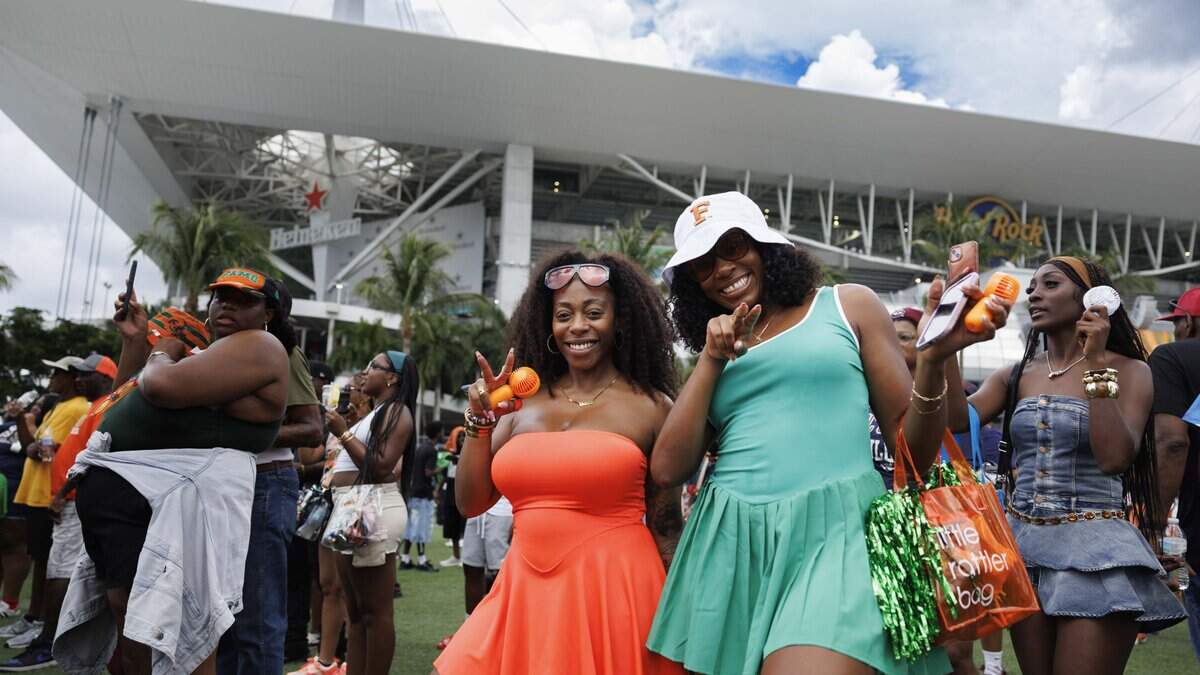
That growth was on display Sunday at Hard Rock Stadium, where generations of HBCU supporters gathered for the latest edition of a game with roots stretching back more than nine decades.
The Rattlers arrived in Miami Gardens with Quinn Gray Sr. leading the football program into a new era. Elsewhere in the athletic department, former Heisman Trophy winner Charlie Ward is beginning his tenure as FAMU’s men’s basketball coach.
The Classic itself is also creating a new connection between FAMU’s past and present. As this game featured the inaugural James “J.R.E.” Lee III MVP Award, named for the FAMU graduate and son of former university president J.R.E. Lee Sr. who founded the Orange Blossom Classic in 1933.
For Williams, those changes are part of a much longer evolution.
The FAMU he remembers from his college years was already defined by a strong sense of community, something he said initially attracted him to the university.
“It was a great family-focused atmosphere, great programs,” Williams said. “It was local. It wasn’t far from home. And you just got that sense of family when you were there.”
Nearly four decades after Williams first arrived at FAMU, that connection is reaching another generation, including people who never attended the university themselves.
For some at Sunday’s Classic, FAMU was familiar territory, and for others, it was an introduction.
Sheneka Brown was attending her first Orange Blossom Classic. She did not attend an HBCU, but her younger sister graduated from FAMU’s nursing school last year.
That connection gave Brown a reason to represent a university she never attended herself.
“My sister is actually a FAMU alum,” Brown said. “She just graduated last year from their school of nursing. So I’m actually elated to represent her and represent the culture.”
Jimmie Butler was also attending his first Orange Blossom Classic and did not attend an HBCU. Still, he said FAMU’s reputation and culture were familiar to him before Sunday.
“I know that the culture and FAMU is actually well-recognizable,” Butler said. “I know that their university in general is actually a great university, so I was glad to be a part of it.”
Brown and Butler were also looking forward to seeing one of FAMU’s most recognizable traditions, the Marching 100, perform at halftime.
“We’re excited about the band,” Brown said.
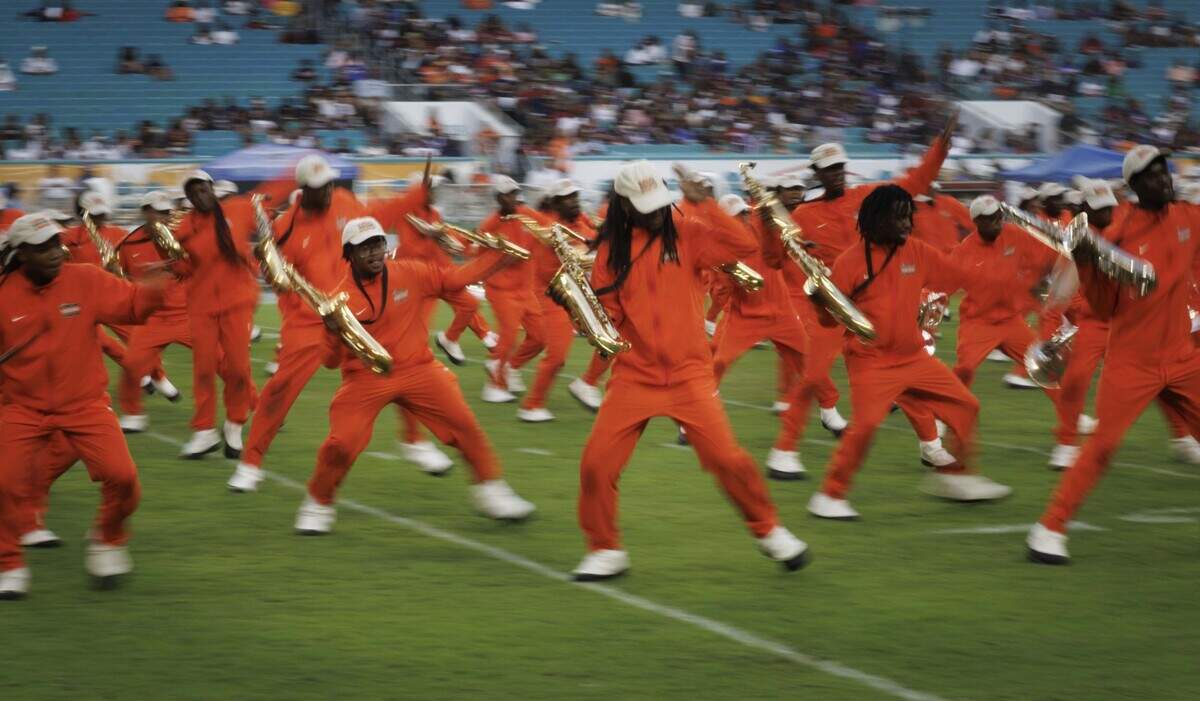
When halftime arrived, the Marching 100 delivered one of the afternoon’s signature moments.
Dressed in matching orange, the band poured onto the field and moved through formations while performing a selection of Michael Jackson songs, including “Human Nature” from his 1982 album “Thriller.” The musicians formed symbols across the field as the performance unfolded, drawing the crowd’s attention away from football and toward one of the traditions that has made FAMU recognizable far beyond Tallahassee.
That reach is particularly significant in South Florida, Williams said, where FAMU and other HBCUs have long produced educators, professionals and community leaders.
“The fact that you get a chance to see African Americans from both colleges and the influence that it still has in our South Florida area,” Williams said. “There was once a time where almost all of your leaders went to HBCUs, whether it was Florida A&M or Bethune-Cookman, and to still see that you’ve got those strong alumni roots right here, that’s what I love.”
The Orange Blossom Classic offered a snapshot of that evolution Sunday.
Williams came with memories of marching in the game decades ago. Brown came to represent a sister who graduated from FAMU just last year. Butler came without having attended an HBCU at all.
Their paths to Hard Rock Stadium were different, but each reflected a piece of FAMU’s reach: the alumni who built its traditions, the graduates carrying them forward and the people being introduced to them for the first time.
Read the full article on the original site
