




Food & Beverage News: Insights, Safety, and Dining Trends
- Greencore recorded a £33.3m loss before tax driven by one-off transaction costs, intangibles amortisation and higher interest costs.
- Greencore posted adjusted pre-tax profit of £54.9m; pro-forma adjusted operating profit rose 15% and pro-forma revenue increased 3.2%.
- Integration of Bakkavor progressing; aiming for at least £80m annual cost synergies within three years, 50% by Jan next year, full by Jan 2029.
- Greencore recognised provisional goodwill £733.7m and intangible assets £949.8m; £928.8m relates to customer relationships amortised over 15 years, £11.6m charged in H1.
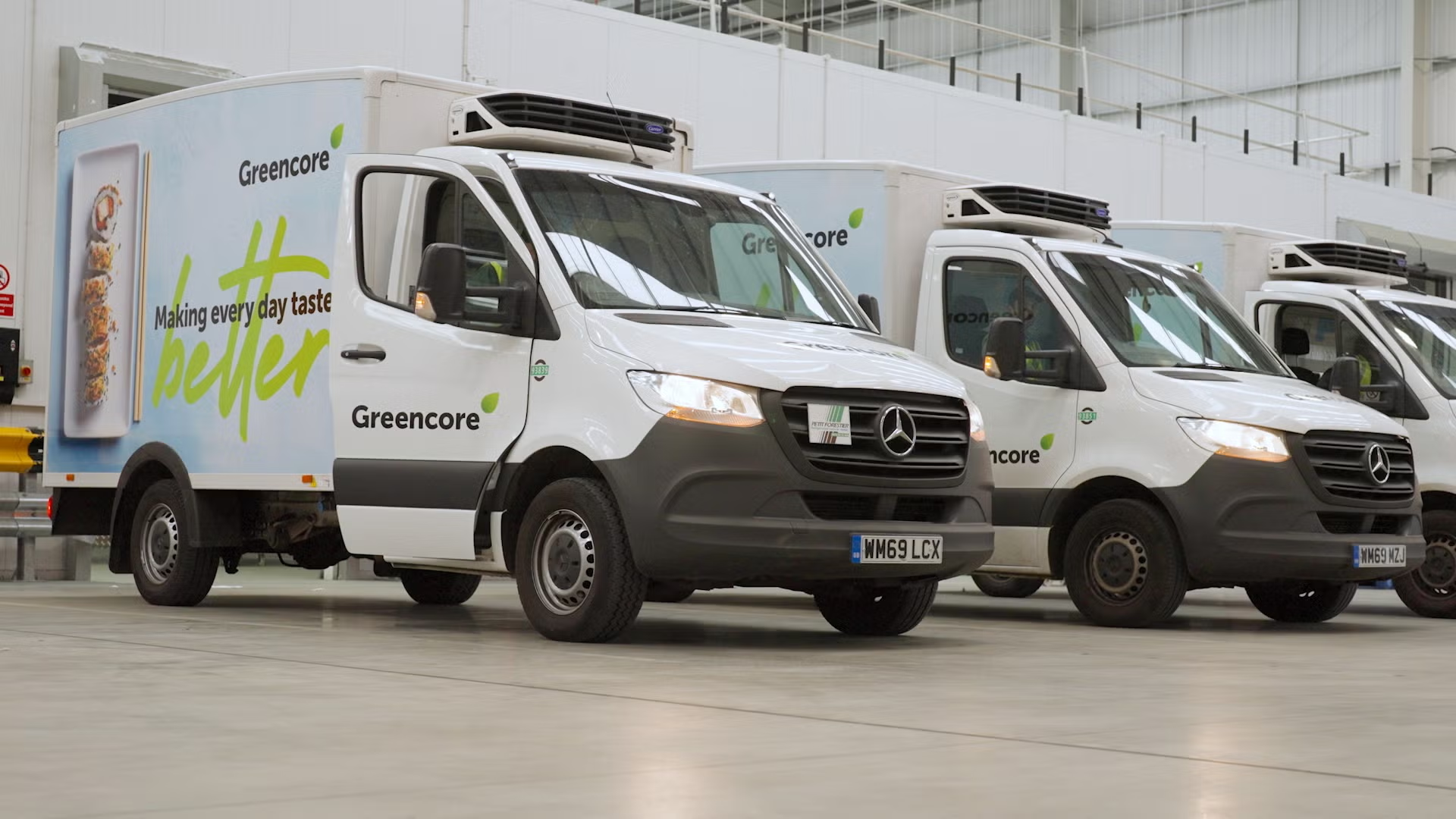
Greencore has issued its first set of results since completing the acquisition of Bakkavor, with a notable hit on the bottom line due to associated costs.
The Dublin-headquartered convenience foods and private-label group today (27 May) reported a loss before tax of £33.3m ($44.7m) in the six months to 27 March, compared to a profit of £26.7m a year earlier.

Discover B2B Marketing That Performs
Combine business intelligence and editorial excellence to reach engaged professionals across 36 leading media platforms.
Greencore said the loss reflected “one-off transaction related costs in exceptional items, the amortisation of customer relationship intangibles and higher interest costs arising from the drawdown of the acquisition financing facilities”.
London-listed Greencore’s approach for UK-based Bakkavor began early last year but was only approved by the Competition and Markets Authority in December to create a combined group with £4bn in annual revenues.
Bakkavor was incorporated into Greencore on 16 January, contributing around ten weeks in sales to the latest numbers.
Otherwise, Greencore reported an adjusted pre-tax profit of £54.9m in the first half, up from £34.8m in the corresponding period.
“The business continued to grow profitably during the half, with 15% pro-forma adjusted operating profit growth and 3.2% pro-forma revenue growth in the UK – during what was a busy period with the Bakkavor acquisition and integration,” Greencore CEO Dalton Philips said today.
“The integration of Bakkavor is progressing well and to plan – and we are focused on bringing our 4,000-plus product portfolio and enhanced capabilities to our customers. We are firmly on track to deliver our target of annual cost synergies of at least £80m within three years post-acquisition.”
Reiterating the previously outlined timeframe, Greencore seeks to achieve 50% of the annual run-rate savings by January next year, rising to 85% 12 months later. The full savings are expected by January 2029.
There was a contrast in fast-half volumes, with volume/mix down 0.8% for the combined business. However, Greencore posted a 0.3% increase while Bakkavor’s volume/mix was down 1.3%.
That decline was partially linked to the “lapping of minor business exits from last year”, Greencore said as it noted general grocery market volumes during the period fell 0.2%.
Greencore added its sandwiches, sushi and pizza categories “performed strongly”. It said the benefits of new business wins in salads, sushi, ambient grocery and desserts are expected to feed through in the final two quarters of the year.
“These wins will support volume growth and will drive [around] 100 basis points of annualised revenue growth – and also include the first wins as a combined business,” the group said.
Elsewhere in today’s results, Greencore posted a 3.2% increase in pro-forma first-half revenue to £1.32bn. Reported revenue was up 43%.
Meanwhile, pro-forma adjusted operating profit rose 15.3% to £73.3m with a 60 basis-point margin progression to 5.6%.
Adjusted EBITDA climbed 52.1% to £111.2m but operating profit turned to a loss of £13.4m versus a positive £38.1m.
Explaining the impact from the Bakkavor deal in its guidance for the full year, Greencore said: “The group are in the process of completing the fair value exercise and recognised provisional goodwill of £733.7m and intangible assets of £949.8m in connection with the acquisition.”
It added that £928.8m “of the intangible assets relate to customer relationships which are being amortised over 15 years with £11.6m charged to the income statement in H1 26”.

Sign up for our daily news round-up!
Give your business an edge with our leading industry insights.
Read the full article from the original source
