




Tomorrow’s Tech, Today: Innovation That Moves Us Forward
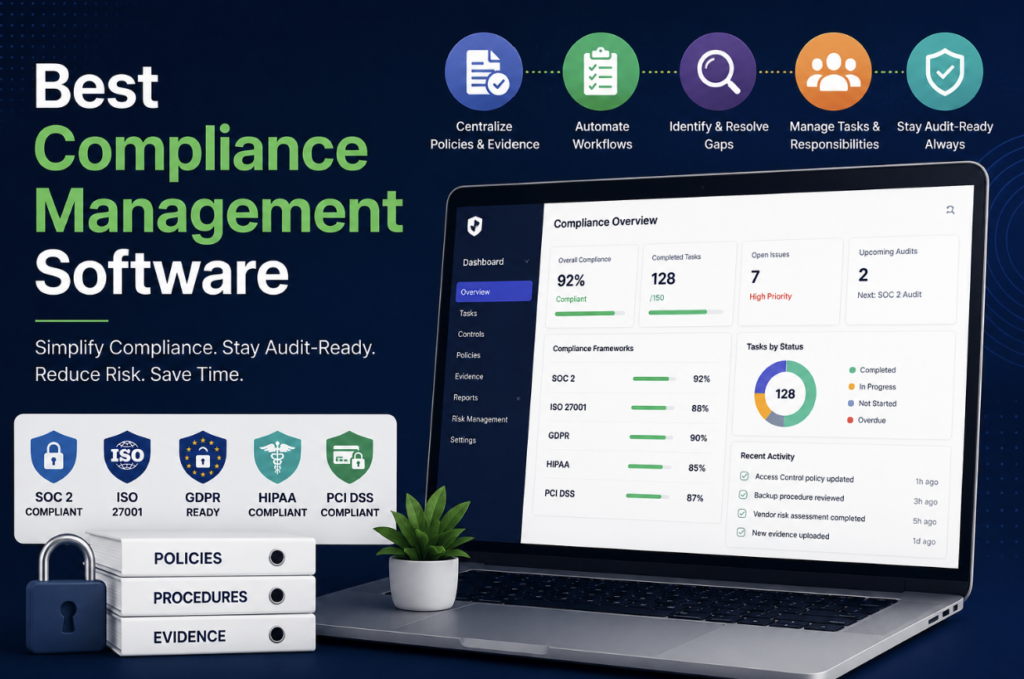
- Centralize Everything. Store regulations, policies, and controls in one repository so updates propagate automatically across dependent processes.
- Automate the Busywork. Workflows should send questionnaires, collect responses, flag exceptions, and consolidate results so your team focuses on risk.
- Provide Real Time Visibility. Dashboards must show live compliance status, pending tests, upcoming deadlines, and open issues for instant prioritization by the Chief Compliance Officer.
- Streamline Evidence Collection. Make uploading, attaching, and retrieving control evidence simple to produce audit trails and instant documentation during reviews.
- Build an Audit Ready Program. Maintain organized documentation, test history, and traceability so audits are delivered from dashboards, reducing remediation time and fines.
Your compliance team is drowning. Regulations are scattered across different spreadsheets. Policy updates live in email chains. Control testing happens in random documents. Someone knows where the audit evidence is filed. No one else does.
It’s 10 PM, and your Chief Compliance Officer is manually consolidating compliance data from five different departments because there’s no centralized system. They’ll be here until midnight. Again.
This is what broken compliance management looks like. And it’s costing your organization far more than you realize—in wasted time, missed deadlines, regulatory risk, and staff burnout.
The good news? You don’t have to keep working this way.
Also Read: The Hidden Risks of Automated ISO 27001 Compliance
The Hidden Cost of Manual Compliance Management
Most organizations don’t calculate the true cost of their current compliance management approach. So let’s do it together.
Your compliance team spends 40% of their time on data entry and organization. That’s not strategic work. That’s not risk assessment or regulatory analysis. That’s manually moving information from one place to another.
At an average compliance manager salary of £60,000 per year, 40% of that person’s time equals £24,000 annually spent on data shuffling. Multiply that by your entire compliance team, and suddenly you’re looking at £100,000+ per year on work that a system should be handling automatically.
Add in the cost of missed deadlines (regulatory fines), delayed remediation of control failures (increased risk exposure), and regulatory audits taking longer because evidence isn’t organized (additional audit fees), and your real compliance management costs become staggering.
Most organizations could fund better compliance management tools by recovering just the time waste alone.
What Actually Effective Compliance Management Looks Like
Effective compliance management isn’t about having perfect processes documented. It’s about having those processes integrated, automated, and centrally managed so they actually work day-to-day.
Here’s what modern compliance management should do:
Centralize Everything. All regulations, policies, controls, and requirements in one place. When a new regulation impacts your business, your compliance team doesn’t hunt through seventeen different documents. They update the central repository once, and all dependent processes automatically reflect the change.
Automate the Busywork. Compliance management workflows should handle routine tasks—like sending control testing questionnaires to the right people, collecting responses, flagging incomplete submissions, and consolidating results. Your team approves. The system handles the rest.
Provide Real-Time Visibility. Your Chief Compliance Officer shouldn’t wait for monthly reports. Modern compliance management means dashboards showing live compliance status, pending control tests, upcoming deadlines, and open issues. They log in and instantly know what needs attention.
Streamline Evidence Collection. Every control requires supporting evidence. An effective compliance management system makes it easy for teams to upload evidence, attach documentation, and create audit trails without complexity. Evidence is organized and retrievable in seconds.
Enable Collaboration. Compliance doesn’t live in one department. Operational teams own controls. Finance teams manage financial controls. IT teams manage technical controls. Good compliance management breaks down these silos and lets teams work together on shared objectives.
Build an Audit-Ready Program. When auditors arrive, they shouldn’t ask for information. You should hand them a dashboard showing everything organized, documented, and tested. That’s what serious compliance management enables.
Also Read: From Contract Backlogs to Real-Time Risk Intelligence: Re-architecting Compliance Review Systems
Where Most Organizations Get Stuck
Knowing what good compliance management looks like and actually implementing it are different things. Most organizations start building compliance management systems manually. They create spreadsheets. They establish document repositories. They send email reminders about control testing deadlines. It works for a while.
Then regulations change. New compliance requirements emerge. The organization grows. The spreadsheets become unmanageable. The email reminders get lost. The document repository becomes a disaster of version control issues. Compliance management reverts to chaos.
The only solution is moving from manual, spreadsheet-based compliance management to a structured, integrated system that grows with you.
How to Evaluate Compliance Management Solutions
If you’re considering implementing better compliance management, here’s what actually matters:
Can it map regulations to your business?
A compliance management system should understand which regulations apply to your industry and geography. It should help you map those regulations to your specific business functions and locations.
Does it support control testing and assessment?
Compliance management is ultimately about testing and validating that your controls work. Look for solutions that make it easy to design tests, assign them to control owners, collect responses, and document results.
Can it track evidence?
Every control needs supporting documentation. A good compliance management system makes it simple to attach, organize, and retrieve evidence. During audits, you need to produce documentation immediately.
Does it integrate with your other systems?
Compliance management shouldn’t exist in isolation. It should connect with your risk management, internal audit, and financial reporting systems. Data should flow automatically, not require manual entry.
Can it scale?
Your compliance management needs will grow. Start small if you need to, but make sure the system can scale across more locations, more regulations, and more complexity without becoming unmanageable.
Will the vendor support you?
Implementation matters. Ongoing regulatory updates matter. The best compliance management solution includes vendor support, regulatory content updates, and advisory services.
Also Read: How Runecast Can Help with DORA Compliance?
The Real ROI of Better Compliance Management
A solid compliance management system typically costs £20,000-£100,000 annually, depending on scope and scale.
But consider the returns. One major regulatory fine? £500,000. One failed audit requiring remediation work? £200,000 in consultant fees. One year of your team’s wasted time doing manual data entry? £100,000.
Better compliance management isn’t an expense. It’s risk reduction and cost avoidance.
Plus, you get strategic benefits: Your compliance team stops firefighting and starts strategizing. Your organization becomes more resilient to regulatory changes. Your audit process becomes faster and cheaper. Your executive team sleeps better knowing compliance is genuinely managed, not just documented.
The Bottom Line
Compliance management is no longer optional. Every organization handles regulations. The question is whether you handle them manually (expensive, risky, exhausting) or systematically (efficient, controlled, scalable).
If your compliance team is still manually managing data across spreadsheets, you’re running a 2010 compliance program in 2024. That’s not just inefficient. It’s risky.
It’s time to move to a real compliance management approach. Your team will thank you. Your auditors will be impressed. Your risk profile will improve.
And you’ll finally stop losing sleep over compliance.
Read the full article on the original site
