


Close Menu
Savannah HeraldSavannah Herald
    • Home
    • News
      • Local
      • State
      • National
      • World
      • HBCUs
    • Events
    • Directories
    • Weather
    • Traffic
    • Jobs
    • Sports
    • Politics
    • Lifestyle
      • Faith
      • Senior Living
      • Health
      • Travel
      • Beauty
      • Fashion
      • Food
      • Art & Literature
    • Business
      • Real Estate
      • Entertainment
      • Investing
      • Education
    • Guides
      • Back to School Savannah
      • Summer Camp Guide
      • Juneteenth Guide
      • Black History Savannah
      • MLK Guide Savannah
    We're Social
    • Twitter
    • Facebook
    • YouTube

    Subscribe to Updates

    Get the latest creative news from FooBar about art, design and business.

    Trending
    • SCAD Donation Provides Creative Resources for SCCPSS Art Classrooms
    • Savannah Steel beat Greensboro Groove for third-straight win
    • How Faith, Community and a Few Bad Games Led These Players to the Savannah Bananas
    • Mary Rivera, ‘Spider-Man: No Way Home’ Grandma, Dead at 82
    • North Carolina A&T homecoming tickets sell out in minutes online
    • Spotlight on Fauci Said to Boost Book Sales for Kennedy and His Publisher
    • DJI launches Mic Mini 2S, but not in the U.S.
    • Will Smith Reveals Parenting Regret
    Facebook X (Twitter) Instagram YouTube
    Login
    Savannah HeraldSavannah Herald
    Savannah HeraldSavannah Herald
    Home » Hormuz Reopening Would Offer Relief for Asia, but Economic Scars Will Remain
    Investing

    Hormuz Reopening Would Offer Relief for Asia, but Economic Scars Will Remain

    Savannah HeraldBy Savannah HeraldJune 15, 20266 Mins Read
    Facebook Twitter Pinterest LinkedIn WhatsApp Reddit Tumblr Email
    Hormuz Reopening Would Offer Relief for Asia, but Economic Scars Will Remain
    Share
    Facebook Twitter LinkedIn Pinterest Email

    Business Briefing: Economic Updates and Industry Insights

    Key takeaways
    • Resuming shipping through the Strait of Hormuz would free tankers, yet trade normalization and deliveries will take months.
    • Inflation and supply-chain strains are likely to persist through the year; liquefied natural gas prices lag oil by three to six months.
    • Fertilizer disruptions from major Middle Eastern exporters threaten peak planting, risking delayed crop shortfalls and serious food security issues.
    • Naphtha and other petrochemical shortages hamper packaging and industry; rebuilding small-business supply links may take a year or longer.
    • Even wealthier economies like Japan and South Korea have used reserves yet face currency pressure and prolonged industrial strain; recovery remains fragile.

    A potential U.S.-Iran agreement to reopen the Strait of Hormuz would offer near-term relief for Asia, the region outside of the Middle East that has borne the brunt of the economic fallout from the monthslong war. Even so, the shock waves of the crisis are likely to ripple through the end of the year, and possibly well beyond.

    Over the past three-and-a-half months, currencies across Asia have plummeted, inflation has surged, and supply-chain bottlenecks have begun to choke industrial production.

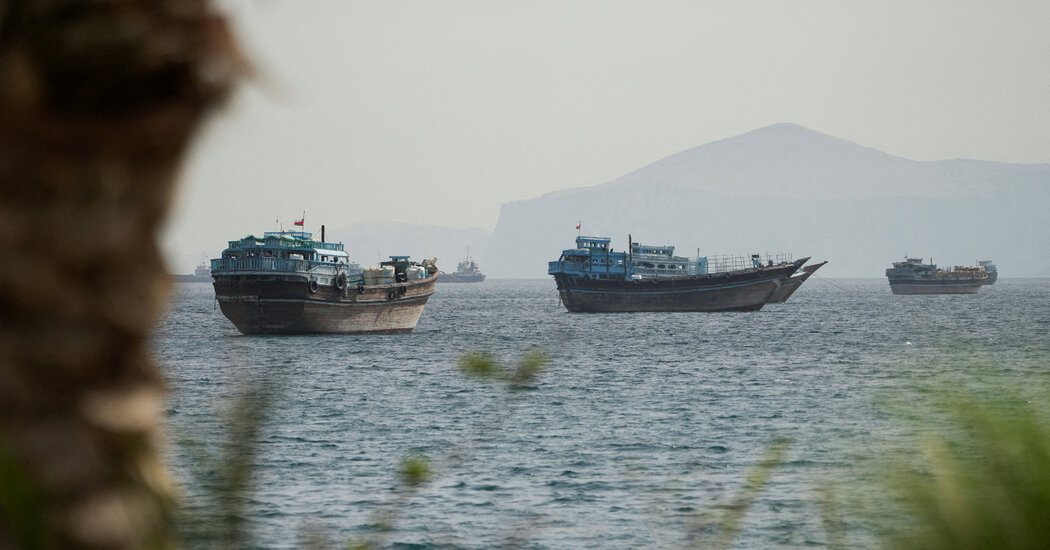
    The disruptions trace back to Asia’s heavy reliance on energy and other commodities that move through the Strait of Hormuz. More than four-fifths of the petroleum and liquefied natural gas transiting the waterway is typically bound for Asian markets.

    On Sunday, President Trump said in a social media post that an interim cease-fire agreement reached by Washington and Tehran would reopen the strait, and that he had authorized “the immediate removal of the United States Naval blockade” on Iranian ports. The deal is scheduled to be signed on Friday.

    “Ships of the World, start your engines,” he wrote. “Let the oil flow!”

    If an agreement to reopen the strait holds, it will provide an immediate reprieve, freeing hundreds of tankers laden with oil, gas, and fuel byproducts to begin making the monthlong journey back to Asian ports.

    Still, industry experts and economists caution that because trade flows have been disrupted for so long, global markets will need considerable time to normalize — meaning elevated inflation and supply-chain strains are likely to linger through the end of the year.

    For Asia, “the good news is that once the strait opens, oil and some gas come back,” said Joshua Ngu, vice chairman of Asia Pacific at the energy consultancy Wood Mackenzie. The bad news, he added, is that over the past three-plus months, “every day the strait has remained closed, the economic disruptions have grown exponentially and bled further down the supply chain.”

    Those disruptions, Mr. Ngu said, “won’t be solved in a short period of time.”

    In Asia on Monday, country leaders celebrated the cease-fire deal. Markets across the region rallied, with benchmark stock indexes in Japan and South Korea both climbing around 5 percent.

    Japan’s prime minister, Sanae Takaichi, wrote on X that the agreement was a “major step toward a resolution.” She also said she hoped that “free and safe navigation in the Strait of Hormuz will actually be ensured.”

    In a joint statement, Australia’s prime minister, Anthony Albanese, and foreign minister, Penny Wong, said they were pleased that the agreement included steps toward reopening the strait and restoring freedom of navigation.

    “While full recovery will take time, restoring this vital trade corridor is essential to easing pressure on energy prices and economies, including in our region,” the statement said.

    While Western nations have largely experienced the crisis at the gas pump and through higher jet fuel prices, Asia has been grappling with an acute physical supply shortage for months. Throughout developing Asia, economic growth forecasts have been downgraded as shortages of crude oil and natural gas force countries to ration power.

    A return to safe shipping lanes would brighten the outlook significantly for countries heavily dependent on Middle Eastern energy, including Pakistan, Vietnam, and the Philippines — the last of which has declared a national energy emergency and ordered mandatory consumption cuts.

    Wealthier economies, including Japan and South Korea, have leaned on their deep pockets and strategic reserves to cushion the initial blow. Even these industrial powerhouses, however, have struggled with soaring oil prices that have weighed on their currencies, and with supply disruptions that only a resumption of trade flows can begin to alleviate.

    Economists worry that these pressures will outlast the immediate geopolitical crisis. The turnaround time alone — for ships to clear the strait, reach their final destinations, and return — will take months, a timeline that could easily slip if fears of renewed Iranian aggression or a lack of insurance coverage keep vessels away.

    Inflationary pressures tied to disruptions in the flow of oil, gas, and their byproducts are also likely to prove sticky. Liquefied natural gas prices in Asia, for example, are typically indexed to oil prices and operate with a three- to six-month price lag. This means that even if oil prices come down in June, elevated natural gas prices are likely to persist through the end of the year.

    “From a price increase perspective, we’ve not even necessarily seen that play through fully,” said Wood Mackenzie’s Mr. Ngu. In gas markets, “the $100 oil price that we saw in March will only fully come through three to six months from then,” he said. As a result, “we are still in a very precarious time.”

    Supply-chain snarls are poised to drag on as well.

    One of the conflict’s biggest economic casualties has been the global fertilizer supply. Five major exporters — Iran, Saudi Arabia, Qatar, the United Arab Emirates and Bahrain — collectively supply more than one-third of the world’s stocks of urea, the dominant form of nitrogen fertilizer. The disruption has already cut into the peak planting season across much of Southeast Asia, which runs from May to July.

    “A disruption of a month or so is manageable, but if it bleeds far into the planting season, the reduction in crop yields raises serious food security issues,” said Albert Park, chief economist at the Asian Development Bank. “The impact will be delayed, meaning we likely won’t see the brunt of the production shortfalls until later in the year.”

    Elsewhere, businesses in Japan and South Korea have been contending with a shortage of naphtha, a petrochemical byproduct of crude oil refining used in plastic wrap and food packaging. Limited supply of other commodities, including helium and liquefied petroleum gas, has strained everything from cooking to medical imaging.

    For naphtha, restoring supply chains to normal will likely take at least a year after Middle Eastern shipments resume, said Haruhiko Sakaino, an adviser to Japan’s Agency for Natural Resources and Energy. The hurdles start with small businesses that must scramble to ramp production back up. “It won’t be as simple as resuming imports,” he said.

    “It’s like capillaries that have been destroyed. They take a long time to recover,” Mr. Sakaino said.

    Read the full article from the original source


    Related Posts

    • Today’s NYT Mini Crossword Answers for March 21
    • HBCU News – Toyota’s partnership with ESPN Events pivotal for major HBCU football & band events
    • HBCU News – HBCU turns to former WNBA standout as next head coach
    • HBCU News – Thousands of Historic HBCU Photos Go Digital Through Getty Images and Ancestry Collaboration
    • Missouri House approves redistricting targeting Black Democrats
    • How Software Startup InsightSquared Wrestled with Creating an Optimal Sales and Marketing Strategy
    • The Source |Is Nicki Minaj’s Marriage Over? DJ Vlad’s Claims Fuel Separation Speculation
    • Trump Signs Bill Ending 43-Day Government Shutdown
    Business Development Business News Business Strategy Business Technology Company News Corporate Finance Economic Growth Economic Insights Economic Policy Entrepreneurship Financial Planning Global Economy Harvard Business Review International Relations Investment Trends Iran Japan Leadership and Management Market Trends Oil (Petroleum) and Gasoline Ships and Shipping Small Business Advice south korea Southeast Asia Startups and Innovation Stock Market Updates Strait of Hormuz Supply Chain Workplace Trends
    Share. Facebook Twitter Pinterest LinkedIn WhatsApp Reddit Tumblr Email
    Savannah Herald
    • Website

    Related Posts

    Business August 2, 2026

    Larry Ellison Bet It All on the A.I. Boom. Will He Be the Face of the A.I. Bubble?

    Business August 1, 2026

    The High-Stakes Battle for Invisible Real Estate in Space

    Investing August 1, 2026

    ‘Spider-Man: Brand New Day’ Heads for $875 Million Opening at Global Box Office

    Business July 30, 2026

    Air India Offered to Cover My Flight on Another Airline. It Cost Me $2,000.

    Business July 29, 2026

    Shipping Risks Rise Across Crucial Middle East Oil Routes

    Investing July 29, 2026

    What Makes Chinese Companies So Competitive?

    Comments are closed.

    Don't Miss
    Travel May 14, 2026By Savannah Herald05 Mins Read

    Go Off-Grid Near Calgary, Alberta While Visiting ‘Back to the Frontier’ Filming Locations

    May 14, 2026

    Black Travelers: Explore Culture, Adventure & Connection “Back to the Frontier” has taken audiences by…

    What Takes place When You Call a Black Guy the N-Word One Way Too Many Times

    June 26, 2026

    Slow Cooker Tuscan Chicken – Fit Slow Cooker Queen

    April 14, 2026

    White Mountains – by Samuel James

    November 15, 2025

    Home Appraisals During Divorce: How Do They Work and Who Foots the Bill?

    March 22, 2026
    Archives
    • August 2026
    • July 2026
    • June 2026
    • May 2026
    • April 2026
    • March 2026
    • February 2026
    • January 2026
    • December 2025
    • November 2025
    • October 2025
    • September 2025
    • August 2025
    • July 2025
    • June 2025
    • May 2025
    • April 2025
    • March 2025
    • February 2025
    Categories
    • Art & Literature
    • Beauty
    • Black History
    • Business
    • Climate
    • Culture
    • Education
    • Employment
    • Entertainment
    • Faith
    • Fashion
    • Food
    • Gaming
    • Georgia Politics
    • HBCUs
    • Health
    • Health Inspections
    • Investing
    • Lifestyle
    • Local
    • Lowcountry News
    • National
    • National Opinion
    • News
    • Politics
    • Real Estate
    • Senior Living
    • Sports
    • State
    • Tech
    • Traffic
    • Transportation
    • Travel
    • World
    Savannah Herald Newsletter

    Subscribe to Updates

    A round up interesting pic’s, post and articles in the C-Port and around the world.

    About Us
    About Us

    The Savannah Herald is your trusted source for the pulse of Coastal Georgia and the Low County of South Carolina. We're committed to delivering timely news that resonates with the African American community.

    From local politics to business developments, we're here to keep you informed and engaged. Our mission is to amplify the voices and stories that matter, shining a light on our collective experiences and achievements.
    We cover:
    🏛️ Politics
    💼 Business
    🎭 Entertainment
    🏀 Sports
    🩺 Health
    💻 Technology
    Savannah Herald: Savannah's Black Voice 💪🏾

    Our Picks

    Meta Built An AI Detection Tool To ID Images And Video Created With Its New Models

    July 7, 2026

    5 Job Search Myths That Are Holding Back New HBCU Grads in 2025 — The HBCU Career Center

    May 8, 2026

    Major League Football announces Georgia franchise, key aspects to come

    November 1, 2025

    Allen Chastanet’s play on crime and the RSLPF is wrong

    September 3, 2025

    Digital Art and NFT Market Analytics

    July 4, 2026
    Categories
    • Art & Literature
    • Beauty
    • Black History
    • Business
    • Climate
    • Culture
    • Education
    • Employment
    • Entertainment
    • Faith
    • Fashion
    • Food
    • Gaming
    • Georgia Politics
    • HBCUs
    • Health
    • Health Inspections
    • Investing
    • Lifestyle
    • Local
    • Lowcountry News
    • National
    • National Opinion
    • News
    • Politics
    • Real Estate
    • Senior Living
    • Sports
    • State
    • Tech
    • Traffic
    • Transportation
    • Travel
    • World
    Copyright © 2002-2026 Savannahherald.com All Rights Reserved. A Veteran-Owned Business

    Type above and press Enter to search. Press Esc to cancel.

    Manage Consent
    To provide the best experiences, we use technologies like cookies to store and/or access device information. Consenting to these technologies will allow us to process data such as browsing behavior or unique IDs on this site. Not consenting or withdrawing consent, may adversely affect certain features and functions.
    Functional Always active
    The technical storage or access is strictly necessary for the legitimate purpose of enabling the use of a specific service explicitly requested by the subscriber or user, or for the sole purpose of carrying out the transmission of a communication over an electronic communications network.
    Preferences
    The technical storage or access is necessary for the legitimate purpose of storing preferences that are not requested by the subscriber or user.
    Statistics
    The technical storage or access that is used exclusively for statistical purposes. The technical storage or access that is used exclusively for anonymous statistical purposes. Without a subpoena, voluntary compliance on the part of your Internet Service Provider, or additional records from a third party, information stored or retrieved for this purpose alone cannot usually be used to identify you.
    Marketing
    The technical storage or access is required to create user profiles to send advertising, or to track the user on a website or across several websites for similar marketing purposes.
    • Manage options
    • Manage services
    • Manage {vendor_count} vendors
    • Read more about these purposes
    View preferences
    • {title}
    • {title}
    • {title}
    Ad Blocker Enabled!
    Ad Blocker Enabled!
    Our website is made possible by displaying online advertisements to our visitors. Please support us by disabling your Ad Blocker.

    Sign In or Register

    Welcome Back!

    Login below or Register Now.

    Lost password?

    Register Now!

    Already registered? Login.

    A password will be e-mailed to you.