




Game On: Latest in Gaming News, Reviews & Industry Buzz
- Publisher Krafton teamed with a military firm to develop unpiloted robot weapons, raising ethical worries about "training Ultron".
- PUBG Ally splits tasks between fast behavior trees and cognitive NVIDIA ACE, balancing reflexive combat actions with higher-level decision-making.
- Three local models run on RTX GPUs: Parakeet STT, Mistral-Nemo-Minitron 2B SLM, and a KRAFTON TTS, requiring at least 8GB VRAM.
- Beta collects player feedback until June 30 via Ally Duo Mode, fueling concern and fascination about genAI teammates as charismatic streaming co-stars.
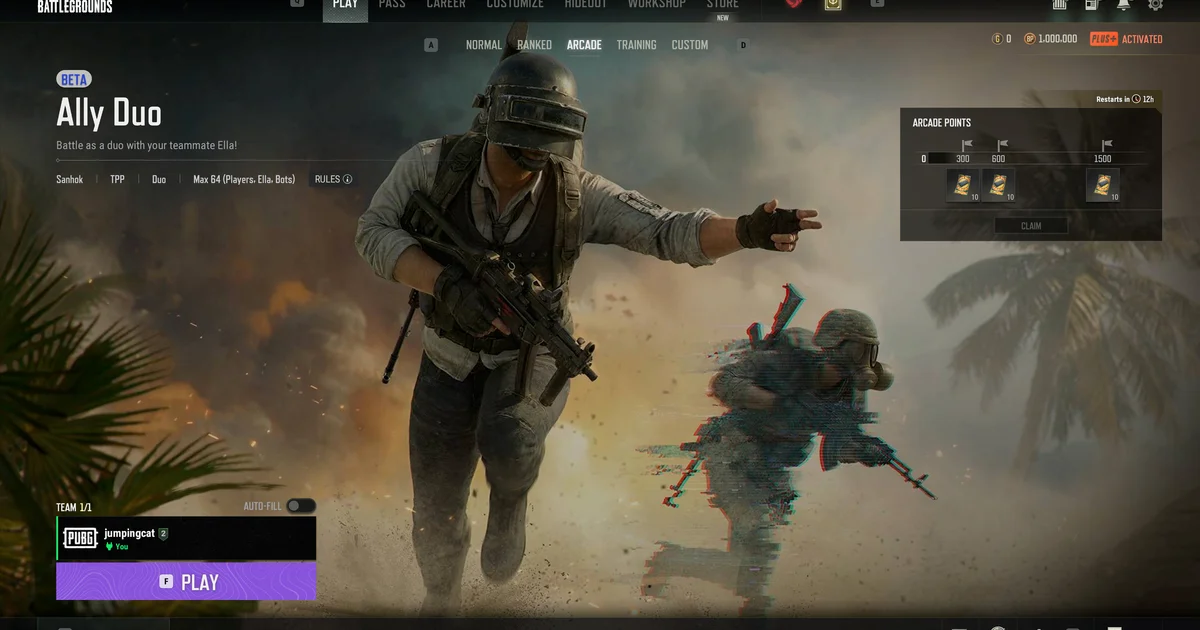
PUBG: Battlegrounds – aka Plunkbat – is getting generative AI team mates in the shape of PUBG Ally Duo, which is available now in beta. The new functionality uses Nvidia tech to simulate “autonomous game characters that use AI to perceive, plan, and take action within their environment”. They also have speech models so that they can do bantz.
It all reflects publisher Krafton’s wider investments in generative AI, which have seen them team up with an actual military company to create unpiloted robot weapon systems – a project that will draw on Krafton’s expertise in “operating large-scale game data and physics based virtual worlds”. So you know, do consider that when you’re enlisting a Plunkbot to acquire some chicken dinner, you’re also possibly training Ultron.
Here is a gushing marketing summary of how PUBG Ally works, snipped from Nvidia’s website.
To balance split-second combat reflexes with intelligent decision-making, PUBG Ally divides its workload into two interconnected systems. The first is a traditional, fast-paced behavior tree that handles immediate tactical actions such as movement, precise aiming, and instant combat responses. The second is NVIDIA ACE, which drives the teammate’s cognitive abilities using AI models and tools. Defining the boundary between these two systems required extensive iteration, as perfecting the division was essential to keeping PUBG Ally responsive enough for high-stakes combat while preserving the flexible, natural feel of a true teammate.
This cognitive system leverages three distinct models running locally on RTX GPUs with at least 8GB of VRAM. First, a lightweight NVIDIA Parakeet speech-to-text model precisely interprets English voice commands in real-time. Next, NVIDIA Mistral-Nemo-Minitron, a 2 billion parameter small language model, analyzes the situation and generates context-aware responses in English. Finally, a custom KRAFTON in-house text-to-speech model synthesizes natural-sounding voice responses instantly. To maximize performance and keep latency to a minimum, an in-game inferencing toolset streamlines AI execution directly alongside the game’s graphics engine.
The Plunkbot beta will run until 30th June, via Ally Duo Mode in PUBG Arcade. The Nvidia post stresses that the beta will allow Krafton “to collect invaluable real-world player feedback, to guide the future of AI agents in games”.
I’m writing this up mostly because as one of the founding battle royales, Plunkbat defines a particular kind of team chemistry over voice chat that has fuelled a lot of Youtube careers. Strange to think of LLMs and SSMs in that context.
It makes me wonder if we’re on the brink of another age in Let’s Play culture, whereby the more charismatic genAI bots emerge as co-stars. Urgh, I’m not especially plugged into the world of streaming, but I can sort of see this. PUBG’s rival Fortnite already has some spontaneously sweary Darth Vader functionality, with plans to let players create their own haunted chatbot NPCs.
Ah, I miss the pre-recorded bot slagging matches of Quake 3. Anyway, here is a more considered, interview-led piece from Samuel Horti about the growing prevalence of LLM-voiced NPCs.
Read the full article on the original site
