




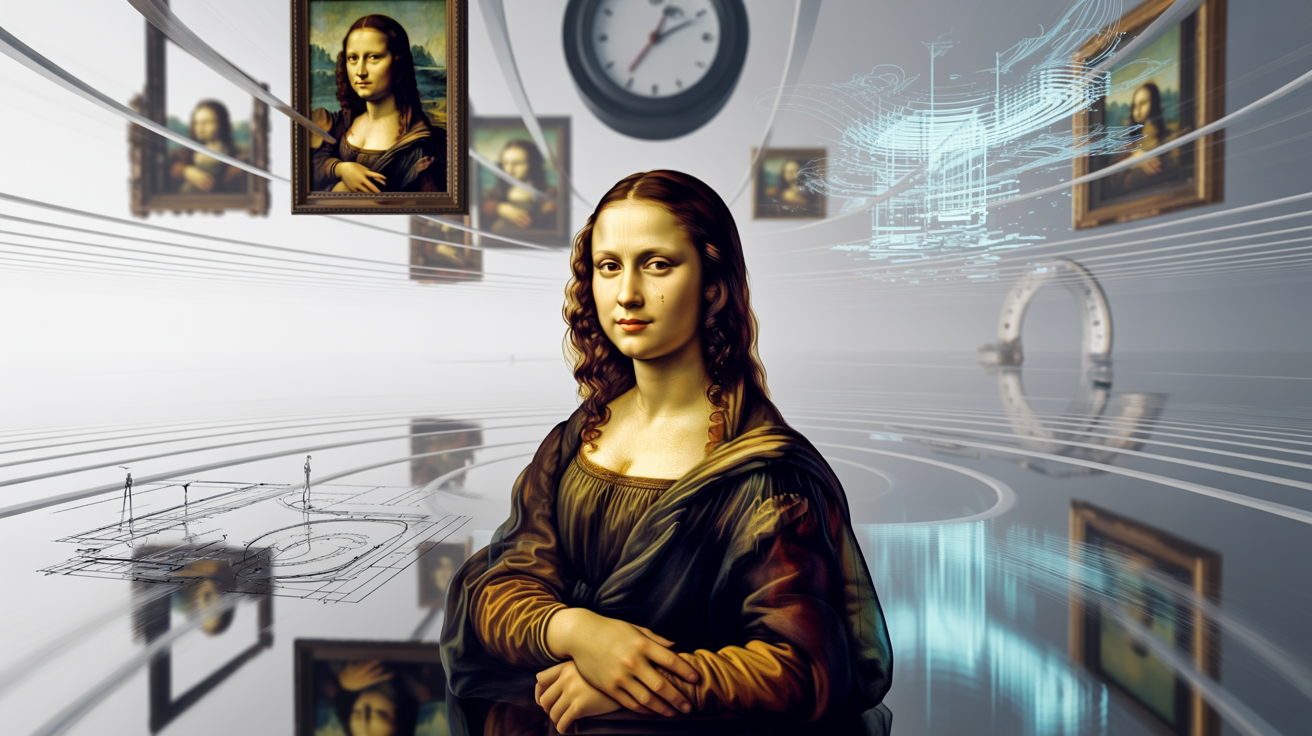
Black Arts & Culture Feature:
- Timelessness is engineered through structural resilience: design for reinterpretation, contextual adaptability, and survival across technologies and ideologies.
- Cultural permanence relies on four layers: symbolic simplicity, narrative elasticity, institutional anchoring, sacred inaccessibility.
- Practice immortality: embed into systems, leave space for myth, and choose reinterpretability over short-term virality.
Frequently Asked Questions: The Art of Immortality
Understanding Cultural Permanence
What’s the difference between virality and immortality in culture?
Virality is optimized for immediate attention, rapid sharing, and short-term impact. It relies on emotional triggers and current relevance, with success measured by views and engagement. In contrast, immortality is engineered for reinterpretation and contextual adaptability across generations. While viral content typically experiences a dramatic spike followed by rapid decay (often within days or months), immortal content maintains or increases its relevance over decades, centuries, or even millennia.
Why does the Mona Lisa endure while other masterpieces fade from public consciousness?
The Mona Lisa endures because it was structured to survive reinterpretation and protected from dilution through four key layers: symbolic simplicity (one woman, one gaze, one pose), narrative elasticity (ability to hold multiple interpretations without breaking), institutional anchoring (locked into the Louvre, French identity, education systems), and sacred inaccessibility (protected from ownership). Unlike works that remain fixed in meaning or context, the Mona Lisa has absorbed countless identities—masterpiece, meme, feminist icon, target of protest, symbol of state power—without losing its core essence.
What actually makes something timeless?
What makes something truly timeless isn’t great design, emotional resonance, cultural relevance, scarcity, or institutional backing alone—though these can contribute. The fundamental quality that creates timelessness is structural resilience—specifically, the ability to survive reinterpretation, to remain relevant without remaining current, and to become part of systems that others reinforce even as the world changes. Timelessness isn’t built on resistance to change but on absorption—the capacity to incorporate new meaning, symbolism, and context without breaking.
Can timelessness be engineered deliberately?
Yes, timelessness can be deliberately engineered. It’s not a coincidence or a miracle but a design feature built through narrative scaffolding, symbolic resonance, aesthetic restraint, and system-level placement. Cultural immortality is the result of structural resilience rather than mere popularity or quality. To create something timeless, you need to design it to withstand shifts in taste, technology, context, and ideology through specific architectural principles.
The Four Layers of Cultural Permanence
What is symbolic simplicity and why does it matter?
Symbolic simplicity is the first layer of cultural permanence, characterized by a form that’s structurally minimal yet emotionally dense. This simplicity makes something recognizable across mediums, memorable across generations, and copyable without loss of meaning. The Mona Lisa exemplifies this through its singular form—one woman, one gaze, one pose—creating a high-fidelity anchor that can survive low-resolution environments, from textbooks to memes to AI remixes, while maintaining its core identity.
How does narrative elasticity contribute to cultural immortality?
Narrative elasticity is the second layer of cultural permanence—the ability to hold multiple, even contradictory meanings without fracturing. The Mona Lisa demonstrates this by simultaneously representing Lisa del Giocondo, a mystery woman, a state treasure, a marketing asset, and a canvas for cultural projection. This modular identity allows endless reinterpretation without breaking, ensuring continued relevance as stories and contexts evolve. The more meanings a symbol can accommodate without losing coherence, the longer it survives, because culture doesn’t kill things it can still use.
What do you mean by institutional anchoring?
Institutional anchoring is the third layer of cultural permanence—the integration of a symbol into systems larger than itself. The Mona Lisa isn’t just floating in cultural ether; it’s hardwired into national heritage, educational infrastructure, global tourism, and internet remix culture. This embedding into multiple reinforcing systems makes it virtually impossible to erase. For any symbol to endure, it must be anchored in platforms with their own permanence, as integration beats mere distribution.
Why is sacred inaccessibility critical for lasting cultural impact?
Sacred inaccessibility is the fourth layer of cultural permanence—the strategic distance between audience and artifact that creates an aura of untouchability. The Mona Lisa’s power is amplified because you can’t buy her, touch her, or truly “own” her. This deliberate inaccessibility—protected by glass, guards, and legal status—creates a mythology of value that no transaction can replicate. Permanence isn’t about ubiquitous presence but about strategic placement in the collective imagination, just out of reach.
Applying These Principles
How can businesses and creators apply these principles to their work?
Creators can apply these principles by: 1) Building an anchor rather than chasing trends—focusing on shapes and signals that survive without context; 2) Detaching identity from literal meaning by creating interpretive flexibility that survives cultural shifts; 3) Embedding, not just promoting—integrating into cultural systems like education or ritual rather than relying on temporary attention; 4) Withholding just enough to create myth—leaving room for debate and interpretation that sustains engagement. The goal isn’t just to create content but to construct a “future-proofed belief object.”
What’s more important: going viral or building for immortality?
While virality brings immediate attention and can create short-term success, it typically follows a pattern of spike and decay. Building for immortality sacrifices some immediate impact for sustained cultural presence. The world is full of forgotten genius—better painters than da Vinci, better products than Apple—that disappeared because they couldn’t be repurposed across time. If your goal is lasting impact rather than temporary attention, engineering for immortality becomes more valuable than optimizing for traffic, because “traffic always stops, but the timeless just waits for the world to catch up—again.”
Can you provide examples of modern brands that have achieved some level of cultural immortality?
While no modern example fully matches the Mona Lisa’s centuries of permanence, some symbols show early signs of cultural immortality. The Nike Swoosh demonstrates symbolic simplicity with clear recognition even at small sizes, while its meaning has evolved from athletic performance to broader cultural statements. Similarly, the Olympic Rings (designed in 1913) show perfect symbolic simplicity while carrying deep meaning about unity and excellence, remaining relevant across political systems and generations through strong institutional anchoring.
How does the concept of cultural immortality apply to digital products?
For digital products, cultural immortality principles still apply, but with adaptation. Focus on creating interface elements or experiences that survive platform changes—symbols that maintain recognition even as technology evolves. Build detached from any specific medium by emphasizing shape over style and signal over noise. Instead of chasing platform-specific virality, aim for cross-platform integration and symbols that carry meaning without explanation, allowing your digital creation to transcend its original environment and survive technological shifts.
Engineering for the Long Arc
What are the biggest mistakes people make when trying to create lasting impact?
The biggest mistakes include confusing stylistic minimalism for true permanence, relying too heavily on cultural relevance (which fades quickly), and focusing on promotion rather than integration. Many creators mistakenly believe that great design, emotional resonance, or institutional backing alone will create permanence. In reality, most great design gets buried, feelings fade, cultural relevance shifts rapidly, and even scarce items are forgotten. Without the ability to survive reinterpretation and anchor into larger systems, even brilliant creations disappear.
How important is mystery in creating timeless symbols?
Mystery is crucial for engineering timelessness. The principle “withhold just enough to create myth” speaks to how strategic ambiguity scales better than complete clarity. By leaving space for debate, interpretation, and discovery, you create ongoing engagement that spans generations. The goal isn’t manipulation but “myth architecture”—designing symbols that invite completion by the audience. As the essay states, “The longer people debate you, the longer you survive,” making controlled mystery a key ingredient in cultural permanence.
What’s the ultimate test of whether something will achieve cultural immortality?
The ultimate test is answering a single question: “Will this still exist after everyone forgets why it was made?” If the answer is no, you’re building for traffic rather than time. Cultural immortality depends not on being liked, understood, or even worshipped, but on being “impossible to erase—even by people who stop believing in you.” True permanence comes from creating something that culture cannot afford to forget because it has become too embedded in how we understand ourselves and our world.
Is creating cultural immortality realistic for most creators?
While perfect immortality like the Mona Lisa’s is rare, applying these principles can significantly extend the cultural lifespan of any creation. The essay doesn’t suggest everyone can achieve centuries of relevance, but rather that by engineering for structural resilience rather than temporary attention, creators can move beyond the “growth hacks, virality loops, and short-term capture” that dominate current thinking. Even partial implementation of these principles can help something outlive typical market cycles and trend patterns.
!function(f,b,e,v,n,t,s)
{if(f.fbq)return;n=f.fbq=function(){n.callMethod?
n.callMethod.apply(n,arguments):n.queue.push(arguments)};
if(!f._fbq)f._fbq=n;n.push=n;n.loaded=!0;n.version=’2.0′;
n.queue=[];t=b.createElement(e);t.async=!0;
t.src=v;s=b.getElementsByTagName(e)[0];
s.parentNode.insertBefore(t,s)}(window, document,’script’,
‘https://connect.facebook.net/en_US/fbevents.js’);
fbq(‘init’, ‘2561524993864423’);
fbq(‘track’, ‘PageView’);
!function(f,b,e,v,n,t,s){if(f.fbq)return;n=f.fbq=function(){n.callMethod?
n.callMethod.apply(n,arguments):n.queue.push(arguments)};if(!f._fbq)f._fbq=n;
n.push=n;n.loaded=!0;n.version=’2.0′;n.queue=[];t=b.createElement(e);t.async=!0;
t.src=v;s=b.getElementsByTagName(e)[0];s.parentNode.insertBefore(t,s)}(window,
document,’script’,’https://connect.facebook.net/en_US/fbevents.js’);
window.fbAsyncInit = function() {
FB.init({
appId : ‘{your-app-id}’,
cookie : true,
xfbml : true,
version : ‘{api-version}’
});
FB.AppEvents.logPageView();
};
(function(d, s, id){
var js, fjs = d.getElementsByTagName(s)[0];
if (d.getElementById(id)) {return;}
js = d.createElement(s); js.id = id;
js.src = “https://connect.facebook.net/en_US/sdk.js”;
fjs.parentNode.insertBefore(js, fjs);
}(document, ‘script’, ‘facebook-jssdk’));
Read more from the original source
