


Close Menu
Savannah HeraldSavannah Herald
    • Home
    • News
      • Local
      • State
      • National
      • World
      • HBCUs
    • Events
    • Directories
    • Weather
    • Traffic
    • Jobs
    • Sports
    • Politics
    • Lifestyle
      • Faith
      • Senior Living
      • Health
      • Travel
      • Beauty
      • Fashion
      • Food
      • Art & Literature
    • Business
      • Real Estate
      • Entertainment
      • Investing
      • Education
    • Guides
      • Back to School Savannah
      • Summer Camp Guide
      • Juneteenth Guide
      • Black History Savannah
      • MLK Guide Savannah
    We're Social
    • Twitter
    • Facebook
    • YouTube

    Subscribe to Updates

    Get the latest creative news from FooBar about art, design and business.

    Trending
    • Georgia Trend Daily – Sept. 2, 2026
    • Jamaica Takes Slavery Reparations Petition Directly to King Charles III
    • Beyoncé In London, Kendrick In Rome: Why Fans Are Traveling Overseas For Concerts
    • Inside Telluride’s secret screening: a meta Elizabeth Holmes doc
    • FAMU’s Orange Blossom Classic unites generations in Miami
    • Lifehacker 2026 Labor Day Sale Live Blog
    • Apple will announce the iPhone 18 this week – here’s how ZDNET readers think it’ll go down
    • Want Less Screen Time in Schools? There’s a Template For That
    Facebook X (Twitter) Instagram YouTube
    Login
    Savannah HeraldSavannah Herald
    Savannah HeraldSavannah Herald
    Home » The Thibodaux Massacre: A Story America Tried to Bury
    Black History

    The Thibodaux Massacre: A Story America Tried to Bury

    Savannah HeraldBy Savannah HeraldSeptember 6, 20267 Mins Read
    Facebook Twitter Pinterest LinkedIn WhatsApp Reddit Tumblr Email
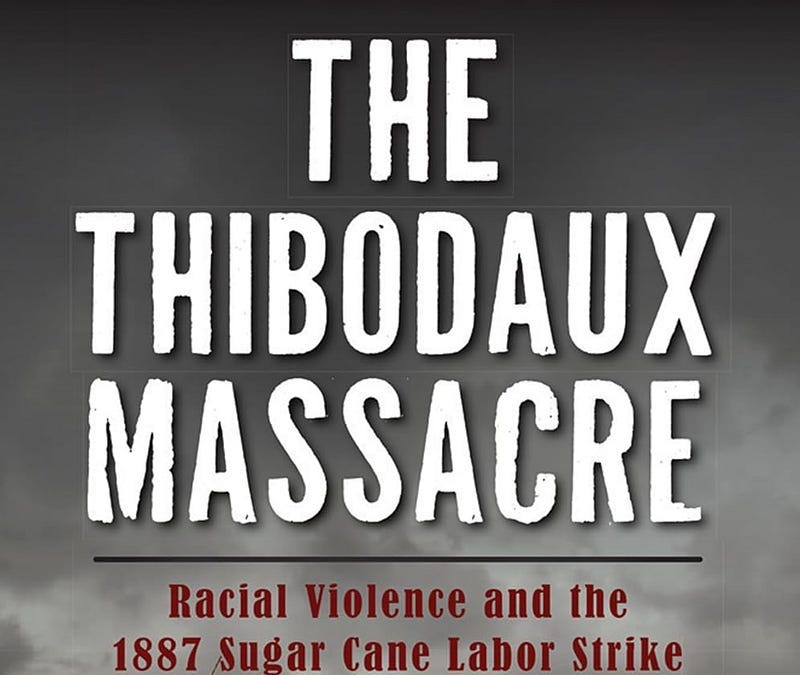
    The Thibodaux Massacre: A Story America Tried to Bury
    Share
    Facebook Twitter LinkedIn Pinterest Email

    Black Background & Cultural Viewpoints:

    Key takeaways
    • Thibodaux Massacre: violent suppression of an 1887 strike by Black workers organized by Knights of Labor, demanding cash pay and fair conditions.
    • Governor Samuel McEnery deployed the state militia; armed white vigilantes and the mayor's force carried out expulsions and murderous attacks.
    • On November 23, 1887 the militia attacked "Rear of Town"; reported deaths 30, historians estimate 50 to 300, many buried in unmarked graves.
    • The massacre's silence endured across generations; descendants seek truth, scholars excavate graves, and Thibodaux began public memorialization in June 2025.

    In the loss of 1887, the sugar areas of Lafourche Church went for miles in every direction. Apartment, humid land was carved into haciendas that had transformed names but not practices since the Civil War. The males and females who reduced walking cane in those areas were extremely Black, a number of them formerly enslaved on the same land. Their labor powered the sugar mills, the railway, and the ton of money of the white planters who controlled southerly Louisiana national politics.

    By October, the cane was high and prepared for harvest. The air smelled of molasses and smoke. However underneath the surface, something else was brewing: rage, fatigue, and a need for self-respect that had actually been rejected for generations.

    This is the tale of the Thibodaux Carnage , among the deadliest labor massacres in American history, and among the least taught. It is a tale of Black workers who dared to strike, white planters who declined to yield, and a town that became the stage for a brutal act of racial physical violence. It is likewise a story of silence, and how the bloodbath was buried, exactly how descendants were never ever told, and how the land itself held the memory until people were ready to pay attention.

    By 1887, Reconstruction was dead. Federal troops had actually withdrawn, white supremacist paramilitary groups had taken political control, and Black Louisianans were living under a regimen that looked uncomfortably like the one they had survived prior to emancipation. Sharecropping and plantation labor replaced enslavement with new chains: financial debt peonage, unscrupulous contracts, and violence utilized to impose obedience.

    Sugar plantations were among the harshest employers in the South. The work was seasonal, dangerous, and improperly paid. Employees were usually paid in scrip; tokens redeemable just at ranch shops, where prices were inflated. Salaries were kept up until the end of the harvest, ensuring workers can not leave. Black workers were entraped.

    In the mid 1880 s, the Knights of Labor , among the largest labor companies in the country, started organizing sugar workers in Louisiana. Unlike numerous unions of the age, the Knights accepted Black participants. Their message was basic: employees deserved reasonable incomes, money payments, and humane working problems. By 1886, hundreds of Black sugar employees had actually joined.

    The planters saw this as an existential danger. If Black workers arranged, the whole ranch economic situation could break down. White elites reacted with scare tactics, shootings, and hazards of violence. However the workers held firm.

    In October 1887, the Knights of Labor called a strike throughout the sugar churches. 10s of hundreds of Black employees walked off the work, demanding:

    The strike was substantial. Mills closed down. Cane deteriorated in the fields. Planters panicked.

    Guv Samuel McEnery, himself a sugar planter, released the state militia to damage the strike. Equipped white paramilitary groups joined them. Physical violence emerged throughout the parishes. Employees were defeated, jailed, and driven from ranches at gunpoint. But in Thibodaux, the strike held.

    Thibodaux was a town, however tactically crucial. It was a hub for sugar transport and a center of white political power. As the strike increased, hundreds of Black workers looked for refuge in the community, thinking it more secure than the vineyards. White locals saw this as an intrusion.

    Rumors spread that Black employees were preparing an uprising. Papers irritated stress, representing strikers as dangerous radicals. Planters required action. The mayor of Thibodaux, E. A. Burke, proclaimed martial legislation and developed a white “peacekeeping” militia, a euphemism for an armed vigilante pressure.

    On November 1, 1887, the mayor released an order:

    All Black workers need to leave Thibodaux by dawn.

    The workers refused. They had nowhere to go. Many feared they would be eliminated if they returned to the haciendas.

    At dawn on November 23, the white militia bordered the Black area called “Rear of Town.” The streets were peaceful. Households were inside their homes. Some were preparing breakfast. Others were still asleep. Then the capturing started.

    White militiamen opened up fire on any person they saw. They moved home to house, dragging people outside, shooting them in the road, or eliminating them where they stood. Witnesses later defined bodies hing on doorways, in yards, and along the roadway.

    Black employees who attempted to leave were pursued. Some were fired in the walking cane areas. Others were carried out after surrendering. The bloodbath lasted hours.

    The main death toll was reported as 30 Historians think the genuine number was in between 50 and 300 Numerous victims were hidden in unmarked graves. Some were unloaded in mass burial pits. Others were left where they fell up until member of the family might obtain them under cover of night. No white militiaman was ever billed.

    By lunchtime, Thibodaux was quiet. The Black neighborhood was smashed. Survivors concealed in the woods, took off to neighboring parishes, or left Louisiana completely. The strike was damaged.

    The Knights of Labor were squashed in the sugar parishes. Black employees went back to the haciendas under also harsher problems. Wages were lowered. Surveillance raised. Organizing was banned. The message was clear: resistance would certainly be consulted with death.

    Local papers celebrated the bloodbath as a victory for “law and order.” White officials claimed the militia acted in self‑defense. The governor commended the town for recovering tranquility. The fact was hidden.

    For generations, white homeowners rejected to speak of the carnage. Black family members murmured concerning it yet rarely shared information. Injury, fear, and the hazard of revenge kept the tale underground.

    Numerous offspring of the sufferers grew up never knowing what occurred. Some heard pieces, “your great‑grandfather was killed in the strike,” or “they shot him in Thibodaux,” however the complete story was kept. Others discovered absolutely nothing whatsoever. The carnage became one of the many removed chapters of Black history in the South, hidden by design.

    In the early 2000 s, historians began assembling the tale with:

    Excavators determined feasible mass grave sites. Community members started holding memorials. Descendants started asking concerns. The silence cracked.

    The Thibodaux Carnage is not simply a story of physical violence. It is a tale of:

    It discloses how deeply linked race and labor were, and still are, in America. It shows how physical violence was made use of to preserve economic systems built on Black labor. And it reminds us that many of the freedoms workers enjoy today were won through battle, sacrifice, and, in Thibodaux’s case, bloodshed.

    Today, descendants of the targets walk the exact same streets where their ancestors were eliminated. They go to churches built by survivors. They live on land that as soon as held unmarked graves. Some are just now finding out the reality and finding that their household history includes among the largest labor massacres in American background.

    The community of Thibodaux has actually begun acknowledging the past. Historic pens had long been proposed and were ultimately mounted and introduced in June 2025 , ending greater than a century of official silence. Community teams hold remembrance occasions. Scholars continue researching burial ground. Yet the work is not ended up.

    The carnage’s heritage survives in the economic inequalities of southern Louisiana, in the racial separates that continue, and in the recurring battle for labor civil liberties throughout the nation. To tell the story of Thibodaux is to challenge the fact that America’s labor background is likewise America’s racial background, which both are noted by physical violence, resistance, and the defend self-respect.

    If you go through Thibodaux today, the sugar areas still extend towards the perspective. The mills still hum. The air still smells of walking cane and smoke. However below the soil exists a background that declines to remain hidden. The land bears in mind, and so do we.

    Read the full post on the initial resource

    Related Posts

    • The 2025 Black Art Guide to Art Week Miami – Sugarcane Magazine ™
    • Disney to Construct a Magic Kingdom Theme Park in Abu Dhabi
    • The ‘A’ in FAMU: Preserving an agricultural identity – The FAMUAN
    • IN MEMORIAM: Ananda Lewis Remembered for Power, Purpose, and Grace
    • Toronto’s Culture and Crowd Appeal Is Attracting Event Planners
    • Speaker Mike Johnson calls for transparency in Epstein case
    • City of Savannah Launches ‘9 Days of 912’ Scavenger Hunt • Savannah, GA
    • Latto: Talks Finding Out Pregnant, Retirement Tweet, More (Video)
    African American Heritage African American Research African Diaspora Ancestral Knowledge Black Historians Black History Black Voices Civil Rights History Cultural Identity Folklife and Culture Global Black History Historical Storytelling Legacy and Memory Modern Black Thought Oral History Personal Narratives Public History Reconstruction Era Slavery and Resistance Substack Voices
    Share. Facebook Twitter Pinterest LinkedIn WhatsApp Reddit Tumblr Email
    Savannah Herald
    • Website

    Related Posts

    Real Estate September 6, 2026

    Cities with the fastest-growing home prices in the Brunswick metro area

    Black History September 5, 2026

    Why the American People Don’t Trust the Government About Data Centers

    Weather September 4, 2026

    Hottest Septembers in Georgia since 1895

    Black History September 3, 2026

    Presidential Libraries: They May Not Be What You Think They Are

    Sports September 6, 2026

    Highest-rated Class of 2027 football recruits from Georgia

    Black History September 2, 2026

    The History of “Standing” That Allowed Trump’s Ballroom to Continue

    Comments are closed.

    Don't Miss
    Local May 23, 2026By Savannah Herald03 Mins Read

    Giant Tyrannosaur Fossil Found in New Mexico

    May 23, 2026

    Scientific research & Discovery: Check Out the Globe Via Research Study and Technology A huge…

    Japan enact an essential political election as Head of state Ishiba deals with a feasible loss: NPR

    July 4, 2026

    You Can Order Helicopters and Boats on Uber at This Iconic Italian Destination

    August 28, 2025

    SWAC History: Six of the greatest women’s basketball players in conference history

    June 1, 2026

    Poulet Yassa Recipe – Authentic Senegalese Chicken Recipe

    July 21, 2026
    Archives
    • September 2026
    • August 2026
    • July 2026
    • June 2026
    • May 2026
    • April 2026
    • March 2026
    • February 2026
    • January 2026
    • December 2025
    • November 2025
    • October 2025
    • September 2025
    • August 2025
    • July 2025
    • June 2025
    • May 2025
    • April 2025
    • March 2025
    • February 2025
    Categories
    • Art & Literature
    • Beauty
    • Black History
    • Business
    • Climate
    • Culture
    • Education
    • Employment
    • Entertainment
    • Faith
    • Fashion
    • Food
    • Gaming
    • Georgia Politics
    • HBCUs
    • Health
    • Health Inspections
    • Investing
    • Lifestyle
    • Local
    • Lowcountry News
    • National
    • National Opinion
    • News
    • Politics
    • Real Estate
    • Senior Living
    • Sports
    • State
    • Tech
    • Traffic
    • Transportation
    • Travel
    • Weather
    • World
    Savannah Herald Newsletter

    Subscribe to Updates

    A round up interesting pic’s, post and articles in the C-Port and around the world.

    About Us
    About Us

    The Savannah Herald is your trusted source for the pulse of Coastal Georgia and the Low County of South Carolina. We're committed to delivering timely news that resonates with the African American community.

    From local politics to business developments, we're here to keep you informed and engaged. Our mission is to amplify the voices and stories that matter, shining a light on our collective experiences and achievements.
    We cover:
    🏛️ Politics
    💼 Business
    🎭 Entertainment
    🏀 Sports
    🩺 Health
    💻 Technology
    Savannah Herald: Savannah's Black Voice 💪🏾

    Our Picks

    Rihanna & A$AP Rocky Welcome Baby #3 – Meet Rocki!

    October 1, 2025

    Transfer rumors, news: Robinson wants Liverpool over United

    March 9, 2026

    PGA Champion win declares Scottie Scheffler’s position on top of the sporting activity

    November 1, 2025

    Nigerian Pepper Soup with Offal Meat

    February 4, 2026

    How This Entrepreneur Turned Faith into Funding

    June 29, 2026
    Categories
    • Art & Literature
    • Beauty
    • Black History
    • Business
    • Climate
    • Culture
    • Education
    • Employment
    • Entertainment
    • Faith
    • Fashion
    • Food
    • Gaming
    • Georgia Politics
    • HBCUs
    • Health
    • Health Inspections
    • Investing
    • Lifestyle
    • Local
    • Lowcountry News
    • National
    • National Opinion
    • News
    • Politics
    • Real Estate
    • Senior Living
    • Sports
    • State
    • Tech
    • Traffic
    • Transportation
    • Travel
    • Weather
    • World
    Copyright © 2002-2026 Savannahherald.com All Rights Reserved. A Veteran-Owned Business

    Type above and press Enter to search. Press Esc to cancel.

    Manage Consent
    To provide the best experiences, we use technologies like cookies to store and/or access device information. Consenting to these technologies will allow us to process data such as browsing behavior or unique IDs on this site. Not consenting or withdrawing consent, may adversely affect certain features and functions.
    Functional Always active
    The technical storage or access is strictly necessary for the legitimate purpose of enabling the use of a specific service explicitly requested by the subscriber or user, or for the sole purpose of carrying out the transmission of a communication over an electronic communications network.
    Preferences
    The technical storage or access is necessary for the legitimate purpose of storing preferences that are not requested by the subscriber or user.
    Statistics
    The technical storage or access that is used exclusively for statistical purposes. The technical storage or access that is used exclusively for anonymous statistical purposes. Without a subpoena, voluntary compliance on the part of your Internet Service Provider, or additional records from a third party, information stored or retrieved for this purpose alone cannot usually be used to identify you.
    Marketing
    The technical storage or access is required to create user profiles to send advertising, or to track the user on a website or across several websites for similar marketing purposes.
    • Manage options
    • Manage services
    • Manage {vendor_count} vendors
    • Read more about these purposes
    View preferences
    • {title}
    • {title}
    • {title}
    Ad Blocker Enabled!
    Ad Blocker Enabled!
    Our website is made possible by displaying online advertisements to our visitors. Please support us by disabling your Ad Blocker.

    Sign In or Register

    Welcome Back!

    Login below or Register Now.

    Lost password?

    Register Now!

    Already registered? Login.

    A password will be e-mailed to you.