


Close Menu
Savannah HeraldSavannah Herald
    • Home
    • News
      • Local
      • State
      • National
      • World
      • HBCUs
    • Events
    • Directories
    • Weather
    • Traffic
    • Jobs
    • Sports
    • Politics
    • Lifestyle
      • Faith
      • Senior Living
      • Health
      • Travel
      • Beauty
      • Fashion
      • Food
      • Art & Literature
    • Business
      • Real Estate
      • Entertainment
      • Investing
      • Education
    • Guides
      • SSU Homecoming Guide
      • Back to School Savannah
      • Summer Camp Guide
      • Juneteenth Guide
      • Black History Savannah
      • MLK Guide Savannah
    We're Social
    • Twitter
    • Facebook
    • YouTube

    Subscribe to Updates

    Get the latest creative news from FooBar about art, design and business.

    Trending
    • ‘It’s all God’s creation’: farmers continue a ‘Jewishly inspired’ agrarian tradition | Judaism
    • Kate Middleton Never Wears Logos But Just Made an Exception
    • Donald Lee Hollowell (1917-2004) | BlackPast.org
    • Always Best Care Appoints Jason Shontz As Chief Financial Officer
    • Buying a House with an LLC: Pros, Cons, and Steps
    • Finalists for 2028 SCCPSS Teacher and Instructional Support Person of the Year Named
    • Domestic Violence Awareness Month: Where to Find Help in Savannah, Coastal Georgia and the Lowcountry
    • Simpkins Speaker Series Goes Bananas: Savannah Bananas President to Speak at Eastern Florida State College on Nov. 9
    Facebook X (Twitter) Instagram YouTube
    Login
    Savannah HeraldSavannah Herald
    Savannah HeraldSavannah Herald
    Home » ‘It’s all God’s creation’: farmers continue a ‘Jewishly inspired’ agrarian tradition | Judaism
    Faith

    ‘It’s all God’s creation’: farmers continue a ‘Jewishly inspired’ agrarian tradition | Judaism

    Savannah HeraldBy Savannah HeraldOctober 22, 20268 Mins Read
    Facebook Twitter Pinterest LinkedIn WhatsApp Reddit Tumblr Email
    ‘It’s all God’s creation’: farmers continue a ‘Jewishly inspired’ agrarian tradition | Judaism
    Share
    Facebook Twitter LinkedIn Pinterest Email

    Faith & Reflection: Voices from the Black Church and Beyond

    Key takeaways
    • Renewed interest among Jews in farming as religious and cultural expression; Jewish tradition is agrarian, holidays tied to the agricultural calendar like Sukkoth.
    • Organizations such as Jewish Farmer Network, Sacred Slaughter Institute and Adamah Farm offer training, fellowships and CSA models.
    • Farms practice tzedakah and pe'ah, donating produce and meat to food banks, seniors and refugee programs.
    • Kashrut guides slaughter while farmers blend humane, regenerative methods; shochet training emphasizes minimizing animal suffering, prompting community debates.
    • Many Jewish growers are often the only Jewish farmer locally, reconnecting identity through land, seasonality and crops like ancient grains grown as yoshon.

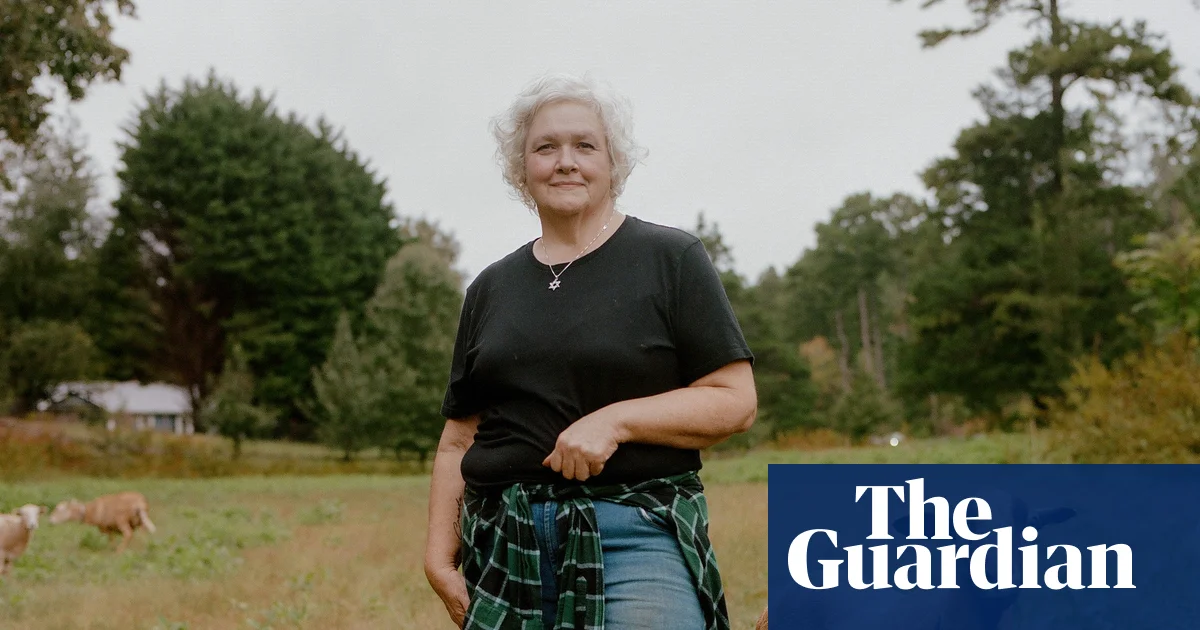
    Wendy Rhein is trying to round up the sheep hanging out among the hazelnut and walnut trees of her Chutzpah Hollow farm in Tryon, North Carolina.

    “Hi, Brea. Come on down. I hear you,” Rhein calls to the bleating queen of the flock. If the Barbados black belly ewe moves, the rest will follow.

    Brea, a bottle-fed lamb named Hadassah and their flock mates bound down the hill when Rhein rustles a box of kosher tea biscuits. The small treat reveals something different about this farm. Rhein is remarkable for several reasons: she’s a female farmer in a male-dominated industry and a single mother who had no farming experience when she launched her farm at age 52. She’s also Jewish.

    Wendy Rhein examines an injured sheep at her farm in Tryon, North Carolina.

    Rhein, who also works as vice-president of a faith-based advocacy organization, is part of a renewed interest among Jews in farming as an expression of their religion, culture or values. Shani Mink, co-founder of the Jewish Farmer Network, often hears “Jewish farmer – isn’t that an oxymoron?” Mink’s organization serves about 1,800 farmers, most of them first-generation agriculturalists, and offers conferences, classes and farm-to-table Shabbat dinners.

    There is no solid estimate of the number of Jewish farmers in the country; the US Department of Agriculture’s census of the farming workforce doesn’t collect data on religion. But as Mink points out: “Jews have been farmers from time immemorial. The Jewish tradition is an agrarian tradition” – evidenced by how many holidays, such as the autumn harvest celebration Sukkoth, are tied to the agricultural calendar.

    The Jewish Agricultural Society, chartered in 1900, helped people facing persecution in eastern Europe relocate to US farmland, where they could gain skills and independence. By 1933, more than 100,000 Jews earned some or all of their living from farming, according to Gary Moore, professor emeritus at North Carolina State University. But as the US population shifted away from agricultural work, many Jewish people moved into cities and suburbs. Some are returning to rural environments and family roots to farm, inspired by principles of their faith and building better food systems.

    Wendy Rhein and her son Samuel vaccinate sheep at their farm.
    Wendy Rhein on her farm.

    Rhein grew up in Detroit, the daughter of a man who was raised on a dairy farm he couldn’t wait to leave. In contrast, she loved the idea of raising livestock and being closer to her food sources; she challenged herself to prepare every ingredient she and her two sons consumed, down to the ketchup, while living in a high-rise with a kitchen “the size of a postage stamp” in Washington DC. When the pandemic hit, she started to search for land and research a new venture selling starter flocks of sheep.

    Her brother, who lives about 45 minutes away in Asheville, showed her properties for sale over FaceTime. “I did not step foot on to this land or into this house until the day of our closing,” she said. Now she owns a 10-acre property.

    Despite rising Jewish interest in land stewardship, Mink noted that most Jewish growers are “the only Jewish person in their farming community or the only farming person in their Jewish community”. In Rhein’s case, the nearest synagogue is almost an hour away. For her, that means “how I practice being a Jew on a day-to-day basis is how I farm and how I am attached to and care for this land”.

    Rhein donates 10% of everything she raises to a local food bank, a reflection of pe’ah, a Talmudic concept that describes giving part of the harvest to the needy. She prays over every duck, chicken and sheep she slaughters so her family may eat.

    “It’s all God’s creation,” she said. “It is a gift that we get to be part of it. We are stewards. We are not owners.”

    A pig at the Rhein family farm.

    But she also differs in her interpretation of some principles. The concept of bal tashchit focuses on limiting waste, so she keeps a pig to eat food scraps – a controversial decision for some Jews who don’t eat pork due to kosher dietary practices, many of whom disagree with her choice online.

    “I am very clear this is not a quote-unquote ‘Jewish farm’,” Rhein said, “but I do consider us to be a Jewishly inspired place.”

    Blending traditions and futures

    A number of Jewish farming organizations focus on both community building and skills building. The Sacred Slaughter Institute trains students to become a shochets, ritual slaughterers of kosher meat; the butchering process calls for prayer, a highly sharpened knife and a single clean cut to lessen tza’ar ba’alei chayim, or animal suffering. Elsewhere, at the 20-acre non-profit Adamah Farm in Falls Village, Connecticut, Jewish people in their 20s and 30s come for three-month farming fellowships. Located at the Isabella Freedman Jewish Retreat Center, Adamah sells vegetables and herbs through membership in its community-supported agriculture (CSA) model.

    The Rhein family’s home and farm.
    Samuel Rhein, 16, helps his mother vaccinate sheep at the family farm.

    Adamah Farm co-founder Shamu Sadeh said the work “is a process of reinvigorating Judaism and the Jewish community with an ecological perspective, and of reinvigorating the ecological environmental community with people who feel spiritually connected”. Graduates work in food rescue programs, food policy, environmental groups and Jewish social services, among other fields; a small percentage are farmers.

    Rabbis Shoshana and Philip Ohriner run the 16-acre Ma’alot Farms in Los Gatos, California, with grants from community organizations and foundations. The farm nurtures hundreds of varieties of produce, from olives and broccolini to marionberries, a type of blackberry. Almost everything is given away to people facing food insecurity, including kids in afterschool programs and seniors with nutritional needs.

    Wendy Rhein picks chestnuts at her farm.

    Ma’alot’s marketing doesn’t refer to Judaism. Still, “you cannot step on to Ma’alot Farms without feeling our Judaism permeate everything”, Philip Ohriner said, “from the way in which we care for our staff and provide a living wage for them and benefits, to the ways in which we seek to share our abundance to feed the hungry, to seek to bring equity and justice more fully into our world.”

    At Ekar Farm, located at an eldercare community in Aurora, Colorado, executive director Jason Plotkin offers intergenerational gardening programs and donates about 20,000lb of organic produce annually to groups including Hope Communities, which serves refugees, and Spirit of the Sun, an Indigenous-led organization. The farm grows epazote, Thai hot chilies and bitter melon among its crops based on requests from recipients. Plotkin grew up Jewish but wasn’t religious. “I actually have learned more about my Jewish identity working for Ekar,” he said, “than what I brought into it.”

    Non-profit farms exemplify the idea of tzedakah, or charity, a requirement in Jewish tradition. Small-scale for-profit farms strive to be community partners in their own ways.

    Zalman (Robbie) Friedman operates a subscription and delivery service for local kosher meat from Robariah Farms in South Deerfield, Massachusetts. A certified shochet, he tends to about 1,000 birds, including meat chickens, egg layers and turkeys. About a quarter of his customers aren’t Jewish but appreciate Robariah’s regenerative farming practices. His birds have plenty of room to move and dine on fresh pasture every day thanks to mobile coops. “We raise a slower-growing variety that’s very active on the grass,” he said.

    The laws of kashrut, or keeping kosher, outline how to slaughter an animal but are less specific about its care, Friedman said. “Why can’t it be done in a way that also honors the life of the animal, which is also a very important Jewish value and Jewish practice?”

    Wendy Rhein sits on her porch with her dog after a day of farmwork.

    Jewish guidance can show up even in crop selection. Ian Yosef Hertzmark grows ancient grains such as emmer, einkorn, spelt and Persian wheats, among other crops, on the 32-acre Migrash Farm in Baltimore county, Maryland. He plants ancient grains in the fall to be yoshon, or “old”, taking root before Passover (the Torah forbids eating chadash, or “new” grain). Hertzmark finds fulfillment in having “a relationship with land in an observant and seasonal context”.

    Rhein agrees. She feels “more self-aware, more confident, more alive and whole as a human being here, doing this, than I ever felt living in Manhattan … This way of life – attaching yourself to land and animals and seasonality – is a constant sense of joy.”

    Read the full article on the original source


    Related Posts

    • MPC to Consider Expanding Hotel Ban to Three Historic Districts – Savannah Agenda
    • 12 Tips to Locate Your Daily Workout Inspiration
    • Eagles Make Their Mark in 2026 Season Opener
    • Here’s how long it takes to save for a South Carolina home
    • Teachers are Burning Out. Can Former Educators Help?
    • Chai Vanilla Bean Hot Toddy
    • Savannah State Assistant Athletic Trainer Selected To Work At Panini Senior Bowl
    • 26 Black Owned Beauty Supply Stores to Support
    African American Religion AME Church Biblical Wisdom Black Faith Christian Living Christian Women of Color Church Leadership COGIC Community Churches Cultural Christianity Devotional Messages Faith and Culture Faith and Justice Faith-Based News Gospel and Grace Inspirational Writing Religion and Identity Religious Commentary Spiritual Reflection The Black Church
    Share. Facebook Twitter Pinterest LinkedIn WhatsApp Reddit Tumblr Email
    Savannah Herald
    • Website

    Related Posts

    Faith October 22, 2026

    Landslides, fires, El Niño: Big Sur’s spiritual centers ‘living with precariousness’

    Faith October 20, 2026

    El-Sayed, Vance pressed on religion, loyalty and immigration

    Faith October 19, 2026

    MLB Needs a Reset: 16 Teams, No Playoffs and New Rules.

    Faith October 18, 2026

    The upside of anger: can fury be one of the deepest forms of human compassion? | Jackie Bailey

    Faith October 17, 2026

    Black Men and Rick Ross: Domestic Violence and Accountability.

    Faith October 16, 2026

    How Insurance Coverage Reaches Hard-To-Place Businesses.

    Comments are closed.

    Don't Miss
    Sports February 28, 2026By Savannah Herald03 Mins Read

    This Week In Tiger Athletics (Week Of Dec. 8th-13th)

    February 28, 2026

    Black Athletes in the Spotlight: HBCU Sports & Local Highlights Story Links …

    Villanova active shooter hoax: 911 call details released

    August 28, 2025

    How to Watch Vikings vs. Buccaneers: TV Channel, Live Stream, Time

    September 28, 2026

    Veteran Leader Alicia Boler Davis Named President of Ford Pro

    June 8, 2026

    An Extreme Cold Watch Issued for Savannah/Chatham County Ahead of Dangerously Cold Temperatures • Savannah Herald

    January 31, 2026
    Archives
    • October 2026
    • September 2026
    • August 2026
    • July 2026
    • June 2026
    • May 2026
    • April 2026
    • March 2026
    • February 2026
    • January 2026
    • December 2025
    • November 2025
    • October 2025
    • September 2025
    • August 2025
    • July 2025
    • June 2025
    • May 2025
    • April 2025
    • March 2025
    • February 2025
    Categories
    • Art & Literature
    • Beauty
    • Black History
    • Business
    • Climate
    • Culture
    • Education
    • Employment
    • Entertainment
    • Faith
    • Fashion
    • Food
    • Gaming
    • Georgia Politics
    • Guides
    • HBCUs
    • Health
    • Health Inspections
    • Investing
    • Lifestyle
    • Local
    • Lowcountry News
    • National
    • National Opinion
    • News
    • Politics
    • Real Estate
    • Senior Living
    • Sports
    • State
    • Tech
    • Traffic
    • Transportation
    • Travel
    • Weather
    • World
    Savannah Herald Newsletter

    Subscribe to Updates

    A round up interesting pic’s, post and articles in the C-Port and around the world.

    About Us
    About Us

    The Savannah Herald is your trusted source for the pulse of Coastal Georgia and the Low County of South Carolina. We're committed to delivering timely news that resonates with the African American community.

    From local politics to business developments, we're here to keep you informed and engaged. Our mission is to amplify the voices and stories that matter, shining a light on our collective experiences and achievements.
    We cover:
    🏛️ Politics
    💼 Business
    🎭 Entertainment
    🏀 Sports
    🩺 Health
    💻 Technology
    Savannah Herald: Savannah's Black Voice 💪🏾

    Our Picks

    Wilmar to become AWL Agri majority shareholder

    November 1, 2025

    National Senior Citizens Day 2026: Celebrating Aging

    August 22, 2026

    HBCU News – R&B legend Bobby Brown to perform at HBCU athletics fundraising gala

    July 12, 2026

    How Surgical Masks Work in a Dehumidified Environment – SeniorCare

    May 12, 2026

    The South is Falling Again: Stuck in the Sunken Place Ever Since the Civil War

    May 22, 2026
    Categories
    • Art & Literature
    • Beauty
    • Black History
    • Business
    • Climate
    • Culture
    • Education
    • Employment
    • Entertainment
    • Faith
    • Fashion
    • Food
    • Gaming
    • Georgia Politics
    • Guides
    • HBCUs
    • Health
    • Health Inspections
    • Investing
    • Lifestyle
    • Local
    • Lowcountry News
    • National
    • National Opinion
    • News
    • Politics
    • Real Estate
    • Senior Living
    • Sports
    • State
    • Tech
    • Traffic
    • Transportation
    • Travel
    • Weather
    • World
    Copyright © 2002-2026 Savannahherald.com All Rights Reserved. A Veteran-Owned Business

    Type above and press Enter to search. Press Esc to cancel.

    Manage Consent
    To provide the best experiences, we use technologies like cookies to store and/or access device information. Consenting to these technologies will allow us to process data such as browsing behavior or unique IDs on this site. Not consenting or withdrawing consent, may adversely affect certain features and functions.
    Functional Always active
    The technical storage or access is strictly necessary for the legitimate purpose of enabling the use of a specific service explicitly requested by the subscriber or user, or for the sole purpose of carrying out the transmission of a communication over an electronic communications network.
    Preferences
    The technical storage or access is necessary for the legitimate purpose of storing preferences that are not requested by the subscriber or user.
    Statistics
    The technical storage or access that is used exclusively for statistical purposes. The technical storage or access that is used exclusively for anonymous statistical purposes. Without a subpoena, voluntary compliance on the part of your Internet Service Provider, or additional records from a third party, information stored or retrieved for this purpose alone cannot usually be used to identify you.
    Marketing
    The technical storage or access is required to create user profiles to send advertising, or to track the user on a website or across several websites for similar marketing purposes.
    • Manage options
    • Manage services
    • Manage {vendor_count} vendors
    • Read more about these purposes
    View preferences
    • {title}
    • {title}
    • {title}
    Ad Blocker Enabled!
    Ad Blocker Enabled!
    Our website is made possible by displaying online advertisements to our visitors. Please support us by disabling your Ad Blocker.

    Sign In or Register

    Welcome Back!

    Login to your account below.

    Lost password?