




Business Insights: Global Markets, Strategy & Economic Trends
- U.S.M.C.A. faces annual reviews and will automatically terminate after ten years without unanimous renewal, heightening investment and supply-chain uncertainty.
- United States seeks stricter rules of origin, higher auto-content thresholds, and expanded domestic-content rules to boost U.S. manufacturing.
- Autos, steel and aluminum tariffs imposed by the United States remain a major sticking point for Canada and Mexico.
- Integrated auto and agricultural supply chains risk disruption; businesses, unions and governments press to preserve jobs and continental investment.
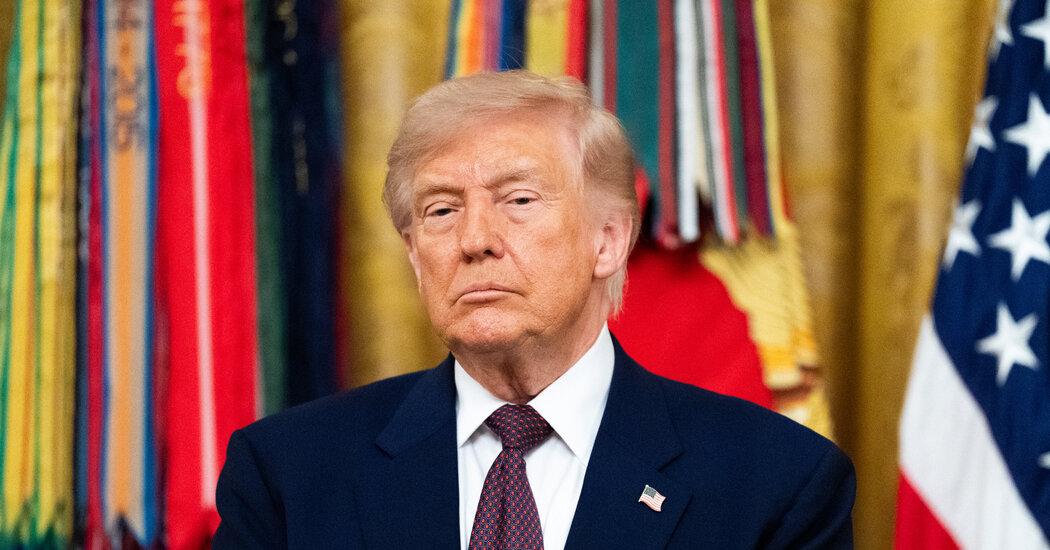
The Trump administration on Wednesday declined to renew the trade deal President Trump negotiated with Canada and Mexico in his first term, a pact that he later came to criticize.
The decision, though expected, was an important symbolic move for a trade deal the United States is currently trying to renegotiate. The move started a decade-long clock to the deal’s expiration, unless the three countries unanimously decide to renew it.
The text of the U.S.-Mexico-Canada Agreement required the three countries to jointly meet to review the agreement six years after it took effect, on July 1, 2020. All three countries were required to say in writing whether they wanted to extend the pact for another 16 years.
Canada and Mexico said last month that they wanted to extend the agreement. But Jamieson Greer, the U.S. trade representative, said on Wednesday that the Trump administration was not ready to renew the pact wholesale. The United States would continue to engage with Mexico and Canada “to address the agreement’s shortcomings and our trade deficits with these countries,” he said, adding that the agreement would remain in force until those issues were resolved or the deal was terminated.
“We think there are substantial issues,” Mr. Greer said in an interview with Bloomberg on Wednesday morning.
Mr. Trump has repeatedly suggested that he might pull out of the deal, raising anxiety among the United States’ neighbors. While the deal has many critics, industries like autos and agriculture are tightly integrated across the continent because of the pact. Its end, experts say, would be disruptive for both workers and businesses.
The announcement that the United States would not renew came as Prime Minister Mark Carney was speaking at the national Canada Day celebration in Ottawa.
In a statement, Dominic LeBlanc, the cabinet minister Mr. Carney placed in charge of dealing with the United States on trade emphasized that the three countries had agreed on the importance of continuing their discussions.
“Canada approaches these discussions from a position of strength and with the goal of preserving and strengthening one of the most successful trading relationships in the world,” Mr. LeBlanc said.
Mexican officials said they had also been left uncertain about the deal’s outcome. “Canada is currently experiencing the same situation as Mexico concerning the treaty due to the U.S. president’s more protectionist economic stance,” President Claudia Sheinbaum of Mexico told reporters on Wednesday morning.
Here’s what to know about the deal, and what comes next in its negotiation.
What is U.S.M.C.A. again?
The pact replaced and updated the 1992 North American Free Trade Agreement, which Mr. Trump criticized as the worst trade deal ever.
Aside from the name change, that negotiation left many parts of the original agreement intact. It also updated the pact with new provisions for digital technology, raised requirements for automakers to build more of their cars in North America, created new labor standards and modestly opened Canada’s dairy market to imports, among other changes.
Trump officials now say the new agreement hasn’t done enough to stop outsourcing, leading to the growth of U.S. trade deficits with Canada and Mexico. Mr. Trump has repeatedly threatened to scrap the deal, while his officials have proposed making changes to encourage more U.S. manufacturing. While many trade analysts believe that threat is a negotiating tactic, no one can be sure, given Mr. Trump’s desire to drastically change the trading system.
With the future of the deal hanging in the balance, businesses, farmers and unions have been watching nervously and lobbying their governments about what to do. Also looming over the meeting are tariffs Mr. Trump introduced on crucial industries like autos, steel and aluminum, which Canadians and Mexicans argue have violated the pact.
What happens now?
Expectations for the July 1 meeting had been low, given that negotiations are continuing separately. The United States and Mexico have another round of talks scheduled for the week of July 20, while U.S.-Canadian negotiations have not started in earnest.
A senior administration official said Wednesday that the Trump administration would like to conclude the deal as quickly as possible, and could push to have new separate protocols with Canada and Mexico before the end of the president’s term.
Both Canada and Mexico have publicly rejected the idea of replacing U.S.M.C.A. with separate bilateral agreements between the United States and its current trading partners. Canadian officials have also downplayed fears at home of an imminent end to the deal and suggested that July 1 is less a deadline than it is a starting point for talks.
With U.S. officials saying they will not immediately move to renew the pact, the countries now begin a cycle of annual reviews. If the countries do not unanimously agree to renew the agreement within that time frame, U.S.M.C.A. will now automatically terminate after a decade.
In Mexico, officials have started preparing for that situation, which they say is the most likely outcome. But they fear that the annual reviews will create frequent instability, making it more difficult to attract the major investments needed to strengthen North America’s economy and phase out Asian suppliers like China.
“If you drag us into a constant review process, you’re going to choke off investment,” Marcelo Ebrard, Mexico’s economy minister, said last week on a podcast. “That completely defeats the purpose of replacing your Asian suppliers. You can’t have it both ways.”
Companies have also argued that the uncertainty undercuts the agreement’s benefits. Matt Blunt, the president of the American Automotive Policy Council, which represents U.S. automakers, said that he was glad the governments were engaging constructively, but that uncertainty over the rules could delay investment decisions.
“The sooner the better, and delay is not our friend,” he said.
How could U.S.M.C.A. change?
The United States has proposed changes to the pact’s rules for agriculture, metals, cars and other goods. Those include a measure that is controversial for the auto industry. It would raise the requirement for how much North American content by value a car needed to have to qualify for tariff-free treatment.
The Trump administration would raise that threshold to 82 percent from 75 percent currently, while requiring 50 percent of a car’s materials to come from the United States, people familiar with the proposals said. The United States is also proposing expanding those rules to new types of car parts and setting new content requirements for other industries, including electronics.
The senior administration official said Wednesday that the United States expected to talk to the Mexicans about rules of origin and economic security, among other topics, when they meet later this month. The United States had discussed ways to build out North American supply chains for electronics, chemicals, auto parts and other goods with Mexico, and is weighing what to do with the aerospace industry, the official said.
Canada and Mexico also have their disputes, but mostly they are eager for the deal to be extended, and for the Trump administration to offer some relief for other tariffs it issued last year.
Mr. Trump has, so far, exempted most goods from Canada and Mexico covered by the trade agreement from tariffs. But that has not been the case for the crucial industrial sectors of automobiles, steel and aluminum, which face tariffs of up to 50 percent. Eliminating, or reducing, those duties is high on the list of demands for Canada and Mexico, though U.S. officials have indicated any substantial reduction is unlikely.
On Wednesday, Mr. LeBlanc emphasized that Canada was seeking “substantive discussions with the United States” on those specific trade measures.
In a statement, a consortium of auto industry trade groups called on the three governments to restore continental free trade for the sector.
“The U.S.M.C.A. is a success story for the entire U.S. auto industry, with billions invested in U.S. production and thousands of manufacturing jobs created,” the group said.
Prime Minister Mark Carney of Canada has made moves that have been widely viewed as concessions to the United States, despite his denials to the contrary. They include ordering a broadcast regulator to review a decision that would have tripled what large U.S. streaming services like Netflix pay to support Canadian television and film production. And after the United States threatened tariffs on countries it decided had inadequate controls on imports of products made using forced labor, Mr. Carney’s government introduced legislation to tighten its system.
But Mr. Carney has also vowed not to cave to Trump administration demands that could harm Canadian industries simply to preserve the trade deal.
In Mexico, Ms. Sheinbaum said that her administration would always protect the economy of Mexican families “without giving in on things we cannot compromise on — from sovereignty to other things they’ve asked of us.”
Mexican officials have drawn a red line at any seasonal restrictions proposed by the United States to prevent Mexico from exporting agricultural goods during the seasons when the United States produces its own. If the Trump administration tries to enforce such constraints, Mr. Ebrard said last week, Mexico will look for alternative mechanisms to replace U.S. agricultural imports, of which corn is the most important.
“We would not accept changes of that nature,” he said. “We’ve told them that.”
Read the full article from the original source
