




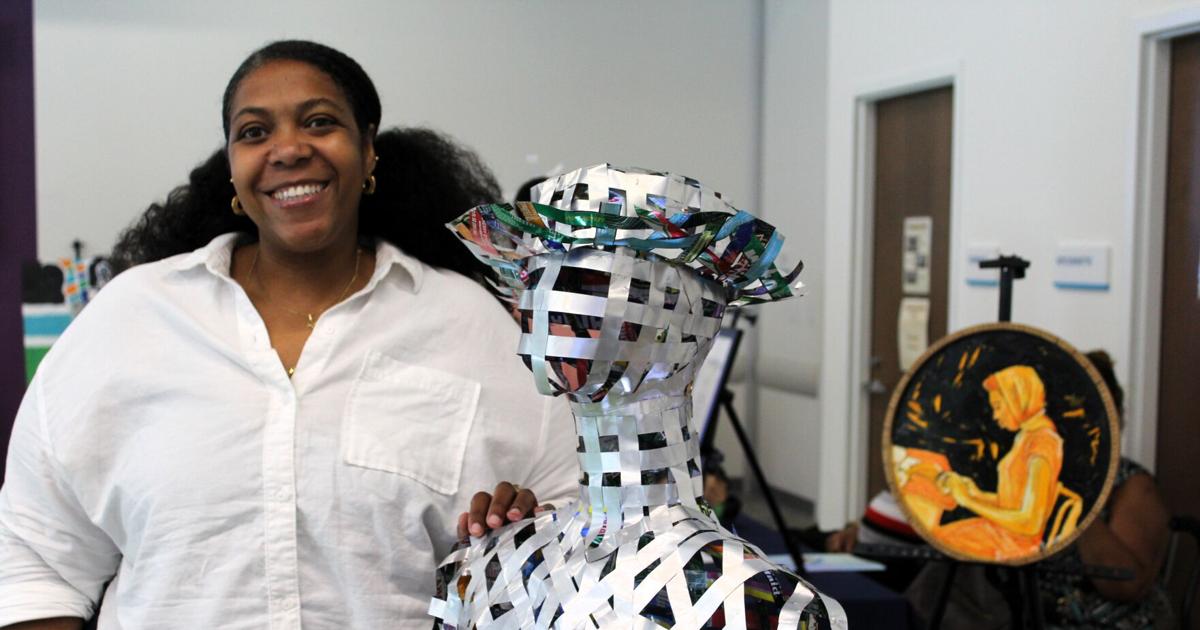
NORTH CHARLESTON — A mosaic of glass beer bottle shards and silver can scraps spelled out a cursive “Hello.” Canvas spattered green from Beaufort beach algae rested on an easel. A baby pink roseate spoonbill made out of discarded car parts, plastic water bottle caps and fishing net perched on a table. And a life-size woman’s figure constructed with sliced strips of soda cans stood by the entryway.
- Grant-funded series by S.C. Sea Grant Consortium pairs Gullah-Geechee artists with marine debris to create community art.
- Artists collect litter via organized cleanups and personal efforts to reuse marine debris, highlighting pollution's harm to wildlife and habitats.
- Exhibit connects cultural preservation, sustainability, and Gullah-Geechee traditions like basket weaving and quilting through repurposed materials.
- Funded by NOAA Marine Debris Program, the series paid artists, marketed shows, and offered prize awards at community showcases.
- Winners included Dorneisha Batson (first place, $3,500) and Priscilla Brockington (second place, $2,000), drawing public engagement.
On June 13, a room at the Keith Summey North Charleston Library was transformed into an art gallery, displaying recent pieces made by Lowcountry Gullah-Geechee artists out of trash.
It was the sixth rendition of a grant-funded series hosted by the S.C. Sea Grant Consortium in which artists participate in local cleanups to collect marine debris and other garbage found in Charleston’s natural habitats.

Then they turn that trash into treasure.
Marine debris reimagined
Marine litter can take many forms. Some of the biggest examples are abandoned boats that dot the coast of the state, creating navigational hazards and releasing pollutants into the water as they deteriorate. On the smaller end, a number of lawsuits in recent years have called attention to nurdles, plastic pellets that manufacturers melt down to make most plastic consumer goods.
The impact of this litter isn’t benign. Sea turtles and other wildlife often eat or become caught in plastic trash. The South Carolina Aquarium rehabilitates turtles that are entangled in marine debris or that have ingested plastic.
The marine debris used in this exhibition was collected during organized litter sweeps or through the efforts of individual artists, said Matt Gorstein, director of development and extension at S.C. Sea Grant Consortium.

Priscilla Brockington made a mythical African bird out of plastic bottles and other collected debris.
Priscilla Brockington of Georgetown collected most of the garbage she used from Murrells Inlet and Atlantic Beach to craft her African-themed art. Plastic bottles formed the base for a feathered bird. It resembled a Sankofa, or African mythical bird — a symbol representing the idea that we must look to the past to understand the present and build a successful future.
Lyela Gadsden, a Charleston-based artist, found some discarded plastic in a football field near her home that made up a roseate spoonbill sculpture. Much of the litter was left behind after sporting events, she said.
The pink bird species depicted in her sculpture has been making an appearance in South Carolina. Sea level rise and warmer temperatures caused by climate change have pushed the roseate spoonbills out of their native Florida. In recent years, birdwatchers have noted more of them in South Carolina as the species moves north.

Lyela Gadsden’s roseate spoonbill was made out of trash collected from a football field near her home.
“Art can be used to preserve cultures, protect ecosystems and promote sustainability,” Gadsden said. “This program brings all three of these elements together. This exhibit has shown me how the Gullah community can transform what is often seen as trash into something valuable, how resilient and resourceful we are as a people.”
Dorneisha Batson, a Beaufort-based artist, built a life-size sculpture of a Gullah woman made entirely of cans and superglue, replete with a removable hat and yard broom. (Yard brooms were used in Gullah-Geechee culture to sweep the dirt from grassless yards, a practice brought over from West Africa.)
Batson collected aluminum cans for her piece starting in 2024, cleaning off the dirt and grime before cutting the cans into thin strips that make up the structure.
“This piece is deeply personal for me and the strong women in my life that raised me,” shared Batson. “Basket weaving, just like quilting, is a huge part of our culture. Like quilting, it told the stories and history of families. Not only is it for practical uses, it also holds spiritual significance.”

Winnie Tataw poses with her art made out of Lowcountry trash at the Keith Summey North Charleston Library for the Gullah/Geechee Create showcase on June 13, 2026.
More on the program
Tina Tyler, who created a yin-yang mosaic made of broken glass bottles, came across the program when she saw a poster while working as a nighttime cleaner at a public library. She thought it was a great idea and decided to enter.
Of the 40 Gullah artists who filled out an initial survey, 11 submitted a completed work and became part of the initiative, Gorstein said.
The series of exhibitions has been funded by the NOAA Marine Debris Program for the last three years and has drawn around 500 attendees. The grant money has helped market the exhibits and pay artists for their work. It also goes toward a prize pool offered at each showcase, in which voters decide their favorites.
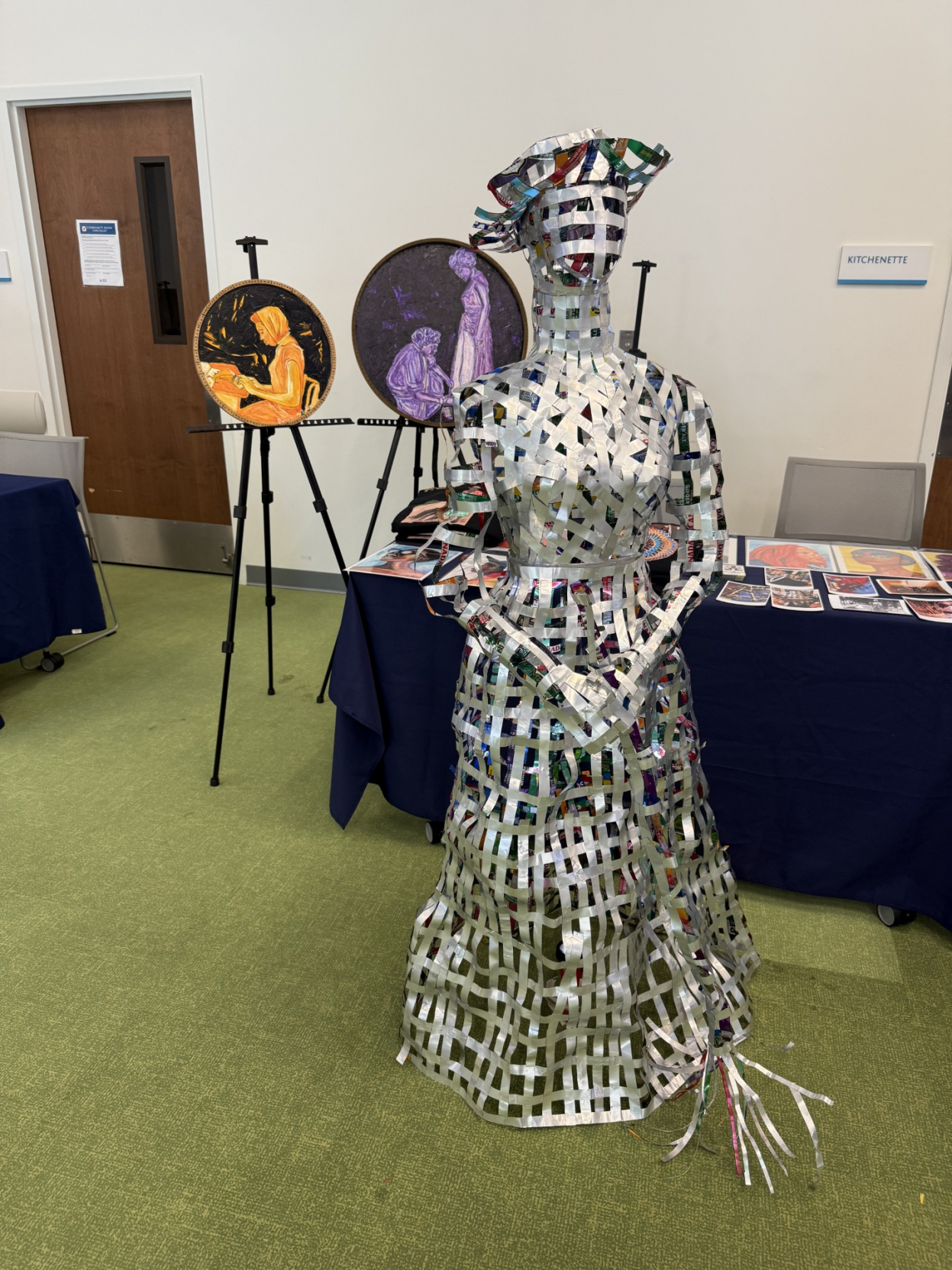
Dorneisha Batson’s Gullah woman figurine made out of strips of discarded soda cans won first place at the North Charleston Gullah/Geechee Create showcase.
For the North Charleston exhibition, Batson took home first place and $3,500 for her Gullah woman, while Brockington finished second with $2,000 for her African bird.
As the grant ends, the consortium and its partners in Gullah communities across the state are looking for ways to stay engaged with the program in the coming years, Gorstein said.
In the meantime, he hopes more communities will help clean up their environments — and perhaps get creative. Participating artists agree.
“I hope our exhibits encourage the community to live more sustainably and consider how they can be good stewards of the planet,” Gadsden said. “Be mindful of your environment. Pick up trash when you see it, and think about how you can reuse materials before discarding them.”
You never know what you might be able to craft from someone else’s trash.
