


Close Menu
Savannah HeraldSavannah Herald
    • Home
    • News
      • Local
      • State
      • National
      • World
      • HBCUs
    • Events
    • Directories
    • Weather
    • Traffic
    • Jobs
    • Sports
    • Politics
    • Lifestyle
      • Faith
      • Senior Living
      • Health
      • Travel
      • Beauty
      • Fashion
      • Food
      • Art & Literature
    • Business
      • Real Estate
      • Entertainment
      • Investing
      • Education
    • Guides
      • Back to School Savannah
      • Summer Camp Guide
      • Juneteenth Guide
      • Black History Savannah
      • MLK Guide Savannah
    We're Social
    • Twitter
    • Facebook
    • YouTube

    Subscribe to Updates

    Get the latest creative news from FooBar about art, design and business.

    Trending
    • Listings, Sales Decrease While Prices Hold Steady In August
    • Tupac Shakur Murder Trial Documentary Is in the Works
    • Banana Ball in Cleveland. What to know about tickets, schedule, times
    • Kevin Durant defends WNBA: ‘Look [at] what these women are doing’
    • George Floyd’s Relatives Demand Transparency Over Millions Raised in His Name
    • Women’s Basketball Announces 2026-27 Non-Conference Schedule
    • $25 Yoga Stick Can Help Loosen Stiff, Tight Backs And Muscles
    • The Download: why AI’s latest breakthroughs and fears may be more hype than reality
    Facebook X (Twitter) Instagram YouTube
    Login
    Savannah HeraldSavannah Herald
    Savannah HeraldSavannah Herald
    Home » How grief made Archbishop García-Siller a prophetic voice on immigration
    Faith

    How grief made Archbishop García-Siller a prophetic voice on immigration

    Savannah HeraldBy Savannah HeraldAugust 9, 20267 Mins Read
    Facebook Twitter Pinterest LinkedIn WhatsApp Reddit Tumblr Email
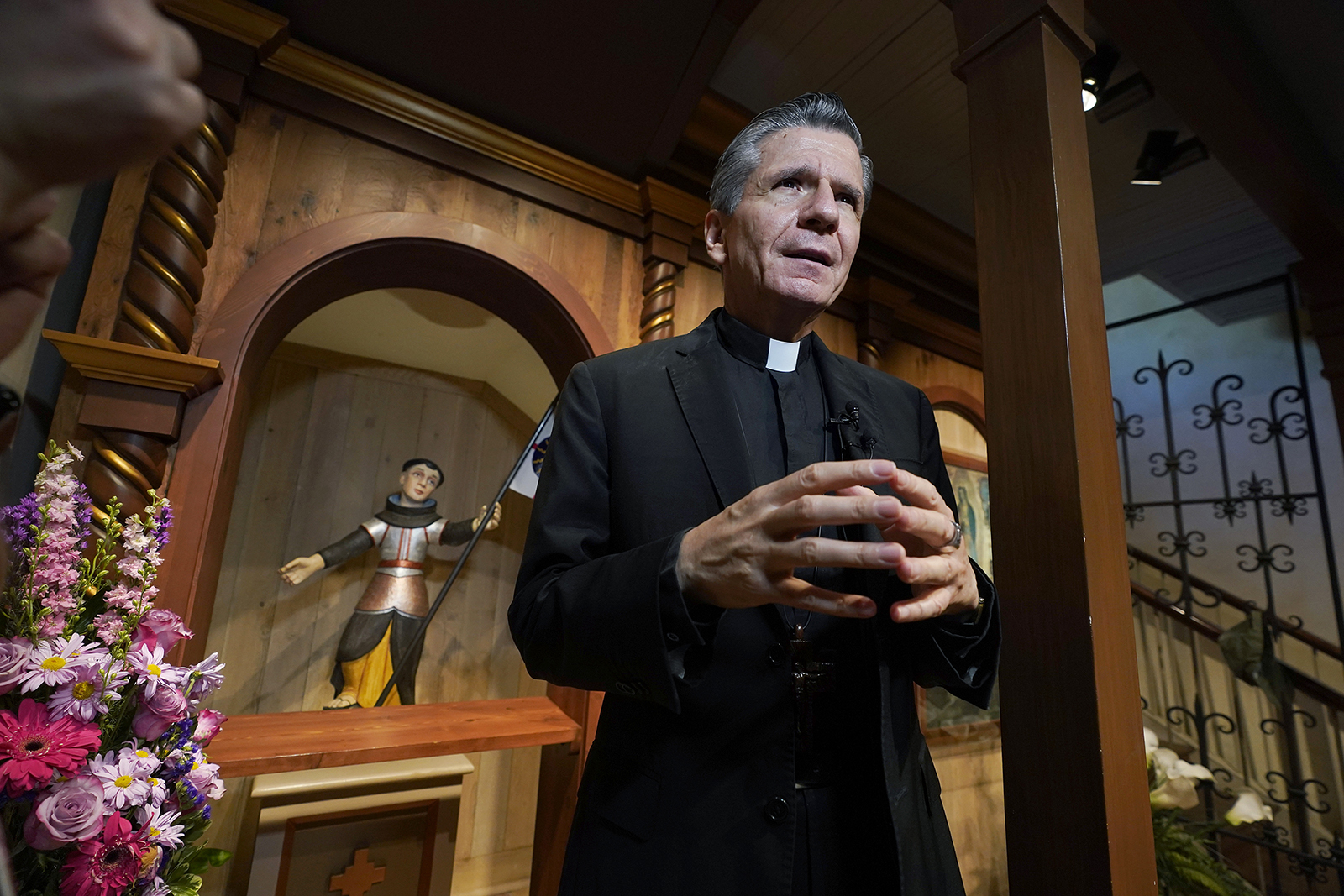
    How grief made Archbishop García-Siller a prophetic voice on immigration
    Share
    Facebook Twitter LinkedIn Pinterest Email

    Faith & Reflection: Voices from the Black Church and Beyond

    Key takeaways
    • Gustavo García-Siller's grief forged the pastoral letter We Will Come to You, grounding prophetic witness in personal sorrow and moral clarity.
    • Gustavo García-Siller's immigrant exile and years accompanying migrants provide moral authority to name systemic injustices and end church silence.
    • He calls immigration detention a profit-driven, racially embedded design, documenting widespread abuses and children's despair as moral evidence.
    • He grounds action in the spirituality of the cross and Our Lady of Guadalupe, urging the church toward lived solidarity: "We will come to you."

    (RNS) — On May 24, 2022, San Antonio Archbishop Gustavo García-Siller sat with parents in Uvalde, Texas. Their children were dead — 19 of them. Most were Mexican-American, as the city sits 50 miles from the U.S.-Mexico border. People there believed their children would be safe. But a school shooting that day marked another massacre in a strip of land with a long historical legacy of violence against those of Mexican descent.

    Thirty-six days later, on June 27, García-Siller stood in San Antonio outside a crime scene where 53 bodies lay in a tractor trailer. In pursuit of the American dream, the migrants had suffocated in metal darkness. In five weeks, he had moved between two forms of American erasure: the sudden obliteration of childhood via school shootings and the slow suffocation of people who migrate. Both communities had been abandoned. Both experiences would stay with him.

    These griefs, along with a series of poignant autobiographical details unique for a public declaration from a Catholic bishop, helped to forge García-Siller’s new pastoral letter, “We Will Come to You.” They sit beneath every word.

    Born in San Luis Potosí, Mexico, when the Cristero War was very much a living memory, García-Siller, now 69, arrived in the United States at 23, with no return date. He learned early what displacement meant. Years later, as a priest, he would walk alongside farmworkers in California who worked bent over in fields and who slept in farmhouse garages to avoid being deported. As a Chicago auxiliary bishop, he learned the lessons of community organizing and boarded deportation buses to hand out prayer cards.

    But experiencing the immediate aftermath of Uvalde and the tractor trailer deaths completed a formation that had begun with his own exile from his home country as a missionary, as he describes in his letter. By then, he fully understood what it meant to find oneself in a moral wreckage he did not create. He understood staying.

    Years later, against a surge in recent migrant deaths — Physicians for Human Rights has documented at least 52 in Immigration and Customs Enforcement custody since the beginning of the Trump administration as of June, and others have been documented since — fathers in Texas and Maine shot during traffic stops, the ordinary machinery of immigration enforcement grinding toward its quota — García-Siller has written a letter of uncommon clarity as well as personal vulnerability. Of moral destruction he has seen much, and it shows in how he writes.

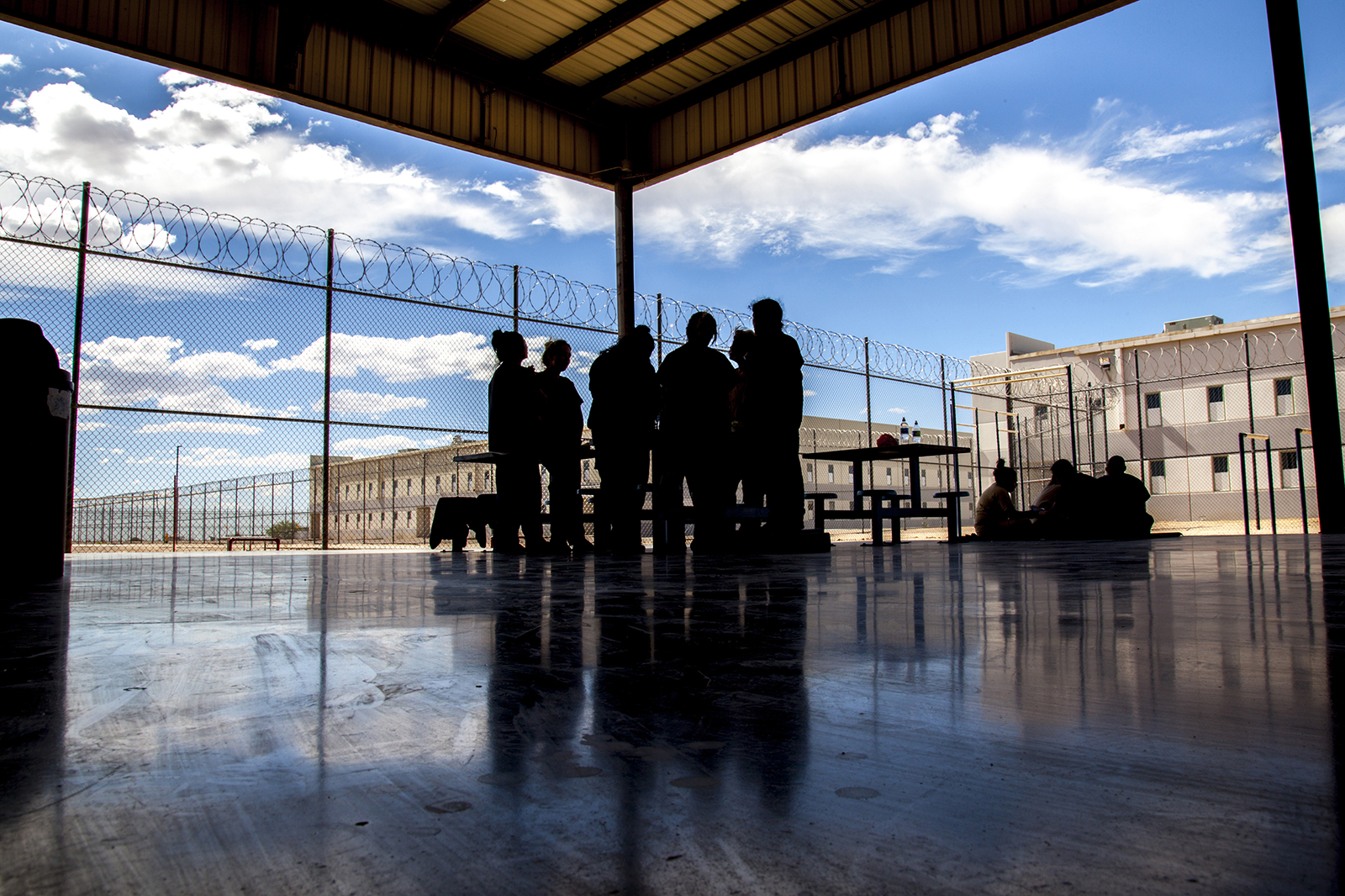
    The letter substantively addresses the issue of immigration detention, now metastasizing throughout the country. For García-Siller, detention is not policy failure. Sustained by private profit, it is design. He notes that a Senate investigation documents over 1,000 credible reports or serious abuses in detention centers since January 2025. Seventy-three percent of those detained have never been convicted of anything, according to the Cato Institute.

    He quotes a 9-year-old Colombian girl held for 113 days, who wrote on a piece of paper: “I am not happy. Get me out.” Seven words. The archbishop does not quote her to move us, but because she is real. She existed in that cage, and her words are the only testimony of that horrible reality some people will never leave behind.


    RELATED: Inside a Brooklyn church where immigration activism is the gospel

    He also names what others will not: the racial architecture underneath the campaign of mass detention and deportation. “This system’s brokenness is not merely policy failure,” he writes.  ” … A system in which racial disparity is so deeply embedded cannot deliver justice without honest reform.” He does not say every officer acts from hatred. He says the system itself is soaked in it. If anyone in the church has known this and looked away, he says that ends now: “The Church must confront the truth and name these injustices for what they are.”

    The theological core of the letter is the spirituality of the cross. Human tragedy met with love becomes where God lives. It is a lens García-Siller describes looking through since childhood — learned from nuns during primary school, alongside undocumented farmworkers, on buses filled with those bound for deportation, in the cells of detention centers, with crying parents in Uvalde. He quotes border theologian Monsignor Arturo Bañuelas: “Jesus is at the border; today He is crucified in the poor.” The archbishop does not explain this. He names it. He expects us to understand.
    Since Pope Leo XIV spoke against the mass detention of immigrants last year, the American hierarchy has begun to move in new ways. Bishops in El Paso and Cheyenne have named the current mass deportation campaign for what it is: grave moral evil. Bishop Bruce Lewandowski chartered a bus from Providence, Rhode Island, to Washington, D.C. after ICE arrested a judge’s 16-year-old intern outside his office. The Bishop of Knoxville, James Mark Beckman, spoke out against a painful rise in family separations on the feast of Our Lady of Guadalupe. Going outside the usual channels, a coalition of bishops opposed President Donald Trump’s enforcement expansion bill. The institutional church is waking.

    García-Siller’s letter accelerates that shift. It offers a map that parallels his life experience: encounter with the reality of human suffering, then accompaniment, then organized advocacy, then lived solidarity. It is a model for what religious leadership looks like when silence becomes impossible.

    The letter closes with Our Lady of Guadalupe — a woman who crossed borders, who appeared to the powerless, who knows the road of suffering. To those living in fear, she speaks: “Am I not here, I who am honored to be your mother?” García-Siller promises the same. You are not alone. The church will not be silent. We will come to you.

    That promise sits heavy. It has been tested in Uvalde’s funeral homes and in that tractor trailer on Quintana Road. It has been tested in detention centers where children write their despair on paper. It will be tested again when ICE pulls someone over, when families wake to find breadwinners gone, when another community buries its dead.


    RELATED: On July 4th, Pope Leo asks United States, Europe: Who is your neighbor?

    García-Siller has written from the foot of the cross. His moral authority does not come from theology alone. It comes from standing where his people stood in grief. It comes from knowing what it feels like to be displaced, to have nowhere, to identify with those who are told your life does not matter.

    “We Will Come to You” deserves to be read — for its integration of witness, memory, theology and pastoral specificity, as well as for its author’s story of vulnerability and growth. But read it also for what it reveals about an archbishop who allows us to see how suffering, when not numbed by privilege, becomes the ground of prophetic action. García-Siller calls the church beyond accompaniment to lived solidarity. To “primerear” — to go first, as Pope Francis asked. To become neighbor to the wounded.

    His letter is a promise and a warning. We will come to you. Not with comfort. Not with the language that makes us feel better about ourselves. But with the willingness to stand in wreckage and say: Your dignity is not negotiable. Your life is not disposable. We will not look away.

    Whether the church in the United States keeps that promise is up to us.

    (Dylan Corbett is the executive director of the Hope Border Institute and member of the Vatican’s Dicastery for Promoting Integral Human Development. The views expressed in this commentary do not necessarily reflect those of Religion News Service.)

    Read the full article on the original source


    Related Posts

    • Why I Started Dressing To Be Seen – Essence
    • Denim Tears Is America’s Story
    • CAT to Implement Service Changes in July – Chatham Area Transit (CAT)
    • OpenAI Could Sue Apple Over Failing Siri Deal
    • Can Southern run it back? The Jaguars are preseason SWAC favorites
    • Cuban-Americans in Miami elevate problems concerning expulsions: NPR
    • SSU to Rename Tiger Court Residence Hall | Opened in 2012, it will be renamed Bostic Hall in Memory of Fallen Tiger
    • Some advice on picking the best weather apps : NPR
    African American Religion AME Church Biblical Wisdom Black Faith Christian Living Christian Women of Color Church Leadership COGIC Community Churches Cultural Christianity Devotional Messages Faith and Culture Faith and Justice Faith-Based News Gospel and Grace Inspirational Writing Religion and Identity Religious Commentary Spiritual Reflection The Black Church
    Share. Facebook Twitter Pinterest LinkedIn WhatsApp Reddit Tumblr Email
    Savannah Herald
    • Website

    Related Posts

    Faith September 22, 2026

    Police believe they have foiled ‘imminent’ attack on Manchester’s Jewish community | UK security and counter-terrorism

    Faith September 22, 2026

    ‘The fears begin to fall away’: why Britain’s mosques are opening their doors to public | Communities

    Faith September 21, 2026

    Hungry for connection? This is what we lose when we stop eating together | Shadi Khan Saif

    Faith September 20, 2026

    The Defiant Divine Journey of the Rev. Dr. Molly Marshall

    Faith September 19, 2026

    When Blood Exposure Happens At Work: A Simple Response Plan.

    Faith September 18, 2026

    ‘We live with a big burden’: survivor of abusive Spotlight priest hopes clergyman’s death brings closure | Catholicism

    Comments are closed.

    Don't Miss
    Local July 13, 2026By Savannah Herald02 Mins Read

    City of Savannah, Board of Education Expand Partnership to Open Additional Pools • Savannah Herald

    July 13, 2026

    City of Savannah: Official News, Events & Community Updates City of Savannah, Board of Education…

    The Download: Quantum computing for health, and why the world doesn’t recycle more nuclear waste

    March 19, 2026

    Can an AI-Powered Scribe Curb Physician Burnout?

    August 19, 2026

    Bowie State Alumna Jakeya Johnson Runs for Congress

    April 23, 2026

    Bills’ record streak comes to an end in stunning ‘Sunday Night Football’ loss to Patriots

    October 21, 2025
    Archives
    • September 2026
    • August 2026
    • July 2026
    • June 2026
    • May 2026
    • April 2026
    • March 2026
    • February 2026
    • January 2026
    • December 2025
    • November 2025
    • October 2025
    • September 2025
    • August 2025
    • July 2025
    • June 2025
    • May 2025
    • April 2025
    • March 2025
    • February 2025
    Categories
    • Art & Literature
    • Beauty
    • Black History
    • Business
    • Climate
    • Culture
    • Education
    • Employment
    • Entertainment
    • Faith
    • Fashion
    • Food
    • Gaming
    • Georgia Politics
    • HBCUs
    • Health
    • Health Inspections
    • Investing
    • Lifestyle
    • Local
    • Lowcountry News
    • National
    • National Opinion
    • News
    • Politics
    • Real Estate
    • Senior Living
    • Sports
    • State
    • Tech
    • Traffic
    • Transportation
    • Travel
    • Weather
    • World
    Savannah Herald Newsletter

    Subscribe to Updates

    A round up interesting pic’s, post and articles in the C-Port and around the world.

    About Us
    About Us

    The Savannah Herald is your trusted source for the pulse of Coastal Georgia and the Low County of South Carolina. We're committed to delivering timely news that resonates with the African American community.

    From local politics to business developments, we're here to keep you informed and engaged. Our mission is to amplify the voices and stories that matter, shining a light on our collective experiences and achievements.
    We cover:
    🏛️ Politics
    💼 Business
    🎭 Entertainment
    🏀 Sports
    🩺 Health
    💻 Technology
    Savannah Herald: Savannah's Black Voice 💪🏾

    Our Picks

    Taylor Swift and Travis Kelce marry at New York City’s Madison Square Garden | Taylor Swift

    July 4, 2026

    Georgia War Veterans Home gets new leader amid care quality concerns

    December 19, 2025

    The Real Life Tech Execs That Inspired ‘Mountainhead’

    March 25, 2026

    Budget Battle Erupts in Nation’s Capital Over Opioid Settlement Money

    August 9, 2026

    Class of 2026 Rams rise from students to graduates

    May 25, 2026
    Categories
    • Art & Literature
    • Beauty
    • Black History
    • Business
    • Climate
    • Culture
    • Education
    • Employment
    • Entertainment
    • Faith
    • Fashion
    • Food
    • Gaming
    • Georgia Politics
    • HBCUs
    • Health
    • Health Inspections
    • Investing
    • Lifestyle
    • Local
    • Lowcountry News
    • National
    • National Opinion
    • News
    • Politics
    • Real Estate
    • Senior Living
    • Sports
    • State
    • Tech
    • Traffic
    • Transportation
    • Travel
    • Weather
    • World
    Copyright © 2002-2026 Savannahherald.com All Rights Reserved. A Veteran-Owned Business

    Type above and press Enter to search. Press Esc to cancel.

    Manage Consent
    To provide the best experiences, we use technologies like cookies to store and/or access device information. Consenting to these technologies will allow us to process data such as browsing behavior or unique IDs on this site. Not consenting or withdrawing consent, may adversely affect certain features and functions.
    Functional Always active
    The technical storage or access is strictly necessary for the legitimate purpose of enabling the use of a specific service explicitly requested by the subscriber or user, or for the sole purpose of carrying out the transmission of a communication over an electronic communications network.
    Preferences
    The technical storage or access is necessary for the legitimate purpose of storing preferences that are not requested by the subscriber or user.
    Statistics
    The technical storage or access that is used exclusively for statistical purposes. The technical storage or access that is used exclusively for anonymous statistical purposes. Without a subpoena, voluntary compliance on the part of your Internet Service Provider, or additional records from a third party, information stored or retrieved for this purpose alone cannot usually be used to identify you.
    Marketing
    The technical storage or access is required to create user profiles to send advertising, or to track the user on a website or across several websites for similar marketing purposes.
    • Manage options
    • Manage services
    • Manage {vendor_count} vendors
    • Read more about these purposes
    View preferences
    • {title}
    • {title}
    • {title}
    Ad Blocker Enabled!
    Ad Blocker Enabled!
    Our website is made possible by displaying online advertisements to our visitors. Please support us by disabling your Ad Blocker.

    Sign In or Register

    Welcome Back!

    Login below or Register Now.

    Lost password?

    Register Now!

    Already registered? Login.

    A password will be e-mailed to you.