




Black Voices: News, Culture & Community from Across the Nation
- COMBEE reveals Harriet Tubman led the Combahee River Raid, the largest successful slave liberation operation in U.S. history.
- Fields-Black used over 200 Civil War pension files to restore freed peoples’ voices and enable descendant genealogies.
- The raid freed more than 700 people across seven South Carolina rice plantations, highlighting collective liberation and coalition building.
- Fields-Black connects rice history, Gullah Geechee culture, and community memory, expanding Tubman’s legacy beyond military action.
When Dr. Edda L. Fields-Black steps onto the stage at Chicago’s 40th Annual Printers Row Lit Fest this September, she will carry with her more than a Pulitzer Prize-winning book. She will bring the voices of hundreds of freedom seekers whose stories have long been buried in the footnotes of history.
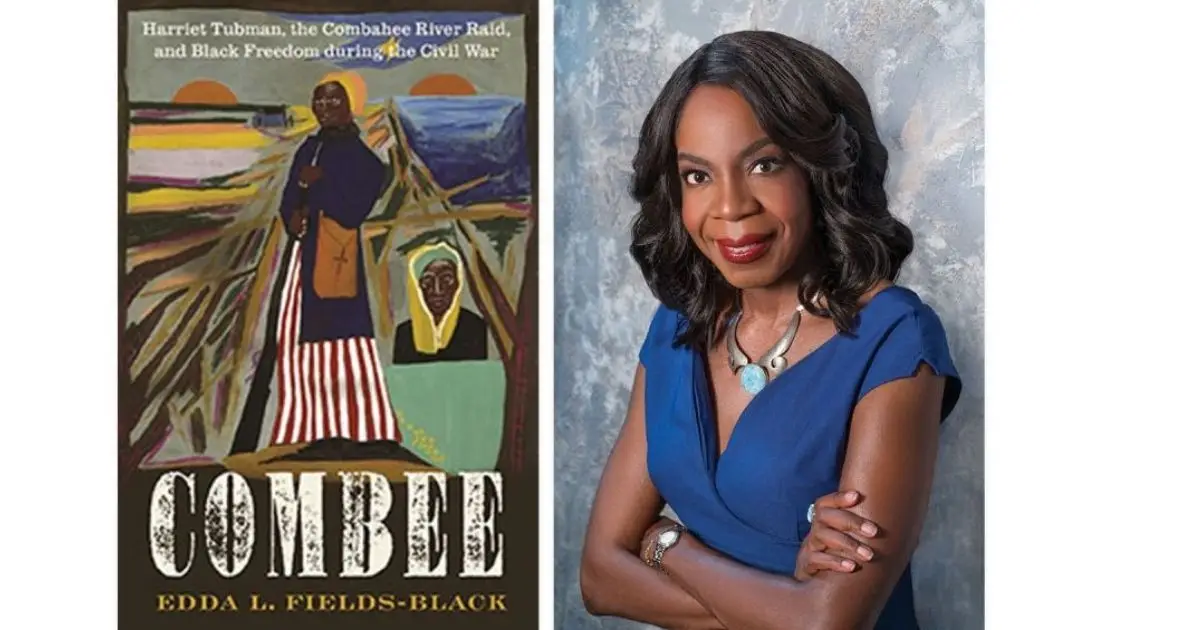
A historian at Carnegie Mellon University, Dr. Fields-Black is the author of COMBEE: Harriet Tubman, the Combahee River Raid and Black Freedom during the Civil War, which won the 2025 Pulitzer Prize in History. The book sheds new light on Harriet Tubman’s role in leading the largest and most successful slave rebellion in United States history—the Combahee River Raid of June 1863.
“I’m excited to introduce COMBEE to Chicago readers for the first time,” she told me in a recent interview. “This will be COMBEE’s first trip to Chicago, and it’s wonderful to do so while celebrating the 40th anniversary of Printers Row Lit Fest.”
The public reception to COMBEE has been overwhelming, she said. Readers from all walks of life see Harriet Tubman not only as a historical figure but as a spiritual guide. “People love Harriet Tubman,” she explained. “It’s almost as if she is each and every one of these multitude of people’s spirit guide. That this book uncovers a chapter of her life we knew little about excites people in ways I didn’t anticipate.”
By combing through more than 200 Civil War pension files, Fields-Black pieced together the lives of men and women who were liberated in the raid. These records, she explained, allow descendants today to trace their enslaved ancestors, identify family connections, and hear their voices preserved in testimony about bondage and freedom. “It’s an invaluable resource for historians, genealogists, and families,” she said.
For Fields-Black, the Combahee River Raid offers lessons that still resonate. The operation was carried out by Tubman, a group of spy scouts and pilots she recruited, and the 2nd South Carolina Volunteers—Black soldiers who had liberated themselves before joining the Union Army. Together, they freed more than 700 enslaved people along seven South Carolina rice plantations.
“These were people who would rather die than be re-enslaved, yet they went back to liberate others,” Fields-Black said. “They knew freedom wasn’t free until all Black people were free. They wouldn’t leave anybody behind. And that’s something we can learn today about coalition building and standing together with the most vulnerable.”
Her journey to Tubman began with rice. Fields-Black’s academic specialty is the history of rice cultivation in West Africa and the American South. When she discovered that the raid took place across rice plantations, she saw an opportunity to tell a deeper story about slavery, technology, and survival. “Rice was the prism I used to connect West Africa, slavery in the Carolinas, and the Gullah Geechee culture,” she said. That expertise is what made COMBEE so distinctive—it reframes Tubman’s raid not just as a military maneuver but as a story of community, technology, and cultural survival.
The research became even more personal when Fields-Black discovered her own ancestor, Hector Fields, had fought in the Combahee River Raid. “I was far along in the book before I confirmed that Hector, my great-great-great-great-grandfather, liberated himself, joined the 2nd South Carolina Volunteers, and was on the boat with Harriet Tubman,” she shared. “There were little breadcrumbs I followed, but eventually I found the documents to prove it.” For her, this discovery underscored the power of family history research. What began as scholarship evolved into a personal connection, one she now shares with her children and extended family.
Fields-Black is also committed to ensuring this history reaches beyond academia. Her collaborations with museums, such as the Smithsonian National Museum of African American History and Culture, and her work as librettist for Requiem for Rice, show her dedication to making history tangible. She is now working on a digital humanities project that will use artificial intelligence to transcribe and index Civil War pension files, making them searchable for descendants and genealogists.
“This history still impacts us today,” she emphasized. “It shapes how we relate to one another, how we understand race relations. Until we deal with it, it will continue to have a negative impact. Covering it up is counterproductive. We have to keep revisiting it.”
When Fields-Black arrives in Chicago this fall, she will join five other Pulitzer Prize winners—including Jonathan Eig and Mary Schmich—for a weekend of storytelling at Printers Row Lit Fest, the largest literary festival in the Midwest. For family historians and everyday readers alike, her work offers not only scholarship but inspiration. In COMBEE, Harriet Tubman is not just a liberator but a teacher for today: a reminder that freedom is collective, that no one should be left behind, and that uncovering the stories of the past is essential for building the future.
“History is not just about the past,” Fields-Black told me. “It’s about who we are, who our families are, and what we choose to carry forward.”
Read the full article on the original publication
