


Close Menu
Savannah HeraldSavannah Herald
    • Home
    • Features
      • View All On Demos
    • Buy Now
    We're Social
    • Twitter
    • Facebook
    • YouTube

    Subscribe to Updates

    Get the latest creative news from FooBar about art, design and business.

    Trending
    • How 6LACK Found a Sense of Balance
    • Wendy’s Drops New ‘Minions’ Frosty, Kids Meal and Adult Meal
    • HBCU basketball power at crossroads with coaching search
    • R & B Crooner Peabo Bryson Has Died at 75
    • New AI Approach for Christian Schools: Built on a Biblical Worldview
    • Is Everyone Using AI? How False Perceptions Can Become Self-fulfilling
    • GRAHAM: I’m excited about the future of The Covington News
    • Visit These ‘Jack Ryan: Ghost War’ Filming Locations In New York, London And Dubai
    Facebook X (Twitter) Instagram YouTube
    Login
    Savannah HeraldSavannah Herald
    Savannah HeraldSavannah Herald
    Home » ‘Send your daughters or you get no aid’: the Taliban are making religious schools girls’ only option | Women under the Taliban
    Faith

    ‘Send your daughters or you get no aid’: the Taliban are making religious schools girls’ only option | Women under the Taliban

    Savannah HeraldBy Savannah HeraldDecember 7, 20256 Mins Read
    Facebook Twitter Pinterest LinkedIn WhatsApp Reddit Tumblr Email
    ‘Send your daughters or you get no aid’: the Taliban are making religious schools girls’ only option | Women under the Taliban
    Share
    Facebook Twitter LinkedIn Pinterest Email

    Faith & Reflection: Voices from the Black Church and Beyond

    Key takeaways
    • Taliban expand madrasas nationwide, making religious schools the primary education option available to women and girls.
    • Qualified female teachers dismissed and replaced by teenage former madrasa pupils with certificates, degrading teaching standards and job prospects.
    • Mullahs and local authorities coerce or incentivize families: attend religious classes or face aid denial, isolation, and hunger.
    • Curriculum focuses on Qur’an memorization and Taliban interpretations; excludes mathematics and science, uses Pashto textbooks even in Dari regions.
    • International aid and supplies diverted to madrasas; girls increasingly stop aspiring to become doctors or engineers, viewing madrasa certificates as vital.

    When the Taliban returned to power in Afghanistan in August 2021, Nahid, 24, was midway through an economics degree. She had hoped to work in a university after she graduated.

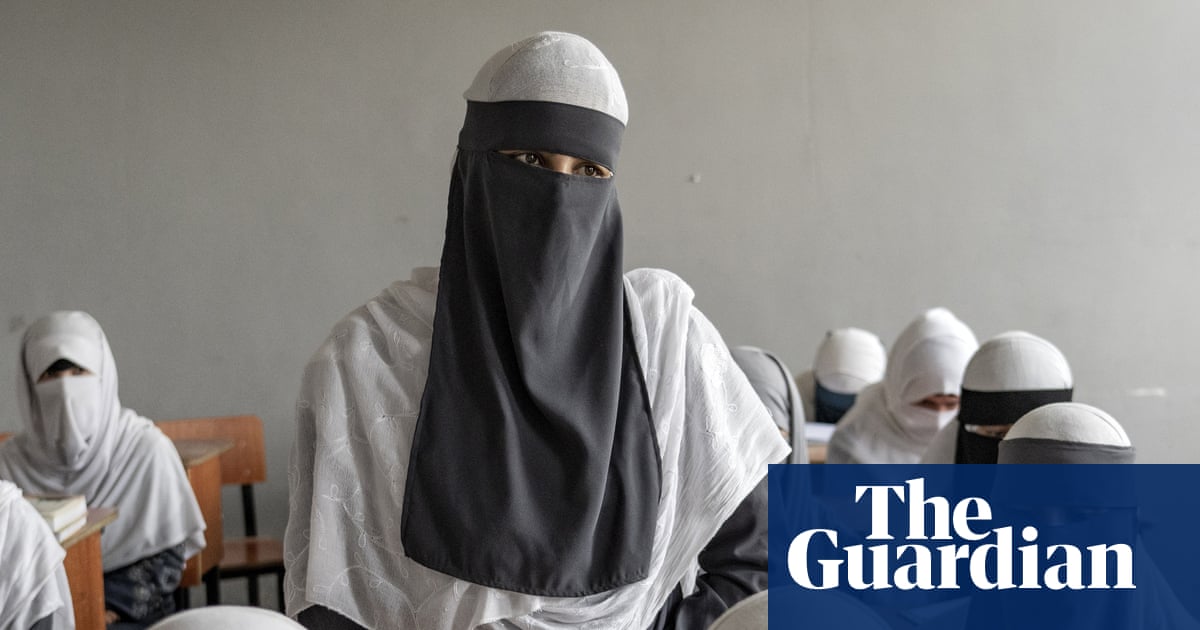
    Instead, Nahid now spends her mornings at a religious school in the basement of a mosque in the western city of Herat, sitting on the floor and reciting scripture with 50 other women and girls, all dressed in black from head to toe.

    She knows the Taliban is “trying to change women’s minds”, but says she attends the class because, “it’s the only way I can leave my home and fight depression”. The incentive of 1,000 Afghanis (£11) she receives every month also helps.

    Nahid’s story is not unusual. A Guardian and Zan Times investigation across eight of Afghanistan’s 34 provinces has revealed the Taliban’s deliberate and calculated efforts to make religious studies the only education option available to women and girls in Afghanistan.

    After first excluding women and girls from secondary school and further education more than four years ago, the regime has been building a large network of religious schools that promote a new alternative.

    There were more than 21,000 Islamic religious schools, or madrasas, across Afghanistan by the end of last year, according to reports. Between September 2024 and February 2025, the Taliban built or laid foundations for nearly 50 new madrasas across 11 provinces.

    The schools are run by mullahs in the mosque or in their homes, for which they receive a salary from the education ministry. To staff the schools, the ministry has issued teaching certificates to 21,300 former madrasa students that allow them to teach at high school, undergraduate or even postgraduate level at universities.

    Families have been left with few alternatives since girls were excluded from secondary education and often find themselves pressed or incentivised into enrolling their children, especially daughters, in religious schools.

    After the Taliban stopped their secondary education, some older girls continue to attend classes in underground schools, such as this one in Herat. Photograph: Dpa Picture Alliance/Alamy

    The mullahs also have an incentivise to fill the classroom as more pupils mean a higher salary. As community leaders and conduits for aid, they wield enormous power over most people’s daily lives.

    Karima, from the south-western Nimroz province, pulled her two daughters out of school at the request of the local mullah. “He said he would give us food aid if I sent them to his class,” she says. “But in the end, nothing came.”

    Another mother, Nasreen, says she was told: “Send your daughters to our religious classes or you get nothing.”

    The result is a steady reshaping of community norms. Families who resist face isolation and hunger. Those who comply often watch their daughters return home more rigid and critical in their thinking, sometimes denouncing their own parents as “infidels”. Even job opportunities, reports suggest, are reserved for families whose daughters attend religious classes.

    In the girls’ primary schools that remain open, the impact is visible. Class sizes are much smaller. In Nimroz, one teacher says that 57 of her pupils left for madrasas this year. “Before, each grade had four sections with 40 students. Now we have three sections with only 20 to 25.”

    Even those who stay often attend both institutions, spending mornings in the madrasa and afternoons in school, until pressure mounts and they drop out of non-religious education altogether.

    skip past newsletter promotion

    Sign up to Global Dispatch

    Get a different world view with a roundup of the best news, features and pictures, curated by our global development team

    Privacy Notice: Newsletters may contain information about charities, online ads, and content funded by outside parties. If you do not have an account, we will create a guest account for you on theguardian.com to send you this newsletter. You can complete full registration at any time. For more information about how we use your data see our Privacy Policy. We use Google reCaptcha to protect our website and the Google Privacy Policy and Terms of Service apply.

    after newsletter promotion

    A primary schoolteacher in Shirzayee village, Nimroz province. Teachers report falling school rolls as girls leave for madrasas. Photograph: Lynsey Addario/Getty Images

    Meanwhile, experienced teachers with university degrees have been barred from teaching. Their replacements are often teenage former madrasa pupils with no educational training but strong ideological credentials.

    In the western province of Farah, a headteacher recalls being ordered to dismiss five qualified teachers. One of their replacements was appointed despite being unable to read fluently; her only qualifications, says the head, were that she had connections with officials and held a certificate from a religious school.

    The curriculum in madrasas is narrow: memorising the Qur’an, the Taliban’s interpretations of Islamic law, gender roles, and rules about dress and behaviour. No mathematics or science are studied.

    Textbooks are imported from Pakistan and printed in Pashto, the language of the ethnic group from where the Taliban emerged. This is even the case in Dari-speaking regions (Dari and Pashto are the two main official languages in Afghanistan), leaving many children struggling to understand.

    Activists say even international aid is being siphoned off to support madrasas. In one case, stationery donated by Unicef to a public school was diverted to a mullah’s class; the school janitor was told to record the pilfered supplies as being “misplaced”, says a schoolteacher.

    The expansion of madrasas is also reshaping Afghanistan’s job market. Civil servants with years of training are being replaced by teenagers with just madrasa certificates. In Nimroz, one activist recalls a woman with a bachelor’s degree and 20 years’ experience at the women’s affairs department being dismissed without explanation. Her replacement was a 17-year-old madrasa graduate. “Now everyone understands. If you want a job, forget university. Go to the madrasa.”

    The message has filtered down. The girls that were interviewed say they no longer dream of becoming doctors or engineers. Instead, they see madrasa certificates as safer and increasingly the only qualification that counts.

    For Nahid, the economics student who felt obliged to become a madrasa pupil, the paradox is cruel. The classes offer her a reprieve from isolation and depression, but only within the confines of an ideology she rejects. “If I stay home, I will lose my mind,” she says. “If I go, at least I see other women.”

    Read the full article on the original source


    African American Religion AME Church Biblical Wisdom Black Faith Christian Living Christian Women of Color Church Leadership COGIC Community Churches Cultural Christianity Devotional Messages Faith and Culture Faith and Justice Faith-Based News Gospel and Grace Inspirational Writing Religion and Identity Religious Commentary Spiritual Reflection The Black Church
    Share. Facebook Twitter Pinterest LinkedIn WhatsApp Reddit Tumblr Email
    Savannah Herald
    • Website

    Related Posts

    Faith June 8, 2026

    HOW POPE LEO 7-DAY APOSTOLIC JOURNEY TO SPAIN KICKS OFF, YOUTH ASKED TO CHANGE HISTORY WITH LOVE,

    Faith June 8, 2026

    The Legacy of Carol P. Christ: Anger is Not a Panacea: The “Next Stage” after Rage – Feminism and Religion

    Faith June 7, 2026

    More than a million people join Pope Leo for outdoor mass in Madrid | Pope Leo XIV

    Faith June 6, 2026

    Discovering God’s Wisdom Through Jesus Christ’s Teachings

    Faith June 5, 2026

    ‘Family values’ African charter condemned by rights groups as regressive and dangerous | Human rights

    Faith June 4, 2026

    Witchcraft as Spiritual Activism by Freia Serafina and Amie Ritchie – Feminism and Religion

    Comments are closed.

    Don't Miss
    Investing May 14, 2026By Savannah Herald042 Mins Read

    Tips on how to Resolve Crew Battle

    May 14, 2026

    Enterprise Briefing: Financial Updates and Trade Insights HANNAH BATES: Welcome to HBR On Management, case…

    The Church, the Klan, and the Authorities

    May 14, 2026

    Father Figures: Atlanta’s tribute to men who matter

    December 6, 2025

    Renée Elise Goldsberry opens up about miscarriages, motherhood, and miracles in new doc ‘Satisfied’

    October 4, 2025

    Great-Grandad Gets Hole-in-One at Age 93 – May Be the Oldest Golfer in Britain to Do it

    November 25, 2025
    Archives
    • June 2026
    • May 2026
    • April 2026
    • March 2026
    • February 2026
    • January 2026
    • December 2025
    • November 2025
    • October 2025
    • September 2025
    • August 2025
    • July 2025
    • June 2025
    • May 2025
    • April 2025
    • March 2025
    • February 2025
    Categories
    • Art & Literature
    • Beauty
    • Black History
    • Business
    • Climate
    • Culture
    • Education
    • Employment
    • Entertainment
    • Faith
    • Fashion
    • Food
    • Gaming
    • Georgia Politics
    • HBCUs
    • Health
    • Health Inspections
    • Investing
    • Lifestyle
    • Local
    • Lowcountry News
    • National
    • National Opinion
    • News
    • Politics
    • Real Estate
    • Senior Living
    • Sports
    • State
    • Tech
    • Transportation
    • Travel
    • World
    Savannah Herald Newsletter

    Subscribe to Updates

    A round up interesting pic’s, post and articles in the C-Port and around the world.

    About Us
    About Us

    The Savannah Herald is your trusted source for the pulse of Coastal Georgia and the Low County of South Carolina. We're committed to delivering timely news that resonates with the African American community.

    From local politics to business developments, we're here to keep you informed and engaged. Our mission is to amplify the voices and stories that matter, shining a light on our collective experiences and achievements.
    We cover:
    🏛️ Politics
    💼 Business
    🎭 Entertainment
    🏀 Sports
    🩺 Health
    💻 Technology
    Savannah Herald: Savannah's Black Voice 💪🏾

    Our Picks

    MOWA’s TASTE 2026: Raising funds for senior meals

    May 31, 2026

    Astronauts arrive at ISS after early crew departure due to medical issues

    March 10, 2026

    Black ‘The Price Is Right’ Contestant Abruptly Quits Live Show, Leaving Host Drew Carey and Viewers Stunned

    May 1, 2026

    Fantasy Life i: The Girl Who Steals Time is, unexpectedly, getting an open-world roguelike mode

    August 28, 2025

    Olivia Dean Is the New Global Brand Partner of Hourglass Cosmetics | Interview

    March 9, 2026
    Categories
    • Art & Literature
    • Beauty
    • Black History
    • Business
    • Climate
    • Culture
    • Education
    • Employment
    • Entertainment
    • Faith
    • Fashion
    • Food
    • Gaming
    • Georgia Politics
    • HBCUs
    • Health
    • Health Inspections
    • Investing
    • Lifestyle
    • Local
    • Lowcountry News
    • National
    • National Opinion
    • News
    • Politics
    • Real Estate
    • Senior Living
    • Sports
    • State
    • Tech
    • Transportation
    • Travel
    • World
    Copyright © 2002-2026 Savannahherald.com All Rights Reserved. A Veteran-Owned Business

    Type above and press Enter to search. Press Esc to cancel.

    Manage Consent
    To provide the best experiences, we use technologies like cookies to store and/or access device information. Consenting to these technologies will allow us to process data such as browsing behavior or unique IDs on this site. Not consenting or withdrawing consent, may adversely affect certain features and functions.
    Functional Always active
    The technical storage or access is strictly necessary for the legitimate purpose of enabling the use of a specific service explicitly requested by the subscriber or user, or for the sole purpose of carrying out the transmission of a communication over an electronic communications network.
    Preferences
    The technical storage or access is necessary for the legitimate purpose of storing preferences that are not requested by the subscriber or user.
    Statistics
    The technical storage or access that is used exclusively for statistical purposes. The technical storage or access that is used exclusively for anonymous statistical purposes. Without a subpoena, voluntary compliance on the part of your Internet Service Provider, or additional records from a third party, information stored or retrieved for this purpose alone cannot usually be used to identify you.
    Marketing
    The technical storage or access is required to create user profiles to send advertising, or to track the user on a website or across several websites for similar marketing purposes.
    • Manage options
    • Manage services
    • Manage {vendor_count} vendors
    • Read more about these purposes
    View preferences
    • {title}
    • {title}
    • {title}
    Ad Blocker Enabled!
    Ad Blocker Enabled!
    Our website is made possible by displaying online advertisements to our visitors. Please support us by disabling your Ad Blocker.

    Sign In or Register

    Welcome Back!

    Login below or Register Now.

    Lost password?

    Register Now!

    Already registered? Login.

    A password will be e-mailed to you.