




Wellness That Matters: Black Health News & Community Care
- Ayesha Patrick endured lifelong psoriasis; the pandemic flare revealed multiple types, hair loss, and spurred deeper self-education and care-seeking.
- Lack of diverse clinical images and research limits recognition; providers need education on how psoriasis appears on darker skin.
- Culturally competent care matters: clinicians should respect Black hair practices and partner with patients to create effective treatment plans.
- She founded Sisters with Psoriasis to build community, expand into the Psoriasis Collective, and work with the National Psoriasis Foundation on advocacy.
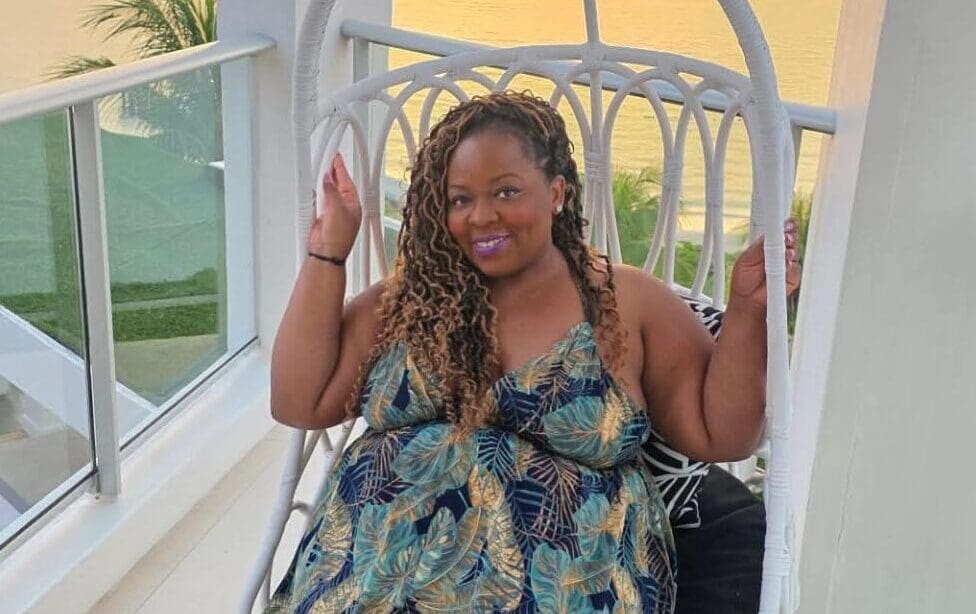
For many people of color, the journey to a psoriasis diagnosis is filled with confusion, mislabeling, and an often-overlooked sense of isolation. While textbooks and online resources frequently depict psoriasis on paler/lighter skin as red or pink scaly patches, these images rarely reflect what the condition looks like for Black and Brown individuals. Ayesha Patrick has created a community where our shared experiences matter.
Ayesha Patrick Opens Up About How Psoriasis Has Impacted Her Body & Mind
This lack of representation can make it even harder to recognize, manage, and accept a chronic autoimmune disease that already impacts both the body and mind. In this candid interview, Ayesha Patrick, founder of Sisters with Psoriasis, opens up about her lifelong experience living with psoriasis. She speaks on the challenges of accessing culturally competent care and the ongoing importance of advocacy, education, and community support for patients of color navigating a world that still has much to learn.
Psoriasis Had Been a Life-Long Journey, But the Pandemic Was a Turning Point
BHM: When did you first begin noticing symptoms, and can you share a little about psoriasis as an autoimmune disease in general?
Ayesha Patrick: I’ve had psoriasis my entire life. I just turned 45, so that’s a long time. As a kid, I had no concept of what it was or what it was called. My twin sister and I both had it, but my mom called it “winter-itch” on our skin because in the winter, our legs would get dry patches, and our scalp would have a lot of what we thought was dandruff. She called it “growing dandruff.”
We didn’t know what it was. It wasn’t until college, when I was going to the doctor on my own, that I learned there was a name for it.
Even then, it was pretty mild and manageable. I didn’t give it much thought, and when I did have patches, I wore clothes to hide them. I had my own hair regimen, and that helped.
Everything changed for me at the beginning of the COVID-19 pandemic, around when I turned 40. I had a major flare-up and realized the full extent of psoriasis.
Suddenly, I had patches all over my body, and multiple types of psoriasis—not just the normal patches I was used to.
I had inverse psoriasis and Guttate psoriasis, which looked like fine bumps. It was scary because I had never experienced it that way. My scalp was so bad, I lost quite a bit of hair at the crown of my head. Even though I knew I had a condition, I didn’t understand the extent of it until that major flare.
The pandemic, another medical issue, and other life stresses pushed my body into this major flare. That was when I had to rely on virtual visits with my dermatologist and learn more about what I was facing.
The Most Common Type of Psoriasis
BHM: You mentioned two different types. Can you explain the different types you’ve experienced?
Ayesha Patrick: Plaque psoriasis is what most people see, with raised, dry patches on the skin and scalp. Scalp psoriasis can look like dandruff, but it doesn’t go away easily. Psoriasis makes your skin regenerate much faster than normal, which is what creates the scales. That was especially hard because I lost most of my hair, which was very difficult to manage as a Black woman. Having to explain it to people was tough, too.
Can Psoriasis Be Mistaken For Other Conditions?
BHM: In the early stages, did you confuse psoriasis with other pre-existing marks, like birthmarks, or with other skin conditions?
Ayesha Patrick: When I was a kid, before I realized what it was, people thought it was ringworm, because the scales sometimes looked like that. It was hard because, as a kid, you don’t want people to think you have ringworm.
A lot of people would say, “Your skin is just dry, just use Vaseline, use cocoa butter.” You try those things, but they come back or don’t fully heal. It’s common for people to mistake it for something else.
She Knew She Had a Condition, But Was Not Formally Diagnosed Until Later
BHM: Were you ever misdiagnosed, or did you experience delays in your diagnosis because of how your symptoms appeared, especially considering your skin color?
Ayesha Patrick: I always knew I had a condition, so there was never a formal misdiagnosis by a doctor. The only misdiagnoses came from people making assumptions about what they thought I had, but not from medical professionals.
BHM: Once you were diagnosed, did your psoriasis look different on your skin compared to images you had seen in brochures or online? How was your research process as you tried to learn more and find others who could relate?
Ayesha Patrick: Because I knew what plaque psoriasis was, I was familiar with it on my skin. But with the inverse type under my breasts, that was completely new. Even the guttate type, the fine bumps, looked different too.
On my skin, the plaques are dark, gray, or sometimes purplish, whereas Google shows red, scaly patches.
Most information isn’t tailored for people of color; unless you search specifically for “psoriasis on Black skin,” you won’t see what it looks like.
Taking photos for my doctor helped me notice that my psoriasis didn’t look red—under my breasts, it looked dark. Online images and others’ descriptions of “red and scaly” didn’t match me. There’s an absolute lack of diversity in how psoriasis is represented in medical literature and online.
Navigating the Challenges of this Chronic Condition
BHM: What has been one of the most challenging aspects of your condition—socially, economically, or regarding barriers to care, like insurance and access to medications?
Ayesha Patrick: One of the biggest challenges was not being heard by my dermatologist. When I was finally able to go into her office, she looked at my scalp and told me to use medication and wash my hair every day.
I explained that as a Black woman with natural hair, I don’t wash my hair daily, and it wasn’t something I could do.
She didn’t seem open to understanding. My daughter was with me, and I realized this relationship wasn’t going to work.
I had to find a new dermatologist, which is always tricky because you have to build trust with someone new and hope they’ll create a treatment plan that works for you. I reached out to Facebook groups to find recommendations, looking for someone who would listen.
Thankfully, my healthcare through my job made access to care easier, but I learned about step therapy and other barriers many people face in receiving the medication that they need. Even though I didn’t experience all those barriers, knowing they exist made me more determined to help others advocate for themselves.
Education and Advocacy are Needed for Patients and Doctors
BHM: Do you believe more research on people of color with psoriasis is needed? How can healthcare providers improve their care for these patients?
Ayesha Patrick: Absolutely, there should be more research. There are historic issues of trust that make it harder for our community to participate in clinical research. Still, unless we’re included, there’s a limit to what can be done specifically for us.
My new dermatologist—who is not a woman of color but works in a diverse practice—told me they didn’t see images of Black skin in medical school.
There’s an ongoing need to educate and show dermatologists how psoriasis and other skin conditions look on Black and Brown skin.
Our voices matter. Education, both in our community and in medical training, is crucial. Without that knowledge, we won’t get the early care and support we need. For example, I now have psoriatic arthritis, which causes irreversible damage if not caught early. The lack of awareness and education can make conditions progress faster. Collaboration, patient partnership, and education are essential.
Good Medicine Can Mean Many Things
BHM: Can you talk about some treatments that you have found helpful, both initially and now?
Ayesha Patrick: Prescribed topicals have been very helpful. Beyond that, I write and journal a lot because stress and anxiety can trigger flare-ups for me. Taking walks, reading, and making changes to my environment help, too.
It’s not all just medication. If a prescribed medication isn’t working anymore, there are always new options to consider—though it can be overwhelming to read about side effects online.
Changing my diet—reducing carbs and sugar, drinking less alcohol, even trying gluten-free—has also helped a lot.
Since I have psoriatic arthritis, movement is my medicine. Getting vitamin D naturally from sunlight helps too. Medicine can mean many things, not just prescriptions—playing music, caring for your mental health, and finding joy have all helped in my journey.
BHM: Lastly, could you tell us about your Sisters with Psoriasis support group? What inspired you, and what is its mission and impact? Also, do you have any advice for patients of color experiencing unexplained skin changes?
Ayesha Patrick: Sisters with Psoriasis came about when I was searching online for support and couldn’t find anyone who looked like me. I thought, “It’s impossible that no one else is experiencing this.”
One day, I felt called to start my group, so I created an Instagram page and a private Facebook group. I wanted to get support but also offer it to other women like myself. I also connected early on with the National Psoriasis Foundation (NPF), received mentorship, and worked as an advocate, which gave me the tools to create a safe space for others.
The Foundation made a real impact on my life. As the group grew, I expanded it into the Psoriasis Collective, bringing together patients, advocates, physicians, and others to share resources beyond the Facebook group.
I’m still involved with NPF as a mentor and patient research partner, where I am working on clinical trials and spreading awareness so that we can bring together more information and support for our community. My advice for any patients out there: your voice matters, and your feelings are valid. Trust yourself and know that.
Ayesha Patrick’s story underscores the importance of culturally competent healthcare, community, and self-advocacy for those living with psoriasis and other autoimmune diseases. By sharing her experiences and creating spaces like Sisters with Psoriasis, she continues to inspire others to raise their voices and seek the care they deserve. For more resources, support, or information about psoriasis, visit the National Psoriasis Foundation.
Resources:
National Psoriasis Foundation: Guttate Psoriasis
Cleveland Clinic: Inverse Psoriasis
Read the full article on the original site
