




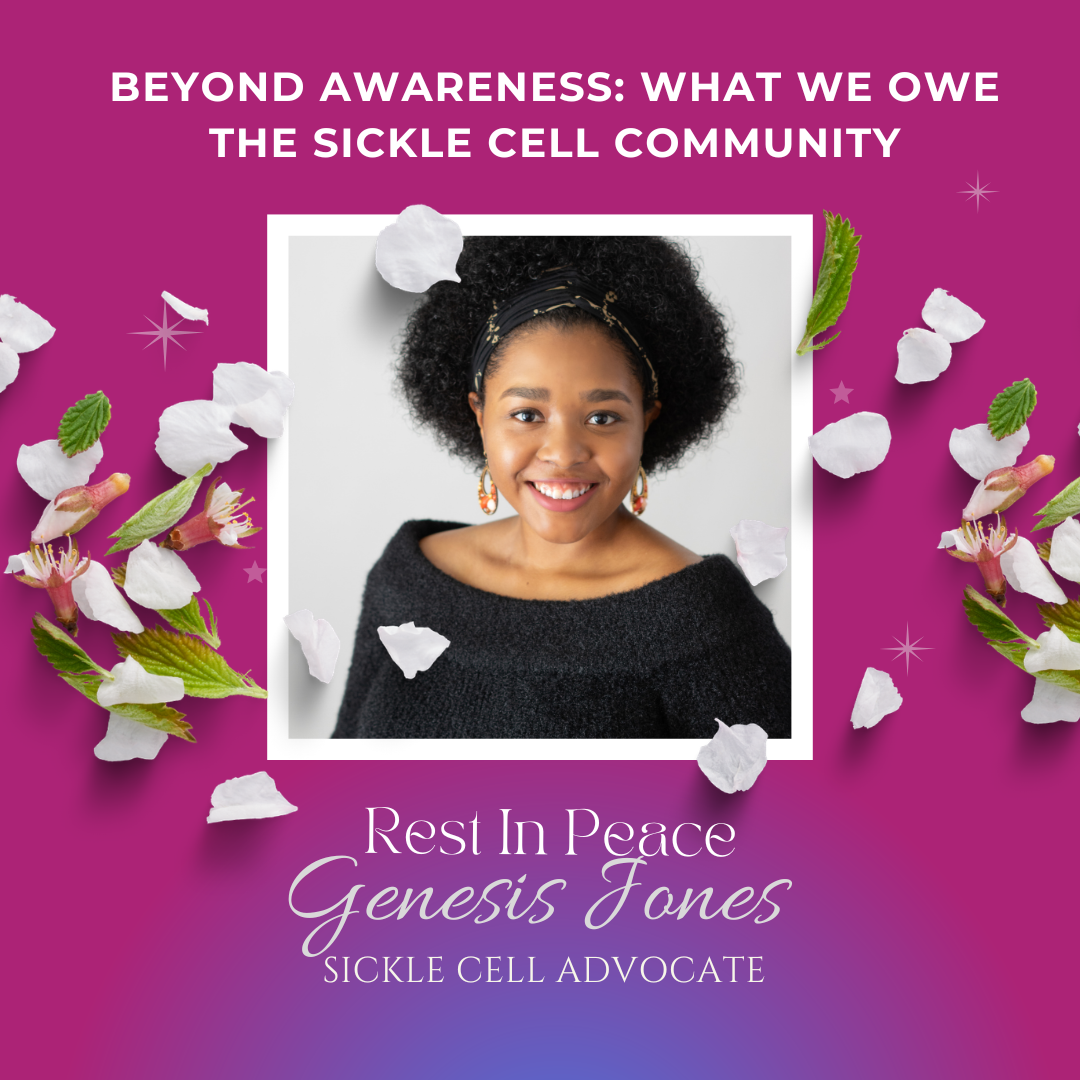
Wellness That Matters: Black Health News & Community Care
- Recognize persistent care disparities: Black patients with sickle cell disease face delayed pain treatment and bias in emergency care.
- Celebrate scientific advances like gene therapies, while ensuring equitable access despite cost, insurance and geographic barriers.
- Center patient voices in research, policy and care decisions; lived experience must guide priorities and design.
- Increase community support: promote blood donation, train local specialists, and fund organizations serving families with sickle cell.
- Honor advocates like Genesis Jones by sustaining advocacy, listening to patients and acting beyond awareness.
September is Sickle Cell Awareness Month, but this year we enter it carrying the loss of someone who knew firsthand why awareness alone has never been enough.
Genesis Jones was a Rare Disease Diversity Coalition Champion and the first recipient of RDDC’s Patient Advocate RISE Award. She was also a woman living with sickle cell disease who made the decision to use her own experience to advocate for other patients. Genesis understood the healthcare system from a place most of us never will. She knew what it meant to live with a disease that can cause extraordinary pain and serious complications, while also having to navigate a system where people with sickle cell disease have too often struggled to have that pain taken seriously.
We are deeply saddened by her passing. We will miss her voice and the energy she brought to this work. But as we begin Sickle Cell Awareness Month, it also feels important to talk about the issues Genesis spent so much of her life asking people to pay attention to.
Sickle cell disease affects approximately 100,000 people in the United States. It is an inherited blood disorder that affects hemoglobin, the protein in red blood cells that carries oxygen throughout the body. For people with sickle cell disease, red blood cells can become hard and sticky and take on the familiar crescent, or sickle, shape. These cells can block blood flow, leading to episodes of severe pain and potentially serious complications affecting organs throughout the body.
In the United States, sickle cell disease disproportionately affects Black people. Approximately one in every 365 Black babies is born with the disease. Those statistics are important, but they can also make sickle cell feel like something we understand simply because we have heard the numbers before.
The experience of living with sickle cell tells a more complicated story.
For many patients, a pain crisis can mean a trip to the emergency room at the moment they are most vulnerable. Yet research continues to show disparities in how quickly people with sickle cell receive pain treatment. One recent study found that patients experiencing a vaso-occlusive pain crisis who were incorrectly given a lower priority in the emergency department waited nearly three times as long for their first pain medication.
Think about what that means in real life. Someone arrives at a hospital in severe pain caused by a disease that is already documented in their medical record, and the quality of the care they receive can still depend on whether the person evaluating them understands the urgency of that pain and believes what they are saying.
This is happening at the same time that the science of sickle cell disease has entered an extraordinary new era. Advances in treatment, including gene therapies, have created possibilities that families affected by sickle cell could scarcely have imagined a generation ago. We should celebrate that progress. But a medical breakthrough only fulfills its promise when the people who need it can actually benefit from it.
That is one of the conversations we need to have during Sickle Cell Awareness Month. What does progress look like when some patients still have trouble finding physicians with deep expertise in sickle cell disease? What does a scientific breakthrough mean if cost, insurance coverage or geography puts it beyond someone’s reach? And how do we make sure the people who have spent their lives living with this disease have a meaningful voice in answering those questions?
Genesis believed patient voices belonged in those conversations.
She brought the perspective of someone who understood that healthcare looks very different from the examination table than it does from a conference room. Her advocacy was rooted in the belief that people living with sickle cell and other rare diseases should have a say in the policies, research and healthcare decisions that affect their lives.
There are tangible ways all of us can help move that idea forward. One of the most immediate is blood donation. Some people living with sickle cell disease need blood transfusions throughout their lives, and having a diverse blood donor pool can improve the likelihood of finding closely matched blood for patients who receive repeated transfusions. We can also learn more about the realities of sickle cell disease and support organizations working directly with patients and families. Perhaps most importantly, we can listen when people living with sickle cell tell us what needs to change.
That feels like the right place to begin this September.
We remember Genesis Jones because of the life she lived and the people she touched. We honor her when we continue the work she cared so deeply about and make sure the voices of people living with sickle cell disease remain at the center of the conversation.
Sickle Cell Awareness Month gives us a reason to pay attention. What we do with that attention is what matters.
Read the full article on the original site
