




Wellness That Matters: Black Health News & Community Care
- Chagas disease has silent acute and chronic phases; chronic infections often cause severe cardiac and digestive damage.
- Experts say Chagas disease may be endemic, with local transmission confirmed in California, Arizona, Texas, Tennessee, Louisiana, Missouri, Mississippi, and Arkansas.
- Kissing bugs species inhabit 32 states, and infected dogs have been reported in 22 states plus Washington, D.C., signaling wider, underrecognized spread.
- Early diagnosis allows cure with antiparasitic medication; chronic infections cannot be cured and may require pacemakers, surgery, or transplant.
- Poor surveillance means cases are likely undercounted; experts like Gabriel Hamer at Texas A&M call known cases the "tip of the iceberg."
A deadly, little-known parasitic infection known as Chagas disease, once considered to only be a threat abroad, may be endemic in the United States, researchers argue in a new study.
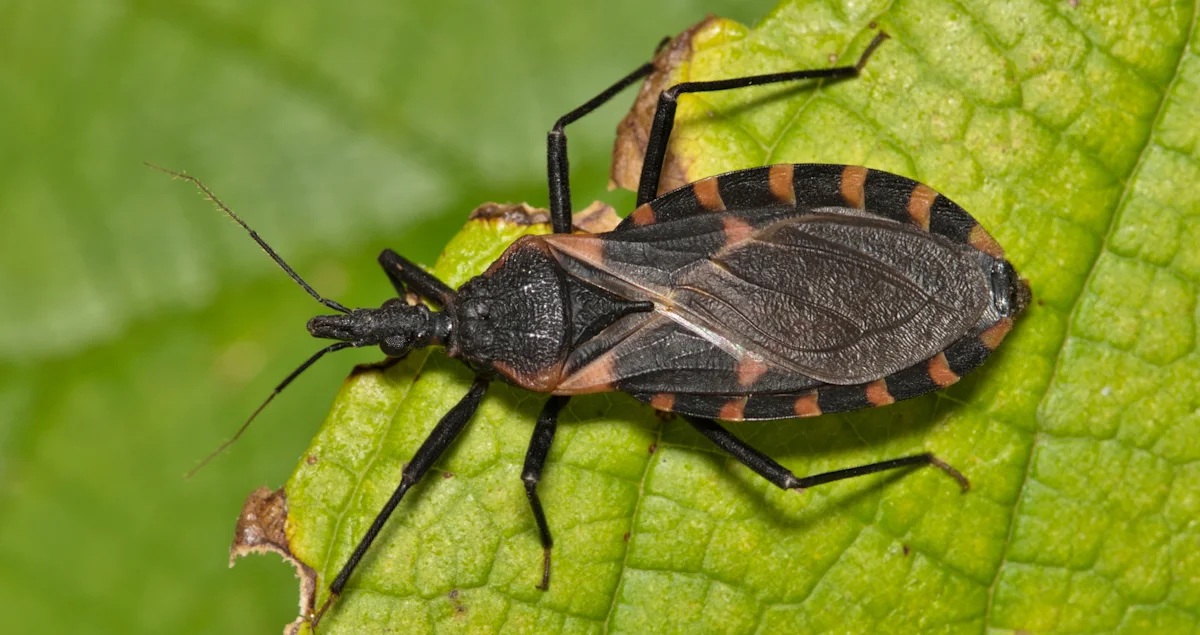
Chagas disease is often called a silent killer because it can go unnoticed for years, even decades, before causing life-threatening complications. It’s caused by a parasite carried by a group of blood-sucking insects commonly known as kissing bugs, because of their tendency to bite people around their mouths.
The disease typically unfolds in two phases, an immediate acute phase and a chronic phase that often occurs much later. During the acute phase, infected people often won’t have any symptoms. If they do, they’re usually mild and nonspecific, like headache, fever and muscle pain. During the chronic phase, which typically happens 10-30 years after the initial infection, the parasites can begin to do serious damage to the heart and digestive tract. About a third of patients develop significant cardiac disorders as a result. Another 10% deal with digestive or neurological problems, according to the World Health Organization.
More than 7 million people worldwide are estimated to be infected with Chagas and the disease causes 10,000 deaths every year, the WHO says. Most cases are found in Central and South America, where kissing bugs are common. In 2016, researchers estimated that there were roughly 300,000 people in the U.S. dealing with chronic Chagas cases, but nearly all got the disease in another country before coming here.
In a paper released this month, a group of experts makes the case that we should consider the disease a serious health threat even to those who never leave the country. They identify eight states (California, Arizona, Texas, Tennessee, Louisiana, Missouri, Mississippi and Arkansas) with confirmed Chagas cases in humans caused by local transmission. This is ample reason to consider the disease to be endemic — meaning always present — in the U.S., they argue.
“Acknowledging the endemicity of Chagas disease in the United States is crucial for achieving global health goals,” the authors write in the study.
Most states do not keep track of Chagas cases, so the actual number of infections in the country isn’t known, but the researchers say there are clues to suggest that the disease is much more prevalent than previously believed. The Texas state health department cataloged 51 locally transmitted cases of Chagas between 2013 and 2023. The state also tracked more than 400 cases in dogs during the same span. Infected dogs have been found in 22 other states and Washington, D.C.
Gabriel Hamer, an entomologist at Texas A&M, told the Los Angeles Times that the known cases of Chagas likely represent “just the tip of the iceberg” of the disease’s actual spread.
Species of kissing bugs known to spread Chagas have been located in 32 states, including every state in the southern half of the U.S.
What you need to know
Fortunately, Chagas can be cured with antiparasitic medication if it’s caught early. However, treatments become less effective the longer someone has been infected.
“If we screened for it and caught it early, most patients could be cured,” Dr. Salvador Hernandez, a cardiologist, told NewsNation. “The problem is, we don’t, and people end up dying or requiring terrifically expensive care, including organ transplants and surgery.”
Once Chagas becomes chronic, it cannot be cured with medication, but the drugs can help slow down the onset of the most serious complications, according to the Mayo Clinic. In some cases, infected people may need a pacemaker, heart surgery or even a heart replacement.
Trypanosoma cruzi, the cause of Chagas disease, which is transmitted by triatomid bugs. (Ed Reschke/Getty Images)
(Ed Reschke/Getty Images)
Identifying Chagas in its early stages is critical. Most of the symptoms that occur in the acute phase, if they show up at all, are common and easy to attribute to typical viruses like the flu or cold. They include fever, fatigue, body aches, headache, diarrhea and vomiting. There is one telltale symptom, however, known as Romaña’s sign — a swelling of the eyelid that sometimes occurs when the parasite enters the body through the eye. Signs of chronic Chagas include heart problems and digestive issues.
Dogs are also often asymptomatic in the acute phase, though they will sometimes present swollen lymph nodes, pale gums and stomach issues. During the chronic phase, dogs can exhibit heart problems, lethargy and a swollen belly.
In their study, the researchers make the case that categorizing Chagas as endemic will greatly improve our ability to “tackle this neglected disease that, as has been demonstrated, has never been exclusively tropical.”
Read the full article on the original site
