




Faith & Reflection: Voices from the Black Church and Beyond
- Met at an Unitarian Universalist church; DeeDee won a donated shawl and a lasting friendship began.
- Raised in New Orleans, Catholic schooling and seminary; studied law, health, business; married and parented two sons.
- Met Helen at the parish workplace in 1977; love developed, they became partners and had a child.
- Father's death triggered deep depression; therapy revealed transgender identity; Helen intervened, preventing suicide.
- Family rejection followed, including conversion therapy and disownment; Helen taught presentation skills and they discarded old clothes into the Mississippi River.
Author’s Note: I am a cis woman writing about a trans woman who was my friend. What I know about her experience comes from stories she told me, and things I learned from her wife Helen, who has given me permission to share this story. So I am not writing from a position of personal knowledge of what it means to be trans. I am writing out of compassion for and sensitivity to the lived experience of my friend DeeDee and of trans individuals across the globe.
***
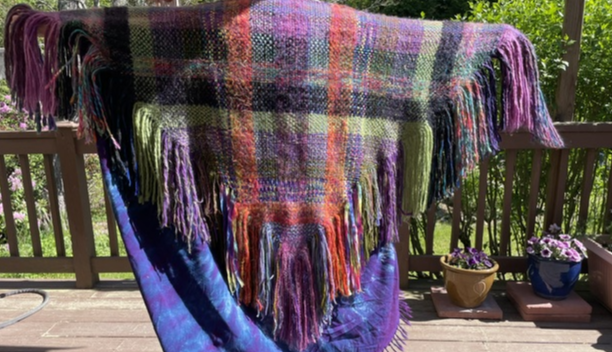
I first met DeeDee when I stopped by my Unitarian Universalist church to drop off a colorful triangular hand-woven shawl I had made for the upcoming auction. DeeDee was sitting behind the desk, recording the items that were being donated and we chatted a for a few minutes. In those days, I was teaching a variety of classes on Paganism and the Divine Feminine at the church. She asked if I was the Mary who taught these classes and expressed interest in joining one That is how our friendship began. I later learned that she made the winning bid on the shawl I donated that day.
DeeDee was assigned male at birth–the oldest child in a large Catholic family residing in New Orleans, Louisiana. Naturally she attended Catholic schools. DeeDee briefly considered a life of religious service and enrolled in St. Joseph’s Seminary. However, being extremely intelligent and given to questioning everything, DeeDee was soon pegged as a troublemaker and she and the Brothers parted ways.
Before she transitioned, DeeDee led a fairly average middle-class life. She studied political science and law, health sciences and business. She married her college sweetheart and parented two sons. They divorced when the boys were young, and her next two marriages are not really relevant to this narrative except as they reveal a soul always seeking something ephemeral in this very material world.
Professionally, DeeDee spent her career working as a parish attorney. It was there, in 1977, that she met a cis woman named Helen, who worked for the parish in human resources. DeeDee had a reputation for being an asshole to work with. When Helen was assigned to work with DeeDee, she was anxious and resolved that when they met, she would give back as good as she got. DeeDee seemed surprised to meet a slip of a woman who was not overwhelmed by her and they became fast friends. She later told Helen it was love at first sight. Several years later they had a child together.
The death of DeeDee’s father in 1998 was a watershed event in her life. Plunged into a deep depression, she began a serious exploration of the trauma she was experiencing, with both professional help and extensive personal research. She confided in Helen that for decades she had been haunted by the feeling that she had ‘a hole in her soul’ that she couldn’t understand. A year later, she told Helen she was so depressed that she was planning to take her own life. Helen became furious and forbade her to do this. “We have a child together,” she said, “and you are not going to abandon us.”
Helen urged DeeDee to talk to her. “I don’t know what this is but I’m willing to help you with it.” Thus DeeDee gradually revealed to Helen the things she was struggling with in therapy. What DeeDee came to understand was that she had a female brain inside her very male body. She identified as gender dysmorphic, or transgender—the profound feeling that the exterior self as represented by the physical body did not match the interior self of mind, personality, soul and identity.
Twenty-five years ago, the word transgender was barely on our cultural radar. I can imagine that coming to this personal epiphany was both liberating and frightening. Liberating because she finally had an understanding of the hole in her soul. Frightening because exploring this possibility meant significant changes in all aspects of her life. At the time, Helen, like most of America, knew nothing about gender dysmorphia. Helen shared that “being trans was such a mystery to me. I didn’t know what it meant. But my strong feeling of love for DeeDee continued.”
A recent survey by the Williams Institute at UCLA Law School noted that over two million Americans over eighteen identify as transgender. Each of them is on an unusual, challenging and potentially dangerous journey, much like the one DeeDee undertook. The importance of allies in the cis community cannot be overstated.
Helen told me about the first time DeeDee wore women’s clothing in public. They met in a coffee house and DeeDee arrived wearing a dress, heels, and a wig. In my mind I visualize this as something like the Disney version of Bambi’s first steps—all long legs and wobbly knees struggling to stay upright and take a graceful step into the future. “Everything was wrong,” Helen told me. “I took one look at DeeDee and thought I have to help her with this. Otherwise she’ll be killed.” So over the coming years, DeeDee educated Helen about what it meant to be trans. And Helen taught DeeDee how to adorn and move her body in a way that authentically expressed her gender, personality, and style.
During this time period, DeeDee also came out to her mother and siblings. Mom insisted that she undergo conversion therapy. When this did not work, she told her first-born child to drop the family name so as not to embarrass the rest of them. All ties between DeeDee and her family of origin were permanently cut. Helen was also disowned by her parents.
This tale of rejection by her biological family is fairly common in the trans community. It is impossible to exaggerate the importance of strong cis allies for individuals who are transitioning. They bear the biological and psychological challenges of bringing their physical appearance into congruence with their soul, while simultaneously facing the possibility of rejection from their family of origin and society at large, plus the very real danger of violent physical attacks. The 2022 U.S. Transgender Survey recorded that forty-four percent of trans adults reported recent suicidal ideation and seven percent reported a recent suicide attempt. The current political, religious, and cultural climate in this country has increased the risks being taken by any trans person, especially adolescents just beginning their transition. Without Helen’s support, suicide or death would likely have been DeeDee’s fate.
In October of 2001, on her 50th birthday, DeeDee bagged up all her clothing from before her transition. Helen drove her to the center of a bridge over the Mississippi River, and DeeDee threw all the bags of her pre-transition clothing into the river. From this point there was no turning back.
(to be continued tomorrow)
Discover more from Feminism and Religion
Subscribe to get the latest posts sent to your email.

Read the full article on the original source
