




Food & Beverage News: Insights, Safety, and Dining Trends
- MAHA frames ultra-processed foods as a primary health threat but risks oversimplifying nuanced nutritional science and alienating consumers.
- GRAS overhaul aims for transparency yet lacks a clear workable plan, risking regulatory confusion, slowed innovation, and more litigation.
- The upcoming 2025 Dietary Guidelines and proposed SNAP purchase limits could be watershed flashpoints shaping regulation, litigation, and industry reform.
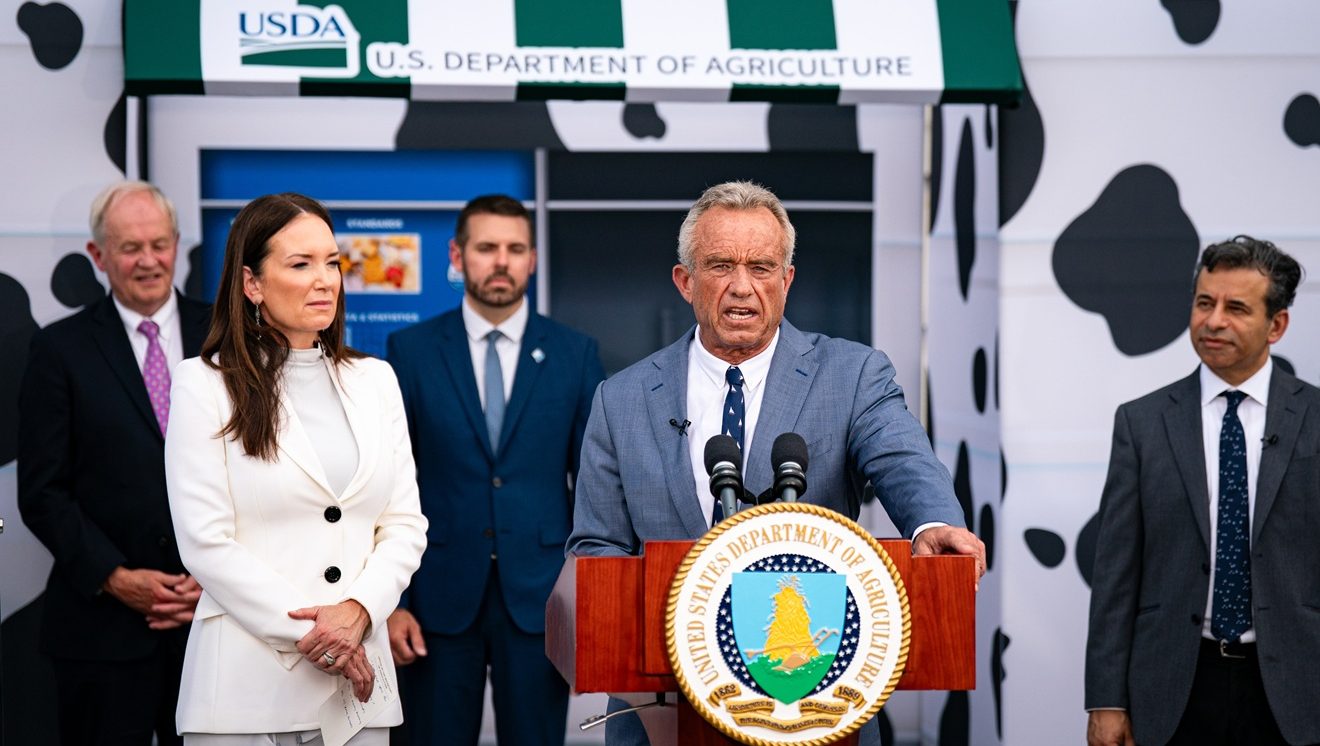
The US food industry continues to navigate a complex maze of challenges, including inflation, supply chain headaches, sluggish sales growth and evolving consumer tastes. But now there’s a new and very different kind of pressure – and it’s coming from Robert F. Kennedy Jr., the US Secretary of Health and Human Services (HHS), and the movement he’s put front and centre – Make America Healthy Again, or MAHA. RFK Jr. wants to fundamentally change the US food industry and its playbook.
What started as a niche slogan has, in a relatively short time, evolved into a disruptive, if uneven, push targeting the tangled web Kennedy sees connecting Big Food, Big Agriculture and Big Pharma. MAHA’s message is straightforward: this system is at the root of America’s chronic diet-related health problems.
But, as bold as the rhetoric is (and as loud as the headlines have been), the food industry hasn’t yet been fundamentally upended. Kennedy’s vision is ambitious, no doubt. The execution so far though has been mixed – part policy experiment, part political theatre, part populist rallying cry.
The red dye reckoning
Take the proposal from the US Food and Drug Administration to phase out several synthetic dyes – Red 40, Yellow 5 and others – that in Europe have already been banned. To MAHA supporters, this signals a long-overdue public-health win and proof the administration is serious.
Yet, here’s the reality check: a lot of major food companies were already moving away from these dyes, driven not so much by government mandates but more so by consumer pressure and retailer demands. So while the move aligns with MAHA’s platform, it’s arguably more a reflection of pre-existing industry trends than a seismic regulatory shift.
Removing these dyes is a good move. But calling it a revolutionary step of government bravery oversells the story. For many food companies, it’s a compliance headache or a marketing opportunity, depending on the brand. For Kennedy, it’s more symbolic than structural reform.
Rethinking GRAS: necessary reform or regulatory headache?
Another MAHA target is the GRAS process – Generally Recognized as Safe – a mechanism that allows companies to self-certify food additives without prior FDA approval. The system has its flaws, without doubt. Transparency issues and potential conflicts of interest have drawn scrutiny for years.
Kennedy’s push to overhaul GRAS is popular with critics but hasn’t yet landed a clear plan for how to do it better. The administration’s approach seems reactive to many stakeholders, prioritising optics over a detailed, workable framework.
That leaves industry watchers worried: what if reform ends up creating more confusion than clarity? The risk is a patchwork regulatory environment that could slow innovation and increase litigation without necessarily improving safety. Accountability matters but a blunt overhaul without scientific consensus or clear pathways for product development could do more harm than good.
Bottom line: it’s too soon to say if MAHA is driving meaningful modernisation here or just stirring the pot.
Ultra-processed foods under increased scrutiny
The framing by RFK Jr. and MAHA of ultra-processed foods (UPFs) as the root cause of America’s chronic health crisis has become its signature issue.
There’s growing scientific evidence linking UPFs to poor health outcomes. Still, MAHA’s broad-brush treatment of all ultra-processed foods as equally harmful misses important nuances.
Processed foods range widely in nutritional value and many provide affordable, shelf-stable options that millions of Americans depend on.
Demonising all processed foods risks alienating consumers and stigmatising key food access points. Moreover, despite MAHA’s vocal campaign, there’s little sign that 2025 has brought widespread reformulation or marketing shifts from major players.
Instead, what’s more visible is a rise in class-action lawsuits targeting large food companies – litigation that may shape the future but hasn’t yet changed products on shelves.
Consumer demand was already leading the way
It’s also important to recognise many trends MAHA champions, such as clean label, transparency, functional ingredients and similar others, were already well underway. Challenger brands like Siete, Once Upon a Farm (and scores of others) and even household giants like Nestlé and PepsiCo had been pivoting toward simpler ingredients and wellness-focused positioning well before Kennedy arrived at HHS.
So how much of the current momentum is genuinely driven by MAHA, and how much is the natural evolution of consumer-driven market forces? To date, MAHA hasn’t passed any landmark food laws, and regulatory changes have been incremental at best. Enforcement is uneven, too.
Kennedy is definitely accelerating public dialogue and shining a spotlight on issues long simmering under the surface but calling it a system overhaul is premature.
Policy contradictions that undermine credibility
If MAHA’s biggest challenge isn’t what it’s proposing, it’s the contradictions embedded in its approach.
Kennedy talks tough on clean food and protecting kids. But at the same time, the administration has moved toward relaxing some pesticide restrictions, weakening school lunch nutrition standards and tightening access to fresh produce through SNAP.
Critics argue that you can’t wage a serious war on Big Food while enabling controversial Big Ag practices or making it harder for vulnerable populations to access healthy food. These aren’t minor quibbles; they go to the core of MAHA’s credibility.
Many food industry leaders aren’t just scratching their heads – they’re growing sceptical. Something I’ve been hearing a lot lately: “Is MAHA a serious food policy platform or primarily a political brand leveraging consumer anxiety for influence?”

What to watch: The coming food policy flashpoints
The next six months could define whether MAHA becomes a meaningful movement or fades into another round of food policy noise. Here’s where things could turn:
2025 Dietary Guidelines – a new playbook: Expected in August, the revised Dietary Guidelines for Americans may end up being MAHA’s most consequential moment to date. Kennedy has promised a “radically simplified” four-page version aimed at broad public understanding, including school-age children. That alone breaks with decades of precedent.
Leaked drafts point to substantial ideological shifts, such as de-emphasising limits on saturated fat, welcoming back full-fat dairy and red meat, as well as labelling refined grains and seed oils as “contributors to chronic inflammation”.
Most notably, the new version may formally incorporate the term ultra-processed foods – something no past edition has done. A new front-of-pack labelling scheme may accompany the guidelines, potentially modelled after Chile’s warning-label system.
If implemented, these changes could reshape how federal feeding programmes like school lunches and military meals are planned. They could also influence product reformulation, retailer procurement and nutrition marketing.
But some public health groups worry science is taking a backseat to ideology, especially with the pivot toward animal fats and against plant oils. Expect litigation, political pushback and public confusion – along with major implications for packaged foods companies.
SNAP reform: Kennedy’s team is drafting new rules that would limit SNAP purchases of sugary drinks, candy and highly processed snack items. While popular with some voters and state governments, these proposals are controversial. Critics argue they would stigmatise low-income households and create enforcement nightmares at the retail level.
Retailers and food manufacturers have begun quietly lobbying against the changes, and civil rights organisations are preparing legal challenges. Whether Congress, or the courts, will allow these restrictions to move forward is very much up in the air.
The lawsuit surge: MAHA’s rhetoric is already appearing in court filings as plaintiffs challenge labelling and advertising claims by major packaged foods companies. Some of these cases target the term ”natural”, others take aim at health claims on UPFs. Legal experts say these suits could define the regulatory boundaries of the post-MAHA food landscape, particularly if judges begin treating Kennedy’s framing as an emerging federal standard.
More noise than change – for now
The US food industry has faced its share of disruptors – organic, non-GMO, plant-based and regenerative being four big ones. MAHA is the latest to try its hand at forcing systemic change. It might also be the loudest. But to date it remains the least coherent.
MAHA is a real coalition that’s not going away anytime soon, though. Kennedy has succeeded in making the food-health-policy conversation louder, more emotional and more politicised. Whether that translates into durable change for how food is regulated, marketed and consumed is still an open question.
For now, the industry should brace not just for reform but for unpredictability. The 2025 Dietary Guidelines could be a watershed moment – or just another flashpoint in a cycle of policy volatility. Either way, Kennedy and MAHA have raised the stakes.
RFK Jr. and MAHA don’t pose an existential threat to the food industry – and packaged food companies don’t need to panic. But they do need to pay attention, modernise and shift from defensive postures to proactive solutions. The companies that will thrive in this climate are those that can adapt to a world where “clean label” is table stakes and where consumers increasingly demand “healthier” packaged foods products.
<!– –>

Sign up for our daily news round-up!
Give your business an edge with our leading industry insights.
Read the full article from the original source
