




Savannah State Update:

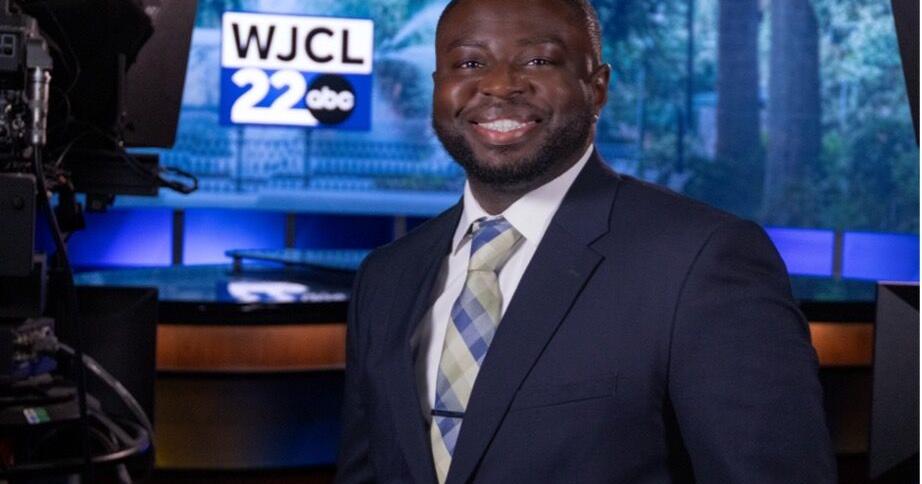
Lynbyrd Massey Jr’s Professional WJCL-22 Headshot
What is the Emma Bowen Foundation?
The Emma Bowen Foundation (EBF) connects emerging talent with leading media, entertainment, and technology companies, helping shape the future of these industries.
The Foundation’s legacy is rooted in the work of Emma L. Bowen, a tireless advocate who dedicated her life to ensuring that young people, especially those from underrepresented backgrounds, had access to meaningful opportunities. With support from media executives at major networks like NBC and ABC, Emma helped launch the Foundation for Minority Interests in Media, which was later renamed in her honor.
Today, EBF continues her mission by partnering with top media companies to promote inclusive hiring, professional development, and career advancement through fellowships, industry councils, and year-round programming.
The Fellowship

My 12-week fellowship at WJCL-22 allowed me to experience nearly every aspect of the newsroom. I shadowed producers, editors, the digital team, reporters, and photographers.
The first six weeks were structured as a rotation in every department; each week I worked in a different area to gain a deeper understanding of how each team contributes to the station’s overall workflow. I also learned how all departments collaborate to deliver consistent, timely, and accurate news coverage to their viewers.
Every morning and afternoon, I attended editorial meetings, where news managers, producers, reporters, photographers, and digital team members gathered to discuss the day’s coverage plan. These meetings offered a front-row seat to the decision-making process, from reporters pitching story ideas to the producers determining how each of their shows would be structured.
My first six weeks were intentionally designed to expose me to what each department in the newsroom had to offer, even if I already had an idea of what roles I was most interested in. Exploring all areas of the newsroom could have revealed a new passion or interest in a department I hadn’t previously considered.
During the first half of my fellowship, I rotated through several departments and shifts, including the morning shows (11 p.m. – 7 a.m.), day-side reporting (9 a.m. – 6:30 p.m.), night-side reporting (2 p.m. – 11 p.m.), afternoon show producing (9 a.m. – 6:30 p.m.), photojournalism, and even breaking news coverage.
After that rotation, I sat down with Kimberly Eller, WJCL-22’s news director, and Richard Ochoa, the assistant news director. Together, we identified the roles I had the most passion for, so we could begin focusing on those areas and start building material for my professional reel, something I’ll use as I prepare to graduate and apply for full-time positions.
My goal going into this fellowship was to become a stronger writer, which made producing one of the top fields I wanted to explore. Writing is foundational to becoming a better communicator. I was also eager to sharpen my reporting skills because I believe in the power of journalism to make a meaningful impact, to inform, educate, and empower communities that are often overlooked. Finally, I wanted to gain experience as an anchor, which is something I’m still looking to grow into and refine.
On just my second day, I was paired with Andy Cole, an investigative journalist and weekend night anchor for WJCL. We were sent to Statesboro, Georgia, to cover a murder-suicide that had taken place overnight. After the morning editorial meeting, I followed Andy to his desk, where he forwarded me the case information to read through as we drove to the scene. I needed to be informed enough to ask questions, assist with man-on-the-street interviews, or simply understand the context well enough to contribute if the opportunity presented itself. Watching him investigate and report on such a sensitive story with professionalism, compassion, and ethical integrity was a masterclass in responsible journalism.
One of the highlights of my rotation was working the night shift with reporter Tia Maggio and her photographer, Pedro Lopez. Night-side reporting offers an unparalleled level of hands-on experience. Since you’re often the only reporter available, it means you could be covering multiple stories in a single evening, and that pressure forces you to think quickly, adapt on the fly, and communicate clearly with little time to prepare. That experience showed me the urgency and responsibility that comes with delivering accurate, timely information to the public. It gave me a real-world understanding of just how valuable that skill is in journalism. Seeing how fast the news cycle moves and how much is expected of reporters in that window of time made me appreciate the discipline and integrity that the job demands.
Greg Coy, investigative reporter and anchor at WJCL, took me under his wing well before we were officially paired through the station’s mentorship program. From the very beginning, he saw something in me, something I didn’t always see in myself, and chose to pour into me not only as a journalist, but as a young Black professional navigating this industry. His belief in me meant more than I could ever fully express. In a field where representation still matters deeply, having someone who looked like me, who understood the cultural and professional challenges I might face, made all the difference.
Greg didn’t just guide me in journalism; he modeled what it looks like to lead with integrity, to ask hard questions, and to stand tall in your purpose. One of the most meaningful opportunities he gave me was inviting me to take part in WJCL’s Juneteenth special, where I got to help highlight the legacy of Ben Haith, the creator of the Juneteenth flag. That project was powerful not only because of its historical significance, but also because it showed me the impact storytelling can have when done with purpose, cultural awareness, and pride. For Greg to trust me with something so important early on in my career is something I’ll never forget. He didn’t have to take me under his wing, but he did. And in doing so, he helped me find my voice and taught me how to use it with confidence, responsibility, and authenticity.
That experience showed me the urgency and responsibility that comes with delivering accurate, timely information to the public, and how valuable that skill is for any journalist.

During my time at WJCL, I was fortunate to contribute to real coverage that mattered. I had the opportunity to be instrumental in several breaking news stories, including severe weather coverage, the Oglethorpe Mall shooting, a hostage situation in Hinesville, and the Fort Stewart shooting at the Fort Stewart Army Base. These high-pressure moments pushed me to be more aware, alert, and ready to help however I could.
I also pitched, reported, and produced my first solo project, which aired during our weekend newscast, a moment I’m incredibly proud of. I contributed to the station’s back-to-school coverage and produced multiple blocks in a newscast using HATMOS and ENPS. Each task, no matter how small, helped me build confidence in my ability to take initiative, work under deadline pressure, and contribute meaningfully to the station’s overall goals.
One of the biggest challenges was not knowing how to use the same software and systems the newsroom relies on daily. Unfortunately, our university currently doesn’t have the funding or programming needed to equip students with those tools, a disadvantage when trying to enter such a competitive industry.

Savannah State President Dr. Jermaine Whirl with WJCL 22’s Shannon Roster previewing his 100-day Address
However, with this new partnership between Savannah State University and WJCL-22, there’s now a real opportunity to bridge that gap and provide students with access to industry-standard tools and training.
Throughout this fellowship, I had the privilege of working closely with nearly everyone in the newsroom. I made it a point to learn from each person I encountered, to gain insight into different roles, workflows, and storytelling styles. Watching this team handle sensitive information with care and ethics, and seeing classroom lessons play out in real-time, was incredibly inspiring.
This experience has only fueled my passion further. I’ve seen the level of commitment, resiliency, and care it takes to be a journalist, and I want to continue doing this work, just like the professionals I’ve spent the last 12 weeks beside.
They welcomed me like family, treated me as a colleague, and supported my growth every step of the way. Saying goodbye isn’t easy.
Read more on the original source
