




Style Spotlight: Looks, Trends & Fashion Inspiration
- Both natural and synthetic fragrances can irritate skin; experts debunk the myth that natural fragrances are safer.
- Fragrance can trigger rosacea, increasing redness, flushing, and burning by irritating skin nerve endings and worsening inflammation.
- To avoid irritants, check ingredient lists for fragrance, parfum, aroma, and allergens like limonene, linalool, geraniol.
- Look for products labeled fragrance-free; unscented may still contain masking fragrances that can irritate.
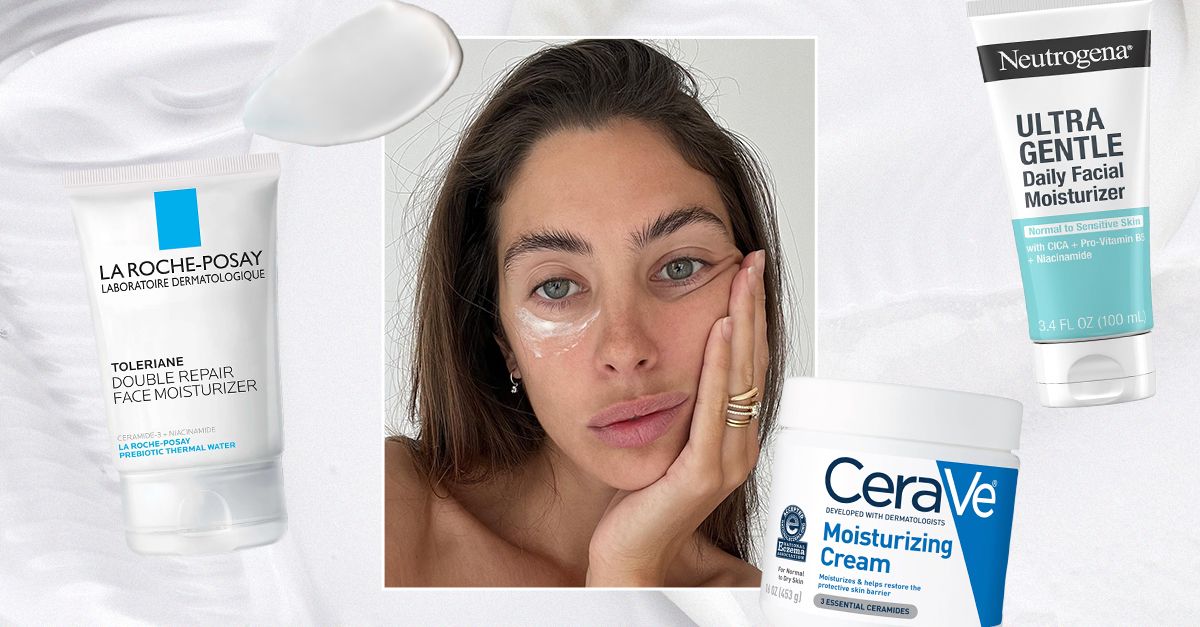
- Experts recommend fragrance-free moisturizers like La Roche-Posay Toleriane, CeraVe, Vanicream, Neutrogena, and Skinfix.
I’m a beauty editor who has sensitive skin. That means I must walk a metaphorical tightrope with my routine—testing hundreds of new skincare products per year (it’s literally my job) without causing irritation, exacerbating inflammation, or setting off a rosacea flare-up. It’s difficult but not impossible.
I accomplish this by A) slowly introducing new products into my routine, B) taking it easy on active ingredients, and C) using fragrance-free moisturizers. The last one is particularly important because nothing irritates my skin like a highly fragranced face cream. According to Sandra Oska, MD, board-certified dermatologist, the link between fragrance and irritation is well-documented. People with sensitive, reactive, or compromised skin should generally avoid fragranced products,” she says. “This includes those with conditions like atopic dermatitis, rosacea, and acne, as well as anyone prone to allergies or recovering from skin treatments. Fragrance can trigger irritation, redness, or flare-ups regardless of whether it’s natural or synthetic, so fragrance-free products are usually the safest option for these skin types.”
Briana Germano, registered nurse, aesthetic injector, and founder of The Aesthetic Bar, agrees, reiterating the importance of avoiding fragrance if you’re post-procedure (e.g., after lasers, injectables, or peels). “Fragrance is one of those ingredients that can quietly keep the skin inflamed without people realizing it.”
Ahead, the experts share their top recommendations for fragrance-free moisturizers. These won’t stress, irritate, or inflame your skin—promise.
The Best Fragrance-Free Moisturizers, at a Glance
Best Overall: La Roche-Posay Toleriane Double Repair Face Moisturizer
La Roche-Posay
Toleriane Double Repair Face Moisturizer
This iconic French pharmacy product is fragrance-free and full of skin-comforting ingredients, like ceramides, niacinamide, glycerin, and the brand’s signature thermal spring water. (This provides prebiotic benefits to soothe and balance the skin microbiome.) It’s safe for highly sensitive skin, provides up to 48 hours of hydration, and won’t clog pores or exacerbate acne.
“This is one of my go-to recommendations because it’s simple, effective, and well-tolerated by almost everyone,” Germano says. It hydrates while helping repair the barrier, and it works really well for sensitive and acne-prone skin.
Best for Dry/Damaged Skin: CeraVe Moisturizing Cream

CeraVe
Moisturizing Cream
Oska recommends CeraVe’s iconic Moisturizing Cream, which is a product I’ve been using on and off for years due to its lightweight texture and deeply moisturizing formula. “CeraVe Moisturizing Cream focuses on barrier repair with ceramides and hyaluronic acid, which helps dry or damaged skin heal and hold on to moisture,” she says.
This one works well with sunscreen and makeup, doesn’t pill, and never clogs my pores. It’s an A-list drugstore product for quenching dry, damaged skin.
Best for Oily/Acne-Prone Skin: Neutrogena Daily Facial Moisturizer

Neutrogena
Daily Facial Moisturizer
If you have oily and/or acne-prone skin, Oska recommends this incredibly lightweight lotion. It’s formulated with Cica, an all-star soothing ingredient, as well as niacinamide and antioxidants. “Neutrogena Daily Facial Moisturizer is lightweight and non-greasy, so it hydrates without clogging pores, which is great for oily or acne-prone skin,” Oska says.
Best for Sensitive Skin: Vanicream Daily Facial Moisturizer

Vanicream
Daily Facial Moisturizer
If you’re like me and you have rosacea or any other inflammatory skin condition (eczema or psoriasis included), this fragrance-free moisturizer is for you. Dermatologists, like Oska, have been recommending it to their patients for years due to its incredibly gentle formula. “Vanicream Daily Facial Moisturizer is extremely minimal and free of common irritants, making it ideal for highly sensitive or eczema-prone skin,” Oska says.
It’s free of fragrance, dyes, parabens, and other common irritants. Meanwhile, five key ceramides, hyaluronic acid, squalane, and glycerin provide lightweight hydration. Yep, it’s the ideal formula for highly sensitive skin types.
Best for Mature Skin: Skinfix Triple Lipid-Peptide Cream

Skinfix
Triple Lipid-Peptide Cream
This fragrance-free moisturizer will benefit mature skin types with its firming and skin-repairing formula. It uses a 3% Triple Lipid Complex to strengthen the skin’s natural moisture barrier, a 3% Peptide Solution to signal skin repair, and an 8% Humectant Blend for long-lasting hydration. Together, these ingredients target dryness, dullness, and loss of firmness and elasticity. And the texture! It’s rich and buttery, so it melts onto the skin, providing comfort and a plumper appearance.
Cetaphil Daily Hydrating Lotion

Cetaphil
Daily Hydrating Lotion
Here’s another good moisturizer for acne-prone skin types. The fragrance-free formula is also oil-free, meaning it won’t clog pores or lead to an oil-slick shine by noon (IYKYK). It relies on hyaluronic acid to provide deep, weightless hydration without irritation.
Cetaphil Deep Hydration Healthy Glow Daily Cream

Cetaphil
Deep Hydration Hydrating Glow Cream
I also love this Cetaphil moisturizer, and I’ll use it whenever my skin needs deep, dewy hydration. It’s formulated with hyaluronic acid and an exclusive HydroSensitiv Complex that uses soothing blue daisy to deepen hydration and soothe sensitivity. It never fails to leave my skin looking soft, smooth, and glowy, which is why I use it on no-makeup days to enhance my complexion. (Although it plays extraordinarily well with my favorite foundations too.)
EltaMD Skin Recovery Light Moisturizer

EltaMD
Skin Recovery Light Moisturizer
You might associate EltaMD with sunscreen, and I don’t blame you, but don’t sleep on its moisturizers. This one is formulated with three amino acids (arginine, taurine, and glycine) to moisturize the skin, help it recover from stress, and prevent tissue breakdown. Antioxidants defend against free radical damage, and its fragrance- and oil-free formula will keep irritation and clogged pores at bay. I think I’ve recommended it to basically every friend and family member who also struggles with sensitive skin.
Synthetic vs. Natural Fragrance
Some people claim that natural fragrance is less irritating than synthetic fragrances, or vice versa. However, the experts say this is a myth, and they’re here to debunk it. Both natural and synthetic fragrances can irritate the skin, neither is automatically safer,” Oska says. Natural ingredients may seem gentler but often contain complex compounds that can cause reactions or become more irritating over time, while synthetic fragrances can also trigger sensitivity depending on their formulation. Ultimately, irritation depends on the specific ingredients, concentration, and your skin type, so ‘fragrance-free’ products are usually the safest choice for sensitive skin.
Germano agrees, saying this is something that comes up often in her practice. “This is something I educate my patients on all the time. Natural doesn’t mean better when it comes to fragrance. Both synthetic fragrance and natural fragrance (like essential oils) can be irritating to the skin. In fact, a lot of ‘natural’ ingredients are actually more reactive. At the end of the day, fragrance is one of the most common causes of irritation I see in practice. It doesn’t add any benefit to the skin; it’s just there for the experience.”
Fragrance and Rosacea
As someone who has rosacea, I avoid fragrance wherever I can because it’s known to trigger and exacerbate inflammatory skin conditions (eczema, psoriasis, and acne included). Let Oska explain. Fragrance ingredients can act as irritants, triggering nerve endings in the skin and leading to increased redness, flushing, burning, and stinging, all hallmark symptoms of rosacea,” she says. “Because rosacea-prone skin already has a more reactive barrier, it is less able to tolerate these added compounds. Over time, repeated exposure to fragranced products can contribute to more frequent flare-ups. That’s why dermatologists typically recommend sticking with fragrance-free, gentle formulations to help keep inflammation at bay.”
Germano has firsthand experience with this as a provider. I’ve seen patients struggle with persistent redness and sensitivity, and once we strip out fragrance from their routine, their skin becomes much more stable,” she says. “Fragrance, whether synthetic or from essential oils, can increase inflammation, trigger flushing, and cause that burning or stinging sensation rosacea patients often describe.”
How to Spot Fragrance in an Ingredient List
Avoiding fragrance seems like it would be simple, but it’s not. That’s because fragrance isn’t always listed as such on an ingredient label. Fragrance isn’t always obvious on an ingredient list, so you have to know what to look for,” Oska says. It’s most commonly listed simply as ‘fragrance‘ or ‘parfum,’ which are catchall terms that can represent dozens of undisclosed scent chemicals. You might also see ‘aroma’ or more specific fragrance allergens like limonene, linalool, citronellol, geraniol, and eugenol. These are often derived from essential oils but can still be irritating. Plant extracts and essential oils (like lavender oil or citrus oils) can also function as fragrance, even if they’re not labeled as such.
The fix? Both experts recommend looking for skincare products that are labeled “fragrance-free,” but not “unscented.” Believe it or not, those terms don’t mean the same thing. One thing I always tell patients: ‘Unscented’ doesn’t mean fragrance-free,” Germano says. “It can still contain masking fragrances. If you’re trying to avoid irritation, you want to specifically look for ‘fragrance-free.'”
How We Chose
Beauty editor Kaitlyn McLintock has a decade of experience testing and reviewing beauty products. She curated this list of the best fragrance-free moisturizers by asking top-level skin experts (a board-certified dermatologist and a registered nurse/aesthetic injector) for recommendations. Then, she put them to the test, ensuring texture, feel, and efficacy met her strict standards. At the end of it all, she had a robust, deeply researched list.
Why Trust Us
At Who What Wear, we know that beauty isn’t one-size-fits-all. Over the years, our editors have tested thousands of products—including skincare, makeup, haircare, and nails—while also working closely with trusted experts, like renowned dermatologists, celebrity makeup artists, and other leading industry insiders. Together, this ensures every guide is well-researched, inclusive, and relevant to you.
We focus on formulas that deliver, whether they’re affordable favorites or luxury investments. Our product selection is based on tangible results, ingredient know-how, and what we’d truly recommend to our closest friends and family members.
Explore More:
See the full look or story from the original source
