




From Campus to Classroom: Stories That Shape Education
- Dana Suskind warns AI companions may seem cuddly but pose hidden developmental risks; original title was Trojan Teddy Bear, later Human Raised.
- Social gate research by Patricia K. Kuhl shows live interactions drive language learning; AI mimics conversation but lacks full human developmental value.
- Commercial AI optimizes engagement, data, and profit; systems may substitute caregivers, risking unequal access and making a fully human-raised childhood a luxury.
- Shield infants and toddlers from early AI exposure; use AI only to augment caregivers and preserve the Human Edge of empathy, creativity, resilience.
But Suskind worries about what happens if AI begins replacing the kinds of human interactions that young brains evolved to learn from.
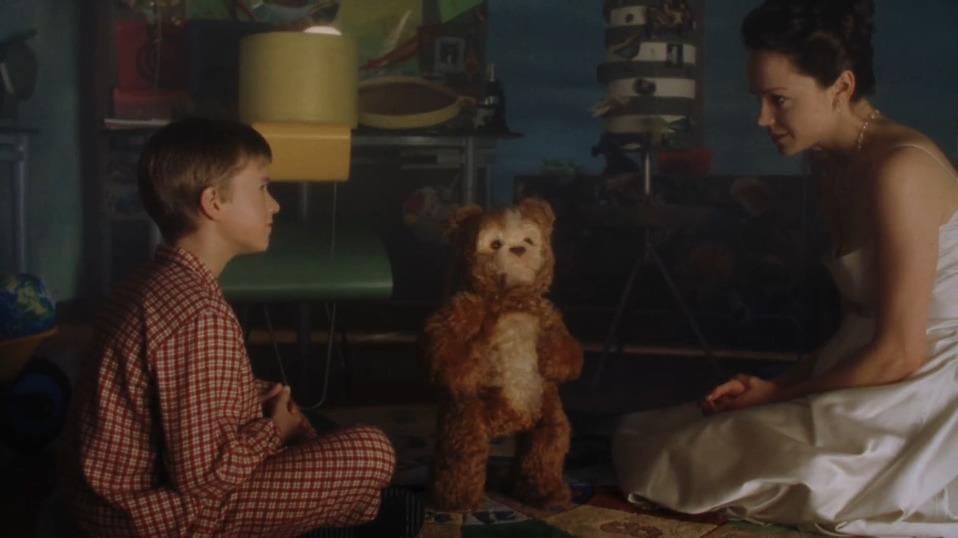
In fact, Suskind says, her original, working title for the book was, “The Trojan Teddy Bear,” a warning that AI companions may seem cute and cuddly — but they carry hidden risks for child development. She ultimately went with Human Raised because she wanted to emphasize the positive — and irreplaceable — role that parents, teachers, and caregivers play in molding young ones.
“If we want children to be able to continue to connect with each other and with other human beings, to be able to think critically, to be able to navigate the human world, we’re gonna need to make sure that kids have a distinctly human-raised early childhood,” Suskind says.
Suskind is a professor of surgery and pediatrics at the University of Chicago Medical Center, where she directs a program aimed at giving kids hearing with cochlear implants. After she began doing this incredible work — literally helping children hear — she noticed that some kids who had the procedure went on to understand spoken language and talk with relative ease, while others had a much harder time. Hearing alone wasn’t enough. And that led her to dive into neuroscience and social science to understand why.
The brain development of young kids, Suskind learned, is heavily influenced by the back-and-forth interactions they have with their parents and caregivers during the first several years of their life. And she grew concerned that there is a big population of kids who aren’t getting the enriching communication their brains need. And so she founded the TMW Initiative, a research center that helps parents create the kinds of brain-enriching environments that children need to reach their full potential. (You can read more about Suskind’s biography and previous work in a Planet Money newsletter from 2022).
Why Dana Suskind is sounding the alarm
With the explosion of AI, Suskind has grown alarmed by a rush to introduce an unprecedented technology into kids’ lives without careful reflection and rigorous scientific study about its effects on young minds. She is especially concerned about AI companions and other systems that interact socially with children, which she fears many people will use to substitute for the human interactions that children need most.
Since the dawn of civilization, humans have used technology to make raising children a little easier. In Human Raised, Suskind traces that history back to prehistoric times, when mothers used woven slings to carry infants while they worked. Over the centuries, new technologies — like television and tablets — have eased the burdens of caregiving or helped keep children occupied. Many of these technologies have also been greeted with fears that they would rot kids’ brains.
But Suskind argues AI may mark a fundamental shift. Interacting with a chatbot or intelligent teddy bear is more than just a kid glued to a television or an iPad watching Sesame Street or Paw Patrol. AI systems carry on conversations that can feel strikingly human. They respond to kids’ questions, emotions, and fears. They create a kind of synthetic social relationship — one that, Suskind argues, may shape developing minds in ways that, until recently, only humans could.
Suskind cites the research of renowned University of Washington developmental psychologist Patricia K. Kuhl. Kuhl proposed what’s known as the “social gate” hypothesis — the idea that children’s brains are biologically primed to learn through social interaction. Studies have shown, for example, that babies learn language much better from a live person than from a screen. Neuroscientists and psychologists suggest that’s because social interactions engage the brain in ways passive media does not. The sing-song way adults naturally speak to babies, smiles and other facial expressions, gentle touch, eye contact, and back-and-forth exchanges all appear to help open that social gate and facilitate learning and healthy brain development.
While artificial intelligence is no match for human educators and caregivers, Suskind argues, it is capable of opening the social gate in young children in ways that previous technologies could not. That makes AI a potentially extraordinary educational tool — but also a potentially dangerous one.
Companies design AI systems with their own goals, which could include maximizing your kids’ engagement, keeping their attention, collecting data, and making money. They don’t have the same priorities as parents. And while those systems may imitate human interaction, Suskind argues they cannot recreate everything that makes human relationships developmentally valuable.
“Eye contact, shared laughter, patient answers to ‘why’ questions activate ancient neural circuits designed for connection,” Suskind writes. “These exchanges provide a form of nourishment no algorithm, however sophisticated, can match.”
Human relationships are also messy and filled with emotions. Parents misunderstand their children. Kids get frustrated. Families argue, reconnect, and then smooth things over. Suskind argues that those imperfect interactions — and “the productive struggle” they create — are how children learn resilience, emotional regulation, flexibility, and how to navigate real relationships.
Unlike most humans, AI systems can be endlessly engaging, infinitely patient, and relentlessly affirming. Interactions with them often feel frictionless. Suskind worries giving young kids considerable exposure to them may make them less prepared for the messy, unpredictable nature of real human relationships.
AI as junk food for the young mind
Suskind compares AI relationships to ultra-processed food. “ If all you eat is fruit snacks, which is a synthetic version of fruit, when you actually eat the real fruit, you’re gonna be like, “Hmm, it’s not quite as sweet,” she says.
AI could eventually be programmed to try and mimic real parents and caregivers even more closely. But Suskind argues that the problem isn’t simply that today’s AI falls short of human relationships. It’s that AI represents a fundamentally new kind of social experience for children — one that already raises concerns based on what we know about child development and whose long-term effects remain deeply uncertain.
Suskind uses an analogy from the 19th century, when a German chemist named Justus von Liebig created one of the first infant formulas, hoping to replicate the nourishment of human milk. But when a French physician tested the formula on four newborns, all of them died within days, and the episode sparked a fierce controversy.
The lesson, Suskind suggests, is that we should be cautious about engineering substitutes for something as biologically, emotionally, and socially complex as human caregiving before we understand how those substitutes shape children’s development.
Given so much uncertainty about this rapidly evolving technology and its potential effects on kids, Suskind spends a lot of the book offering parents a practical guide for safely navigating child-rearing in the age of AI. She emphasizes that it’s especially important to shield kids from AI during their first years of life.
“Older children and adults encounter AI with already-built neural scaffolding, but young children are still wiring the very circuits that shape future learning and relationships,” she writes. “Introducing AI during this sensitive period presents a fundamentally different challenge with greater potential for harm.”
Suskind is open to the idea of using AI to enhance education for some kids — but only as a tool that enhances, rather than replaces, humans. She argues that human caregivers are the best way to cultivate what she calls “the Human Edge,” a set of social, emotional, and cognitive skills like “critical thinking, interpersonal connection, genuine creativity, empathy, and resilience.”
But, like time-crunched parents who rely on screens to buy themselves some time today, there may be growing temptations to outsource parts of child-rearing to AI, especially considering the fact that childcare is incredibly expensive. Suskind worries that, over time, a fully human-raised childhood could become a kind of luxury good — much the way fresh, healthy food often is today. Families with the time and resources would provide rich human interaction to their kids. Everyone else might increasingly rely on cheaper, more convenient AI substitutes.
And children raised largely by AI might not only lag socially, emotionally, and cognitively, but, ironically, they could also be less prepared for an AI-driven economy.
Suskind points to a recent essay by the University of Chicago economist Alex Imas. Imas argues that as AI automates more cognitive work, human jobs may be increasingly concentrated in what he calls “the relational sector” — occupations where humans are valued for qualities that make them distinctly human, from education to health care to hospitality, the arts, and therapy.
Read the full article on the original site
