




Black Travelers: Explore Culture, Adventure & Connection
Thailand’s Cannabis Journey: Tradition, Treatment, and Tightened Laws
I’ve been a longtime advocate for medicinal cannabis, but it wasn’t until I moved to Thailand that I started to understand just how deeply this plant runs in other cultures. For me, cannabis isn’t just something I support—it’s something I depend on like many others.
Physically. Mentally. Emotionally.
I’m dealing with issues I picked up during my time in the military. The kind of issues the U.S. government still refuses to treat holistically, even though we all know damn well it works. So yeah, for people like me—especially veterans—this isn’t just about getting high. It’s about staying level. Staying sane. Staying alive. And the reason Thailand has been such a godsend for many on this subject is because much of the world is still stuck behind antiquated laws and restrictions. Not to mention corporate interests that don’t want to see cannabis used to help people in a way that impacts their bottom line.
The Legal Double Standard That Makes No Sense
Let’s just be real: we live in a world where alcohol and tobacco—two of the most destructive substances out there—are legal, glorified, and taxed. And yet cannabis? A plant that helps with pain, anxiety, seizures, appetite, sleep, you name it? Still illegal in large parts of the world. Still stigmatized. Still criminalized.
Meanwhile, we’ve got an opioid epidemic in the U.S. that’s killed hundreds of thousands of people—and it wasn’t street dealers handing out that stuff. It was doctors. Hospitals. Pharmaceutical reps in suits.
Here’s a stat that’ll mess with your head:
In the U.S., over 1 million doctors can prescribe fentanyl—one of the most powerful opioids on the market. Fewer than 100,000 can legally recommend medical cannabis. Even in states where it’s fully legal.
How is that even real?
Thailand’s History With the Plant Runs Deep
What makes Thailand unique is that this isn’t a new conversation here. Cannabis—ganja—has been part of Thai culture for generations. It was used in traditional medicine for muscle pain, stress, digestion. Farmers would cook with it after long days in the fields. Healers would mix it into balms. It wasn’t some taboo thing—it was part of life.
During the Vietnam War era, a lot of American soldiers—myself included, but much later—got exposed to Thai-grown cannabis. “Thai Stick” became legendary back in the U.S. A lot of the cannabis culture we know today in America? It has roots right here in Thailand.
From Legal Highs to a Quick Rewind
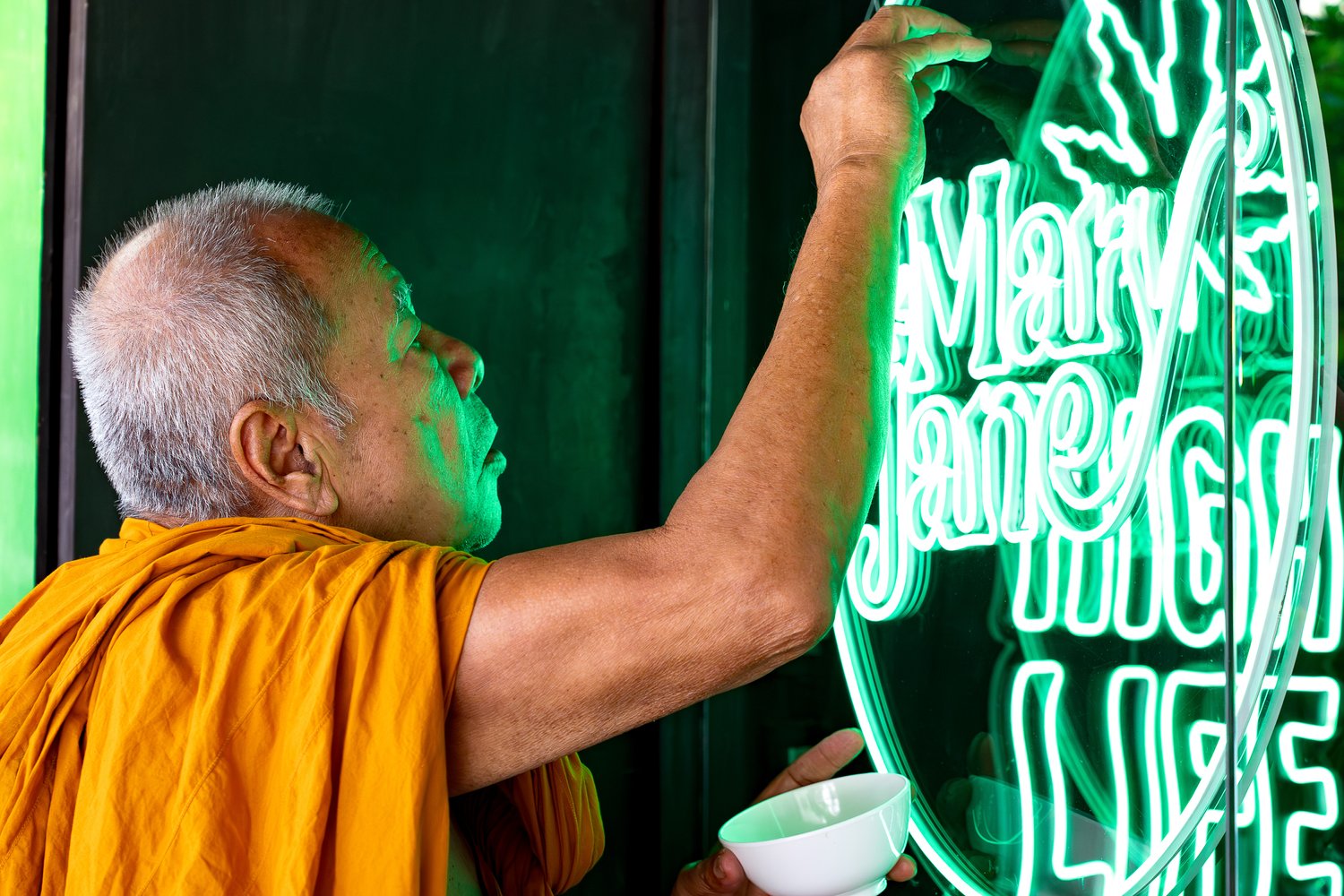
When Thailand decriminalized cannabis in June 2022, it was a game-changer. First country in Asia to do it. Dispensaries exploded across the country, especially in Bangkok. Neon signs. Boutique brands. People were lining up at shops like they were grabbing iced coffee.
But for those of us who’ve been living here since before medicinal cannabis was legalized in 2018, this wasn’t a surprise. We knew it was the Wild West out here for a while—little to no oversight, rapid shop openings, barely any guardrails. And as things got looser, international pressure started mounting. Smugglers were operating across borders, and other countries were raising concerns.
So yeah—something had to change. Is this the right change? We’ll see.
As of July 1, 2025, Thailand has officially hit the brakes and returned to a medical-only cannabis policy. Recreational use is banned again. You need a prescription. Public smoking is still off-limits. No extracts still (edibles, vapes, and droppers). And dispensary owners now face much tighter licensing requirements.
A lot of people are frustrated—and rightfully so. But I see this more as a reset than a shutdown. Thailand’s trying to find the balance between health, culture, economy, and control. It’s messy, yeah—but this isn’t over.
What Comes Next?
Thailand’s cannabis market was projected to reach US$661 million by 2024, with expectations to hit the $1 billion mark not long after. This new law may slow that growth a bit, but the momentum isn’t going anywhere. People believe in the product. People need the product.
What’s interesting is that this moment might actually push Thailand toward a more serious, sustainable future for cannabis, rooted in medicine, research, and better infrastructure. The novelty is wearing off. The opportunity for real impact is here.
Why I Still Have Hope
Look, it shouldn’t take moving across the world just to get access to the one thing that actually helps you function. But here I am. And I know I’m not the only one.
But here’s why I’m still optimistic:
We’re seeing real change globally. Germany just made big strides toward legalization. Dozens of U.S. states now have medical and/or recreational cannabis laws, including my home state of OHIO, which shocked me. The DEA is finally talking about rescheduling cannabis from Schedule I to Schedule III, which would be huge. That change alone would acknowledge that cannabis has medical value.
Even the U.S. Department of Veterans Affairs, which has dragged its feet for years on this, is starting to fund research into cannabis and PTSD thank god.
Major universities and hospitals—from Barcelona to Toronto—are diving deep into studies on how cannabis can help with chronic pain, anxiety, neurological disorders, and more. And most importantly: the stigma is cracking. People are sharing their stories. Doctors are listening. Lawmakers are being forced to evolve.
Final Thoughts (Jerry Springer Voice)
Cannabis isn’t some miracle drug. But for a lot of us, it’s the only thing that works. It brings peace. It brings relief. It brings a chance at something like normalcy.
While governments and policies shift back and forth, I’m gonna keep telling the truth. About what this plant means to PEOPLE. About what it’s done for me.
Because at the end of the day, this isn’t just about cannabis. It’s about access. It’s about dignity. It’s about being seen and treated like a human being.
And that fight? It’s far from over.
But I’m still here. Still healing. Still hopeful.
See the full story on the original site
