




Food & Beverage News: Insights, Safety, and Dining Trends
- Protein remains the core growth driver; Valio pushes protein products like Profeel, prioritizing nutritional density.
- GLP-1 drugs reshape consumption toward nutrient-dense, lower-calorie options; Valio cautious, predicts pharmaceutical-led shift with uncertain behavioral longevity.
- AI powers data integration, trend analysis and creativity; Valio uses it to free time, predict trends and accelerate consumer-centric innovation.
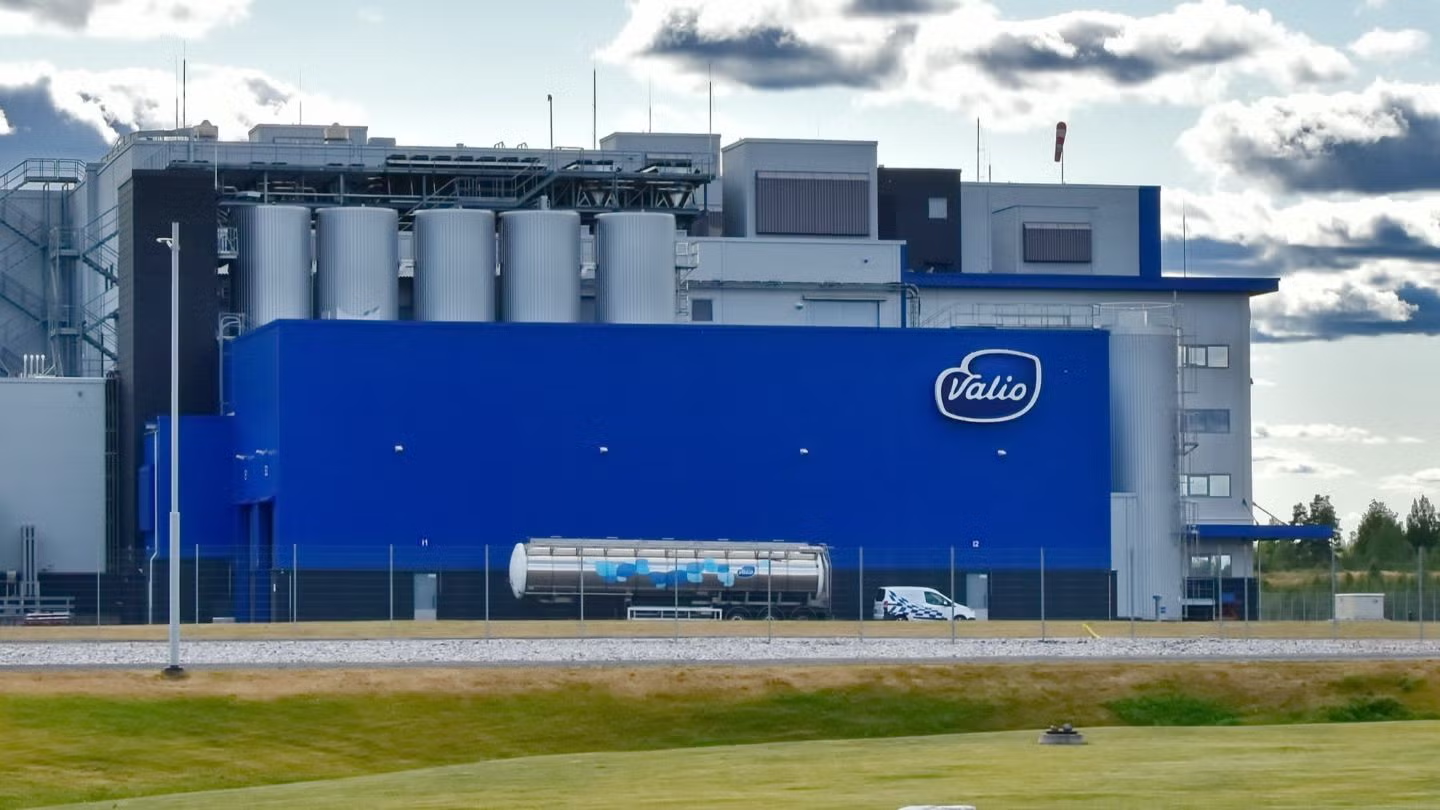
As one of Europe’s largest dairy companies, Valio appears well-positioned to capitalise on rising consumer interest in protein and the growing use of GLP-1 weight-loss drugs.
Two-thirds of the Finland-based group’s revenue is derived from consumer-facing products with the rest through selling ingredients to manufacturers.

Discover B2B Marketing That Performs
Combine business intelligence and editorial excellence to reach engaged professionals across 36 leading media platforms.
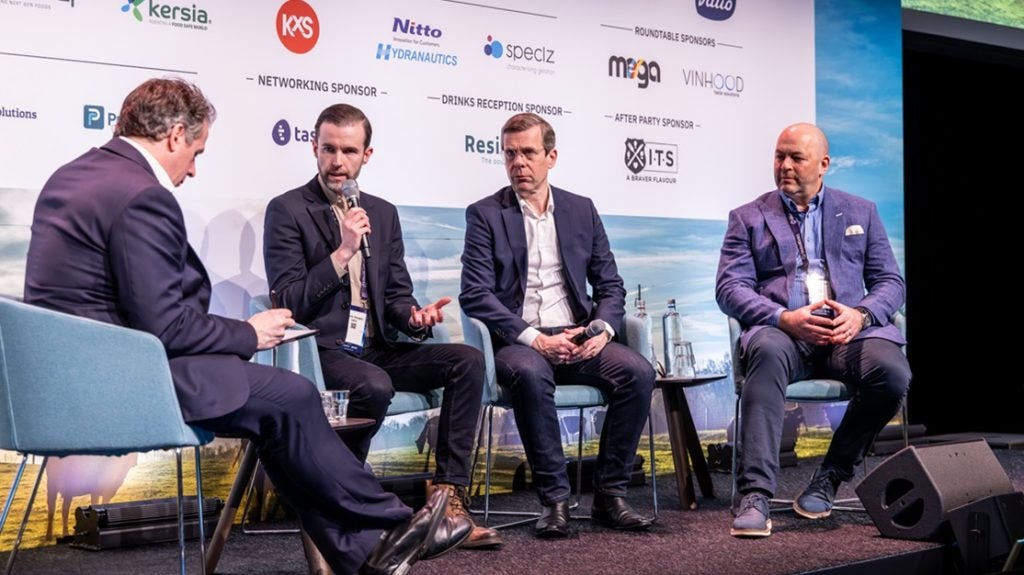
Just Food met Dr. Kevin Deegan, vice president for innovation at Valio, at the Arena Dairy Innovation Strategies conference in Amsterdam to explore how the company views the increasing demand for protein, how the company innovates and the emerging ways the co-op is using AI.
Dean Best (DB): Protein has been a focus area for Valio’s product development for at least two decades. But amid growing interest in the ingredient – and amid the rise in GLP-1 drugs – is the company devoting more time and resources to the area?
Dr. Kevin Deegan (KD): It’s difficult to say. That’s where we’re seeing the strongest growth currently, in protein. We can think of it in two ways. We have a protein-enriched brand, which is called Profeel and its USP is it’s enriched with protein but then obviously dairy is known and is perceived as a very strong source of protein as well.
We get asked quite often ‘What’s the next protein?’ The next protein is protein, in my view. I don’t think it’s going to be replaced with something. Fibre is mentioned. It’s not going to replace protein. Protein is too easily understood. It has a positive health halo. The only negative is that: do we get too much protein? Do we need so much protein?
DB: Do you think there’s been an over-emphasis on the ingredient? All sorts of products have hit the market that are packed with protein.
KD: You could look at it from the point of view of is it better to have protein than another potentially not-as-good macro molecule, like sugar or fat, for example? Fat is complicated because it’s not black and white. We need sugar to a certain extent but we eat too much sugar in the West. Would you rather have more protein and less sugar? That’s one of the drivers of the protein boom that we’re seeing? That’s only a positive thing in that sense. Is your physiological need [for protein] being met? Yes, in the West it is but, if it can provide us with the option to reduce the amount of sugar that we eat, or the types of fat that we eat, or to reduce calories, for example, which is what people want to do if they want to get healthy, then that’s just a good thing.
DB: There’s been a lot of chatter in recent months about whether the market is at ‘peak protein’ and how much further demand can rise.
KD: We had the same conversation around 2016/2017. We found a new driver, which was kind of led from the Nordics, which was about protein giving permission. We launched a range of protein puddings, really delicious snack products, high in protein and low in sugar, have artificial sweeteners in some cases, have less sugar in some cases as well but essentially giving you permission to indulge.
GLP-1 seems to be the next driver. Protein has gone through weight management, to body building, to general fitness, to ‘allowing’ currently, and then, obviously, with the GLP-1 about nutritional density, a bang for your bite as I like to call it.
DB: Valio is a consumer-facing business and sells ingredients to industry. Looking at your innovation department through that lens, how do you think differently about trends like protein and GLP-1 drugs?
KD: Roughly, it’s split 65:35 in favour of value-added consumer goods and export. Our strategic direction has been to get growth through value-added consumer goods. That means you also have to know how to sell them and build brands.
We have had this kind of ‘push innovation’ approach, where we invent and we tried to find a market. Now, we’re looking more and more at ‘What are [consumers’] needs?’ We usually have a solution to those needs but it’s a slight nuance in how we approach innovation. We’re basing and focusing our innovation to provide solutions to needs, problems and challenges that exist.
DB: Are there any major differences if you’re producing ingredients or value-added products?
KD: Probably the biggest challenge with that is that you need to consider the concept, you need to consider the story and the brand whereas, on B2B, our brand is Valio, essentially. We do have value-added ingredients in powder.
Probably the approach that we’re taking more and more now is to become consumer-centric. What that means is that we understand the why: what are the issues and the challenges that they have and how we can provide solutions for that. The example I always use is Oddlygood, our plant-based range, which was launched in 2019. We didn’t do that because we could, believe me. We’re traditionally a dairy cooperative owned by over 3,000 dairy farmers, so, I have to say that was a very brave but very pragmatic decision as well. Now it’s become quite a big success story, acquiring Rude Health a couple of years ago.
DB: With regard to GLP-1, there has been research on what happens when people come off the drugs that suggests consumption habits may bounce back to what they were before. Much of the industry is trying to work out how the medication will affect consumption and sales but some observers are sceptical about how long this trend could last.
KD: It does seem the behavioural change is not as sustainable as the physical and physiological changes. This is not the first time that we’ve had this issue. It was the same with Atkins. Any diet essentially requires willpower and requires behavioural change. Human animals, as we are, we’re not responsive or very open to change and it requires a lot of willpower.
It’s like a band aid maybe, a crutch that we’re using to get the results without having to put the work in. Inputting the work into it would then require a behavioural change to happen.
It’s interesting. I don’t know where it’s going because, on the other hand, currently, the vast majority of these GLP-1 medications are by injection and also by prescription – obviously, depending on markets – and the vast majority of users are using it because of diabetes or obesity. The kind of ‘voluntary’ usage of GLP-1 is still quite low but now it will be available in pill form.
I can’t say if that is a sustainable change. Will it make it easier? Yes, definitely. Will it increase voluntary usage? Very much so. Will it lead to sustainable behavioural changes in people? I don’t think so. The food industry is not driving this. The pharmaceutical industry is driving it and we’re reacting to it.
DB: Given all of that, what’s Valio doing in its product development to react to the use of GLP-1 drugs? Are you looking to launch products that cater to people that are on the medication? Are you spending more on marketing to say your existing products could appeal to users? Research has shown dairy has seen a sales boost.
KD: That’s a very good question. One thing I like to say first is that perception is reality and the second thing is that what people say and what people do are not necessarily the same thing. We need to understand, in many cases, the subconscious desires or reasons why people are doing these things.
It has happened very quickly. Such a fundamental change as this doesn’t normally happen as quickly. The sustainability of the change, that’s a question mark. Will it become more available? Yes. Will it become easier to attain and to use? Yes. Will it lead to behavioural changes? Probably not. We need to keep our heads cool as well and think about what it is without jumping in headfirst. On the other hand, we find many times again and again in dairy, that existing products, existing solutions, can be – I don’t know if repurposed is the right word – but there’s always something that we can [do].
There’s a lot in what we currently have – and I’m not just talking about Valio but the dairy industry in general – that we can use to respond to this and that people who are looking for more protein, looking for more bang for their bite, can already use.
DB: Moving away from trends to how Valio innovates. How many are in your team? To what extent does the company work with external partners?
KD: We have R&D in our Helsinki headquarters and there’s about 130 people working in that. That’s quite high, given the size of our company, which has 4,400 people. Innovation management, which is what I’m leading, is about how we can build and maintain a culture of innovation. We work across all of our different organisations, not just with R&D and NPD. We have a project ongoing with our sourcing department, for example. We’ve taken the approach that innovation is for everybody in the company. It’s not just about creating new products. It’s about being better every day.
How we do that is we need to give people the tools. We need to enable people to raise their voice. Where’s the next idea going to come from? We have essentially 4,500 possibilities internally and then we also work a lot externally. We have a major project ongoing in Finland, with funding we receive from a semi-state organisation called Business Finland, which is for the promotion of Finnish exports.
As part of that, in the last two years, we have an RDI ecosystem of over 200 partners, mainly in Finland, but more and more internationally as well, even competitors. The aim of that programme is to increase Finland’s food exports. It’s a very nice example of where we’re all coming together under this umbrella, even competitors, and looking at the bigger picture of what a sustainable food production system in Finland looks like. The three parts we see are animal-based, plant-based and cell-based, which, is quite a radical thing for a traditional dairy cooperative to say. We have invested in start-ups looking at how we can utilise some of our side streams in producing protein, for example. Cellular agriculture is also something we’re looking at investing in.
DB: What do you think the prospects are for cell-based dairy?
KD: Dairy is incredibly complex. I don’t believe we’re going to have, at least at commercially viable levels, dairy products, like milks, cheese, produced by cellular agriculture. What we are going to see is that there are a lot of very valuable bioactive compounds in milk, which we can extract and then use in infant-milk formula, for example, or in specific functional goods. The extraction of those from milk is not difficult but it’s very expensive. It requires investment in order to do that and, in those kind of individual, specific bioactive ingredients, that’s where we see the future.
DB: Speaking of tech, how are you harnessing the advances in digitalisation and in AI in your innovation work?
KD: What I like to say about AI is AI is a solution for a problem we don’t understand. We’ve gone through the hype now of everybody doing funny things with ChatGPT and showing each other. We’ve started to think about it from two different directions. One is top-down. Where can we see AI and data transformation having the biggest effect on our business? To give you an example: bringing different data streams together, standardising our data infrastructure, finding links and patterns and insights that we can’t see. Making our processes more efficient, bringing us new possibilities.
The second one is that AI is the first technology in a long time that enables people: to test, to prototype, to take chances.
We talk a lot about AI maturity levels in companies. The first level of that maturity is if you can save time. It can’t be just that. The second part of that maturity level is about creativity. It’s not just about how can we do things more efficiently. It’s about where can we get new ideas. The biggest challenge we have in creativity as humans is our own minds. A lot of people believe ‘I’m not creative. I’m a doer.’ In some level, we’re all creative as children. All of these things are learned as we get older. How can we use [AI] to test or to reduce the risk of trying these things?
DB: So, you would say there have been tangible benefits of using the technology within your function?
KD: Yes, definitely. For example, with trend analysis. What is a trend? A change, essentially. We can see what direction the change is going and how fast it’s going. We need to understand the why behind it. Is Dubai chocolate a trend at some level? Yes. Why is it happening? If we dig down into that, is there something we can learn from that? The knee-jerk reaction is that we need to make the Dubai chocolate yogurt, which is fine but that can’t be our way of working. We can’t just have knee-jerk reactions.
We need to understand the why and be able to predict, extrapolate that forward as well. How can we automate the collection of data, of what happens on social media, of what happens in the news, and put that into a digestible form that we can then interpret and then use, free up the time to actually use the human intelligence that we have?
DB: What do staff think about the possible impact on jobs? Is there concern?
KD: It’s human nature to think that and especially when you start to realise yourself in your own work what you can do. The approach that we’ve taken from it is: what’s the biggest reason why innovation doesn’t happen? We know this and this is not unique to us: a lack of time. We need to start challenging that because are we ever going to have time? We have more tools, we have more conveniences than we’ve ever had before? Does it mean that we have more time? It’s debatable.
How can we get people to think about the future if you’re nine to five is all-consuming and you’re just full of meetings? Is there something that AI could do in order to free up your time, to give you the time to think beyond the next year, two years. That’s what we need to be doing as well. In our home markets, we’re market leaders in many of the categories. The market leader’s responsibility is not just to grow but also to bring new ideas, to challenge the category and challenge the market. It can’t be the routine. It can’t be keeping the engine running. It has to be thinking outside the box, looking into the future.
DB: We are seeing major CPG companies cutting jobs and automation, digitalisation and AI are factors. It can be a lever for retrenchment.
KD: And that’s nothing new. If you look in production and operations, that has been the case for a long time, and development will always be in that direction. I think that if we think about it in terms of creativity, think about it in terms of finding focus in your own work, that has to be the approach that’s taken.

Sign up for our daily news round-up!
Give your business an edge with our leading industry insights.
Read the full article from the original source
