




Aging Well: News & Insights for Seniors and Caregivers
- Recognize red flags: requests for immediate payment, gift cards, unsolicited personal information requests, and pressure to keep transactions secret.
- Know common tactics: Phone Scams, Email and Phishing Scams, Tech Support Scams, sweepstakes, and romance scams.
- Families should talk openly, verify requests, monitor accounts, and set up call blocking or email filters to protect loved ones.
- Trusted caregivers and Always Best Care staff can screen calls, notice behavior changes, reduce isolation, and encourage family communication.
- If you suspect a scam, contact the financial institution, report to local authorities or adult protective services, and monitor accounts closely.
Scams targeting older adults are becoming more common—and more sophisticated. Many seniors are seen as vulnerable due to their trusting nature, financial stability, or unfamiliarity with newer technology. Unfortunately, scammers often exploit these factors, resulting in significant financial loss and emotional distress.
The good news is that awareness is one of the most effective tools for prevention. By understanding common scams and knowing what to look for, families can help protect their loved ones and reduce the risk of exploitation.
Why Seniors Are Often Targeted
Scammers frequently target older adults because they may:
- Be more trusting or polite when approached by strangers
- Have savings, retirement funds, or a steady income
- Live alone or have limited social interaction
- Be less familiar with digital scams or online threats
These factors can make it easier for scammers to build trust and manipulate situations.
Common Types of Scams Affecting Seniors
Scammers use a wide range of tactics to deceive their targets. Some of the most common scams include:
Phone Scams
Fraudsters may pose as government officials, utility companies, or even family members in distress. They often create a sense of urgency, asking for immediate payment or personal information.
Email and Phishing Scams
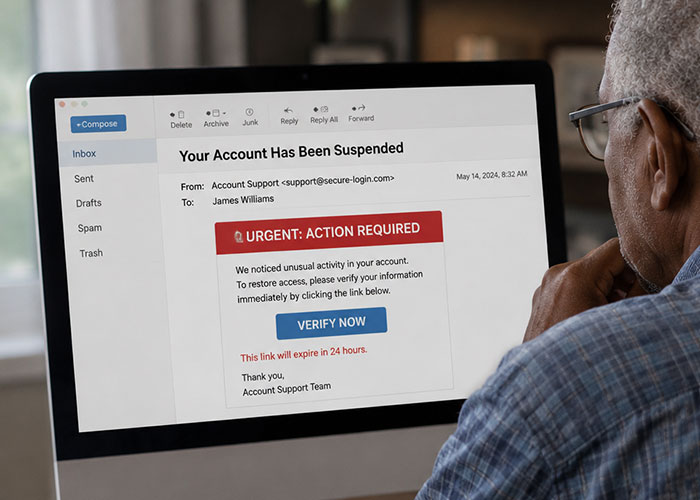
Emails or text messages may appear to come from banks, healthcare providers, or well-known companies. These messages often include links that lead to fake websites designed to steal personal information.
Sweepstakes and Lottery Scams
Seniors may be told they have won a prize but must pay fees or taxes to claim it. In reality, there is no prize—only a request for money.
Romance Scams
Scammers build emotional relationships online and eventually ask for money, often claiming an emergency or financial hardship.
Tech Support Scams
A caller or pop-up message claims there is a problem with a computer or device. The scammer then requests remote access or payment for “repairs” that are not needed.
Warning Signs to Watch For
Scams often follow predictable patterns. Being aware of red flags can help prevent a situation from escalating.
Watch for:
- Requests for immediate payment or urgent action
- Demands for payment using gift cards, wire transfers, or cryptocurrency
- Unsolicited calls, emails, or messages asking for personal information
- Messages that create fear, panic, or pressure
- Requests to keep a transaction secret from family members
If something feels suspicious, it is always best to pause and verify before taking action.
How Families Can Help Protect Loved Ones
Families play an important role in preventing scams. Open communication and regular check-ins can make a significant difference.
Helpful steps include:
- Talking openly about common scams and how they work
- Encouraging seniors to verify requests before responding
- Monitoring financial accounts for unusual activity
- Helping set up call blocking or email filters
- Encouraging seniors to consult a trusted family member before making financial decisions
Creating an environment where seniors feel comfortable asking questions can help prevent costly mistakes.
The Role of In-Home Care in Scam Prevention
Having a trusted caregiver present can provide an added layer of protection. Caregivers can help monitor for suspicious activity, support daily decision-making, and offer reassurance.
At Always Best Care, caregivers are trained to recognize unusual situations and encourage safe practices. They can:
- Help screen phone calls or unexpected visitors
- Notice changes in behavior or financial concerns
- Provide companionship that reduces isolation
- Encourage communication with family members
Reducing isolation is especially important, as scammers often target individuals who feel alone or disconnected.
What to Do If You Suspect a Scam
If you believe a loved one may have been targeted or affected by a scam, it is important to act quickly.
Steps to take include:
- Contact the financial institution involved immediately
- Report the incident to local authorities or adult protective services
- Monitor accounts for further suspicious activity
- Offer reassurance and support to your loved one
Many victims feel embarrassed or ashamed, which may prevent them from speaking up. A supportive approach can help them feel safe sharing what happened.
Protecting Seniors Starts with Awareness
Scams may be evolving, but prevention starts with knowledge and vigilance. By staying informed, maintaining open communication, and providing the right support, families can help seniors avoid becoming victims.
At Always Best Care, we are committed to helping seniors live safely and confidently at home. Our caregivers provide not only daily support, but also an extra layer of awareness and protection.
Helping Your Loved One Stay Safe
If your loved one could benefit from additional support and companionship, Always Best Care is here to help.
Call Always Best Care today at (855) 470-2273 to schedule a care consultation and learn how our caregivers can help protect your loved one while supporting their independence and well-being at home.
Read the full article on the original source
