




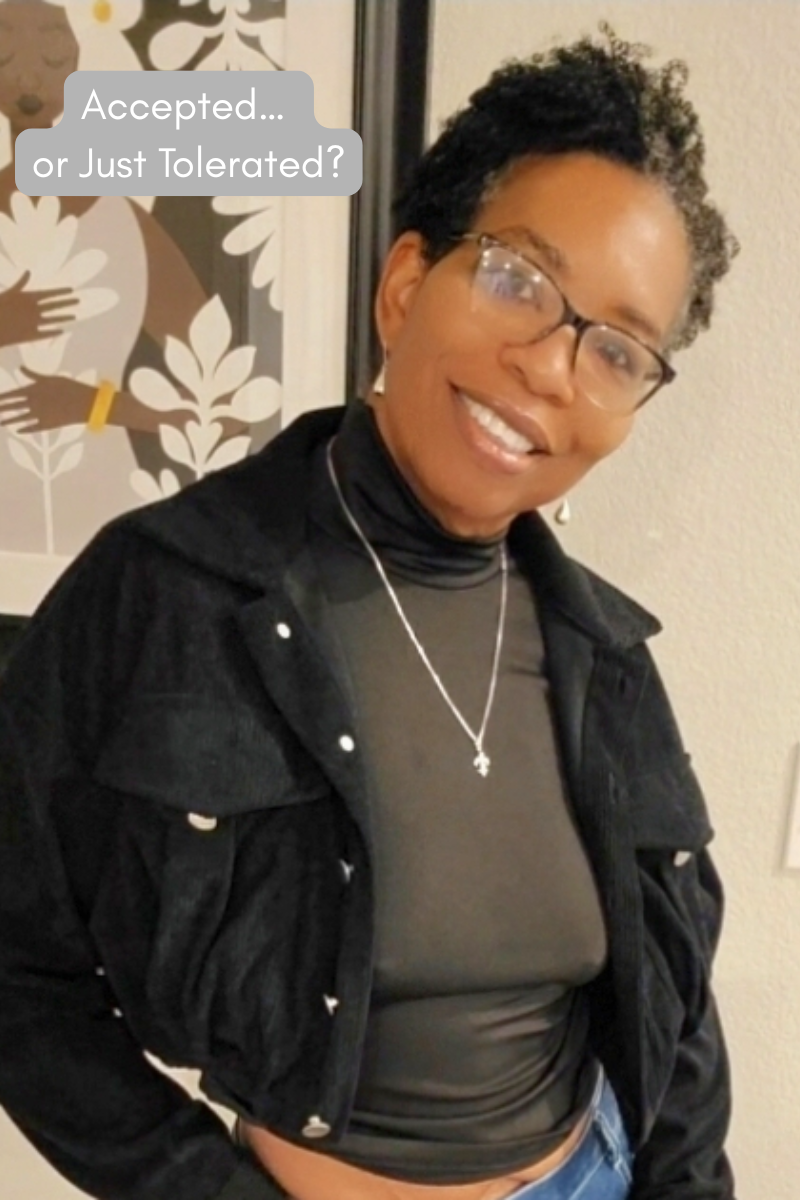
Glow & Grow: Black Beauty, Haircare, and Skincare Tips
- More visibility of natural hair hasn't meant full acceptance; biases against Black women persist in schools, workplaces, everyday spaces.
- Acceptance is conditional: looser curls often welcome, while tighter coils and locs face stricter standards.
- Pressure shifted from straightening to demanding perfect styles like defined curls and twist-outs; assimilation expectations remain harmful.
- Real change needs self-acceptance plus cultural and political shifts; laws like CROWN Act help, but mindsets must change.
I can’t believe a full decade has passed and I’m still here, having this very personal conversation. Natural hair has been a core part of my journey—and my platforms—for years. I’ve built not one, but two blogs around natural hair care and natural hair acceptance. And yet, what still doesn’t sit right with me is this: why are people outside of our community still so invested in our hair and the choices we make about it? In the workplace, in schools, in everyday spaces… it’s still a topic of discussion.
So here we are, ten years later, revisiting the question: is natural hair truly accepted—by others, and even by ourselves? And maybe more importantly, where is this conversation actually headed now?
If you’re still figuring out how to keep your hair hydrated, check out my full guide on how to actually keep natural hair moisturized.
Why Your Natural Hair Still Feels Dry (Even When You Moisturize)
What Has Changed (Give credit where it’s due)
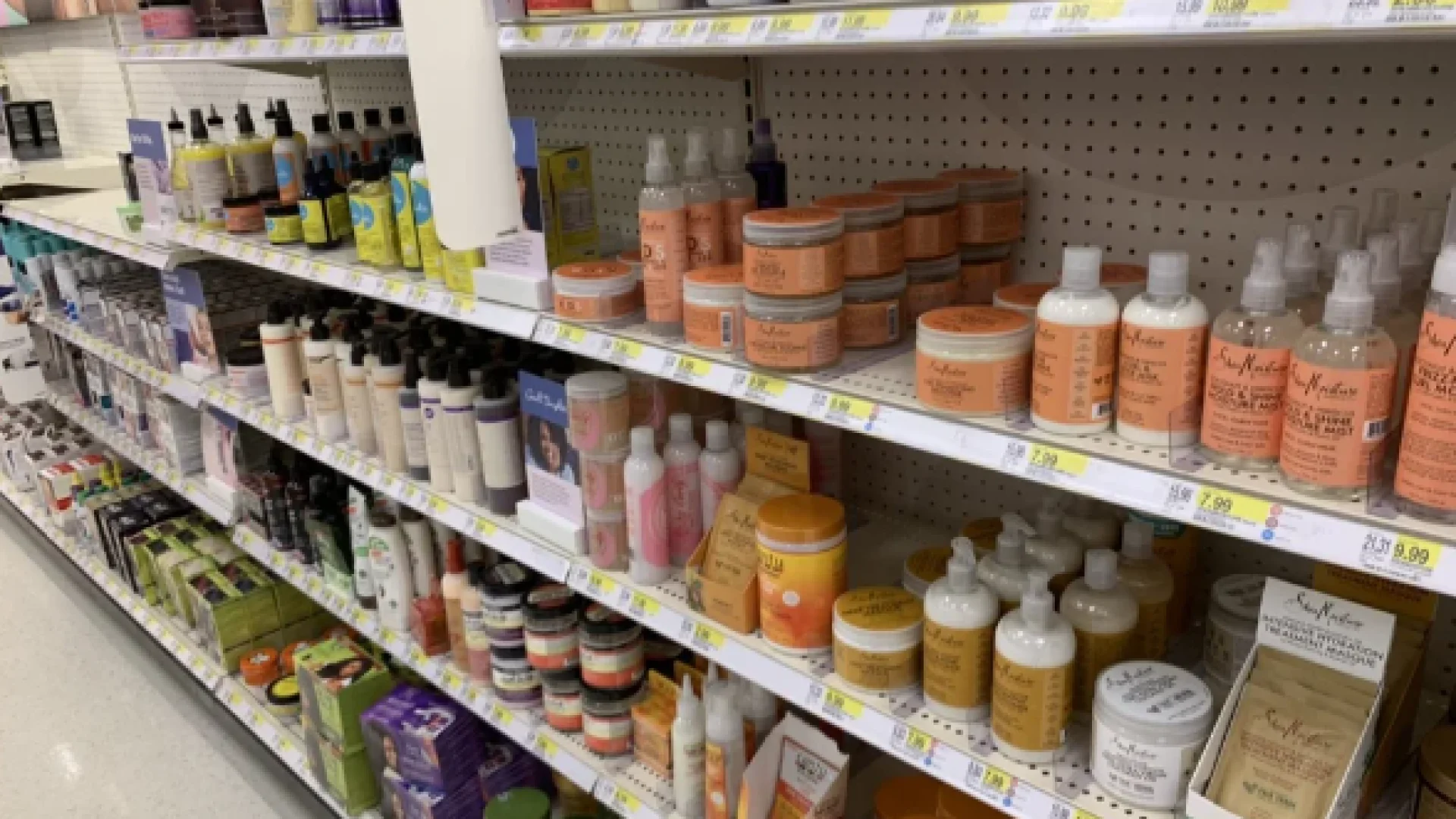
Natural hair is more visible than ever. We see it in film, on TV, on the streets, in the workplace, and on the runways of major fashion houses. Walk into any store now and you’ll see entire sections dedicated to textured hair. Ingredients once marketed almost exclusively to Black women—like shea butter and coconut oil—are now front and center on products for everyone.
We’ve gone from bottom shelves to eye-level placement. From limited options to full aisles. And Black haircare brands? They’re no longer niche—they’re household names.
Social media has played a huge role in that shift. Natural hair is no longer a “mystery” or something hard to understand. There’s an abundance of information—tutorials, blogs, videos, books—all dedicated to caring for, styling, and celebrating natural hair. You can find everything from beginner routines to advanced styling techniques in seconds.
Even the beauty industry has expanded how natural hair is represented. Wigs and weaves now include textured, coily, and curly options that reflect natural hair patterns—something that wasn’t nearly as common years ago. Back then, there was some information and some visibility, but nothing like what we see today.
And that matters.
Visibility vs. True Acceptance
Now let’s talk about what isn’t always being said in these natural hair spaces—just because we see natural hair more doesn’t mean it’s fully accepted in every space.
In today’s climate, we’re watching conversations about identity, equity, and inclusion shift in ways that directly affect us. And when our very presence is questioned, our hair comes right along with it. Natural hair doesn’t exist in a vacuum—it’s tied to how we’re perceived, how we’re treated, and in many cases, how we’re judged.
What used to be framed as a “professionalism” issue—locs, coils, and kinkier textures being labeled as “unpolished” or “unacceptable”—is now part of a much larger conversation. It’s not just about hair anymore. It’s about fitting into spaces that were never designed with us in mind.
And the reality is, those pressures haven’t disappeared—they’ve just shifted.
Because let’s be honest… when people ask if natural hair is accepted in 2026, the answer is layered. It often depends on the texture. The looser the curl, the softer the appearance, the easier it is to be accepted. But tighter coils? Locs? Full, unapologetic texture? That acceptance still comes with conditions.
And in corporate spaces especially, there’s often an unspoken expectation: blend in. Look polished—but more importantly, look familiar. Look like everyone else.
But that’s not something we can do—and it’s not something we should have to do.
So while representation has increased, acceptance hasn’t caught up at the same pace. And in some ways, it can feel like we’re moving forward in visibility… but backward in what’s truly allowed.
Today, you can walk into a store and find everything from rich leave-in conditioners to curl creams designed specifically for textured hair…
PATTERN Beauty by Tracee Ellis Ross Styling Cream or Carol’s Daughter Goddess Strength Leave In Conditioner Cream
The Pressure Didn’t Disappear—It Shifted
Then (2016):
Pressure to relax or straighten
Now (2026):
Pressure to have:
- Defined curls
- Perfect twist-outs
- Always “styled” natural hair
The pressure to assimilate didn’t disappear—it just rephrased what was expected.
You can be natural… as long as your texture looks a certain way. But is that really acceptance?
If you still have to alter your appearance to be considered “presentable,” while others never have to make that adjustment, are you truly showing up as yourself?
And let’s be honest—what’s labeled as “effortless” or “messy” on a White woman often doesn’t get the same grace on a Black woman. That same undone look suddenly becomes “unprofessional” or “unkept” when it’s on us—unless it mirrors a standard that was never created with us in mind.
You might think this sounds overly critical—but it’s not. These are real conversations Black women are still having, whether it’s in the workplace or at home. Whether it’s a boss, a colleague, or even family, the message can sometimes be the same: adjust, refine, fit in.
But when the expectation is rooted in mirroring someone else—someone outside of who you naturally are—that’s not acceptance. That’s adaptation.
And over time, that kind of pressure becomes more than frustrating—it becomes damaging.
Individuality is part of what makes us human. But lately, it can feel like the expectation has shifted toward uniformity: look a certain way, present a certain way… or risk being pushed out.
And if your styles aren’t lasting the way you want, I break that down here…
Senegalese Twists & Box Braids: How To Keep Them Beautiful
My Personal Evolution
I work for myself now, so I understand the workplace battle a little differently these days. But that doesn’t mean I didn’t have my moments when I was natural and working in corporate America.
I learned to play the game—strategically. I would often wear my hair straight to interviews, knowing it would be more “acceptable,” and then switch to braids once I got the job. I adjusted when I needed to… until I didn’t.
I remember one moment clearly. A boss told me she preferred my hair straight—that it looked more “professional.” I didn’t argue. I didn’t respond. I went straight to the bathroom, turned on the water, and wet my hair.
Not out of rebellion—but out of something deeper. Discomfort. Frustration. Maybe even a quiet refusal.
That moment stayed with me.
Today, if I ever stepped back into corporate America, I already know how I would show up: in my natural hair, exactly as it is. Most likely a simple wash-and-go. No adjustments. No strategy. No shrinking myself to fit someone else’s idea of what is “acceptable.”
Because what I’ve learned over time is this: I am who I am, and my natural hair is a part of that.
I have no desire to straighten my hair to make someone else comfortable. I love it the way it grows from my head. And anyone who has a problem with that? That’s not mine to carry.
That’s freedom.
Not approval. Not acceptance. Freedom.
And for me, that will always matter more.
Are We Past It? (Answer the question)
Let’s be honest—can we really answer this question with a simple “yes” or “no”?
There has been real progress when it comes to natural hair. Over the past 20 years, we’ve gone from having little to no support for natural hair care to having more products than we can count, more shelf space than we ever imagined, and more information than we could ever fully consume. Representation has expanded in ways that would have felt almost impossible in the early 2000s.
But despite all of that, we can’t ignore what’s happening around us.
The current climate—socially and professionally—has created new pressures. We’re still seeing pushback in workplaces, still navigating how we’re perceived, and still dealing with negativity that shows up both in person and online. Even language we thought we had moved past is resurfacing, aimed at diminishing what makes Black women unique.
So what does that mean?
It means we’ve made progress—but we’re not past it.
We’re in a different phase of the same conversation.
One where visibility has increased, but full acceptance is still inconsistent. One where we’re seen more—but not always understood. One where the question isn’t just w
hether natural hair is accepted… but under what conditions.

The Real Question Now
So what is the real question we should be asking about natural hair?
It’s no longer, “Is natural hair accepted?”
It’s “Accepted by who?”
Who are Black women seeking—or feeling pressured to seek—acceptance from?
First and foremost, it has to be ourselves. For many of us, that’s the only place acceptance truly needs to come from.
We haven’t talked much about romantic relationships in this conversation, but let’s be honest—that’s another space where pressure can show up. Expectations, preferences, opinions… they all play a role. But at the end of the day, it really comes down to one simple truth: love all of me, or none of me.
Now, does approval matter in the workplace, online, at school, or even at home?
Unfortunately… yes, it does.
These are real spaces where decisions are made, opportunities are given—or taken away—and where both Black women and Black children are navigating expectations that aren’t always fair.
And let’s be clear—this isn’t about pretending life is fair. It’s not. And in many ways, the current social and political climate has made that even more obvious. The reality is, we are often navigating battles that others don’t have to think about in the same way.
Some of those battles are being addressed in meaningful ways. Laws like the CROWN Act are steps in the right direction, helping to protect natural hair in workplaces and schools. But laws alone don’t shift mindsets overnight.
That’s why change has to happen on multiple levels—individually, culturally, and yes, politically. Challenging closed-minded thinking, pushing back against the idea of uniformity, and continuing to show up as we are… that’s how individuality stays intact.
Because at the end of the day, this conversation isn’t just about hair.
It’s about identity, freedom, and the right to exist as we are—without conditions.
✍🏾 ✨ CLOSING
The goal was never just about acceptance from others—it was always about the freedom to be ourselves.
I love my natural hair, and I want every Black woman, man, and child to feel that same love for their own. To know that they can show up in whatever way feels right to them—whether that’s relaxed, loc’d, curly, coily, braided, or yes… even wigged up.
Because true freedom isn’t about fitting into one definition of beauty. It’s about having the space to define it for yourself.
And that’s what I want for all of us.
Sabrina
My Go-To Natural Hair Staples:
PATTERN Beauty by Tracee Ellis Ross Hydration Shampoo
Donna’s Recipe by Tabitha Brown Sweet Potato Pie Hair CreamCurl cream
The Doux 808 Base Curl Defining Gel for Natural Hair
Read the full article from the original source
