




Faith & Reflection: Voices from the Black Church and Beyond
- Ownership disparity: Despite majority Black players, team ownership and league governance remain overwhelmingly white.
- Access barriers: Ownership requires elite networks and approvals, not just capital, excluding many former players.
- Labor vs capital: Players assume physical risks while owners capture long term wealth and franchise value growth.
- Cultural extraction: Black creativity fuels industries, yet intellectual property and infrastructure often remain outside Black control.
- Need for structural change: Equity requires pathways to ownership, coordinated strategy, and policies that convert labor into lasting control.
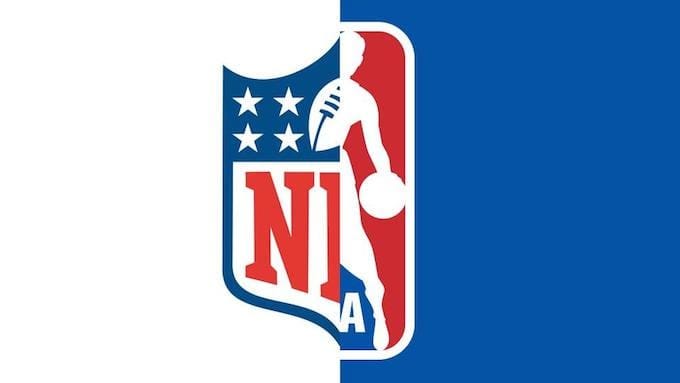
The National Basketball Association and the National Football League stand among the most profitable entertainment institutions in modern history. These leagues are not merely sports organizations. They are multinational corporations that influence media, culture, labor markets, real estate development, advertising, and political relationships. Through television contracts, global licensing, merchandise sales, sponsorships, and digital platforms, they generate tens of billions of dollars each year and shape how the world consumes American culture.
At the center of this global spectacle are the players. Their labor, discipline, physical sacrifice, and talent form the foundation upon which the leagues are built. Yet the distribution of power within these organizations reveals a troubling imbalance. While players receive significant compensation during their careers, the true centers of long term wealth and decision making remain largely inaccessible to them.
Approximately 80 percent of NBA players and roughly 70 to 75 percent of NFL players are African American. Despite this demographic reality, ownership of teams and control of league governance remain overwhelmingly white. African Americans rarely occupy principal ownership positions, and when they do participate at the ownership level, it is often through minority stakes with limited influence. This raises a critical question that goes beyond salaries and contracts. Why do those who generate the value exercise so little control over the institutions they sustain?
Ownership, Access, and Structural Barriers
Professional sports ownership is not simply about having money. It is about access. Ownership groups are approved by existing owners, creating an internal system of validation that prioritizes familiarity, social alignment, and legacy over merit or contribution. This structure ensures continuity of power within a narrow class and makes upward mobility into ownership exceedingly difficult for outsiders, particularly former players.
Even African American athletes who accumulate substantial wealth face barriers that extend beyond financial thresholds. Ownership requires not only capital but acceptance into elite networks that have historically excluded Black participation. These networks often function through inherited relationships, corporate alliances, and long standing social trust that players are rarely positioned to access during or after their playing careers.
Players, by contrast, operate under short career windows. The average professional career lasts only a few years, during which athletes must maximize earnings while managing health risks and long term financial uncertainty. Ownership, however, offers stability, leverage, and generational wealth. It provides influence over league policies, labor negotiations, franchise valuations, and civic partnerships with cities and states.
This disparity reveals that compensation alone does not equate to fairness. High salaries do not compensate for the absence of ownership pathways. Labor without control remains labor, regardless of income level.
Labor, Risk, and the Illusion of Equality
Professional athletes bear extraordinary physical and psychological risks. Injuries, long term health consequences, and post career instability are common realities. While league revenues continue to grow, these risks are disproportionately absorbed by the players, not the owners. Guaranteed contracts and benefits offer partial protection, but they do not address the fundamental imbalance between labor and capital.
Owners profit whether teams win or lose. Franchise valuations continue to rise regardless of player turnover or performance. Media deals and revenue sharing insulate ownership from volatility. Players, on the other hand, are replaceable commodities within a system that emphasizes constant renewal and youth.
This dynamic creates the illusion of equality. The visibility of wealth among star athletes can obscure the deeper structural inequality that defines the system. Players appear empowered, yet they remain subject to rules, approvals, and limitations imposed by those who control the institutions.
Cultural Labor Beyond Sports
The dynamics present in professional sports mirror those found in other Black dominated cultural industries. Music, fashion, and entertainment all follow similar patterns. Black creativity fuels global demand, yet ownership of intellectual property, distribution infrastructure, and revenue channels often remains outside Black control.
Hip hop and R and B generate billions annually, influencing global language, fashion, and identity. Yet artists frequently enter contracts that strip them of ownership over their work. Masters, publishing rights, and catalogs are commonly owned by corporations that did not create the culture but profit from it indefinitely.
This recurring pattern reflects a broader economic reality. Black labor and innovation are welcomed, even celebrated, but Black ownership remains restricted. Cultural influence without economic sovereignty leaves communities vulnerable to extraction without reinvestment.
Economic Distance from Black Communities
A frequent point of discussion involves the limited reinvestment of athlete wealth into Black neighborhoods. While some players establish foundations, sponsor programs, or support educational initiatives, large scale economic reinvestment remains rare. This absence is often misinterpreted as personal neglect or indifference, when it is more accurately understood as the result of systemic pressures.
Once athletes enter elite economic spaces, their financial decisions are shaped by advisors, institutions, and risk frameworks that prioritize conventional investments. Real estate, equities, and partnerships are often directed toward established markets perceived as stable and secure. Investments in historically Black communities are frequently labeled risky or discouraged outright.
This guidance is not neutral. It reflects long standing assumptions about value, safety, and legitimacy. As a result, capital generated by Black labor often exits Black communities permanently, reinforcing cycles of underinvestment and economic stagnation.
This process is not accidental. It is structural. Wealth flows toward established power centers while communities that produced the talent remain economically marginalized.
The Political Economy of Consumption
African Americans collectively spend over two trillion dollars annually in the United States economy. This spending power rivals the gross domestic product of entire nations. Yet the majority of this capital circulates outside Black owned businesses and institutions.
Consumption alone does not create power. Ownership does. Without control over production, distribution, and policy, spending power benefits those who already possess economic leverage. This reality explains why cultural dominance has not translated into economic independence.
Political engagement further complicates the picture. African Americans vote at high rates and play decisive roles in elections. However, tangible policy outcomes that directly address Black economic development, ownership access, and wealth building remain limited. Symbolic representation often replaces structural reform.
This gap between participation and results fuels frustration. It reveals the limitations of influence without institutional control.
Media Narratives and Structural Silence
Mainstream media coverage of professional sports often reinforces existing power structures. Focus is placed on individual success stories rather than systemic analysis. Players are celebrated as role models while the institutions that profit from their labor escape scrutiny.
Discussions of ownership inequality are rare. Conversations about collective bargaining, revenue distribution, and post career outcomes receive limited attention. When athletes speak critically about these issues, they are often labeled ungrateful or divisive.
This framing protects the status quo. It shifts responsibility away from institutions and places the burden of success or failure solely on individuals.
Toward Structural Awareness
This analysis is not an indictment of sports, music, or individual achievement. Nor is it a rejection of opportunity. It is a call for structural awareness. True equity requires access to ownership, decision making authority, and long term economic participation.
Education alone is insufficient if pathways remain blocked. Wealth accumulation without ownership fails to alter power dynamics. Representation without control offers visibility without agency.
African Americans possess the talent, creativity, and economic capacity to shape institutions, not merely participate in them. The challenge lies in transforming labor into leverage and visibility into ownership.
This transformation requires collective strategy, financial literacy, institutional reform, and political will. It requires recognizing that participation is not the same as power.
The future of equity in professional sports and beyond depends on shifting the conversation from compensation to control. From income to infrastructure. From inclusion to ownership.
The challenge ahead is not talent.
It is control, coordination, and capital retention.
Read the full article on the original source
