




Wellness That Matters: Black Health News & Community Care
- Lawsuits in Alabama, Georgia, and Mississippi challenge state rules requiring collaborative practice agreements and hospital like birth center regulations.
- Collaborative practice agreements impose costs and scarcity of physician partners, limiting midwives' practice and access to care in rural and maternity-care-desert areas.
- Plaintiffs say restrictions violate constitutional and antitrust law and block expansion of culturally congruent care that improves outcomes for Black women.
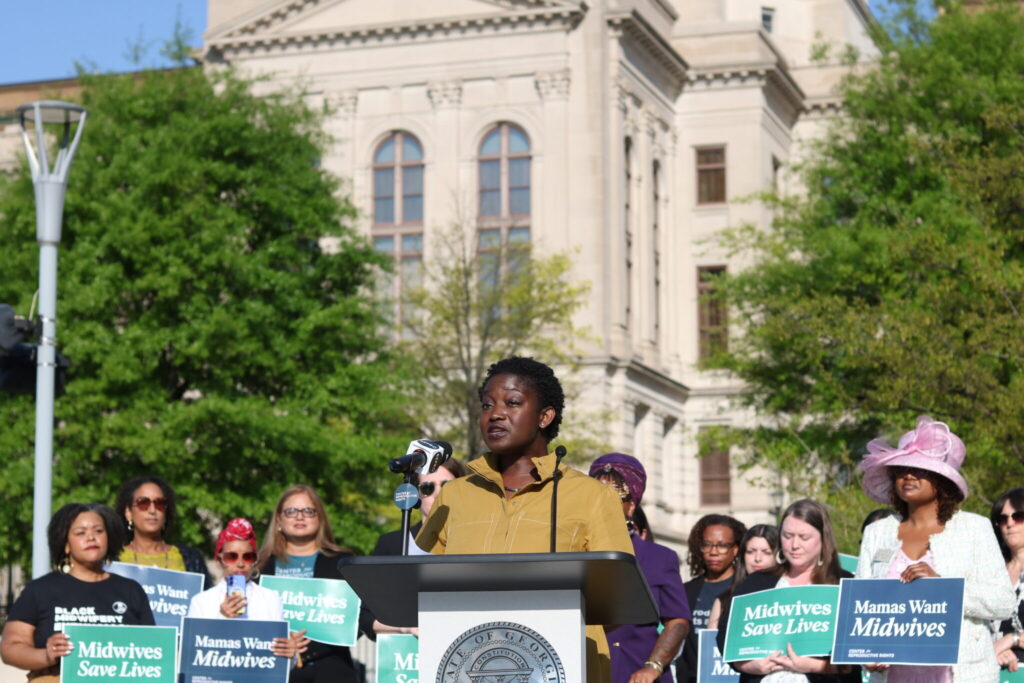
Black midwives in the South, a region rife with racial disparities in maternal health access and maternal mortality, are leading lawsuits over state regulations that they say limit their ability to provide care.
Women behind the litigation say midwives can help improve birthing outcomes in Southern states, where maternal mortality rates are higher than the overall U.S. rate, and treat low-risk pregnancies in rural and underserved areas. They turned to the courts, they said, after legislative attempts to widen their scope of practice stalled.
The lawsuits were filed against Alabama, Georgia and Mississippi, where state regulations and laws require midwives to have collaborative practice agreements with physicians — some of whom may bristle at working with midwives. Those states also apply regulations to birth centers, where midwives assist labor and delivery for low-risk pregnancies, that are similar to the ones they apply to hospitals.
The U.S. maternal mortality rate in 2024 was 17.9 deaths for every 100,000 births, according to the latest data from the federal Centers for Disease Control and Prevention, but the rate for Black women was 44.8, meaning they’re two-and-a-half times more likely to die from pregnancy-related complications than the national average.
Studies show that culturally congruent care — patients having providers who look like them — can improve maternal health outcomes. Yet 82% of the nation’s nearly 15,000 certified midwives are white, according to the American Midwifery Certification Board’s 2025 demographic report.
“It is also true that when you focus your lens and your attention on the greatest impacted group — in this case, Black women — that everyone in the system benefits,” said Tamara Taitt, a direct-entry midwife, executive director of Atlanta Birth Center and a plaintiff in the April lawsuit against the state of Georgia.
Banning some midwives
Although Taitt runs a birth center, she hasn’t been able to practice.
That’s because Georgia bars direct-entry midwives, also called certified professional midwives, from practicing in the state. Such midwives learn through certification and apprenticeships. Georgia requires certified nurse-midwives — advanced practice clinicians with graduate degrees — to have collaborative practice agreements with physicians.
Those agreements can cost up to $1,000 a month, too steep for Sarah Stokely, a certified nurse-midwife based in Rome, Georgia, who routinely travels more than four hours to Tennessee to practice midwifery at a birth center in that state instead, according to the complaint against the state of Georgia.
Alongside Jamarah Amani, the cofounder of the National Black Midwives Alliance, Stokely and Taitt are asking a Fulton County Superior Court for an injunction against the state’s restrictions on midwifery. They argue the restrictions violate the due process and equal protection clauses of the Georgia Constitution.
Taitt said the limitations on midwifery in Georgia lead to a smaller pool of job applicants at birth centers like hers. There are only three in the state, all in the Atlanta region, according to Hillary Schneller, a Center for Reproductive Rights lawyer who represents the plaintiffs.
A bill that would have loosened regulations on midwifery did not advance in the legislature this spring. A spokesperson for the Georgia attorney general’s office, the defendant in the lawsuit, declined to comment on pending litigation.
There are 350 certified nurse-midwives and certified professional midwives in Georgia, but there are even fewer in Alabama, which has 22, and in Mississippi, where 11 are certified by the American Midwifery Certification Board.
Taitt said it’s especially significant that Black midwives are pushing to expand their line of work, considering that until the early 20th century, most midwives in the South were Black.
Dr. Yashica Robinson, an OB-GYN who owns a Huntsville, Alabama, practice where certified professional midwives, nurses and doulas work, said she opened the center to expand labor and delivery options for people who don’t want to give birth in hospitals.
“We know outcomes are improved by people who have access to providers that they’re comfortable with, that they trust, and that they can actually get into in a timely fashion,” she said. “Every community — especially communities of color, rural communities, those that are having maternity wards shut down — everyone benefits from that.”
Robinson said other providers may be skeptical of working with midwives because they don’t understand the value they bring to pregnancy care. Other concerns include liability and costs, she said.
In Alabama, the state Supreme Court declined last month to review a January appeals court decision that determined the Alabama Department of Public Health has the authority to regulate birth centers like it does hospitals. Birth centers initially filed the lawsuit in 2023, saying the restrictions make it harder to operate.
The case is set to go back to the circuit court level, where judges will gauge what specific regulations will stand. Oasis Family Birthing Center in Birmingham and the Alabama Birth Center in Huntsville, plaintiffs in the lawsuit, remain open.
Push for legislation
The American College of Nurse-Midwives filed a federal lawsuit in January against the Mississippi Board of Licensure and other state health officials, alleging that the collaborative practice agreement is irrational and violates federal and state anti-trust laws. The state attorney general’s office denied the allegations in March and asked for the court to dismiss the case.
Getty Israel is the founder of Sisters in Birth, a Mississippi women’s health clinic that provides community health services and referrals. She isn’t a midwife, but has tried to open a freestanding birth center in her state for five years.
“The collaborative practice agreement is the major stumbling block, along with the written transfer agreement,” she said. States typically require birth centers to have a contract with a hospital that allows them to transfer patients if emergency complications arise.
Israel said few physicians want to sign collaborative agreements with certified nurse-midwives, and that the hospital associations see midwives as competition.
The Mississippi State Medical Association told Stateline it is monitoring the lawsuit, and the American College of Obstetricians and Gynecologists declined to comment on any of the suits.
Rob McDuff, a lawyer at the Mississippi Center for Justice who represents the plaintiff, said the group would have dropped the lawsuit had the legislature passed a bill this spring that would have nixed the collaborative practice requirement.
Mississippi Republican state Rep. Dan Eubanks has repeatedly introduced such a bill, but it did not advance beyond the health committee in either chamber.
Eubanks said getting rid of collaborative practice agreement requirements is “a fiscally responsible solution right at our fingertips. All we’ve got to do is give our nurse-midwives a little more practice authority, and they’re not going to operate outside of their scope of practice.”
He said the change would increase access to pregnancy care in Mississippi, where more than half of the state’s counties are maternity care deserts, according to the March of Dimes.
Mississippi state Sen. Hob Bryan, the Democrat who chairs the Senate Public Health and Welfare Committee, said midwifery regulations are complex. He said the legislature should examine the issues in detail before scrapping the collaborative practice requirement.
“I’m a big proponent of going slowly, and I guess my thought basically is first, do no harm. Whatever we do, I think we need to think through all the implications of it,” Bryan said.
Eubanks acknowledged that making it easier for midwives to practice in the state won’t solve all the state’s maternal and infant health disparities, but he said it would help.
“One of the reasons we have high infant mortality in our state is because we lack access to care, and we’ve got a lot of mothers that don’t even get much prenatal care,” Eubanks said. “Yet we talk about the problem, but we don’t really want to do anything that’ll fix the solution, and the beautiful thing is, this is a fix … that doesn’t cost the state any money.”
‘What’s the problem?’
Dr. Wanda Wilburn, a Southern California-based OB-GYN and historian at the Association of Black Women Physicians, pointed out that midwives are not equipped to handle high-risk pregnancies.
Wilburn supports giving midwives more opportunity to expand prenatal care for Black women, but she said midwives should bring in doctors when a patient’s condition worsens.
“There’s no way that their level of training is in-depth enough to make some decisions about some various serious issues that can occur in obstetrics and gynecology,” said Wilburn, who trained at Emory School of Medicine in Atlanta.
But, she added, midwives can help establish closer relationships with patients that doctors simply don’t have the time to develop, and working together would improve maternal outcomes for Black women.
“What’s the problem?” Wilburn asked. “Open up a birth center and let us both collaborate and make sure the patient gets the whole care instead of missing a chunk that may have been that vital piece that caused the maternal morbidity and mortality.”
Stateline reporter Elisha Brown can be reached at ebrown@stateline.org.
This story was originally produced by Stateline, which is part of States Newsroom, a nonprofit news network which includes Georgia Recorder, and is supported by grants and a coalition of donors as a 501c(3) public charity. Georgia Recorder is part of States Newsroom, a nonprofit news network supported by grants and a coalition of donors as a 501c(3) public charity.
Related
Read the full article on the original site
