




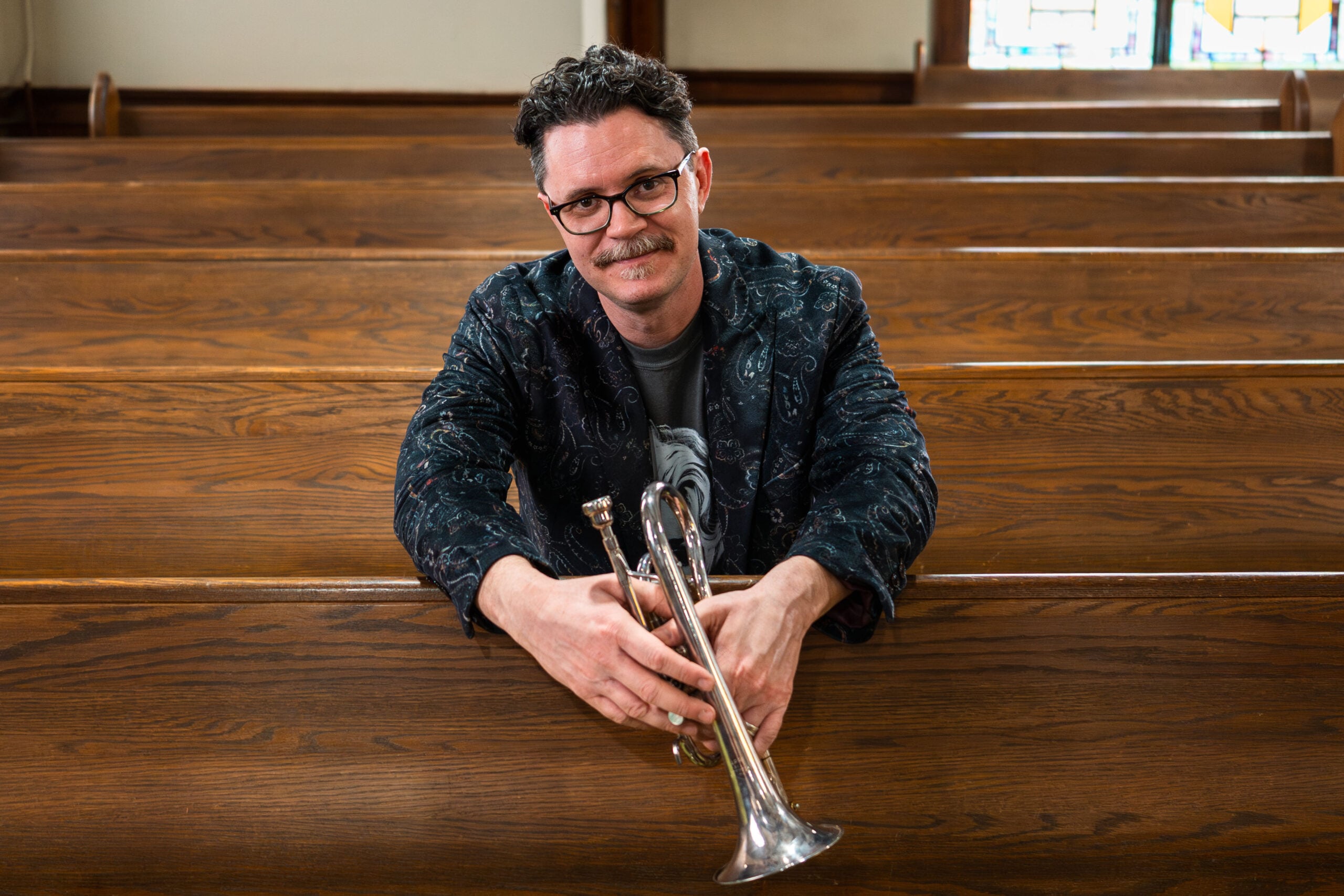
Near the close of a recent interview with composer-bassist Melvin Gibbs, he and I talked about a concert intended to showcase the sounds evoked in “Stono’s Children,” a chapter of Gibbs’s (then) soon-to-publish book, How Black Music Took Over the World. Gibbs curated this new live showcase, titled Geechee Reclamation, to explore how African-originated music and instrumentation acted as predecessor to its Anglo counterparts.
- Matt White grounds his albums in field recordings and praise house rituals, honoring the emotional power of Gullah Geechee traditions.
- Dolly Parton songs are reimagined, linking call-and-response and the 3-3-2 ground rhythm to Gullah Geechee forms, arranging music to match narrative twists.
- Collaborations with local players and elders, like Liz Kelly, Demetrius Doctor and Colleen Clark, ensure an authentic, region-rooted sound.
- He records and archives elders at places like the Penn Center on St. Helena Island, returning tapes and preserving melodies and rhythms.
From this standpoint one grasps the Gullah Geechee roots of George Gershwin’s Broadway folk opera Porgy and Bess in connection with Gibbs’s own family history. Gershwin came to Charleston, South Carolina in 1934, where he summered on James Island, hit up Wadmalaw Island and studied the agricultural acuity of the Gullah Geechee people and the quixotic quirk of their Kongo-based music, derived from centuries of spiritual rituals and cultural traditions.
On Wadmalaw, Gershwin took in Plantation Echoes — a musical revue whose timeline went back to their antebellum past, put on by members of the community, many of whom had been enslaved. During Gibbs’s research into this encounter and the music of the Gullah Geechee people, the author found that, of the many performers who took part in Plantation Echoes for Gershwin’s pleasure (and eventual profit), one just happened to be his great-grandfather, Solomon Gibbs. How Black Music Took Over the World is dedicated to the memory of Grandfather Gibbs.
 This story was worth repeating during my conversation with Tampa-born cornetist, composer, cultural curator and educator Matt White. Listening to his new album Matt White’s Dolly, I realized in its sound White’s own connection to Southern folk music and Creole traditionalism — to the Gullah Geechee people of the Coastal Carolinas, their flowing vocal tones, their eloquent melodic epiphanies and their celebratory rhythmic patterns.
Along with archiving literal elements of the legacy of Gullah elders in song and story form, White’s deep passion for the Coastal Carolinas sound became part of his 2023 album Lowcountry, its staging at Spoleto 2024 with a large-scale ensemble of Gullah elders and, of course, the chunky country jazz vibe of Matt White’s Dolly and its reimagining of Dolly Parton’s earlier, folkier songs.
This exchange has been edited for length and clarity.
Born in the Midwest, raised in Tampa, lived in Nashville for several years. And yet it’s South Carolina’s coasts where you seem to derive the most interest, make the most music. Just nothing in those other cities that could hold your attention?
[laughs] I couldn’t get a teaching gig after 2008 due to the economy at the time, and I heard that a lot of Miami grads has moved to Nashville for session work, so I went there to do likewise as a studio and touring musician — did some work for The Mavericks — and taught at Vanderbilt as an adjunct for a time.
Nashville has a pretty hip little jazz scene. In 2012 I became friendly with two bassists, Victor Wooten and Steve Bailey. Steve’s my mentor, he’s from Myrtle Beach, South Carolina, and while I was there with him, found a job where he was teaching. That was Coastal Carolina University, which just happened to be looking for a jazz and trumpet professor. I’ve been in South Carolina ever since, only now I’m at USC in the center of the state. So my experience with the area comes from just being here and being around the people.
The people are the most important aspect of all of this — the Gullah Geechee people in the Carolinas. In an emotional and musical sense, how do you begin to key into who they are and what they’re about?
My introduction to all this occurred after I’d been here a few months, and got an email from a Dr. Eric Crawford, now my research partner. Eric has been driving down from Norfolk, Virginia to St. Helena Island, near Buford. There’s only one road into St. Helena, so it’s still geographically isolated, and it’s home to the Penn Center, the first school in the United States for freed enslaved people, a place rich with historical documents.
Eric reached out to me, as I’d had a lot of experience making field recordings, and together, with my mobile recorder, [we started] visiting praise house services. Just recording their stories, their singing and so much more in regard to the Gullah oral tradition. We’re meeting elders who learned these songs from their grandparents and the elders before that. We were getting these time capsules of how the music may have been sung many generations ago.
And the praise houses. They operate somewhat in the same fashion as do Quaker meeting houses, only more inclusive of song as opposed to speech or silence.
Yes. Once there, you have deacons who do their opening prayer, then the rest of it is music — the elders stand up among the congregation and sing. Lining and raising a hand. Someone says the word “Scripture,” and the whole congregation jumps in and sings.
You mentioned emotion. One afternoon an elder next to me jumps in with a “shouting song,” which has its roots in the ring shout. While he’s singing it, the whole congregation starts clapping and stomping the 3-3-2 rhythm, the ground rhythm. The louder it began to rise, the more I became covered in goosebumps.
Most of my experiences up until that point had been in jazz. If you’re a jazz musician and not living in New Orleans, you’re always looking to find ways to get back to the source. For me, this really deep experience with the Gullah people made me feel connected. For a long time afterwards, we went down there, and I would do my field recordings and bring them back to the studio, giving these tapes to the families for their own documentation. After a few years, though, I began developing my own jazz musical projects based on those sounds.
Playing devil’s advocate, as a Midwesterner-Southerner, do you have anything in your family history that would connect you to this sound? Is there a reason, beyond the intellectual — and this doesn’t discount feelings — that the sound of the Gullahs might mean so much to you?
I think that it connects to how I learned jazz, how I became connected to jazz. The experience of mentorship there goes back to me, as a kid, growing up in the Tampa area with these jam sessions run by Buster Cooper and Jon Land, both old members of the Duke Ellington Orchestra. They ran these events at The Garden in St. Pete’s, and I used to get my dad to drive me there. I didn’t know what I was doing, but I did my best to pick up their advice every week. I learned something about the communal nature of music, pulling me in, going back through history, gleaning knowledge from the elders.
Before you got to experience the Gullah Geechee culture, what was jazz for you? Before Lowcountry and Dolly?
For me, that definition is always evolving, and not just because of the musical experiences, but the learning of musical cultures, too, Nashville to South Carolina. Also, my role as a teacher has changed what and how I see jazz, how my students interact with it. The older I get from the age of my students, it changes. With that distance, I’m less certain how to define jazz than I ever have — though as a player, I’m better at it than I ever was.
If we go back to your first recording, Worlds Wide in 2017, it’s a more spacious, space-jazzy vibe than anything on Lowcountry, which is way more earthen, especially when it comes to your trumpet playing. Thoughts?
It’s definitely a time capsule thing of how I was writing at that time. Worlds Wide was about the places I had visited, literally and figuratively. Composing original music is different than what I’ve done with Lowcountry and Dolly in that I’m reimagining folk traditions. When you’re writing original material, everything is open.
It can also relate to the tools that I use, like on Worlds Wide using through-composed forms but making them sound like songs. There’s a lot on Worlds Wide that was stuff I considered for larger ensembles.
When I did Lowcountry, it was important to me that I respect the melody as it existed. Rhythmic too — these are the source of the Gullah traditions. They had to be at the forefront so I could manipulate all the music behind them. With that, there were guidelines I wrote out for Lowcountry and Dolly, to keep myself on track and not move too far from the source material.
So why Dolly Parton?
When I was working on Lowcountry, in the thick of its orchestration, I was watching YouTube videos from Bessie Jones, a Sea Island singer and tambourine player, when I spied Dolly Parton on The Porter Wagonner Show doing her song “The Bridge,” which I later came to arrange for this new album. Porter introduces Dolly, early 1960s, she’s singing solo, and she begins narrating its story about a woman who falls in love and has this romance, and its most defining elements are on this bridge. The twist at the very end of the song is that she’s pregnant, the person she fell in love with has left her and she’s going to commit suicide.
I was emotionally struck by the song, but during the video itself, Dolly was strumming on her guitar, with this underlying rhythm being bohn-bohn-bohn-bohn-bohn. The same rhythm from the shouting songs of the Gullah tradition going back to Africa. So I became obsessed by all her earlier records and began doing the thing that all of us jazz musicians do when we get obsessed — we transcribe and figure out a song.
I started transcribing, listening for all these connections to the call-and-response songs and the rhythms, along with discovering more about her background in Appalachian and country music. In doing that, like Lowcountry, the question became how I could take some of these songs that were so powerful in their original iterations and reimagine them.

And how did you start that process? How did you find your way into Dolly Parton’s music?
Once I started, I called a former student of mine, vocalist Liz Kelly, told her the concept, asked if she was in, and together we began finding songs that she felt really good about singing, and the record came together.
As long as the songs that we looked at had elements of the Gullahs, such as the call-and-response, or the rhythms, the form structures of Southern folk music, and they spoke to me in terms of wanting to deconstruct them, they were in. And the players on this Dolly record — the idea of sounding as if it was rooted in this region — are all musicians and friends I’ve met and made from the Carolinas.
Someone like Colleen Clark who plays drums on the record… One of the things I love about her playing is this facility she has for orchestrating her way through these arrangements, and she’s so great at checking into source styles. She sounds like a jazz drummer capturing the tradition of country beats. Organist Demetrius Doctor is a former student of mine, he’s Gullah and is very much in that culture. He has a rhythmic and harmonic sensibility that’s also so authentic. Between them, there is real authenticity there.
So how do you make and manipulate these Dolly Parton songs into something of your own, something jazz and Gullah and low-countrifed all at the same time?
One of the things that is so brilliant about Dolly Parton is that she writes these long stories, each with their own individual, dramatic arc. But she would do them over these really simple song forms.
What I was thinking about for Dolly — and I did this on Lowcountry too — was to have the music evolve to match the narrative. So we looked at the stories she wrote, we looked to their twist endings, and we figured out how do those twists instrumentally. On a song like “The Bridge,” we go the minor after Liz sings the line, “I’m on the bridge, all alone.” And suddenly, that song that you know has a much more sinister sound, one that we’ve created — and it’s nothing that you’ve come to expect. JT
