


Close Menu
Savannah HeraldSavannah Herald
    • Home
    • News
      • Local
      • State
      • National
      • World
      • HBCUs
    • Events
    • Directories
    • Weather
    • Traffic
    • Jobs
    • Sports
    • Politics
    • Lifestyle
      • Faith
      • Senior Living
      • Health
      • Travel
      • Beauty
      • Fashion
      • Food
      • Art & Literature
    • Business
      • Real Estate
      • Entertainment
      • Investing
      • Education
    • Guides
      • Summer Camp Guide
      • Juneteenth Guide
      • Black History Savannah
      • MLK Guide Savannah
    We're Social
    • Twitter
    • Facebook
    • YouTube

    Subscribe to Updates

    Get the latest creative news from FooBar about art, design and business.

    Trending
    • Windsor Forest Elementary Teacher Receives Classroom Gifts from Music Will
    • What Resilient Farm Operations Do Differently Long Before Harvest Season
    • Alicia Keys Closes Tribeca Festival, Performs With Nas At After Party
    • Ingredion Appoints Kenneth Escoe to its Board of Directors
    • Celeb Plastic Surgeon Dr. John Layke Shares the Sneaky Summer Skincare Mistakes You Might Be Making
    • HBCU could benefit from local high school campus donation
    • Naomi Osaka Gets Candid About Motherhood, Pressure, and Learning to Ask for Help
    • Intel CPUs with Nvidia RTX integrated graphics are targeting an early 2028 release
    Facebook X (Twitter) Instagram YouTube
    Login
    Savannah HeraldSavannah Herald
    Savannah HeraldSavannah Herald
    Home » U.S. Government Will Stop Paying for Test Strips to Detect Deadly Drugs
    Health

    U.S. Government Will Stop Paying for Test Strips to Detect Deadly Drugs

    Savannah HeraldBy Savannah HeraldApril 28, 20266 Mins Read
    Facebook Twitter Pinterest LinkedIn WhatsApp Reddit Tumblr Email
    U.S. Government Will Stop Paying for Test Strips to Detect Deadly Drugs
    Share
    Facebook Twitter LinkedIn Pinterest Email

    Health Watch: Wellness, Research & Healthy Living Tips

    Key takeaways
    • The federal SAMHSA notified states it will stop funding test strips, saying they are intended for people using drugs.
    • The abrupt policy reversal bewildered and alarmed outreach programs that distribute strips to prevent overdoses.
    • Administration framed the move as shifting away from harm reduction; HHS spokeswoman Emily G. Hilliard cited incompatibility with federal laws.
    • Strips detect dangerous contaminants like fentanyl, xylazine, and medetomidine; limiting access may increase fatal overdoses.

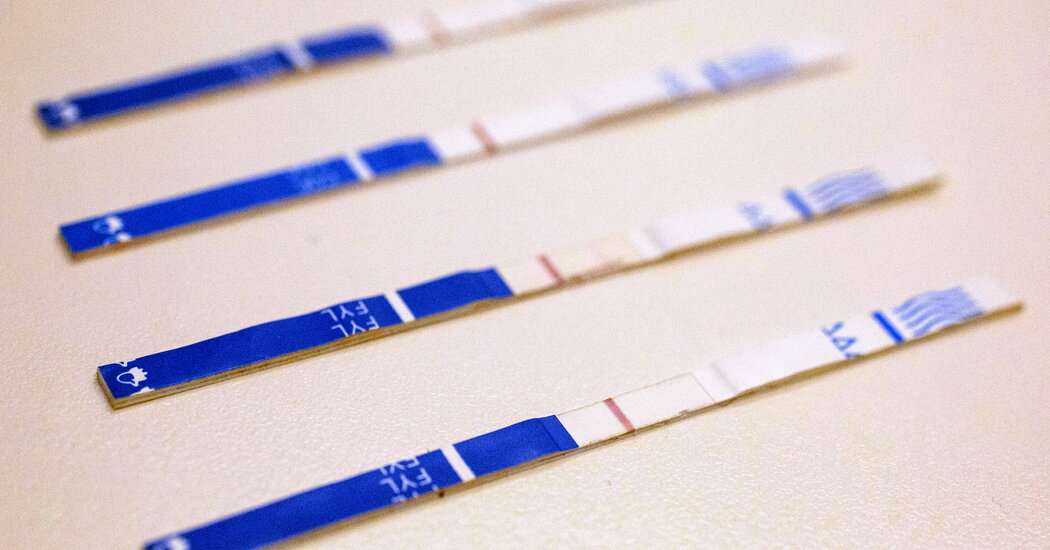
    A simple strip of treated paper that can swiftly signal whether a street drug contains deadly fentanyl or other contaminants is a common overdose prevention tool, distributed widely on college campuses and at music festivals and community clinics. The federal government has championed test strips since 2021 and has paid to supply them to states, a position the Trump administration publicly embraced as recently as July.

    But on Friday afternoon, the federal Substance Abuse and Mental Health Services Administration sent a letter to state health departments and grant recipients across the country, saying that the government would no longer pay for the strips because they are “intended for use by people using drugs.”

    A copy of the letter was obtained by The New York Times.

    The sudden policy reversal bewildered and alarmed administrators of programs that have routinely handed out test strips for years, hoping to stave off overdoses and encourage people who use drugs to exercise more caution. The strips can be used to test drugs ranging from crack cocaine to anti-anxiety pills.

    “Having more information about drugs rather than less can really impact people’s behavior” including stopping them from taking something that might kill them, said Dr. Yngvild Olsen, the former director for the Center for Substance Abuse Treatment at SAMHSA, who now works as a health consultant.

    “The drug supply now is unbelievably unpredictable,” she said. People might think they are using stimulants like cocaine and methamphetamine, she continued, but those drugs are increasingly cut with opioids and dangerous animal sedatives. “So they really need that information. ”

    Fentanyl Overdoses: What to Know

    Card 1 of 6

    Understand fentanyl’s effects. Fentanyl is a potent and fast-acting drug, two qualities that also make it highly addictive. A small quantity goes a long way, so it’s easy to suffer an overdose. With fentanyl, there is only a short window of time to intervene and save a person’s life during an overdose.

    Stick to licensed pharmacies. Prescription drugs sold online or by unlicensed dealers marketed as OxyContin, Vicodin and Xanax are often laced with fentanyl. Only take pills that were prescribed by your doctor and came from a licensed pharmacy.

    Talk to your loved ones. The best way to prevent fentanyl use is to educate your loved ones, including teens, about it. Explain what fentanyl is and that it can be found in pills bought online or from friends. Aim to establish an ongoing dialogue in short spurts rather than one long, formal conversation.

    Learn how to spot an overdose. When someone overdoses from fentanyl, breathing slows and their skin often turns a bluish hue. If you think someone is overdosing, call 911 right away.

    Buy naloxone. If you’re concerned that a loved one could be exposed to fentanyl, you may want to buy naloxone. The medicine can rapidly reverse an opioid overdose and is often available at pharmacies without a prescription. Narcan, the nasal spray version of naloxone, has received F.D.A. approval to be sold over the counter.

    The policy shift highlights the growing tension over harm reduction, a drug policy approach introduced more than 25 years ago by grass-roots groups and later adopted by mainstream addiction medicine, and, finally, the Biden administration. The harm-reduction model maintains that interventions that make drug use safer have lifesaving merits, including the possibility that users might seek treatment.

    But through executive orders and agency letters, the Trump administration has said that harm reduction measures encourage drug use, even as it had continued to support test strips, which cost about $1 each.

    Asked about the letter informing states of the policy change, Emily G. Hilliard, a spokeswoman for the Department of Health and Human Services, which oversees SAMHSA, said: “This letter furthers the agency’s clear shift away from harm reduction and practices that facilitate illicit drug use and are incompatible with Federal laws.“

    In the roughly 10 years since test strips were introduced, their use has grown considerably. At first people who used prescription opioids or heroin would rely on the strips to determine whether a notorious new drug — fentanyl — had been mixed into their supply. Now fentanyl and other synthetic opioids dominate the illicit street market. While many people eschew opioids, they may be seeking party drugs like ecstasy, or stimulants, like cocaine or methamphetamine. And they will use strips, to make sure that their drugs have not been cut with fentanyl.

    “If you have no opioid tolerance, then fentanyl test strips really might be the tool for you: a tiny bit of fentanyl in an unprepared body could kill you immediately,” said Rachel Winograd, an associate professor of addiction science at the University of Missouri-St. Louis.

    Test strips can also check for two very troubling animal sedatives coursing through the street supply: xylazine, which can prompt severe necrotizing wounds, and medetomidine, which causes hours of deep sedation and can lead to cardiac damage and prolonged hospital stays.

    Nabarun Dasgupta, who runs the street drug analysis lab at the University of North Carolina at Chapel Hill, said he was worried about limiting testing for medetomidine, in particular, which is relatively new to the streets.

    Often drug users don’t realize it is in their product. “So people trying to quit cold turkey are having heart attacks and being rushed to the hospital,” he said.

    Studies that look at whether using the strips directly changes a drug user’s behavior show mixed results. In some, people reported that the strips had stopped them from using a drug that had fentanyl in it and had heightened their awareness of overdose safety practices. But another cautioned that a positive result for fentanyl encouraged risky behavior in some users.

    “What’s interesting about test strips is that they can also help others, like providers, start a conversation about the risk of drug use, and options for people, including treatment,” Dr. Olsen said.

    Last Friday afternoon, Dr. Winograd, who oversees a team that manages Missouri’s central warehouse for overdose prevention supplies, confirmed the usual $51,000 order for 80,000 test strips, which go to street outreach workers, drop-in and community centers and treatment programs, among others.

    Scarcely an hour later, the SAMHSA letter landed in her inbox.

    Read the full article on the original source


    Disease Prevention Fitness and Nutrition Fitness Trends Health News Health Policy Healthcare Innovation Healthy Habits Healthy Living Immune Health Lifestyle Medicine Medical Breakthroughs medical research Men's health Mental Health Awareness Nutrition News Public health Self-Care Strategies Stress Management Substance Abuse and Mental Health Services Administration Tests (Drug Use) Therapy and Rehabilitation Wellness Tips Women's health
    Share. Facebook Twitter Pinterest LinkedIn WhatsApp Reddit Tumblr Email
    Savannah Herald
    • Website

    Related Posts

    Health June 16, 2026

    Naomi Osaka Gets Candid About Motherhood, Pressure, and Learning to Ask for Help

    Health June 15, 2026

    Cuba quantifies impact of US oil blockade on children’s health and daily life

    Health June 15, 2026

    Black Men PTSD Awareness Month Mental Health Op-Ed

    Health June 15, 2026

    Understanding Bipolar I in Black Communities

    June 15, 2026

    Globally significant volcanic event formed Giant’s Causeway, scientists find | Geology

    Health June 15, 2026

    What the Knicks' Championship Means to New York

    Comments are closed.

    Don't Miss
    Senior Living May 14, 2026By Savannah Herald02 Mins Read

    Senior Living Dealbook: Distinctive Living Assumes Management in Kentucky; Berkadia Provides $24.8M Acquisition Loan

    May 14, 2026

    Aging Well: News & Insights for Seniors and Caregivers Management Distinctive Senior Living announced it…

    Apple Pie Gelato – Britney Breaks Bread

    November 1, 2025

    The Truth About Natural Hair : Secrets, Science, and Self-Love

    December 4, 2025

    Ingredion Appoints Kenneth Escoe to its Board of Directors

    June 16, 2026

    ‘I have never seen anything like it’: MP warns of rise in extreme views on race and identity | Islamophobia

    May 23, 2026
    Archives
    • June 2026
    • May 2026
    • April 2026
    • March 2026
    • February 2026
    • January 2026
    • December 2025
    • November 2025
    • October 2025
    • September 2025
    • August 2025
    • July 2025
    • June 2025
    • May 2025
    • April 2025
    • March 2025
    • February 2025
    Categories
    • Art & Literature
    • Beauty
    • Black History
    • Business
    • Climate
    • Culture
    • Education
    • Employment
    • Entertainment
    • Faith
    • Fashion
    • Food
    • Gaming
    • Georgia Politics
    • HBCUs
    • Health
    • Health Inspections
    • Investing
    • Lifestyle
    • Local
    • Lowcountry News
    • National
    • National Opinion
    • News
    • Politics
    • Real Estate
    • Senior Living
    • Sports
    • State
    • Tech
    • Traffic
    • Transportation
    • Travel
    • World
    Savannah Herald Newsletter

    Subscribe to Updates

    A round up interesting pic’s, post and articles in the C-Port and around the world.

    About Us
    About Us

    The Savannah Herald is your trusted source for the pulse of Coastal Georgia and the Low County of South Carolina. We're committed to delivering timely news that resonates with the African American community.

    From local politics to business developments, we're here to keep you informed and engaged. Our mission is to amplify the voices and stories that matter, shining a light on our collective experiences and achievements.
    We cover:
    🏛️ Politics
    💼 Business
    🎭 Entertainment
    🏀 Sports
    🩺 Health
    💻 Technology
    Savannah Herald: Savannah's Black Voice 💪🏾

    Our Picks

    Chatham County Restaurant Inspections

    August 29, 2025

    Oil Prices Tumble After Trump Announces Deal With Iran

    June 15, 2026

    Nia Long Files Restraining Order Against Alleged Stalker

    March 24, 2026

    Microsoft’s open-source SkillOpt automatically upgrades AI agent skills without touching model weights

    June 11, 2026

    The Source |Lawsuit Against Lauryn Hill Dropped By Pras Before His 14-Year Prison Sentence

    March 17, 2026
    Categories
    • Art & Literature
    • Beauty
    • Black History
    • Business
    • Climate
    • Culture
    • Education
    • Employment
    • Entertainment
    • Faith
    • Fashion
    • Food
    • Gaming
    • Georgia Politics
    • HBCUs
    • Health
    • Health Inspections
    • Investing
    • Lifestyle
    • Local
    • Lowcountry News
    • National
    • National Opinion
    • News
    • Politics
    • Real Estate
    • Senior Living
    • Sports
    • State
    • Tech
    • Traffic
    • Transportation
    • Travel
    • World
    Copyright © 2002-2026 Savannahherald.com All Rights Reserved. A Veteran-Owned Business

    Type above and press Enter to search. Press Esc to cancel.

    Manage Consent
    To provide the best experiences, we use technologies like cookies to store and/or access device information. Consenting to these technologies will allow us to process data such as browsing behavior or unique IDs on this site. Not consenting or withdrawing consent, may adversely affect certain features and functions.
    Functional Always active
    The technical storage or access is strictly necessary for the legitimate purpose of enabling the use of a specific service explicitly requested by the subscriber or user, or for the sole purpose of carrying out the transmission of a communication over an electronic communications network.
    Preferences
    The technical storage or access is necessary for the legitimate purpose of storing preferences that are not requested by the subscriber or user.
    Statistics
    The technical storage or access that is used exclusively for statistical purposes. The technical storage or access that is used exclusively for anonymous statistical purposes. Without a subpoena, voluntary compliance on the part of your Internet Service Provider, or additional records from a third party, information stored or retrieved for this purpose alone cannot usually be used to identify you.
    Marketing
    The technical storage or access is required to create user profiles to send advertising, or to track the user on a website or across several websites for similar marketing purposes.
    • Manage options
    • Manage services
    • Manage {vendor_count} vendors
    • Read more about these purposes
    View preferences
    • {title}
    • {title}
    • {title}
    Ad Blocker Enabled!
    Ad Blocker Enabled!
    Our website is made possible by displaying online advertisements to our visitors. Please support us by disabling your Ad Blocker.

    Sign In or Register

    Welcome Back!

    Login below or Register Now.

    Lost password?

    Register Now!

    Already registered? Login.

    A password will be e-mailed to you.