




From Campus to Classroom: Stories That Shape Education
- Students use proxy servers to bypass filters and hide games from blockers like GoGuardian, exposing major security gaps.
- School-issued devices increase off-task behavior, reduce attention spans, and shift monitoring responsibilities onto teachers, eroding instructional time.
- Some districts like Los Angeles Unified removed devices; experts urge structured use, stronger filters, teacher training, and clearer screen-time policies.
For years, districts have promoted one-to-one devices as a way to boost learning, provide tailored lessons for differing academic needs and offer enrichment.
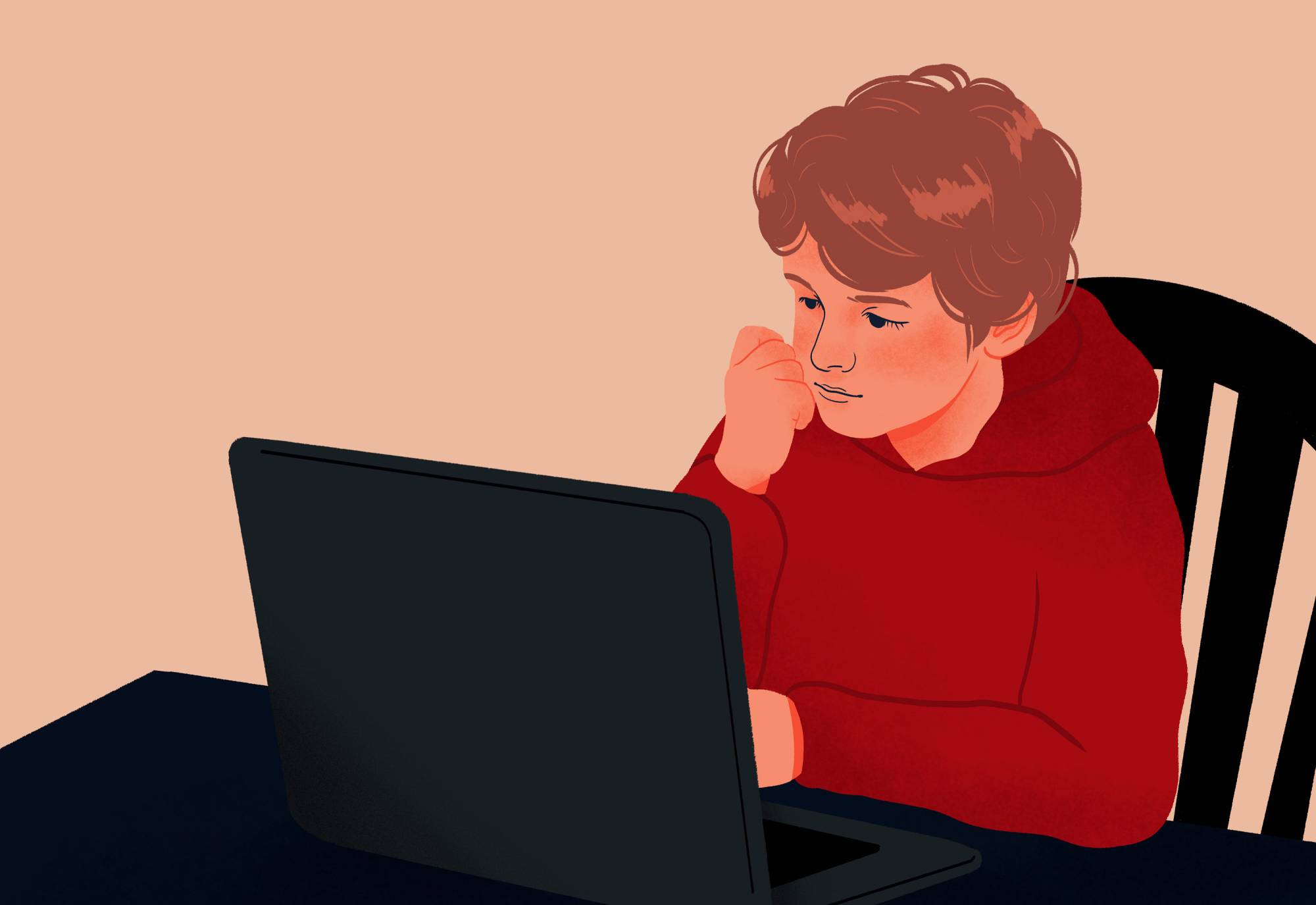
But parents and teachers say even the youngest students are finding ways past any blocks adults try to put on school devices to play games, watch videos and message friends on school-issued devices.
Interviews with more than 45 parents, educators and experts across the country, as well as recent surveys with parents and educators, describe the many ways elementary students are using devices in class: watching YouTube videos of soccer matches or playing games featuring Jeffrey Epstein or a “corpse-like grandmother” who chases players with a bloody baseball bat. Third graders have used Google Docs to compile inappropriate memes and images and message each other throughout the school day, and a second grader searched for a sexually explicit term and was shown a Wikipedia page — with pictures.
All of this occurred in districts that had filters, safeguards and systems in place meant to block such content.
Related: Young children have unique needs and providing the right care can be a challenge. Our free early childhood education newsletter tracks the issues.
Bryn Prusky, a second grader in Pennsylvania’s Lower Merion Township, said her friends “just drift off into a video game and start doing something else that they’re not supposed to be doing” instead of classwork. It isn’t hard to find the games — they’re usually “just there,” she said, already downloaded on the computers.
Some parents and teachers are now asking if the benefits of classroom tech are worth the costs in distraction and energy spent policing its use.
“The problem is in the way the machine works. As soon as you give me unfettered access to programs and the internet, … I’m going to go right down that path, and learning goes away,” said Jared Cooney Horvath, a neuroscientist and author of “The Digital Delusion,” which argues that educational technology harms learning. “It doesn’t matter the size of the screen or the fact that the school bought it and stamped ‘educational’ on it.”
In the New York City borough of Brooklyn, fourth grade teacher Martina Meijer only gives her students Chromebook time during small group reading rotations. But within minutes of sitting down with a computer, some of her students are navigating to video sites. Some wear headphones to listen to audiobooks, which also blocks Meijer from knowing exactly what they’re doing when she’s working with another group.
“I always try to monitor what they’re looking at,” Meijer said, “but my eyes can’t be everywhere.”
Kids have been off task and distracted in school long before Chromebooks or iPads existed. But some parents and experts say devices only make it easier to engage in non-academic, inappropriate and even dangerous content.
This is especially challenging for young children whose brains, self-regulation skills and self-control are still developing.
“Let’s say you hand a child a pen and you’re like, ‘This pen can write, it can turn into a magic wand, it can turn into a knife, it can fly, it can change colors. But only use it as a pen, OK?” said Deanie Eichenstein, a California-based clinical psychologist who is one of the leaders of the advocacy group Schools Beyond Screens. “It’s silly.”
John Bellis, the parent of a preschooler and a third grader in Lower Merion Township, said his son got in trouble earlier this year after he successfully guessed a classmate’s password, logged into one of the student’s online accounts and changed the profile picture to a poop emoji.
“It’s not like they’re doing crime, but they’re goofing around and they’re not learning,” Bellis said.
Many teachers say devices have added challenges to their classrooms. Fifty-six percent of more than 1,200 educators surveyed by Education Week last year reported that off-task behavior on computers is a “major source of distraction that cuts into students’ learning time.” Teachers said computers and tablets are more distracting than cellphones, which more than 20 states have banned in schools. And 70 percent of 350 educators surveyed by The New York Times last year said school-issued devices distract from learning and engagement in class.
One North Carolina district found in an audit of student screen use, screen time spent on distraction added up to 31 lost instructional days each year, according to The Wall Street Journal.
Teaching in an era of devices has been frustrating, said Meijer. “It’s reducing the children’s stamina, the children’s attention span and creating this dopamine hit need.”
In classrooms across the country, it’s largely up to teachers to monitor devices. Many say it’s become all-consuming.
“The onus is always put on the shoulders of the teachers,” said Molly Esquivel, who teaches sixth grade in California. “You need to monitor the kids, you better be watching them, you better be surveilling them,” she added. “You introduced this problem, and the problem is now the teachers’ problem.”
Teachers don’t always have a choice, however: Some are required to prepare their students to take state tests on computers, and other districts are locked into contracts with ed tech vendors that mandate a certain level of use.
Districts vary in the degree they lock down student computers. Some districts, for example, have fully blocked access to sites like YouTube, while others allow it.
Some districts have adopted monitoring programs that allow teachers to see student screens and get notified when a student is off task. Parents say even when it’s available, however, not all teachers use it. In Westchester County, New York, parent Lucy Collins said her oldest child, who is 11, knows which of his teachers use monitoring software and which don’t. Her son regularly tells her how tempted he is to e-mail friends, play games and watch YouTube while at school.
“Even if my kid was more focused, if you look up and see someone else on a laptop on something fun or distracting, that’s a distraction to him as well,” Collins said.
Even the creators of blocking programs are constantly needing to evolve in response to determined children. Brian Larkin, the director of product management for the blocking program GoGuardian, said students are using proxy servers to bypass filters and blocks, and are hiding games inside of school-appropriate websites.
“That’s how bad it’s gotten,” Larkin said. The company recently started using artificial intelligence to proactively block those workarounds for districts and give educators more ways to limit content.
Related: PROOF POINTS: 10,000-student study points to kindergartners who may become heavy screen users
In recent months, motivated by concerns over device use, wasted time and these effects of screen time, some districts have moved away almost entirely from technology, especially in the earliest grades. Los Angeles Unified was the largest to do so in April, but others have taken similar steps to completely remove or cut back on devices in class, including districts in Michigan, Pennsylvania and Oklahoma.
Sixteen states have introduced legislation focused on evaluating ed tech products and setting limits for students’ screen time, including Alabama, which created screen time rules for early childhood classrooms, and Missouri, which sought to require districts to set limits for screen time in elementary school. And in May, the U.S. surgeon general issued a warning about screen time and encouraged schools to limit screen use to “enable distraction-free teaching.”
But such moves are not universal.
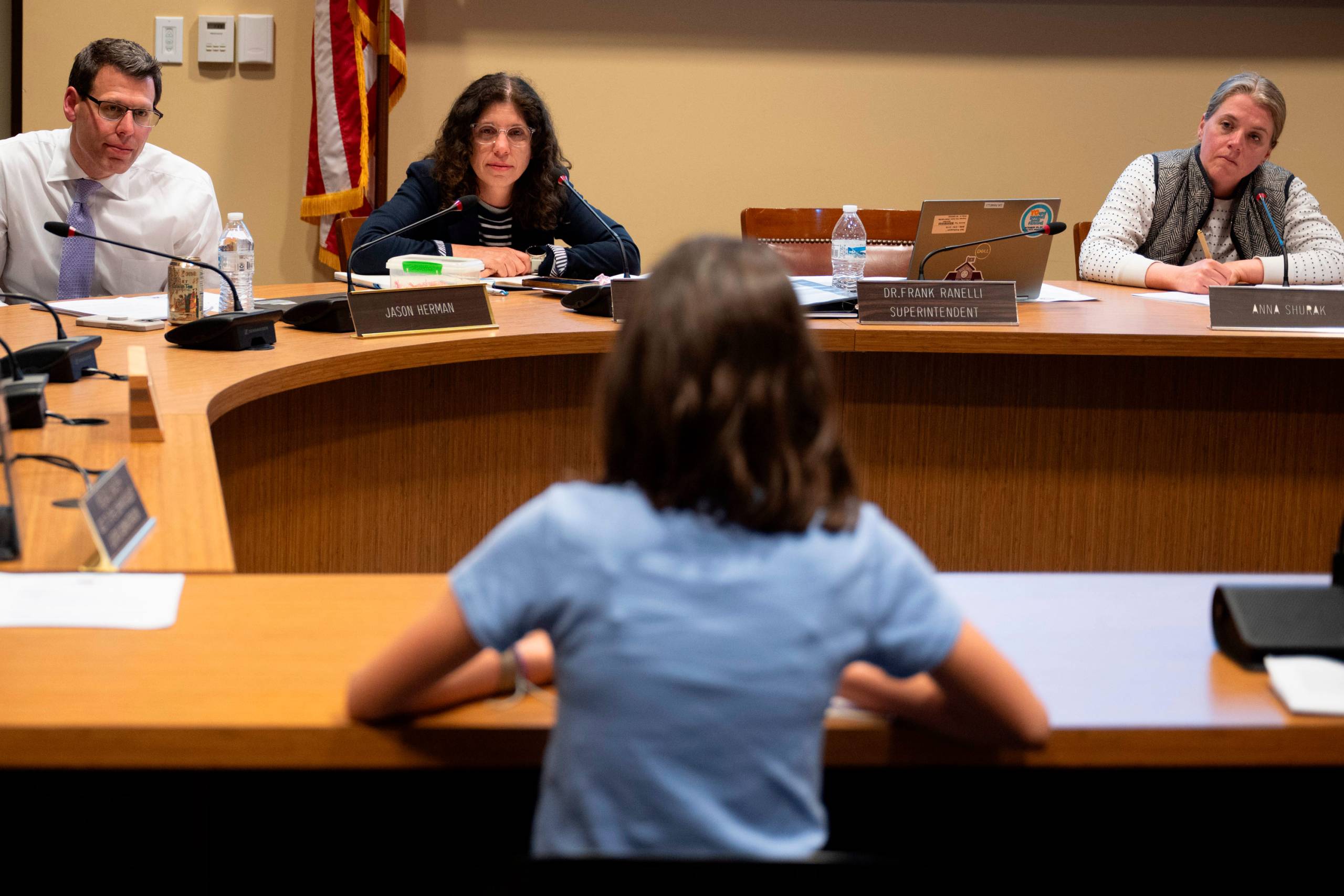
In Lower Merion Township — despite widespread parent advocacy and a petition signed by more than 600 parents in a district of 8,600 students — school leaders recently rescinded a policy that allows parents to opt out of the system’s one-to-one device program. “Our curriculum is delivered the way it’s delivered, and part of that curriculum is done with electronic devices,” said Frank Ranelli, the district superintendent, at an April school board policy meeting.
(Ranelli later told parents the district would review the one-to-one policy in elementary school, strengthen web filters and provide teachers with “real-time control and oversight of student technology use.” One proposal under consideration would remove devices in grades K-2)
The district already has a shaky history with technology: More than 10 years ago, the school board was sued for spying on students at home through cameras on district-issued laptops.
A spokesperson declined to answer questions about the district’s approach to technology or its decision to revisit its opt-out policy.
To be sure, teachers say there are some benefits of devices in class. Assigning work on laptops and tablets is a way to guarantee kids will be quiet and kept busy while they attend to the needs of other students, especially when classes are large.
Erica Boyce, an elementary special education teacher in New York, said her students were especially excited to use a reading app provided by her district.
“They really wanted to read, they were enjoying reading,” Boyce said. She said having students take assessments on devices saves her time on grading, allows her to see what she needs to reteach and helps her group students for mini lessons and extra help.
Michelle Rogers, an elementary reading intervention teacher in California who has taught kindergarten, first and fifth grades, has found devices are helpful with tracking data and giving children work at their level. But she thinks schools need a healthier balance and should bring back computer labs so device use is more intentional. “I have seen when it is not in a structured environment, it’s abused,” said Rogers.
What could help, Rogers added, is more education for teachers. “We need better training, better guidelines and better knowledge of how to use all the apps in a way that’s going to be beneficial,” she said.
Some proponents of devices in schools caution that states and districts shouldn’t move too fast and establish blanket policy changes that completely remove devices from schools.
“I just want to sort of help us all take a deep breath and not throw the baby out with the bathwater,” said Tracy Weeks, who leads education policy and strategy at the education technology company Instructure. “We want all children to be safe,” she added. “We want to put them in the best situation to learn,” but that doesn’t necessarily mean “arbitrary” time limits or bans on screens, she said. Instead, districts should prioritize ed tech that supports learning and show how they are keeping children safe, she added.
In California, Kelly May-Vollmar, superintendent of Desert Sands Unified School District and the board chair-elect for the Consortium for School Networking, a group for school ed tech leaders, said that more “structured, intentional” usage of tech in school can help cut down on distractions. “Inside the classroom, if there’s a problem, it’s not a screen problem, it’s a design problem,” she said.
If districts are going to keep devices, many parents want changes — less time on screens, increased protections, clear policies about screen time and a better sense of how their children are using the tools.
Amy Swers, a Maryland parent of three, only found out her son was spending time gaming at his Montgomery County school when she reached out to his teachers for feedback near the end of sixth grade. (The district did not respond to multiple requests for comment).
When Swers asked if she could be notified when her son was distracted in class, the teacher responded that “contacting parents about gaming would mean we’d be sending emails all day every day.”
Swers was floored. “Our school district, they’ve thrown their hands up and it’s like a hydra, it’s a three-headed monster that they don’t have any control over.”
Contact staff writer Jackie Mader at 212-678-3562 or mader@hechingerreport.org.
Read the full article on the original site
