




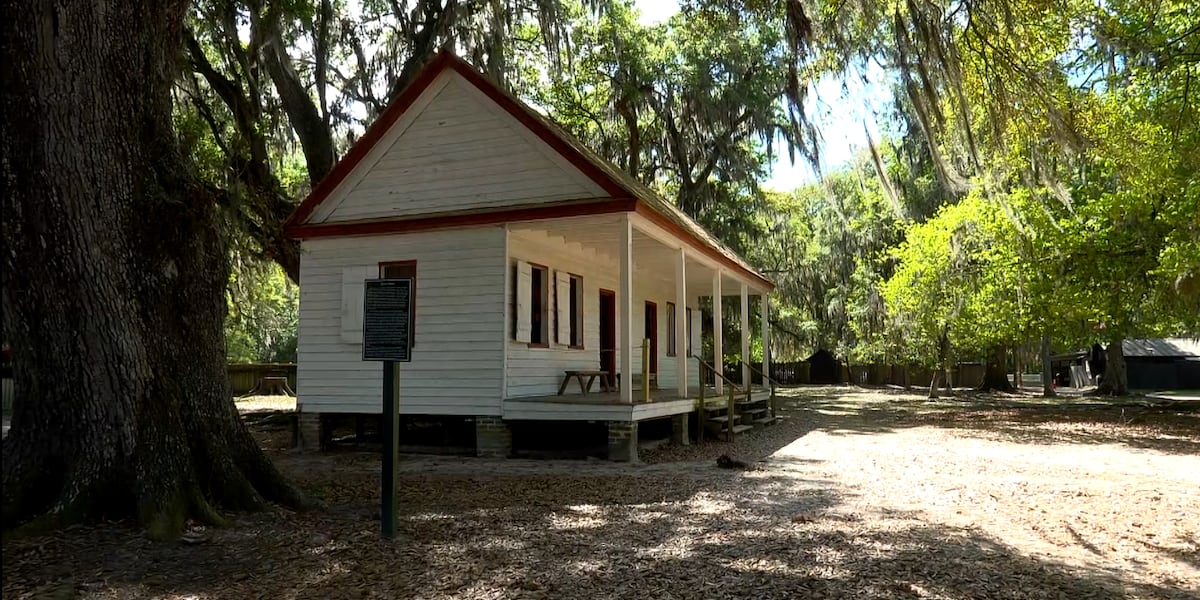
- Descendants demand transfer of plantation land to establish the Gullah Geechee Reparations Reservation under permanent community stewardship.
- Task force gave plantations 40 days to enter formal discussions about land transfer and reparations.
- Goals include community-controlled economic development, affordable housing, intergenerational teaching, cultural preservation, and sustainable agriculture for the Gullah Geechee community.
- Boone Hall, Magnolia, and Middleton acknowledged perspectives, cited preservation and education commitments, but offered no action toward land transfer.
- Over 135 businesses, organizations, and community members, including white descendants and local businesses, have backed the reparations push.
CHARLESTON, S.C. (WCSC) – Members of the Charleston Reparations Task Force, local Black Lives Matter, and Gullah Geechee community members are demanding the transfer of over 7,000 acres of former plantation land in the area.
Descendants are calling for land from three major Lowcountry plantations: Boone Hall Plantation and Gardens, Magnolia Plantations and Gardens, and Middleton Place.
They hope to claim the land to help establish the Gullah Geechee Reparations Reservation, land to be held in permanent stewardship by Gullah Geechee people.
They have given Middleton Plantation, Boone Hall, and Magnolia 40 days to respond and to enter into a conversation about their request, which would be June 1.
“We’ve had people tell the story, but we’ve not been the people to receive the end benefits from it,” Marcus McDonald, member of the task force and a direct descendant of Boone Hall, says. “And that’s what we want to change with this. We need to receive the benefits from it and see and be able to teach people as well, and have ownership of that program.”
The NAACP defines reparations as a financial recompense for African-Americans whose ancestors were slaves and lived through the Jim Crow era.
This also isn’t a new push, as over 225 communities across the country are already working to make amends for slavery and colonization.
McDonald says there’s no time like now to request reparations.
It’s a time where Charleston’s tourism is booming, developments are popping up, and historic Black settlement communities are fighting to keep their culture alive.
This also comes at a time when the Gullah Geechee community is seeing a loss of land.
“Over the last 50 years, there’s been a decrease of Black folks in Charleston, and we had to choose this moment, if any, because we just keep getting erased from the peninsula,” McDonald says. “We decided if we ain’t going to do it, we’re just going to keep losing land and losing our people.”
It’s land and people they hold close to their hearts and now want to claim.
Every time Miah Palmer passes by Boone Hall, she feels a spiritual connection to the land through her ancestors. She’s an organizer with the task force and is a descendant of the Boone Hall plantation, and says reparations for her means giving back to the community.
“Knowing that I have ancestors that lived there and worked it is extremely important to me to see reparations be given back to my ancestors, my community, and being able to see that,” Palmer says.
She says she is unsettled every time she sees another event or wedding held at a plantation, especially knowing they aren’t investing any of the money they’re making directly into the communities.
“It is not extreme because when our ancestors were on that land, they were killed, beaten, and so much more,” Palmer says. “It was an extreme when that was happening to them, so it shouldn’t be extreme when we’re requesting that back.”
And it’s not a fight just being fought by Black descendants, but local businesses and white descendants have also joined. More than 135 businesses, organizations, and community members have backed the push for reparations.
Charlotte Drayton is a descendant of Middleton Place and says that once she saw an effort to call for reparations, she knew she had to join and make her voice heard.
“It just makes me sick, and it makes me cry, it makes me mad, it’s hell,” Drayton says. “It’s beyond time, and it’s the right thing to do. It feels like my soul is being cleansed. because we pay for the sins of our ancestors.”
‘We deserve to tell our own stories’: Goals of land transfer in Gullah Geechee hands
Their goals for the land transfer include allowing for community-controlled economic development to support affordable housing, intergenerational teaching, cultural preservation, and growing sustainable agriculture for families in need.
“We’d have nature preservation, but we’d also have commerce, tourism, and us telling our own story in nature and telling the truth about what happens on those lands,” McDonald says.
On the commerce end, they would want money the plantation makes to directly fund Black settlement communities who are often still fighting for basic infrastructure and are just catching up.
While the named plantations do have Gullah Geechee tours and classes, the task force says it often feels like a sidenote instead of the major highlight of the plantation and now they want to be the ones telling the story of their ancestors.
“We deserve to tell our own stories,” McDonald says. “You don’t let the family of Nazis tell the story of concentration camps, so that shouldn’t be replicated here.”
Calvin Smith Sr. grew up on the Magnolia Plantation grounds with his two brothers and says he’s always known what his ancestors went through and knew they deserved better.
“My descendants help make that place the most beautiful place,” Smith says. “We adapted to any times they brought against us, but we still helped them. We still provided. All the necessities in the world now, Black people made those things, we just didn’t have the right to claim anything.”
Smith believes the time is now and would like to see descendants like himself and the greater Gullah Geechee community benefit.
The role plantations play in balancing tourism and cultural preservation
The demand is also sparking a broader question: where’s the line between tourism and cultural preservation?
The task force says seeing all the surrounding plantations host events is “sickening,” and they believe it’s rooted in a place of carelessness for the enslaved and their descendants.
“Around the block, y’all are making tens of thousands, hundreds of thousands, and millions of dollars a year off of these plantations, off of some of the events, and that’s unacceptable,” McDonald says.
Those events range from weddings, concerts, and family events like strawberry festivals and pumpkin patches that all draw big crowds and, as a result, big business.
Descendants say the money made here should finally benefit the people who built and cared for the plantations against their will.
“That’s the way they need to really honor their history instead of what they’re claiming to do now, which is not doing that,” McDonald says. “They’re just benefiting and reaping the benefits from our history. That’s not commemoration, that’s not support.”
Drayton believes the focus on the plantations should be on education.
She says Charleston’s “Southern charm” shouldn’t come with selective memory where tourists can be found snapping photos, while the ugly truth gets edited out.
For Drayton and the reparations task force, they say time is over with looking past the pain that built the plantations.
Reaction to responses from plantations before 40-day deadline to enter a conservation
The task force has given the three plantations a deadline of 40 days to enter into a formal discussion regarding the possible transfer of land.
In response, they have said they “are aware of” the call for reparations and “respect” the task force’s perspectives, but have not yet taken any action towards a conversation.
Boone Hall Plantation and Gardens sent us a statement in a request for an interview:
“Boone Hall Plantation & Gardens operates under a land conservatorship, with a deep commitment to preserving and representing one of the Lowcountry’s most historically significant landscapes. Our mission is grounded in responsible stewardship and education, ensuring that the full and complex history of this land is shared with honesty and respect. We are aware of and respect the perspectives recently shared by members of the community, and we remain committed to engaging thoughtfully and responsibly, while continuing to advance our mission with care and integrity.”
Magnolia Plantation and Gardens also sent us a statement in a request for an interview:
“Magnolia Plantation & Gardens has been part of the Lowcountry for more than 350 years. We do not take lightly the full weight of that history, including the lives of the enslaved men, women, and children whose labor, knowledge, and resilience shaped this land. Telling that story honestly — not selectively — is central to our mission. We are committed to honest interpretation, meaningful community partnership, and ensuring that the full history is told with integrity. We are aware of the perspectives recently shared by community members. We remain committed to ongoing research, bringing forward the full breadth of Magnolia’s history, and advancing public understanding through thoughtful, accurate, and responsible interpretation.”
Middleton Place also sent a statement:
“Middleton Place Foundation is a 501(c)(3) nonprofit educational trust dedicated to preserving and interpreting one of America’s most significant historic landscapes. Our mission is grounded in preservation and education, ensuring that the full and complex history of Middleton Place is shared with honesty and respect. Central to our work is advancing a complete and honest interpretation of our history, one that centers the contributions and enduring legacies of the enslaved Africans and African Americans who lived and labored here. The landscape itself reflects their knowledge and skill, shaped by artisans and laborers whose expertise, resilience, and cultural traditions continue to inform how this place and the Lowcountry is understood today. As a nonprofit organization, Middleton Place Foundation exists to serve the public good. All resources directly support the preservation of this National Historic Landmark and the reeducational programs that bring these stories to life for visitors and the broader community. We believe that engaging with this history, both its beauty and its brutality, is essential. It invites reflection, deepens understanding, and encourages meaningful dialogue about the past and its continuing impact today. We are aware of and respect the perspectives recently shared by members of the community, and we remain committed to engaging thoughtfully and responsibly in dialog, while continuing to advance our mission with care and integrity.”
Palmer says she’s not in agreement with the responses and is still hoping they reach out to the members of the task force with an official response.
“I feel like there should be action-oriented movement from them versus just saying that we support it,” she says. “And I’m expecting to see the transfer to the Gullah Geechee communities.”
The 40 acres and a mule promise is now over 160 years old, and descendants say it’s time to finally fulfill it.
“It’s just knowing all these things being raised up on the plantation, it gives you power, but it also gives you fear,” Smith says. “And when it comes to fear, you fight back. You never let fear overcome you. That’s when you get your power from your ancestors.”
Copyright 2026 WCSC. All rights reserved.
